HAWASSA UNIVERSITY
12/19/2018 2
MSc : clinical laboratory ( special truck diagnosis and
public health microbiology)
Course : microbial genetics
Lecturer : Dr. P. VIJAYALAKSHMI
by : Abdikhaliq Hussein Ali
Learning Objectives
At the end of this module, participants will be able to:
• Understand Definition, Function, Importance, History,
of insulin
• Describe Insulin production using rDNA Technology
• Understand Definition, Function, Importance, History,
of human growth hormone
• Describe HGH production using rDNA Technology
• Describe the genetic engineering of other human
hormane production
Outline
 Introduction
 Structure and function of insulin
 Genetic engineering of insulin
 Structure and function of HGH
 Genetic engineering of HGH
 Genetic engineering of human hormones.
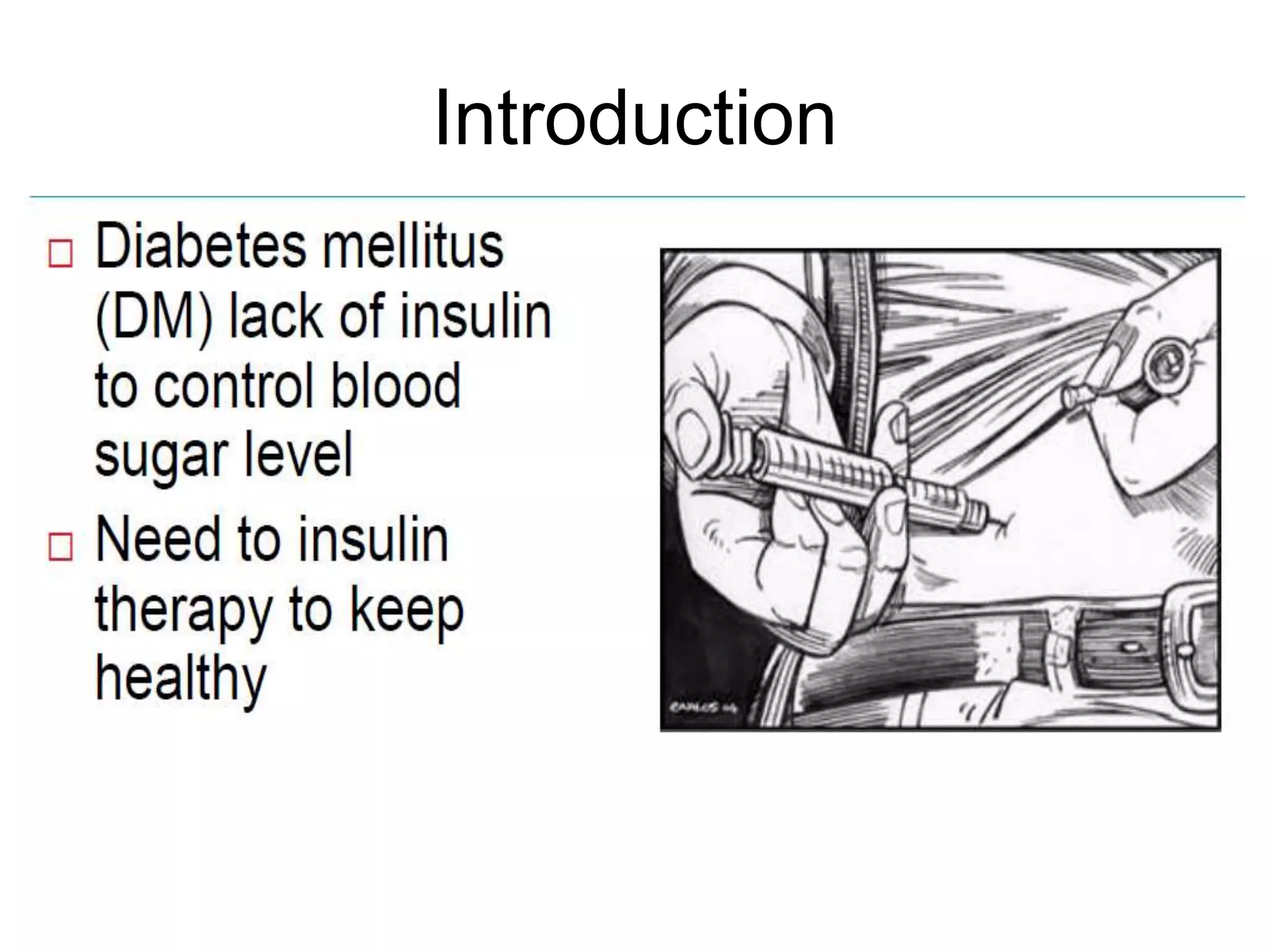
Introduction
• the earliest uses of biotechnology in pharmaceutical
manufacturing is the use of recombinant DNA technology to
modify Escherichia coli bacteria to produce human insulin,
which was performed at Genentech in 1978
• Insulin is a hormone produced by β-cells of islets of
Langerhans of pancreas. It was discovered by sir Edward
Sharpey Schafer (1916) while studying Islets of Langerhans
• People who do not produce the necessary amount of insulin
have diabetes.
Introduction
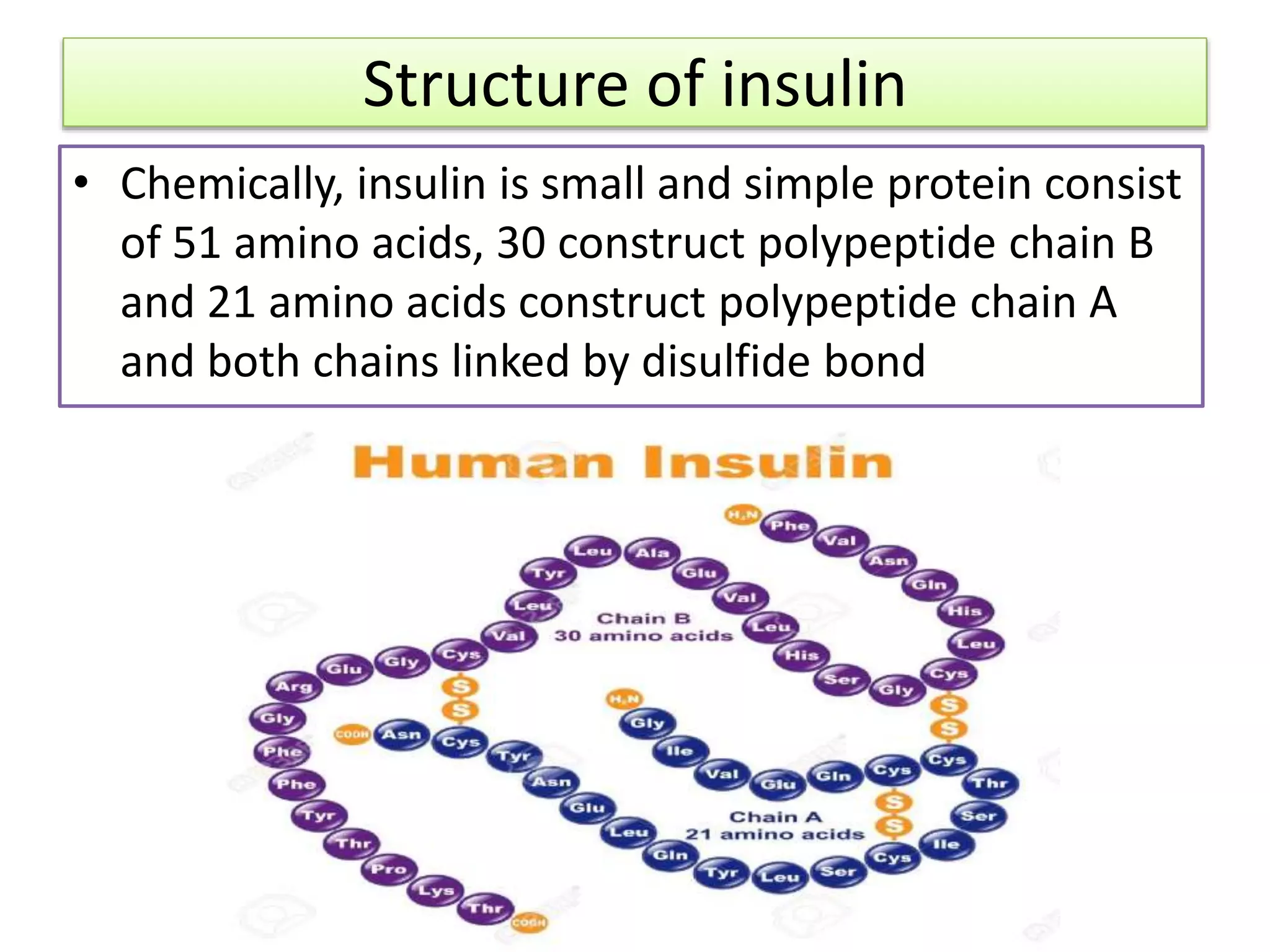
Structure of insulin
• Chemically, insulin is small and simple protein consist
of 51 amino acids, 30 construct polypeptide chain B
and 21 amino acids construct polypeptide chain A
and both chains linked by disulfide bond
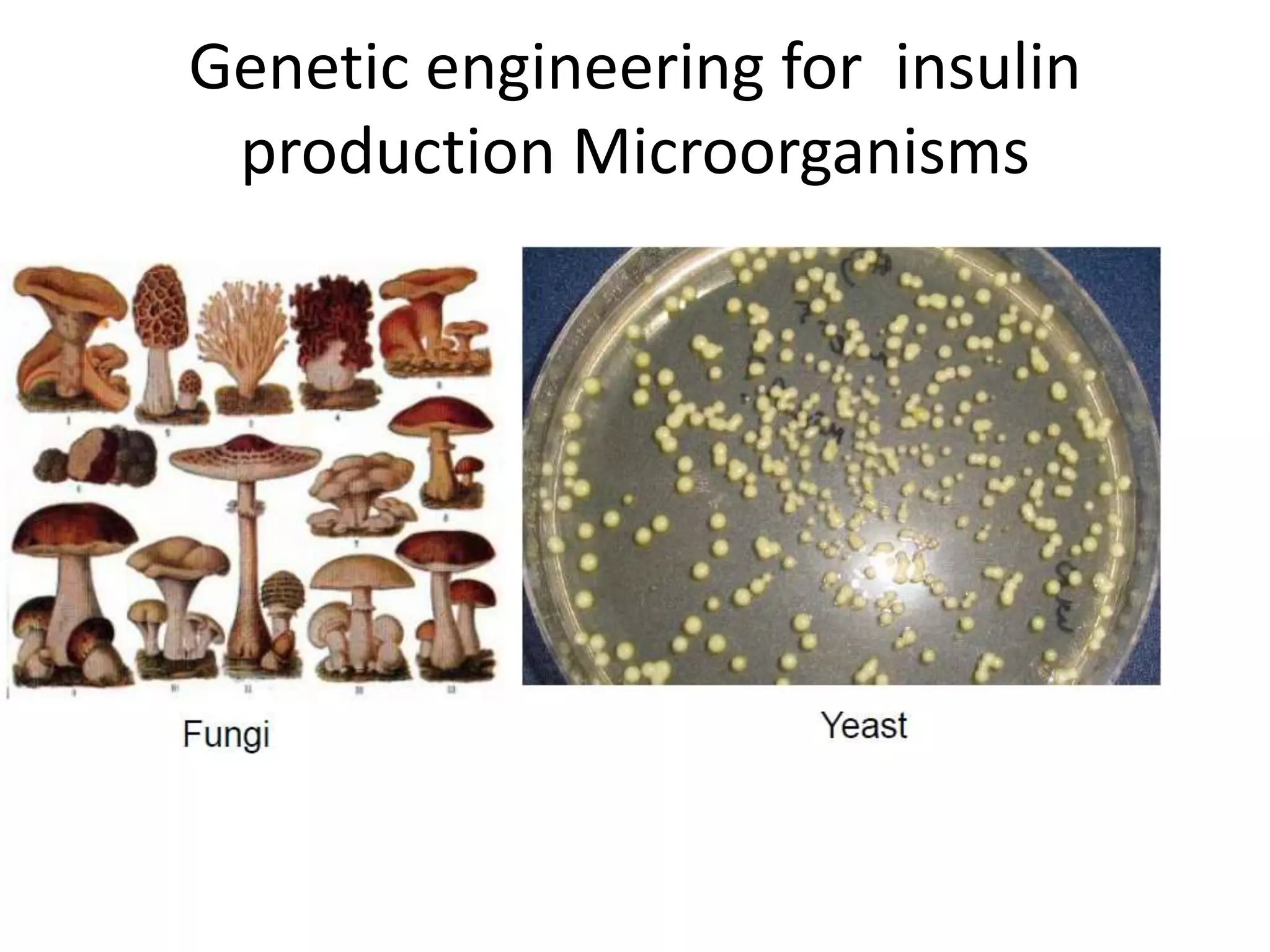
Genetic engineering for insulin
production Microorganisms
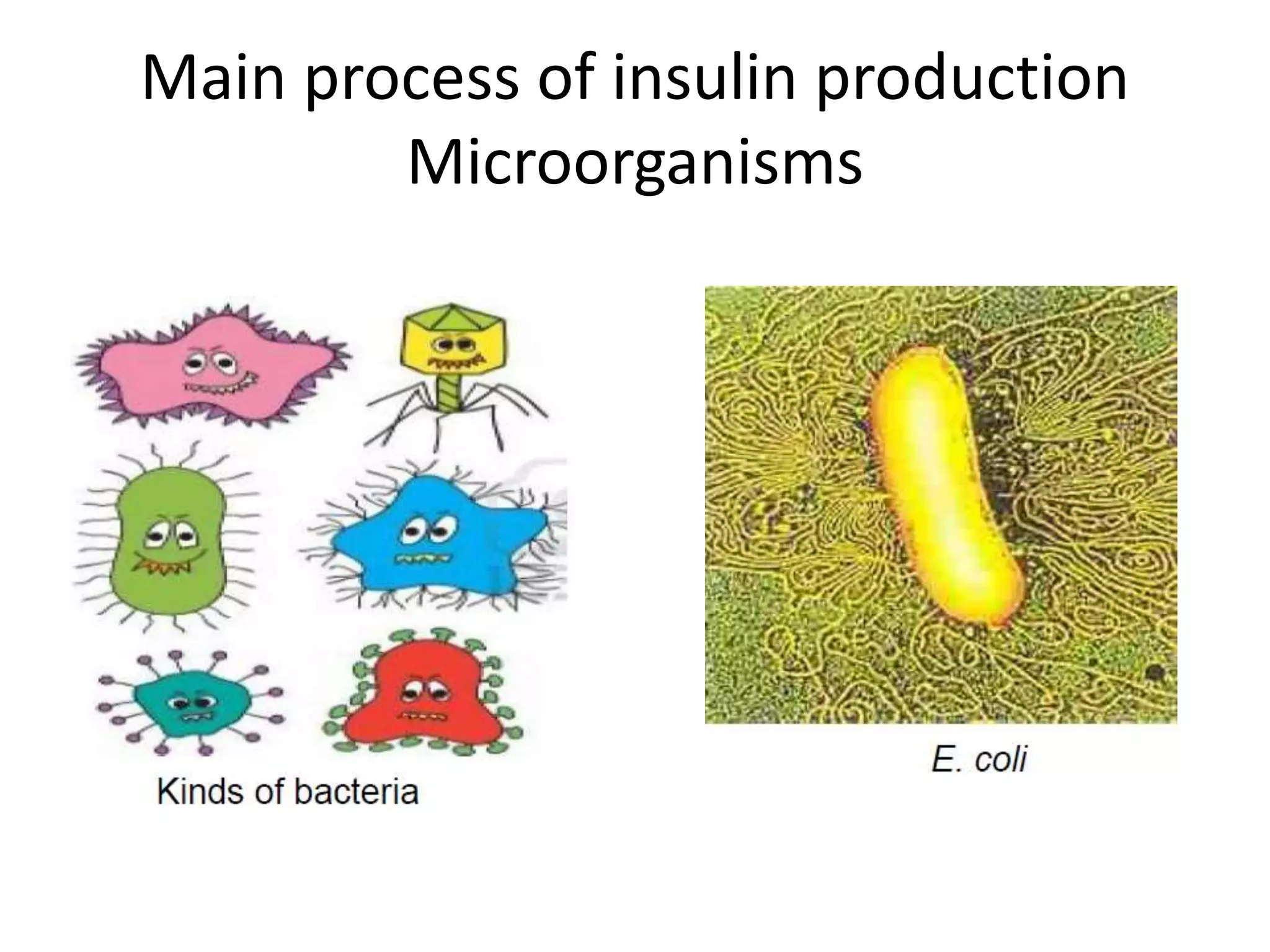
Main process of insulin production
Microorganisms
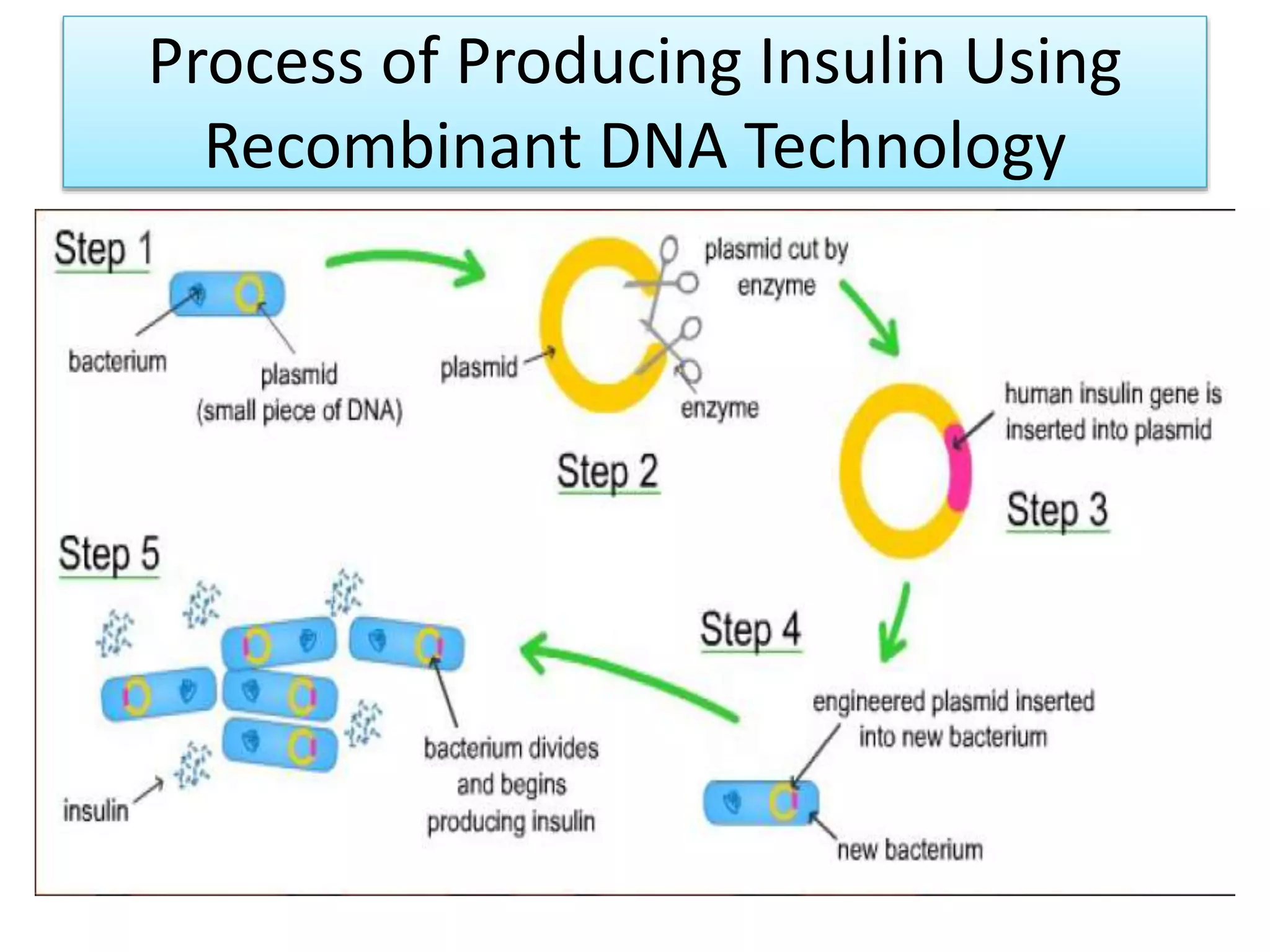
Process of Producing Insulin Using
Recombinant DNA Technology
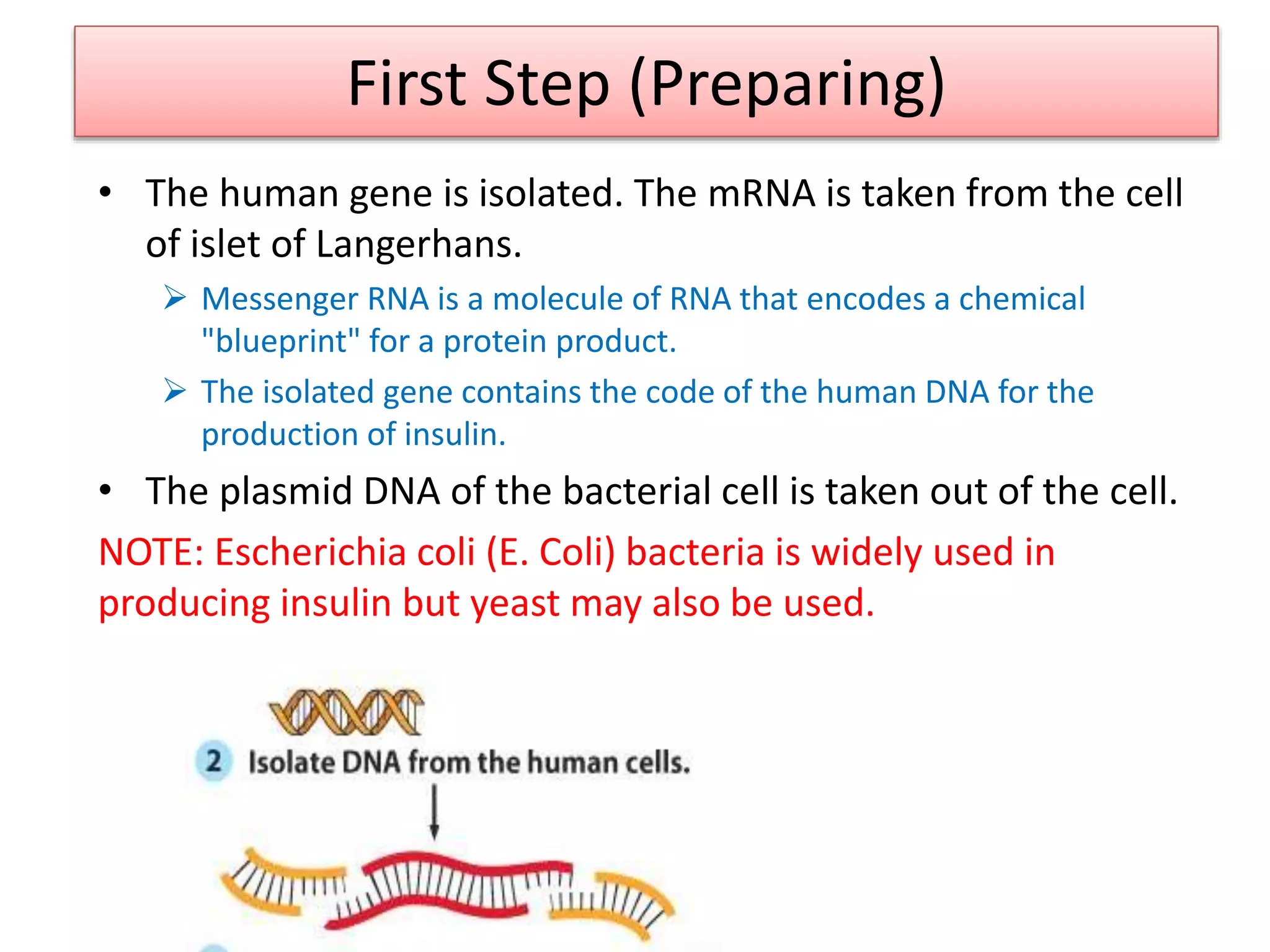
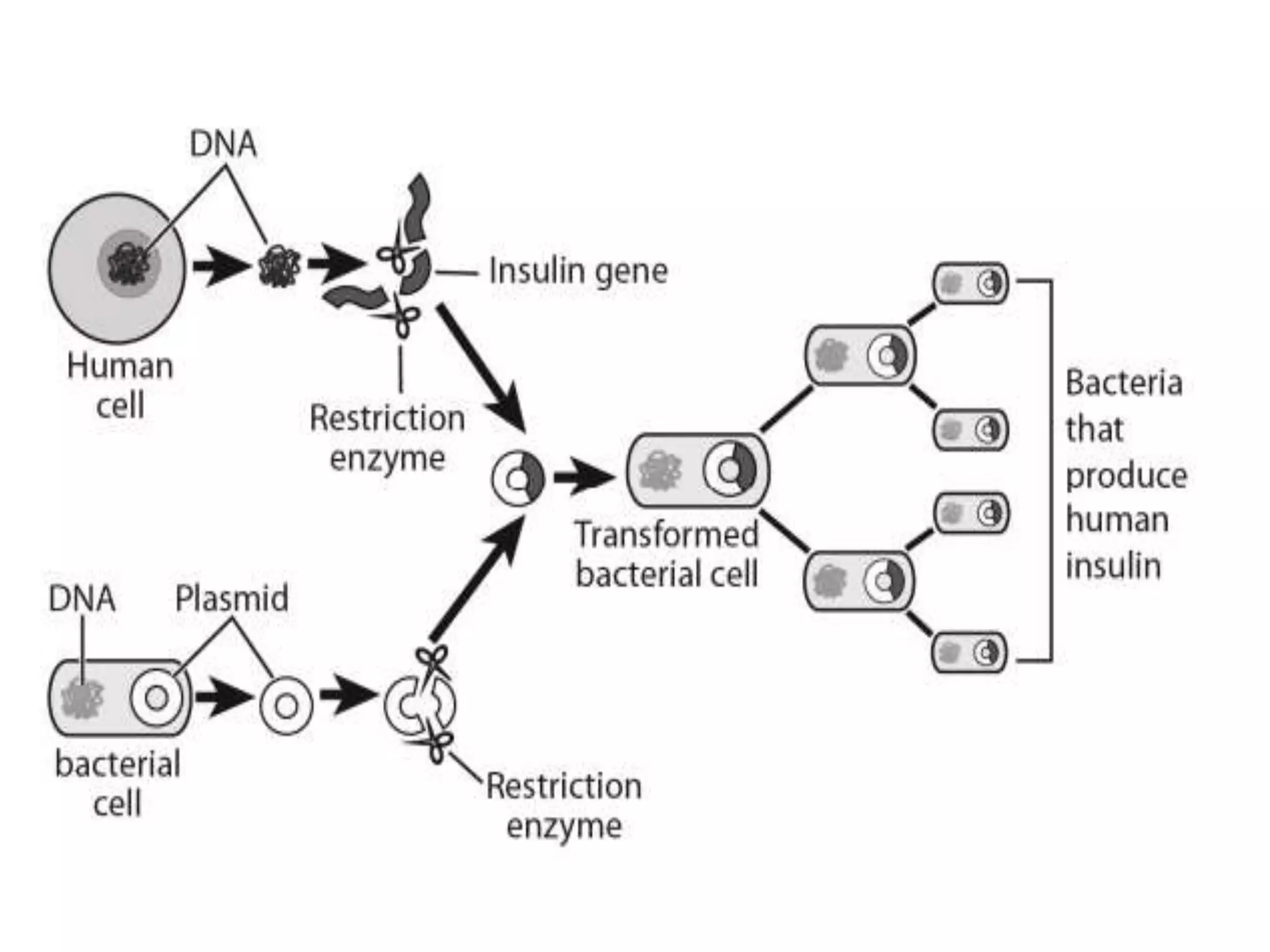
First Step (Preparing)
• The human gene is isolated. The mRNA is taken from the cell
of islet of Langerhans.
 Messenger RNA is a molecule of RNA that encodes a chemical
"blueprint" for a protein product.
 The isolated gene contains the code of the human DNA for the
production of insulin.
• The plasmid DNA of the bacterial cell is taken out of the cell.
NOTE: Escherichia coli (E. Coli) bacteria is widely used in
producing insulin but yeast may also be used.
Second Step (Cutting)
• The plasmid DNA of the bacteria is cut out
producing plasmid ring which is an empty
segment of the DNA.
A Restriction Enzyme is an enzyme that cuts DNA
at specific recognition nucleotide sequences
known as restriction sites.
A segment of DNA known as sticky ends.
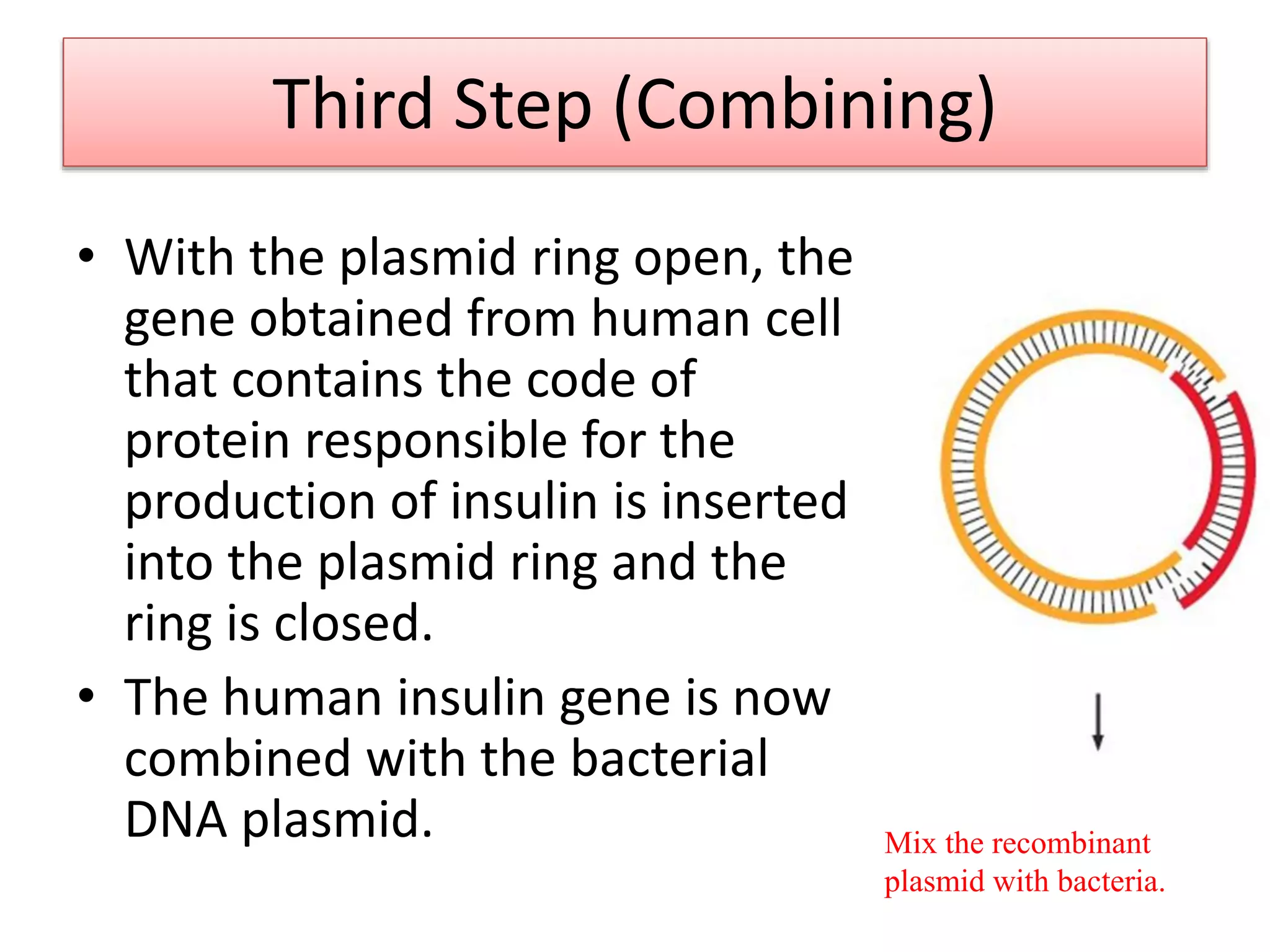
Third Step (Combining)
• With the plasmid ring open, the
gene obtained from human cell
that contains the code of
protein responsible for the
production of insulin is inserted
into the plasmid ring and the
ring is closed.
• The human insulin gene is now
combined with the bacterial
DNA plasmid. Mix the recombinant
plasmid with bacteria.
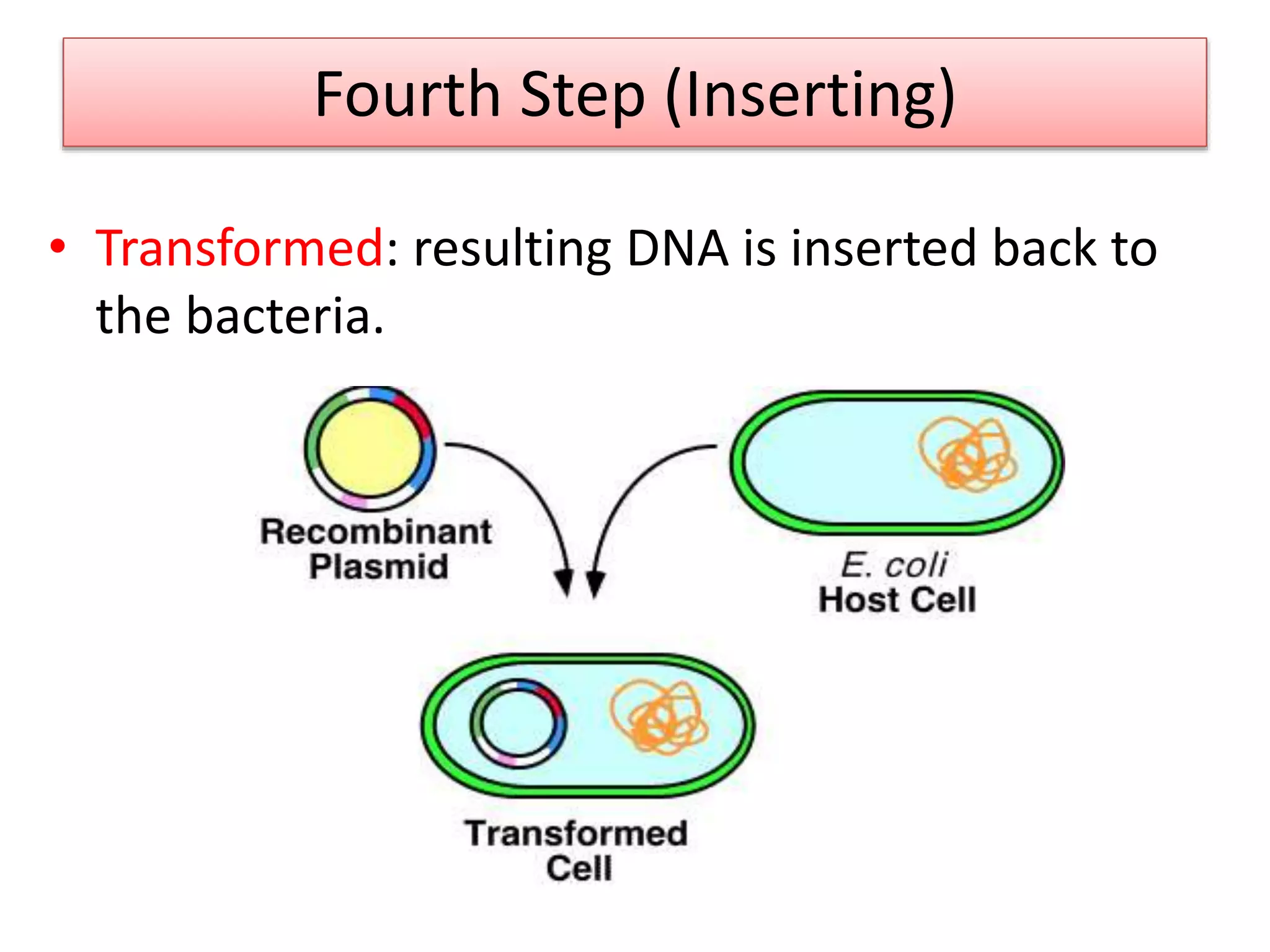
Fourth Step (Inserting)
• Transformed: resulting DNA is inserted back to
the bacteria.
Production
• The cells need nutrients in order to grow,
divide, and live. While they live, the bacterial
cell processes turn on the gene for human
insulin and the insulin is produced in the cell.
When the bacterial cells reproduce by
dividing, the human insulin gene is also
reproduced in the newly created cells.
Human growth hormone
• Growth hormone is one of the
most important hormones in
human body.
• Human growth hormone is
secreted from somatotropic
cells in the anterior pituitary
gland.
• It is responsible for normal
body growth and development
of muscles, bones, lengthening
of height etc. are all regulated
by HGH
Structure of HGH
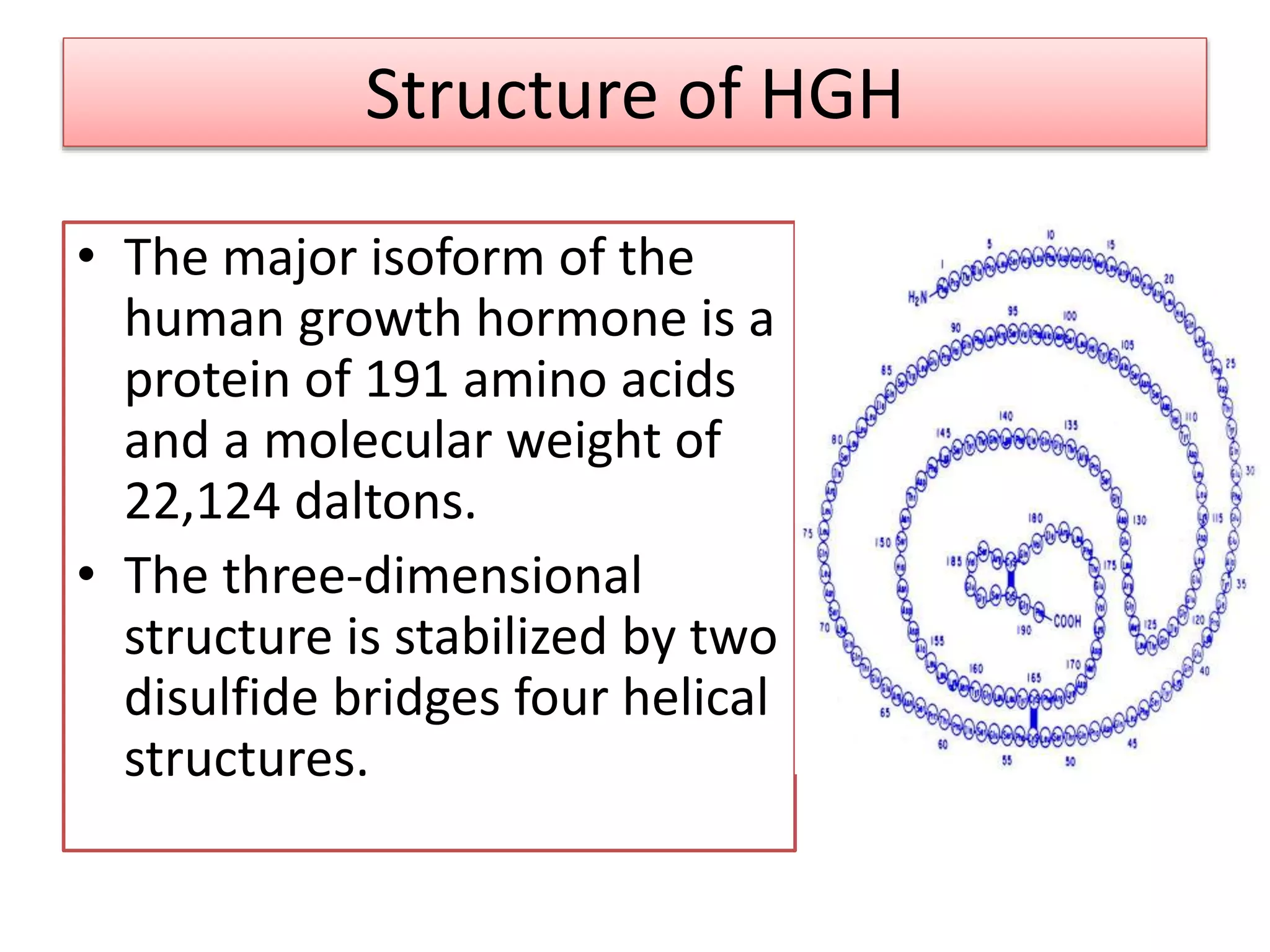
• The major isoform of the
human growth hormone is a
protein of 191 amino acids
and a molecular weight of
22,124 daltons.
• The three-dimensional
structure is stabilized by two
disulfide bridges four helical
structures.
Genetic engineering of HGH production
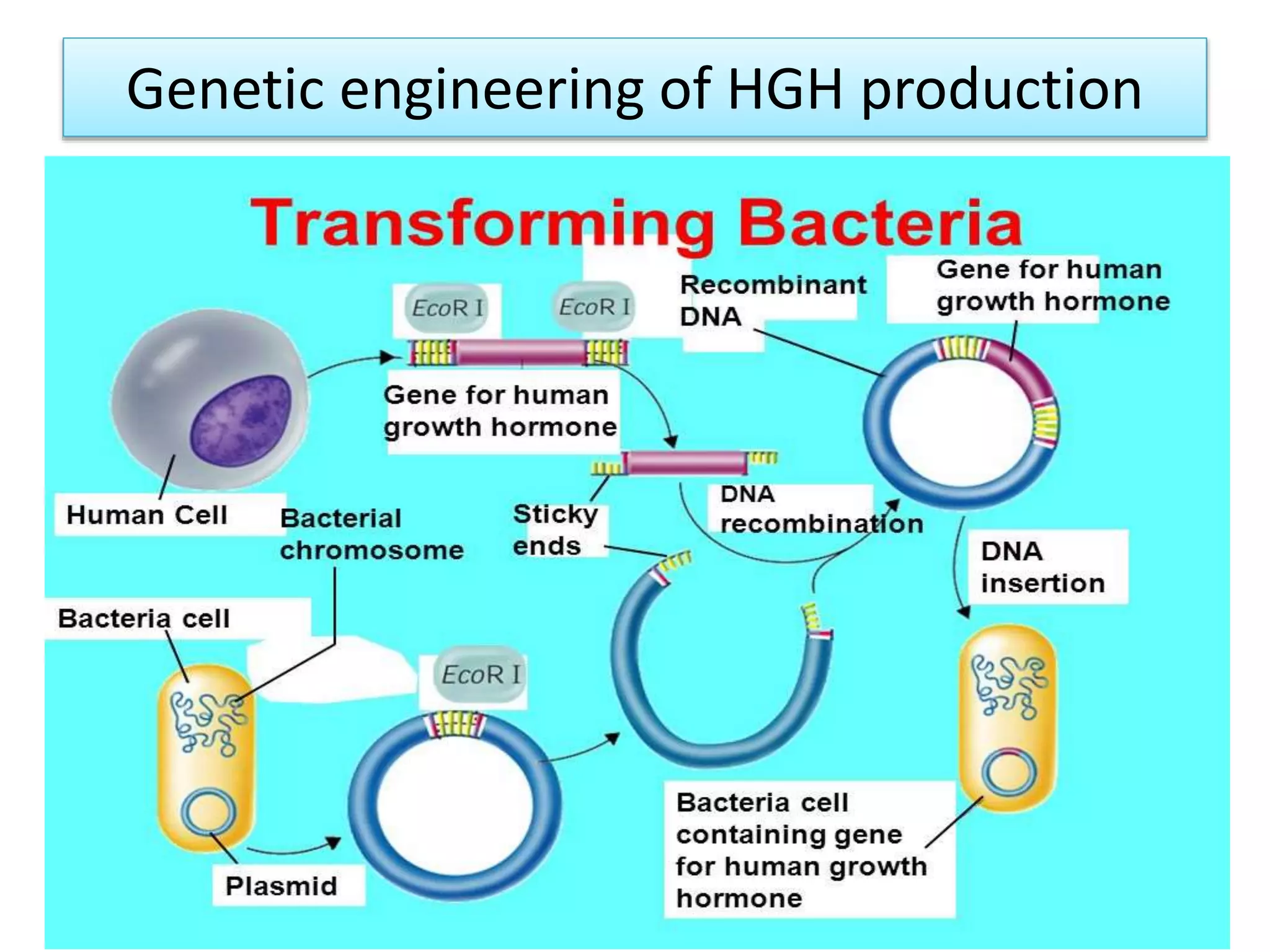
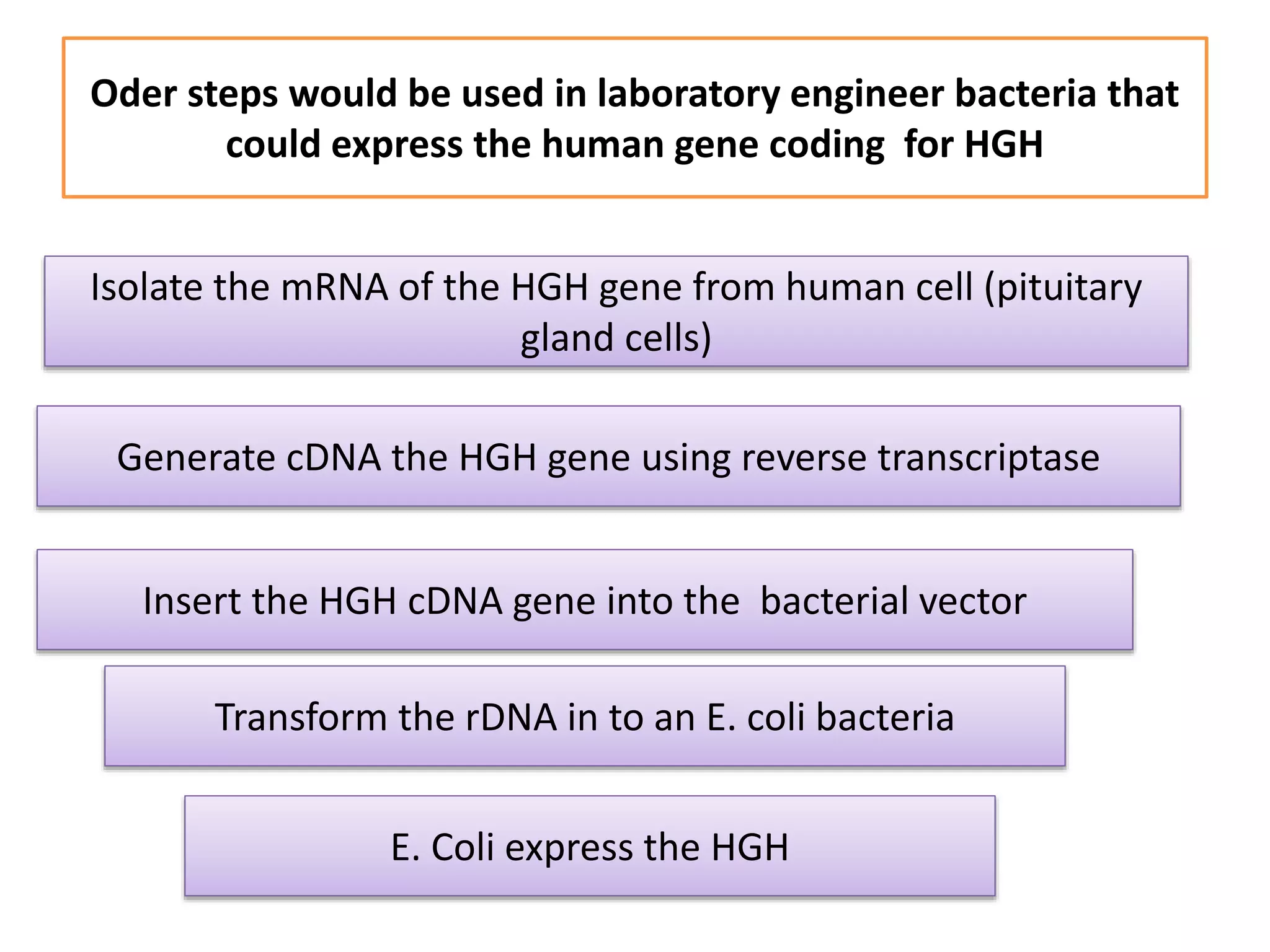
Oder steps would be used in laboratory engineer bacteria that
could express the human gene coding for HGH
Transform the rDNA in to an E. coli bacteria
Isolate the mRNA of the HGH gene from human cell (pituitary
gland cells)
Generate cDNA the HGH gene using reverse transcriptase
Insert the HGH cDNA gene into the bacterial vector
E. Coli express the HGH
• Lastly, scientists isolate the
human growth hormone
from the transformed
bacteria.
• This human growth hormone
is used to make the injection
that is given to the patient.
Simulate the isolation of the
human growth hormone by
removing the paper clips
from the bag and placing
them on the vials in the
diagram on the right
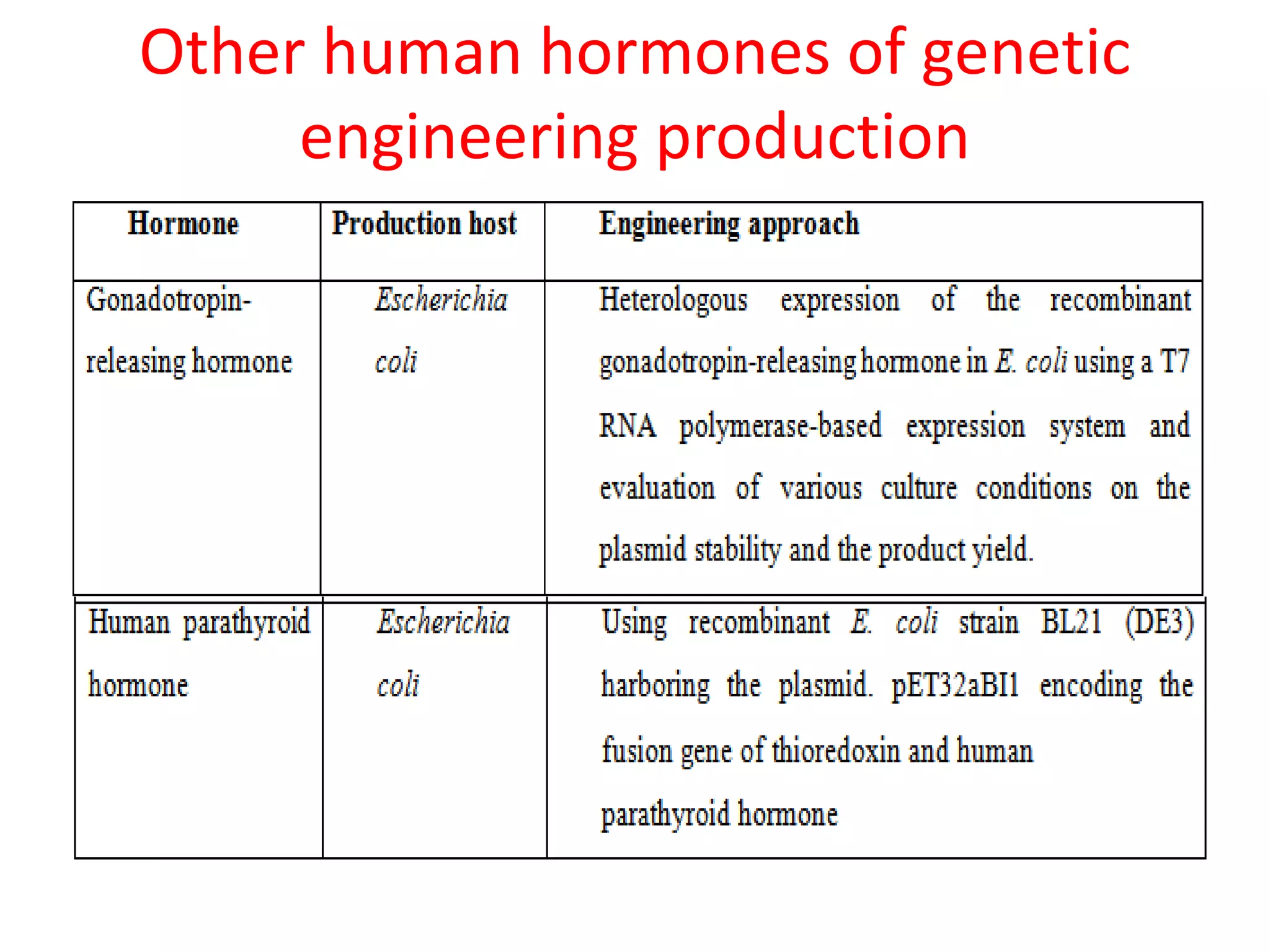
Other human hormones of genetic
engineering production
References
• T.A. BROWN ; GENE CLONING AND DNA ANALYSIS Sixth Edition published
by Blackwell Publishing Ltd, 2010, © 2010, 2006 by T.A. Brown
• http://www.onlinebiologynotes.com/human-insulin-production-by-
genetic-engineering/
• Glick, Bernard R. Molecular biotechnology : principles and
applications of recombinant DNA / Bernard R. Glick, Jack J.
Pasternak, and Cheryl L. Patten. — 4th ed.
• Hmge. Human insulin from second generation genetic engineering,
Novo. Insulin, Grolier Electronic Publishing Inc., 1992; 234-237.
• https://nptel.ac.in/courses/102103013/35
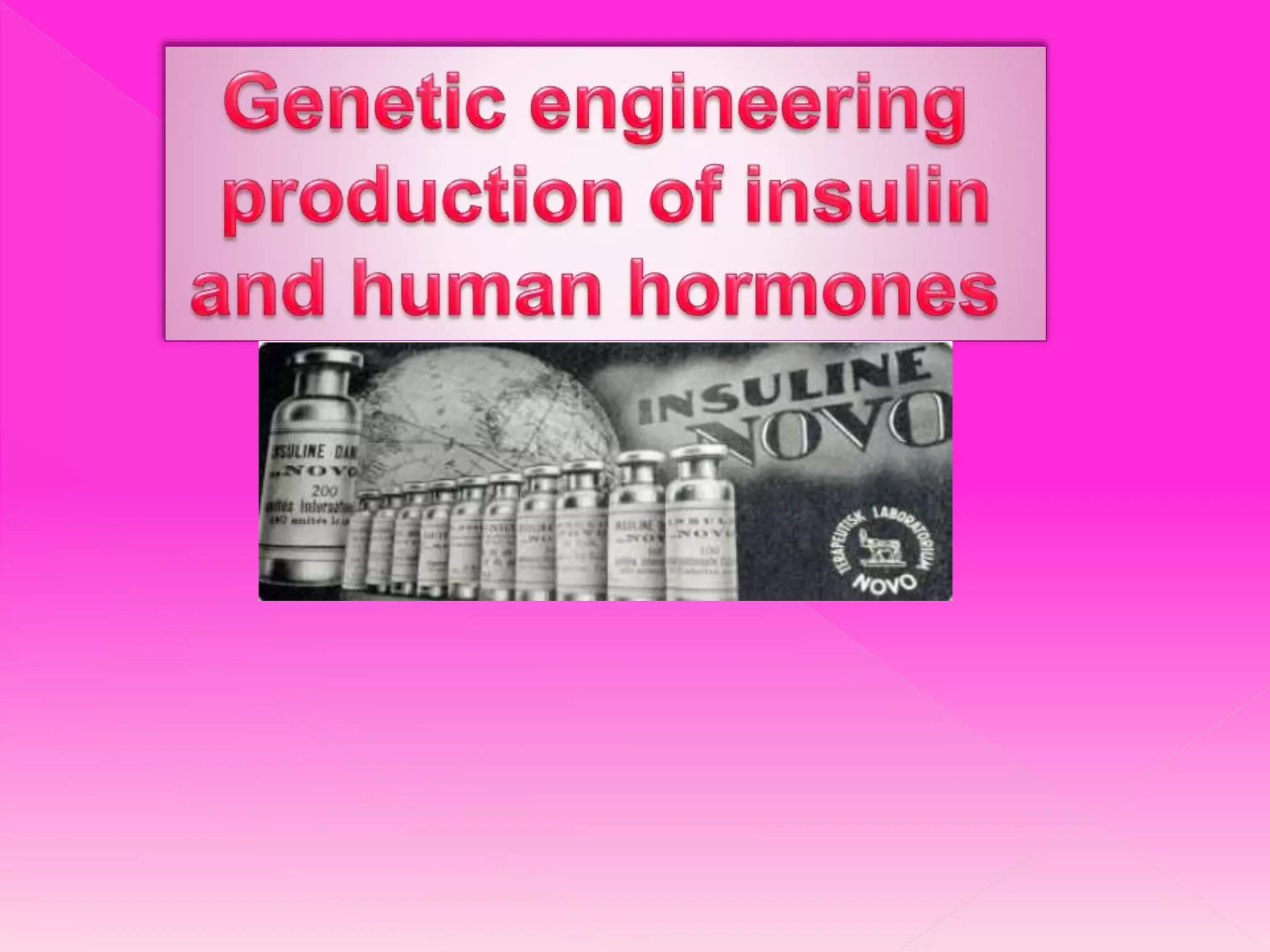
Insulin production by genetic engineering

Insulin production by genetic engineering

  • 2.
    HAWASSA UNIVERSITY 12/19/2018 2 MSc: clinical laboratory ( special truck diagnosis and public health microbiology) Course : microbial genetics Lecturer : Dr. P. VIJAYALAKSHMI by : Abdikhaliq Hussein Ali
  • 3.
    Learning Objectives At theend of this module, participants will be able to: • Understand Definition, Function, Importance, History, of insulin • Describe Insulin production using rDNA Technology • Understand Definition, Function, Importance, History, of human growth hormone • Describe HGH production using rDNA Technology • Describe the genetic engineering of other human hormane production
  • 4.
    Outline  Introduction  Structureand function of insulin  Genetic engineering of insulin  Structure and function of HGH  Genetic engineering of HGH  Genetic engineering of human hormones.
  • 5.
    Introduction • the earliestuses of biotechnology in pharmaceutical manufacturing is the use of recombinant DNA technology to modify Escherichia coli bacteria to produce human insulin, which was performed at Genentech in 1978 • Insulin is a hormone produced by β-cells of islets of Langerhans of pancreas. It was discovered by sir Edward Sharpey Schafer (1916) while studying Islets of Langerhans • People who do not produce the necessary amount of insulin have diabetes.
  • 6.
  • 7.
    Structure of insulin •Chemically, insulin is small and simple protein consist of 51 amino acids, 30 construct polypeptide chain B and 21 amino acids construct polypeptide chain A and both chains linked by disulfide bond
  • 8.
    Genetic engineering forinsulin production Microorganisms
  • 9.
    Main process ofinsulin production Microorganisms
  • 10.
    Process of ProducingInsulin Using Recombinant DNA Technology
  • 11.
    First Step (Preparing) •The human gene is isolated. The mRNA is taken from the cell of islet of Langerhans.  Messenger RNA is a molecule of RNA that encodes a chemical "blueprint" for a protein product.  The isolated gene contains the code of the human DNA for the production of insulin. • The plasmid DNA of the bacterial cell is taken out of the cell. NOTE: Escherichia coli (E. Coli) bacteria is widely used in producing insulin but yeast may also be used.
  • 12.
    Second Step (Cutting) •The plasmid DNA of the bacteria is cut out producing plasmid ring which is an empty segment of the DNA. A Restriction Enzyme is an enzyme that cuts DNA at specific recognition nucleotide sequences known as restriction sites. A segment of DNA known as sticky ends.
  • 13.
    Third Step (Combining) •With the plasmid ring open, the gene obtained from human cell that contains the code of protein responsible for the production of insulin is inserted into the plasmid ring and the ring is closed. • The human insulin gene is now combined with the bacterial DNA plasmid. Mix the recombinant plasmid with bacteria.
  • 14.
    Fourth Step (Inserting) •Transformed: resulting DNA is inserted back to the bacteria.
  • 15.
    Production • The cellsneed nutrients in order to grow, divide, and live. While they live, the bacterial cell processes turn on the gene for human insulin and the insulin is produced in the cell. When the bacterial cells reproduce by dividing, the human insulin gene is also reproduced in the newly created cells.
  • 17.
    Human growth hormone •Growth hormone is one of the most important hormones in human body. • Human growth hormone is secreted from somatotropic cells in the anterior pituitary gland. • It is responsible for normal body growth and development of muscles, bones, lengthening of height etc. are all regulated by HGH
  • 18.
    Structure of HGH •The major isoform of the human growth hormone is a protein of 191 amino acids and a molecular weight of 22,124 daltons. • The three-dimensional structure is stabilized by two disulfide bridges four helical structures.
  • 19.
    Genetic engineering ofHGH production
  • 20.
    Oder steps wouldbe used in laboratory engineer bacteria that could express the human gene coding for HGH Transform the rDNA in to an E. coli bacteria Isolate the mRNA of the HGH gene from human cell (pituitary gland cells) Generate cDNA the HGH gene using reverse transcriptase Insert the HGH cDNA gene into the bacterial vector E. Coli express the HGH
  • 21.
    • Lastly, scientistsisolate the human growth hormone from the transformed bacteria. • This human growth hormone is used to make the injection that is given to the patient. Simulate the isolation of the human growth hormone by removing the paper clips from the bag and placing them on the vials in the diagram on the right
  • 22.
    Other human hormonesof genetic engineering production
  • 23.
    References • T.A. BROWN; GENE CLONING AND DNA ANALYSIS Sixth Edition published by Blackwell Publishing Ltd, 2010, © 2010, 2006 by T.A. Brown • http://www.onlinebiologynotes.com/human-insulin-production-by- genetic-engineering/ • Glick, Bernard R. Molecular biotechnology : principles and applications of recombinant DNA / Bernard R. Glick, Jack J. Pasternak, and Cheryl L. Patten. — 4th ed. • Hmge. Human insulin from second generation genetic engineering, Novo. Insulin, Grolier Electronic Publishing Inc., 1992; 234-237. • https://nptel.ac.in/courses/102103013/35