Introduction to Pathology Chapter 1 Heather Johnson, A.S., R.T. (R)
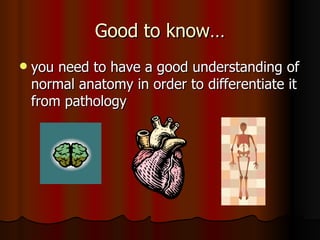
Good to know… you need to have a good understanding of normal anatomy in order to differentiate it from pathology
remember that medical terminology class way back in first semester?
Why take a pathology class? “We’re not supposed to read the x rays!” A basic understanding of pathology helps you do your job better.
Why take a pathology class? better care for your patient – more careful positioning, alternative positioning, care to protect immunocompromised patient, protect yourself, more understanding change in routine projections to make a subtle pathology stand out change in technique
Disease Pathology  is defined as: the study of disease that can cause abnormalities in body structure or function can be hereditary can be the result of previous injury, infection, vascular or metabolic abnormality presents as signs or symptoms
iatrogenic  – pathology caused by a physician and their treatment nosocomial infection  – hospital-acquired community acquired infection  – acquired outside of a health care facility idiopathic  – cause is unknown
Inflammation swelling body’s response to injury, can be anywhere in / on the body, but is often localized
process of inflammation: increased blood flow and vascular permeability (capillaries allow for more permeation of exudate) white blood cells migrate to injured tissue injured (dead) cells are eaten (phagocytosis)…yuk proliferation of normal parenchymal cells and granulation (scar) tissue
some tissues cannot heal by regeneration – heart, damaged area replaced by scar some partially heal, partially scar – cirrhosis of liver, mix of regenerated cells and scar tissue
5 signs of inflammation rubor (redness) calor (heat) tumor (swelling) dolor (pain) loss of function
Edema accumulation of fluid in tissue or body cavities in abnormal amounts or for a prolonged amount of time can be localized (inflammatory reaction) or generalized (subcutaneous accumulation throughout the body)
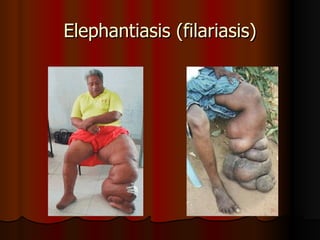
localized edema area of inury, area of blocked lymphatic drainage filariasis – parasitic worm causing lymphatic obstruction
Elephantiasis (filariasis)
generalized edema fluid accumulation over entire body or regions CHF, cirrhosis of the liver, renal disease ambulatory patients – accumulates in distal lower extremities sedentary patients – accumulates in back and lungs
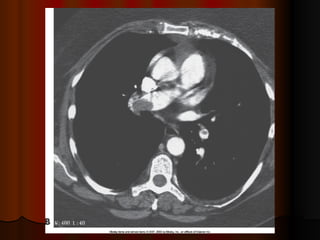
ischemia interference of an organ or tissue’s blood supply caused by narrowing of arterial vessels, most often from atherosclerosis, thrombus/embolus; less often external force (post-traumatic swelling, unintentional mechanism) less dangerous when occlusion is slow-growing and in a healthy patient more dangerous when it occurs rapidly, or happens in patients with anemia incidence increases after a patient has surgery
 
infarct localized necrosis (death) of tissue or an organ due to venous or arterial ischemia most common form are myocardial and pulmonary can also lead to gangrene
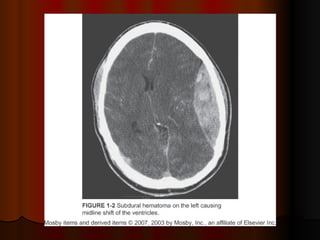
hemorrhage rupture of a larger artery or vein may be caused by trauma, atherosclerosis, or erosion of a vessel wall (cancer) accumulations of blood trapped within the body is called a  hematoma ecchymosis  – subcutaneous hematoma (bruise)
 
facts: a patient can lose up to 20% of their total blood supply with little clinical significance urgency of hemorrhage depends on location in the body
alterations in cell growth atrophy - the reduction in size or number of cells in organ or tissue; results in decreased function; disuse or pathologic hypertrophy  – increase in  size   of cells due to increased use; ex. muscles hyperplasia  – increase  number  of cells; ex. granulation tissue dysplasia  – loss of cell uniformity due to irritation (premalignant)
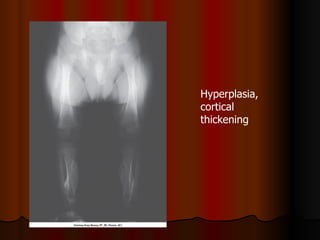
Hyperplasia, cortical thickening
neoplasms / oncology neoplasia  – abnormal growth of cells (tumors) benign tumors  – resemble tissue of origin, do not spread to other areas (do not metastasize); not as dangerous , but can still cause complications malignant tumors  (cancer) – invade and destroy tissue, spread (metastasize)
carcinoma  – cancer of epithelial cells (mucous linings in body) sarcoma  – cancer of bone, muscle, and cartilage, highly malignant metastases occur via the lymphatic or hematogenous systems cancer grading  – cell’s aggressiveness  cancer staging  – extent of entire body involvement
hereditary diseases abnormal DNA passed from one generation to another mutations may occur by enzyme mutation, radiation, chemicals, or viruses
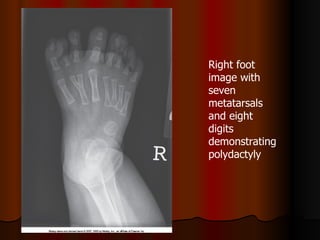
Right foot image with seven metatarsals and eight digits demonstrating polydactyly
immunity disorders most immunity is acquired by exposure to antigens or artificial immunizations vaccine  – low dose of dead or deactivated viruses that stimulate the body to produce antibodies active immunity  – when a body forms antibodies due to exposure passive immunity  – a dose of preformed antibodies from an animal; acts quickly, but doesn’t stay in body
AIDS / HIV acquired immunodeficiency syndrome most commonly affected homosexual men, IV drug users, but now rising in incidence among heterosexual partners, and third world countries once epidemic amongst hemophiliacs primarily affects the lungs, GI tract, and CNS
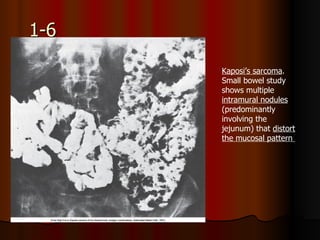
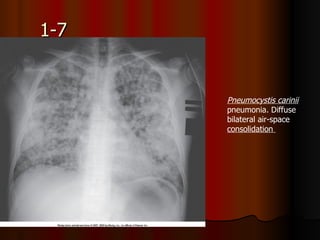
radiographically: pneumocystis carinii – hazy infiltrates in lungs, consolidation resembling pneumonia Kaposi’s sarcoma – nodules in small bowel that invade the lumen
1-6 Kaposi’s sarcoma . Small bowel study shows multiple  intramural nodules  (predominantly involving the jejunum) that  distort the mucosal pattern
1-7 Pneumocystis carinii  pneumonia. Diffuse bilateral air-space  consolidation
treatment: incurable symptom management lifestyle changes – avoid stress, alcohol, drugs, infections

Introduction To Pathology

  • 1.
    Introduction to PathologyChapter 1 Heather Johnson, A.S., R.T. (R)
  • 2.
    Good to know…you need to have a good understanding of normal anatomy in order to differentiate it from pathology
  • 3.
    remember that medicalterminology class way back in first semester?
  • 4.
    Why take apathology class? “We’re not supposed to read the x rays!” A basic understanding of pathology helps you do your job better.
  • 5.
    Why take apathology class? better care for your patient – more careful positioning, alternative positioning, care to protect immunocompromised patient, protect yourself, more understanding change in routine projections to make a subtle pathology stand out change in technique
  • 6.
    Disease Pathology is defined as: the study of disease that can cause abnormalities in body structure or function can be hereditary can be the result of previous injury, infection, vascular or metabolic abnormality presents as signs or symptoms
  • 7.
    iatrogenic –pathology caused by a physician and their treatment nosocomial infection – hospital-acquired community acquired infection – acquired outside of a health care facility idiopathic – cause is unknown
  • 8.
    Inflammation swelling body’sresponse to injury, can be anywhere in / on the body, but is often localized
  • 9.
    process of inflammation:increased blood flow and vascular permeability (capillaries allow for more permeation of exudate) white blood cells migrate to injured tissue injured (dead) cells are eaten (phagocytosis)…yuk proliferation of normal parenchymal cells and granulation (scar) tissue
  • 10.
    some tissues cannotheal by regeneration – heart, damaged area replaced by scar some partially heal, partially scar – cirrhosis of liver, mix of regenerated cells and scar tissue
  • 11.
    5 signs ofinflammation rubor (redness) calor (heat) tumor (swelling) dolor (pain) loss of function
  • 12.
    Edema accumulation offluid in tissue or body cavities in abnormal amounts or for a prolonged amount of time can be localized (inflammatory reaction) or generalized (subcutaneous accumulation throughout the body)
  • 13.
    localized edema areaof inury, area of blocked lymphatic drainage filariasis – parasitic worm causing lymphatic obstruction
  • 14.
  • 15.
    generalized edema fluidaccumulation over entire body or regions CHF, cirrhosis of the liver, renal disease ambulatory patients – accumulates in distal lower extremities sedentary patients – accumulates in back and lungs
  • 16.
    ischemia interference ofan organ or tissue’s blood supply caused by narrowing of arterial vessels, most often from atherosclerosis, thrombus/embolus; less often external force (post-traumatic swelling, unintentional mechanism) less dangerous when occlusion is slow-growing and in a healthy patient more dangerous when it occurs rapidly, or happens in patients with anemia incidence increases after a patient has surgery
  • 17.
  • 18.
    infarct localized necrosis(death) of tissue or an organ due to venous or arterial ischemia most common form are myocardial and pulmonary can also lead to gangrene
  • 19.
    hemorrhage rupture ofa larger artery or vein may be caused by trauma, atherosclerosis, or erosion of a vessel wall (cancer) accumulations of blood trapped within the body is called a hematoma ecchymosis – subcutaneous hematoma (bruise)
  • 20.
  • 21.
    facts: a patientcan lose up to 20% of their total blood supply with little clinical significance urgency of hemorrhage depends on location in the body
  • 22.
    alterations in cellgrowth atrophy - the reduction in size or number of cells in organ or tissue; results in decreased function; disuse or pathologic hypertrophy – increase in size of cells due to increased use; ex. muscles hyperplasia – increase number of cells; ex. granulation tissue dysplasia – loss of cell uniformity due to irritation (premalignant)
  • 23.
  • 24.
    neoplasms / oncologyneoplasia – abnormal growth of cells (tumors) benign tumors – resemble tissue of origin, do not spread to other areas (do not metastasize); not as dangerous , but can still cause complications malignant tumors (cancer) – invade and destroy tissue, spread (metastasize)
  • 25.
    carcinoma –cancer of epithelial cells (mucous linings in body) sarcoma – cancer of bone, muscle, and cartilage, highly malignant metastases occur via the lymphatic or hematogenous systems cancer grading – cell’s aggressiveness cancer staging – extent of entire body involvement
  • 26.
    hereditary diseases abnormalDNA passed from one generation to another mutations may occur by enzyme mutation, radiation, chemicals, or viruses
  • 27.
    Right foot imagewith seven metatarsals and eight digits demonstrating polydactyly
  • 28.
    immunity disorders mostimmunity is acquired by exposure to antigens or artificial immunizations vaccine – low dose of dead or deactivated viruses that stimulate the body to produce antibodies active immunity – when a body forms antibodies due to exposure passive immunity – a dose of preformed antibodies from an animal; acts quickly, but doesn’t stay in body
  • 29.
    AIDS / HIVacquired immunodeficiency syndrome most commonly affected homosexual men, IV drug users, but now rising in incidence among heterosexual partners, and third world countries once epidemic amongst hemophiliacs primarily affects the lungs, GI tract, and CNS
  • 30.
    radiographically: pneumocystis carinii– hazy infiltrates in lungs, consolidation resembling pneumonia Kaposi’s sarcoma – nodules in small bowel that invade the lumen
  • 31.
    1-6 Kaposi’s sarcoma. Small bowel study shows multiple intramural nodules (predominantly involving the jejunum) that distort the mucosal pattern
  • 32.
    1-7 Pneumocystis carinii pneumonia. Diffuse bilateral air-space consolidation
  • 33.
    treatment: incurable symptommanagement lifestyle changes – avoid stress, alcohol, drugs, infections