Writing a Design
Statement
Design
Studio:
Senior
Project
What is a DesignStatement?
Your Design statement is a written description of your work that gives your
audience deeper insight into it.
It may include personal history, the symbolism you give your materials, or the issues
you address;Your statement should include whatever is most important to you and
your work.
What is a DesignStatement?
1. A general introduction to your design project.
2. It should open with the work’s basic ideas in an overview of two or three
sentences or a short paragraph.
3. The second paragraph should go into detail about how these issues or ideas are
presented in the work.
4. The final paragraph should recapitulate the most important points in the
statement.
You can
include the
following
points:
Sources and inspiration for your design.
Work you have been influenced by or how your work
relates to other designers’ work. Other influences.
How a certain technique is important to the work.
Your philosophy of design or of the work’s origin.
You can
include the
following
points:
Why you have created the work and its history.
Your overall vision.
What you expect from your audience and how they
will react.
Where your work fits in with current contemporary
design.
How your work fits in with the history of design
practice.
What an
Design
Statement is
NOT:
 Pomposity, writing a statement about your role in
the world.
 Empty expressions and clichés about your work and
views.
 Technical and full of jargon.
 Long dissertations or explanations.
 Lectures on the materials and techniques you have
employed.
 Poems or prosy writing.
HowShould I
Write It?
 Emotional tone
 Theoretical
 Academic
 Analytic
 Humorous
 Antagonistic
 Political
 Professional
Ask yourself
 “What are you trying to say in the project?”
 “What influences my project?”
 “How do my methods of working (techniques, style, formal
decisions) support the content of my project?”
 “What are specific examples of this in my project”
 “Does this statement conjure up any images?”
Questions
What inspired the project?
Talk about the work from a conceptual, thematic, and/or emotional point of view.
Is there a central or guiding idea?
What are its different elements and how to they affect each other or interact?
What kind of materials or media will you use?Why?
What are the process of development for the work?
How does the work use space and relate to the surrounding?
How does this work fit into the overall flow of your development as an designer?
Where does it fit into or relate to your awareness of other contemporary work?
Getting
Started
WritingAn
Design
Statement
Describe your work: Describe the project that you are
currently working on. Do it quickly. Don't worry about
grammar, jargon, or finding the right word.There is no
format to this, no structure. Just get down on paper
everything that comes to mind about the piece.
Writing the
Design
Statement
 Prepare an outline or diagram of your ideas.
 Write your thesis statement.
 Write the body.
 Write the main points.
 Write the subpoints.
 Elaborate on the subpoints.
 Write the introduction.
 Write the conclusion.
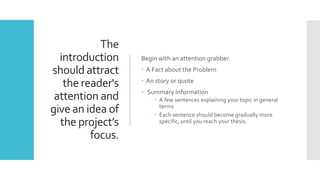
The
introduction
should attract
the reader's
attention and
give an idea of
the project’s
focus.
Begin with an attention grabber.
 A Fact about the Problem
 An story or quote
 Summary Information
 A few sentences explaining your topic in general
terms
 Each sentence should become gradually more
specific, until you reach your thesis.
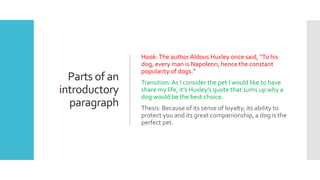
Parts of an
introductory
paragraph
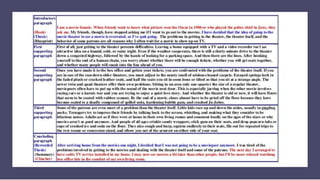
Hook:The author Aldous Huxley once said, “To his
dog, every man is Napoleon; hence the constant
popularity of dogs.”
Transition:As I consider the pet I would like to have
share my life, it’s Huxley’s quote that sums up why a
dog would be the best choice.
Thesis: Because of its sense of loyalty, its ability to
protect you and its great companionship, a dog is the
perfect pet.
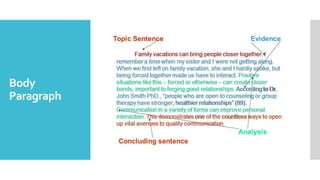
Body
Paragraph
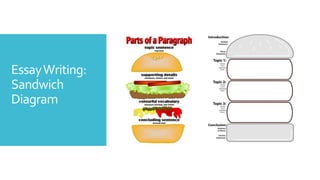
EssayWriting:
Sandwich
Diagram
Finaly
Make it clear and
direct, concise and to
the point.
Timeline
Week 9
Week 10
Week 11
Week 12
Week 13
Week 14
JURY
Final Submission – Sunday by 1:30

Design statement

  • 1.
  • 2.
    What is aDesignStatement? Your Design statement is a written description of your work that gives your audience deeper insight into it. It may include personal history, the symbolism you give your materials, or the issues you address;Your statement should include whatever is most important to you and your work.
  • 3.
    What is aDesignStatement? 1. A general introduction to your design project. 2. It should open with the work’s basic ideas in an overview of two or three sentences or a short paragraph. 3. The second paragraph should go into detail about how these issues or ideas are presented in the work. 4. The final paragraph should recapitulate the most important points in the statement.
  • 4.
    You can include the following points: Sourcesand inspiration for your design. Work you have been influenced by or how your work relates to other designers’ work. Other influences. How a certain technique is important to the work. Your philosophy of design or of the work’s origin.
  • 5.
    You can include the following points: Whyyou have created the work and its history. Your overall vision. What you expect from your audience and how they will react. Where your work fits in with current contemporary design. How your work fits in with the history of design practice.
  • 6.
    What an Design Statement is NOT: Pomposity, writing a statement about your role in the world.  Empty expressions and clichés about your work and views.  Technical and full of jargon.  Long dissertations or explanations.  Lectures on the materials and techniques you have employed.  Poems or prosy writing.
  • 7.
    HowShould I Write It? Emotional tone  Theoretical  Academic  Analytic  Humorous  Antagonistic  Political  Professional
  • 8.
    Ask yourself  “Whatare you trying to say in the project?”  “What influences my project?”  “How do my methods of working (techniques, style, formal decisions) support the content of my project?”  “What are specific examples of this in my project”  “Does this statement conjure up any images?”
  • 9.
    Questions What inspired theproject? Talk about the work from a conceptual, thematic, and/or emotional point of view. Is there a central or guiding idea? What are its different elements and how to they affect each other or interact? What kind of materials or media will you use?Why? What are the process of development for the work? How does the work use space and relate to the surrounding? How does this work fit into the overall flow of your development as an designer? Where does it fit into or relate to your awareness of other contemporary work?
  • 10.
    Getting Started WritingAn Design Statement Describe your work:Describe the project that you are currently working on. Do it quickly. Don't worry about grammar, jargon, or finding the right word.There is no format to this, no structure. Just get down on paper everything that comes to mind about the piece.
  • 11.
    Writing the Design Statement  Preparean outline or diagram of your ideas.  Write your thesis statement.  Write the body.  Write the main points.  Write the subpoints.  Elaborate on the subpoints.  Write the introduction.  Write the conclusion.
  • 12.
    The introduction should attract the reader's attentionand give an idea of the project’s focus. Begin with an attention grabber.  A Fact about the Problem  An story or quote  Summary Information  A few sentences explaining your topic in general terms  Each sentence should become gradually more specific, until you reach your thesis.
  • 13.
    Parts of an introductory paragraph Hook:Theauthor Aldous Huxley once said, “To his dog, every man is Napoleon; hence the constant popularity of dogs.” Transition:As I consider the pet I would like to have share my life, it’s Huxley’s quote that sums up why a dog would be the best choice. Thesis: Because of its sense of loyalty, its ability to protect you and its great companionship, a dog is the perfect pet.
  • 14.
  • 15.
  • 17.
    Finaly Make it clearand direct, concise and to the point.
  • 18.
    Timeline Week 9 Week 10 Week11 Week 12 Week 13 Week 14 JURY Final Submission – Sunday by 1:30