Downstream Processing
Downstream processing, what and why
Downstream processing is any treatment
of culture broth after fermentation to
concentrate and purify products.

2
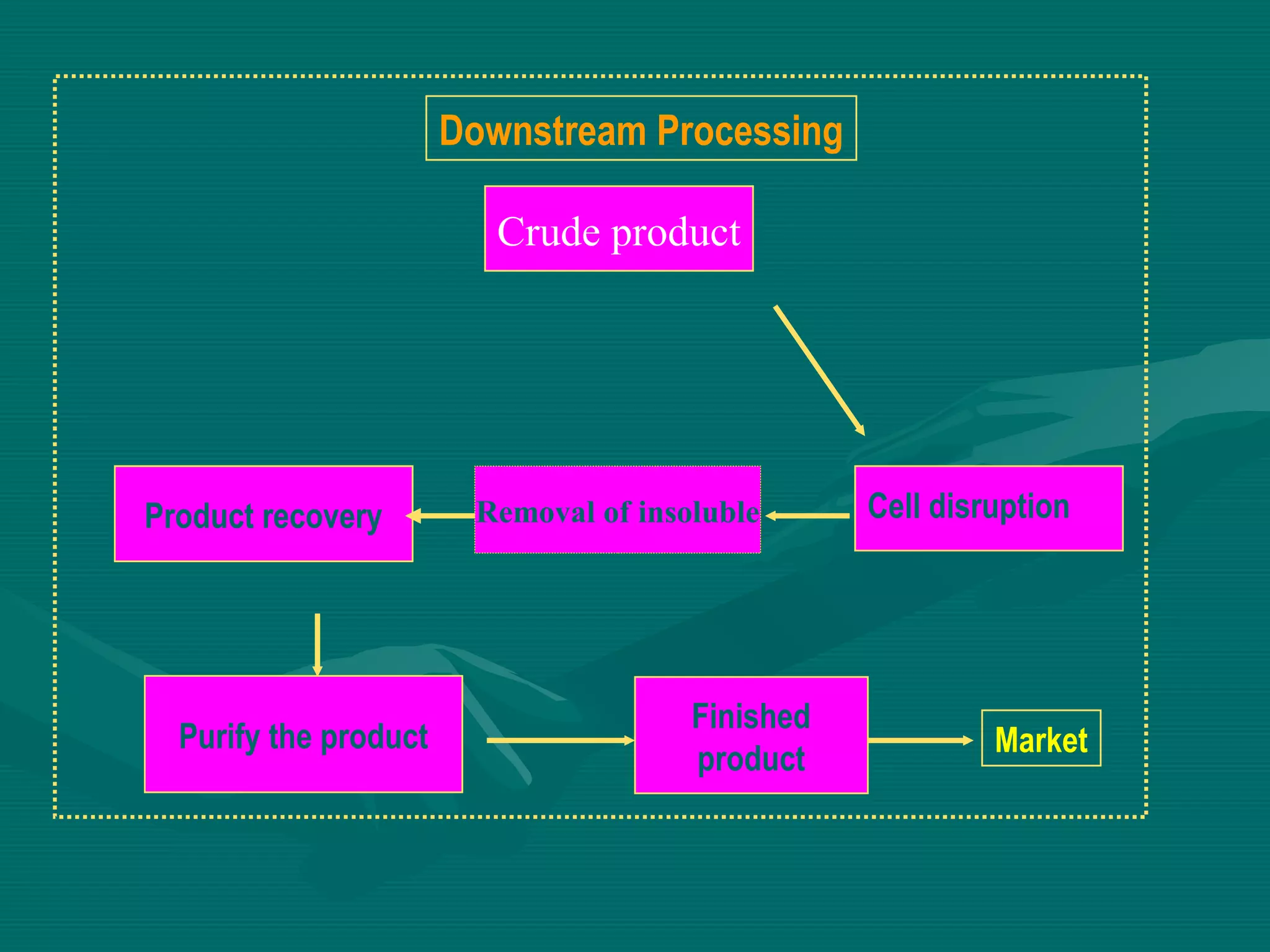
Downstream Processing
Crude product

Product recovery

Purify the product

Removal of insoluble

Finished
product

Cell disruption

Market
Cell disruption
• Some product are intracellular including many
enzymes and proteins required to disrupt the cell
and release these products e.g. Yeast
• Cell disruption can be achieved by both
mechanical and non-mechanical methods.
• Mechanical- sonication and liquid shear
homogenization etc
• Non mechanical- autolysis, osmosis shock etc.
Removal of insoluble's
Separation of cells, cell debris or other
particulate matter from fermentation broth
culture.
Filtration
Separation of particles from liquid by applying
a pressure to the solution to force the solution through
a filter. Filters are materials with pores.
Particles larger than the pore size of the
filter are retained by the filter.
Particles smaller than the pore size of the filter pass
through the filter along with the liquid.
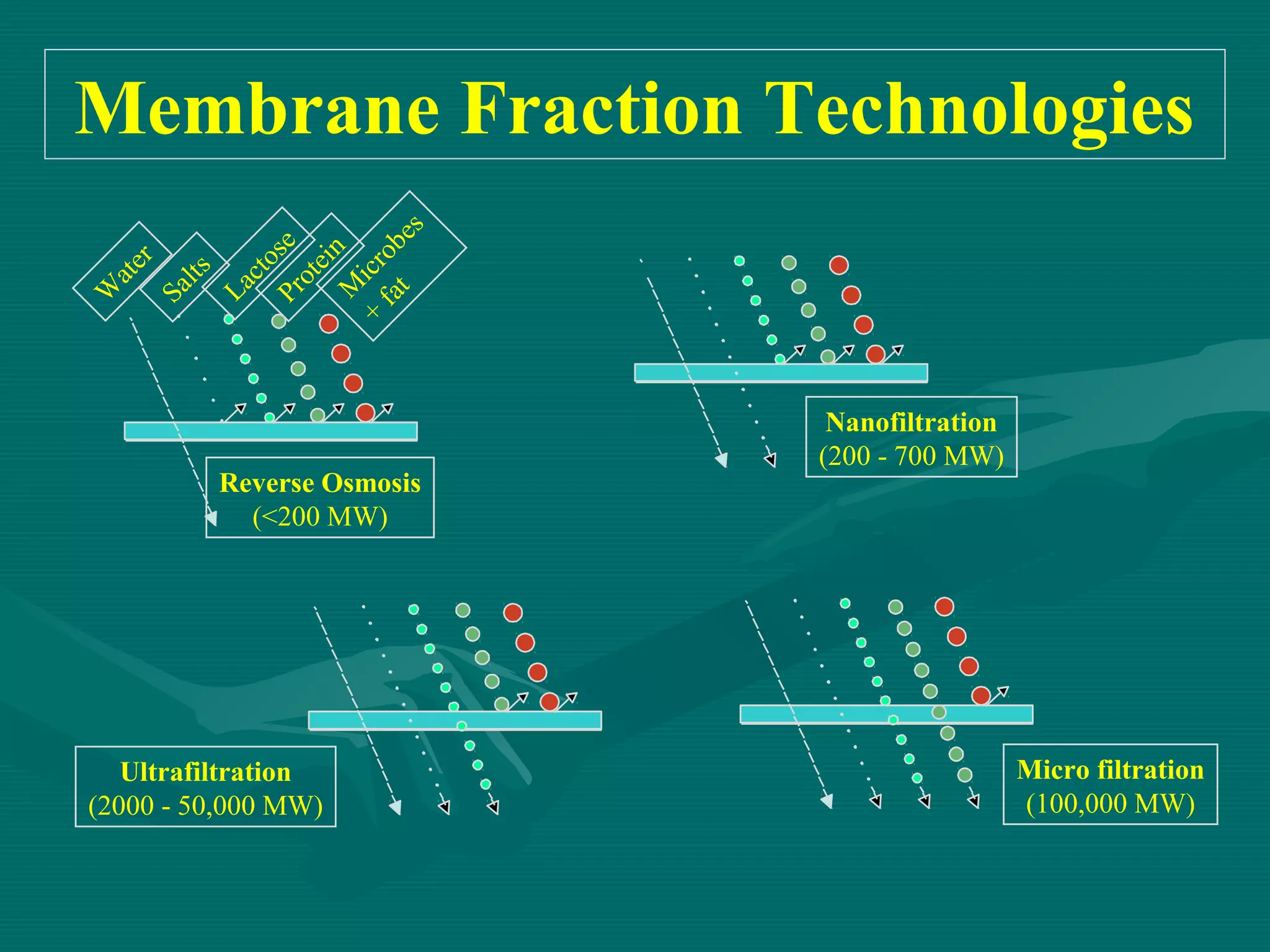
W
at
er
Sa
lts
La
ct
o
Pr se
ot
ei
M n
+ icr
fa ob
t
es

Membrane Fraction Technologies

Reverse Osmosis
(<200 MW)

Ultrafiltration
(2000 - 50,000 MW)

Nanofiltration
(200 - 700 MW)

Micro filtration
(100,000 MW)
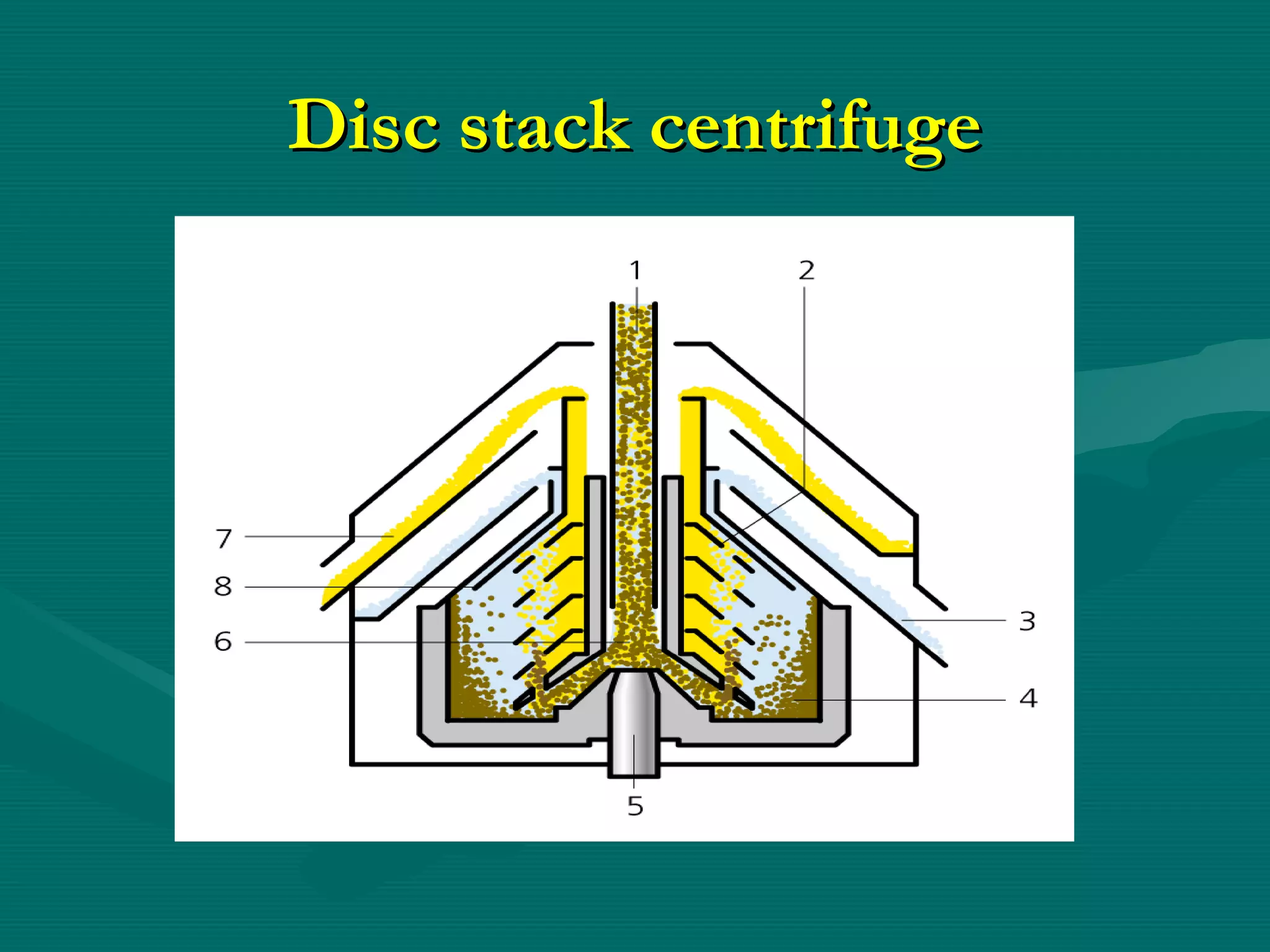
Centrifugation
 Centrifugation used to separate particles as
small as 0.1μm diameter and is also suitable
for some liquid-liquid separations.
 Higher speed centrifuge are required for the
separation of the smaller particles
 Use of the centrifugal force for the separation
of mixtures
Disc stack centrifuge
Coagulation and Flocculation
Coagulation:
Forming semisolid lumps in a liquid.
Flocculation:
Forming woolly cloudlike aggregations.
Product purification
• Removing components with properties similar
to those of the products

Chromatography

• Separates molecules by their chemical and
physical differences
E.g. – adsorption chromatography
•
affinity chromatography
•
ion exchange chromatography etc.
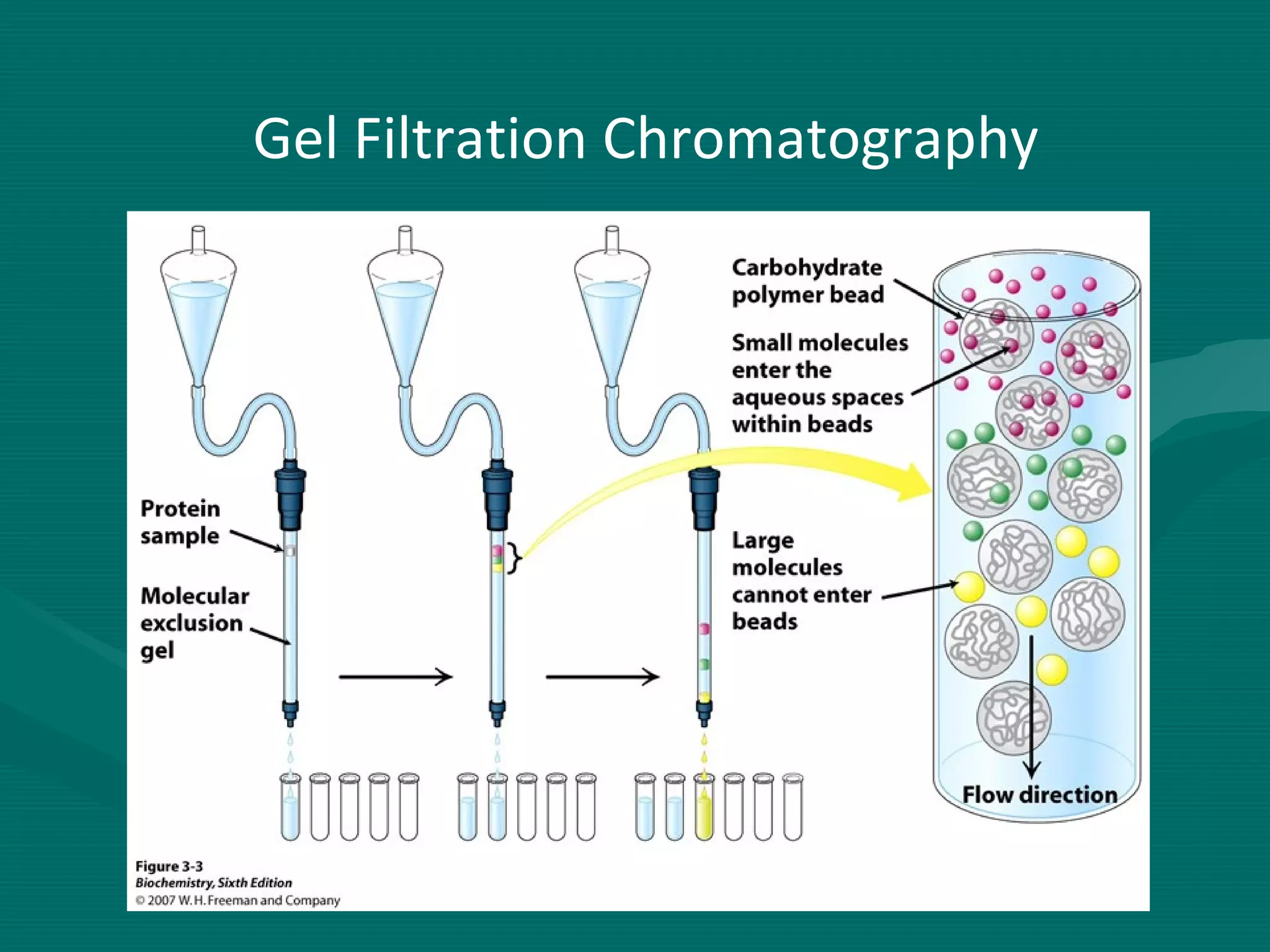
Gel Filtration Chromatography
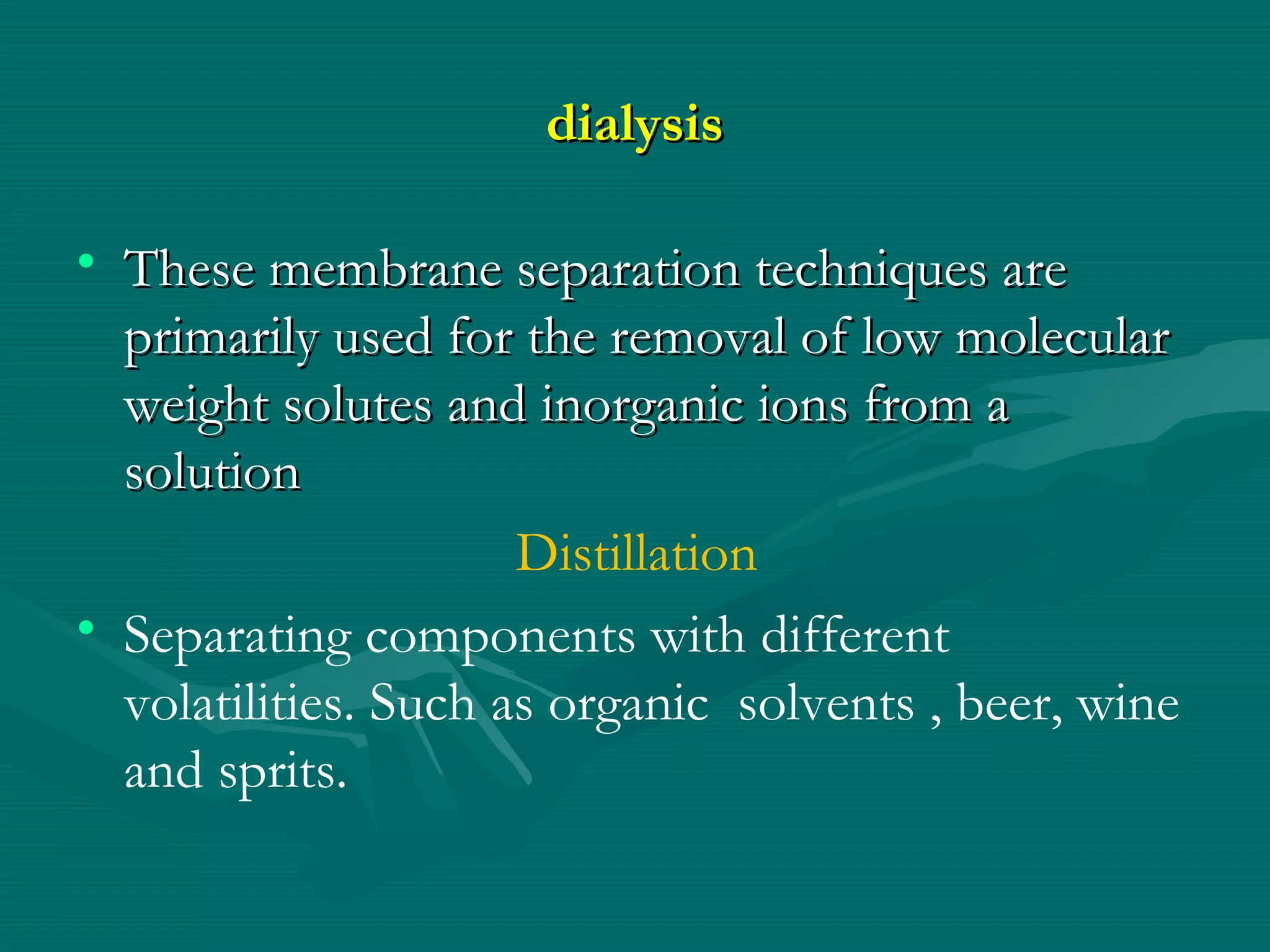
dialysis
• These membrane separation techniques are
primarily used for the removal of low molecular
weight solutes and inorganic ions from a
solution
Distillation
• Separating components with different
volatilities. Such as organic solvents , beer, wine
and sprits.
Product Polishing
 Final processing steps which end with

packaging of the product in a form that is
stable and easily transportable
 Crystallization, concentration and drying

are typical unit operations
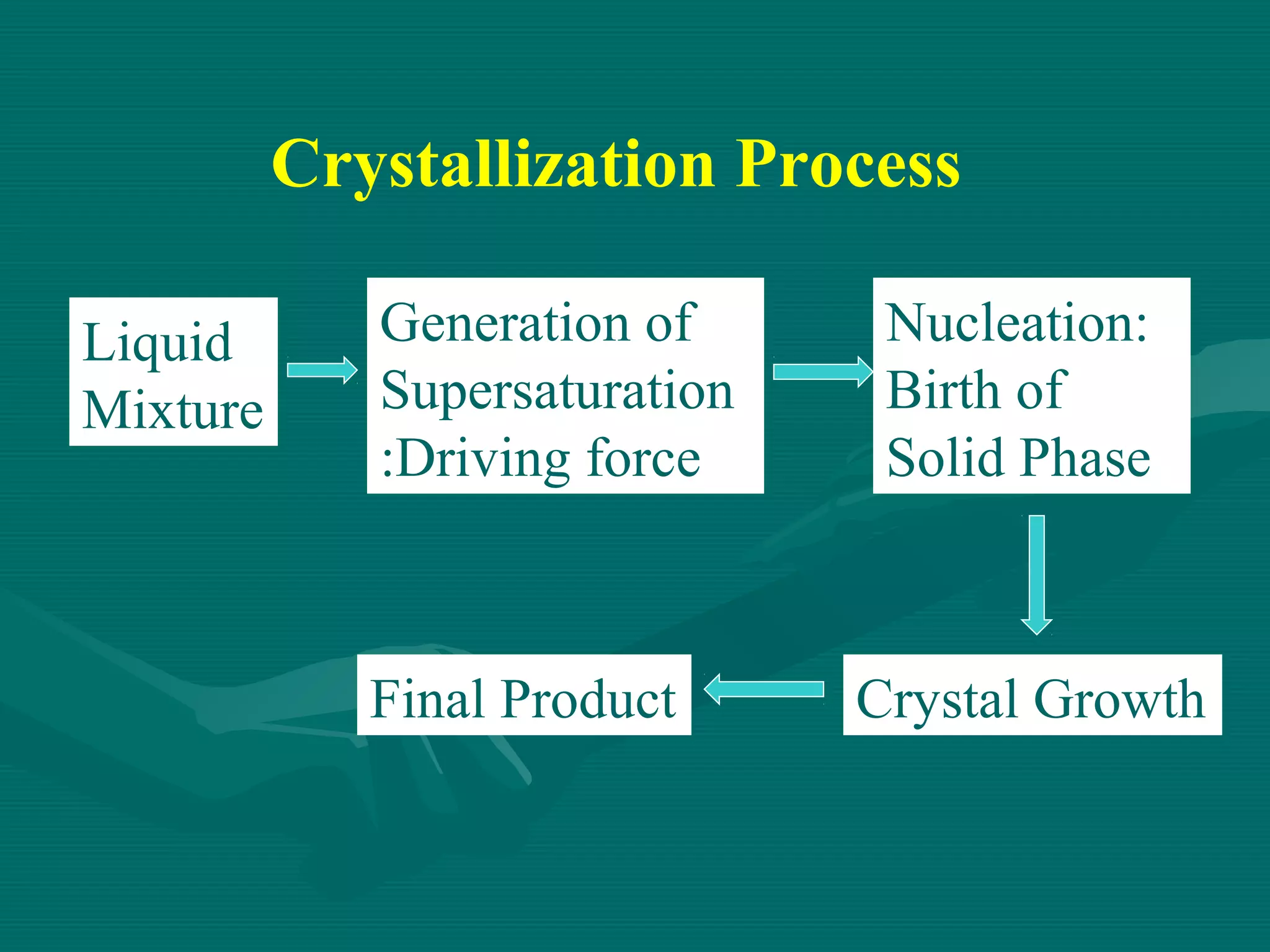
Crystallization Process
Liquid
Mixture

Generation of
Supersaturation
:Driving force

Final Product

Nucleation:
Birth of
Solid Phase

Crystal Growth
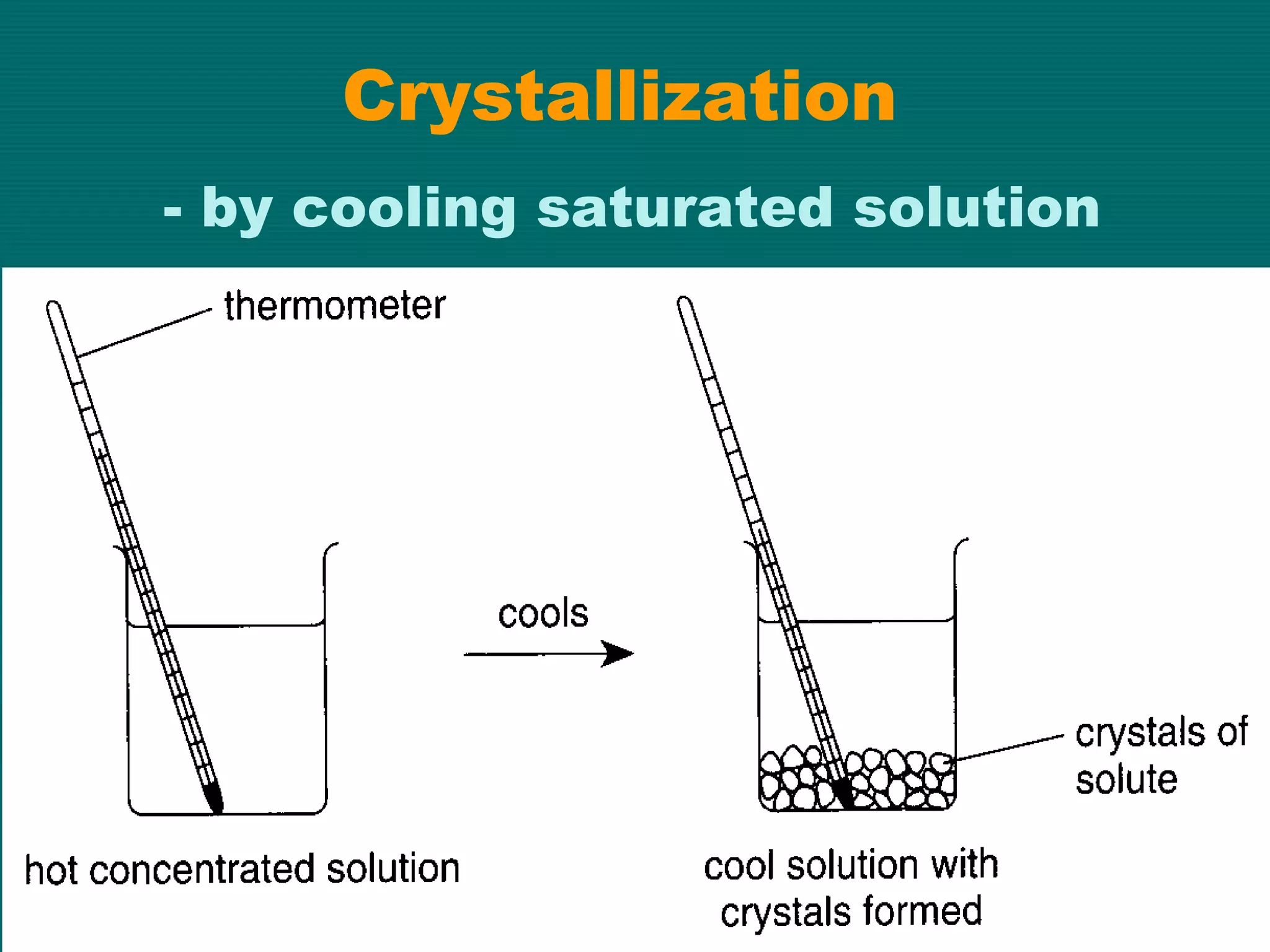
Crystallization
- by cooling saturated solution
Drying
Drying involves the transfer of heat to the
wet material and removal of the moisture as
water vapor.

Drying Methods
(
(
(
(

1)
2)
3)
4)

Atmospheric drying
Vacuum drying (Decompression )
Freeze-drying (lyophilization)
Spray drying
lyophilization
Freezing the material
Reducing the surrounding pressure and
adding enough heat to allow the frozen
water in the material to sublime directly
from the solid phase to gas.
THANKYOU

Downstream process(industrial process)- Downstream processing is any treatment of culture broth after fermentation to concentrate and purify products.

  • 1.
  • 2.
    Downstream processing, whatand why Downstream processing is any treatment of culture broth after fermentation to concentrate and purify products. 2
  • 3.
    Downstream Processing Crude product Productrecovery Purify the product Removal of insoluble Finished product Cell disruption Market
  • 4.
    Cell disruption • Someproduct are intracellular including many enzymes and proteins required to disrupt the cell and release these products e.g. Yeast • Cell disruption can be achieved by both mechanical and non-mechanical methods. • Mechanical- sonication and liquid shear homogenization etc • Non mechanical- autolysis, osmosis shock etc.
  • 5.
    Removal of insoluble's Separationof cells, cell debris or other particulate matter from fermentation broth culture.
  • 6.
    Filtration Separation of particlesfrom liquid by applying a pressure to the solution to force the solution through a filter. Filters are materials with pores. Particles larger than the pore size of the filter are retained by the filter. Particles smaller than the pore size of the filter pass through the filter along with the liquid.
  • 7.
    W at er Sa lts La ct o Pr se ot ei M n +icr fa ob t es Membrane Fraction Technologies Reverse Osmosis (<200 MW) Ultrafiltration (2000 - 50,000 MW) Nanofiltration (200 - 700 MW) Micro filtration (100,000 MW)
  • 8.
    Centrifugation  Centrifugation usedto separate particles as small as 0.1μm diameter and is also suitable for some liquid-liquid separations.  Higher speed centrifuge are required for the separation of the smaller particles  Use of the centrifugal force for the separation of mixtures
  • 9.
  • 10.
    Coagulation and Flocculation Coagulation: Formingsemisolid lumps in a liquid. Flocculation: Forming woolly cloudlike aggregations.
  • 11.
    Product purification • Removingcomponents with properties similar to those of the products Chromatography • Separates molecules by their chemical and physical differences E.g. – adsorption chromatography • affinity chromatography • ion exchange chromatography etc.
  • 12.
  • 13.
    dialysis • These membraneseparation techniques are primarily used for the removal of low molecular weight solutes and inorganic ions from a solution Distillation • Separating components with different volatilities. Such as organic solvents , beer, wine and sprits.
  • 14.
    Product Polishing  Finalprocessing steps which end with packaging of the product in a form that is stable and easily transportable  Crystallization, concentration and drying are typical unit operations
  • 15.
    Crystallization Process Liquid Mixture Generation of Supersaturation :Drivingforce Final Product Nucleation: Birth of Solid Phase Crystal Growth
  • 16.
    Crystallization - by coolingsaturated solution
  • 17.
    Drying Drying involves thetransfer of heat to the wet material and removal of the moisture as water vapor. Drying Methods ( ( ( ( 1) 2) 3) 4) Atmospheric drying Vacuum drying (Decompression ) Freeze-drying (lyophilization) Spray drying
  • 18.
    lyophilization Freezing the material Reducingthe surrounding pressure and adding enough heat to allow the frozen water in the material to sublime directly from the solid phase to gas.
  • 19.