Audiences
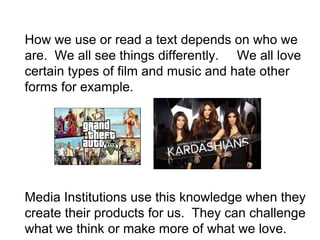
How we use or read a text depends on who we 
are. We all see things differently. We all love 
certain types of film and music and hate other 
forms for example. 
Media Institutions use this knowledge when they 
create their products for us. They can challenge 
what we think or make more of what we love.
Audiences are different and in media 
studies we Media are particularly interested in 
the target audience. This is the audience that 
media producers aim their product at. 
Media Institutions often put their audiences into 
categories depending upon their social, ethnic or 
economic backgrounds. This is called 
Demographics. They use this to work out how 
to best target their shows and products. 
Of course this is not an exact science but look at 
the following advert and think about how different 
demographic groups may respond to it.
Connotation 
Fill in the 
blanks: 
An old lady 
may think.... 
A latin 
american 
teenager may 
think..... 
A middle-aged 
labourer may 
think......
Media producers have a profile of the group and 
individuals whom they see as their intended 
audience. 
A film about teenagers will have a target audience 
of teenagers. The Harry Potter films will have 
children and the family as the target audience. 
For any media text we ask who is the target 
audience for this text. Then we have to ask what 
sort of audience is the target audience? Is it a 
mass audience?
Mass Audience: 
Niche Audience: 
Provide 
Definitions
Every media is aimed at an audience! 
Think about mobile phone companies how 
do you think the following companies may 
have different audience, and how the 
company may target them in the following 
adverts? 
•Click Link: China Mobile 
Click Link: Smartone Advert
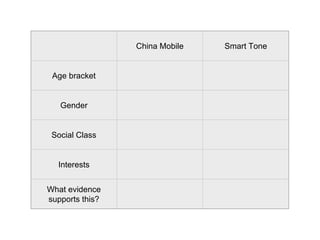
China Mobile Smart Tone 
Age bracket 
Gender 
Social Class 
Interests 
What evidence 
supports this?
Different Ways to Read a Text 
The makers of the product being advertised and 
the company who designed the advert itself will 
be aware of the polysemic range of meanings 
in it. This means that the product may be read 
in different ways by different people. We all see 
what we want to see. 
This can be both a strength and a weakness. 
Give reasons why. 
Strength Weakness 
Student Notes
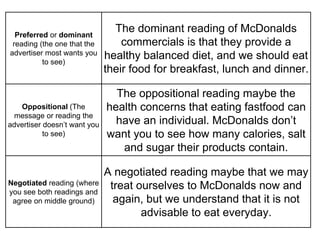
Preferred or dominant 
reading (the one that the 
advertiser most wants you 
to see) 
The dominant reading of McDonalds 
commercials is that they provide a 
healthy balanced diet, and we should eat 
their food for breakfast, lunch and dinner. 
Oppositional (The 
message or reading the 
advertiser doesn’t want you 
to see) 
The oppositional reading maybe the 
health concerns that eating fastfood can 
have an individual. McDonalds don’t 
want you to see how many calories, salt 
and sugar their products contain. 
Negotiated reading (where 
you see both readings and 
agree on middle ground) 
A negotiated reading maybe that we may 
treat ourselves to McDonalds now and 
again, but we understand that it is not 
advisable to eat everyday.
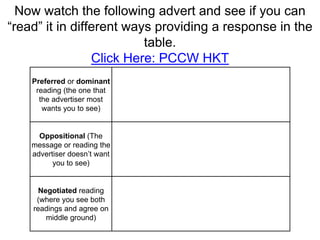
Now watch the following advert and see if you can 
“read” it in different ways providing a response in the 
table. 
Click Here: PCCW HKT 
Preferred or dominant 
reading (the one that 
the advertiser most 
wants you to see) 
Oppositional (The 
message or reading the 
advertiser doesn’t want 
you to see) 
Negotiated reading 
(where you see both 
readings and agree on 
middle ground)
Just why do we watch Big Bang Theory? 
Media Theorists Blumler and Katz presented their model of audience uses and 
gratifications declaring that there were five main reasons why audiences 
consumed media text.. Could you give examples of tv programmes or films that 
you match each idea? 
To be informed and educated 
To identify with characters and 
situations 
To be entertained 
To be able share the 
experience with others 
To escape from the real world 
Student Notes
Activity 
1.Choose a television programme you like. Break down what exactly you like 
about the programme. 
2.What particular features do you identify with? 
3.What things particularly attract you about this programme? 
4.Now try and work out who the producers think is the target audience - is it you? 
(If it’s on after 9pm, then it’s probably not you!) 
5.How big is this audience? (Check episodes on wiki for ratings) 
Student Notes
Audience Controversies 
• Some people are very concerned about the 
effects of the media on society and on young 
people in particular. 
• They worry that we watch the sex and violence 
and may copy what we see. It is as if we have 
been injected by a big hypodermic syringe by 
its ill effects.
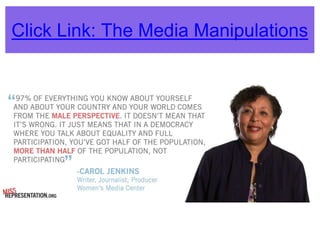
Click Link: The Media Manipulations
The effects of Media on teens 
Devise a presentation on whether you think the 
‘Media has a negative effective on teenagers'. This 
should be supported with evidence (images, 
videos, text, case studies).

Audience 2014

  • 1.
  • 2.
    How we useor read a text depends on who we are. We all see things differently. We all love certain types of film and music and hate other forms for example. Media Institutions use this knowledge when they create their products for us. They can challenge what we think or make more of what we love.
  • 3.
    Audiences are differentand in media studies we Media are particularly interested in the target audience. This is the audience that media producers aim their product at. Media Institutions often put their audiences into categories depending upon their social, ethnic or economic backgrounds. This is called Demographics. They use this to work out how to best target their shows and products. Of course this is not an exact science but look at the following advert and think about how different demographic groups may respond to it.
  • 4.
    Connotation Fill inthe blanks: An old lady may think.... A latin american teenager may think..... A middle-aged labourer may think......
  • 5.
    Media producers havea profile of the group and individuals whom they see as their intended audience. A film about teenagers will have a target audience of teenagers. The Harry Potter films will have children and the family as the target audience. For any media text we ask who is the target audience for this text. Then we have to ask what sort of audience is the target audience? Is it a mass audience?
  • 6.
    Mass Audience: NicheAudience: Provide Definitions
  • 7.
    Every media isaimed at an audience! Think about mobile phone companies how do you think the following companies may have different audience, and how the company may target them in the following adverts? •Click Link: China Mobile Click Link: Smartone Advert
  • 8.
    China Mobile SmartTone Age bracket Gender Social Class Interests What evidence supports this?
  • 9.
    Different Ways toRead a Text The makers of the product being advertised and the company who designed the advert itself will be aware of the polysemic range of meanings in it. This means that the product may be read in different ways by different people. We all see what we want to see. This can be both a strength and a weakness. Give reasons why. Strength Weakness Student Notes
  • 10.
    Preferred or dominant reading (the one that the advertiser most wants you to see) The dominant reading of McDonalds commercials is that they provide a healthy balanced diet, and we should eat their food for breakfast, lunch and dinner. Oppositional (The message or reading the advertiser doesn’t want you to see) The oppositional reading maybe the health concerns that eating fastfood can have an individual. McDonalds don’t want you to see how many calories, salt and sugar their products contain. Negotiated reading (where you see both readings and agree on middle ground) A negotiated reading maybe that we may treat ourselves to McDonalds now and again, but we understand that it is not advisable to eat everyday.
  • 11.
    Now watch thefollowing advert and see if you can “read” it in different ways providing a response in the table. Click Here: PCCW HKT Preferred or dominant reading (the one that the advertiser most wants you to see) Oppositional (The message or reading the advertiser doesn’t want you to see) Negotiated reading (where you see both readings and agree on middle ground)
  • 12.
    Just why dowe watch Big Bang Theory? Media Theorists Blumler and Katz presented their model of audience uses and gratifications declaring that there were five main reasons why audiences consumed media text.. Could you give examples of tv programmes or films that you match each idea? To be informed and educated To identify with characters and situations To be entertained To be able share the experience with others To escape from the real world Student Notes
  • 13.
    Activity 1.Choose atelevision programme you like. Break down what exactly you like about the programme. 2.What particular features do you identify with? 3.What things particularly attract you about this programme? 4.Now try and work out who the producers think is the target audience - is it you? (If it’s on after 9pm, then it’s probably not you!) 5.How big is this audience? (Check episodes on wiki for ratings) Student Notes
  • 14.
    Audience Controversies •Some people are very concerned about the effects of the media on society and on young people in particular. • They worry that we watch the sex and violence and may copy what we see. It is as if we have been injected by a big hypodermic syringe by its ill effects.
  • 15.
    Click Link: TheMedia Manipulations
  • 16.
    The effects ofMedia on teens Devise a presentation on whether you think the ‘Media has a negative effective on teenagers'. This should be supported with evidence (images, videos, text, case studies).