Confidential + Proprietary
Everyday Innovation
Carl Sziebert • FITC Toronto • 29 Apr 2019
What is innovation?
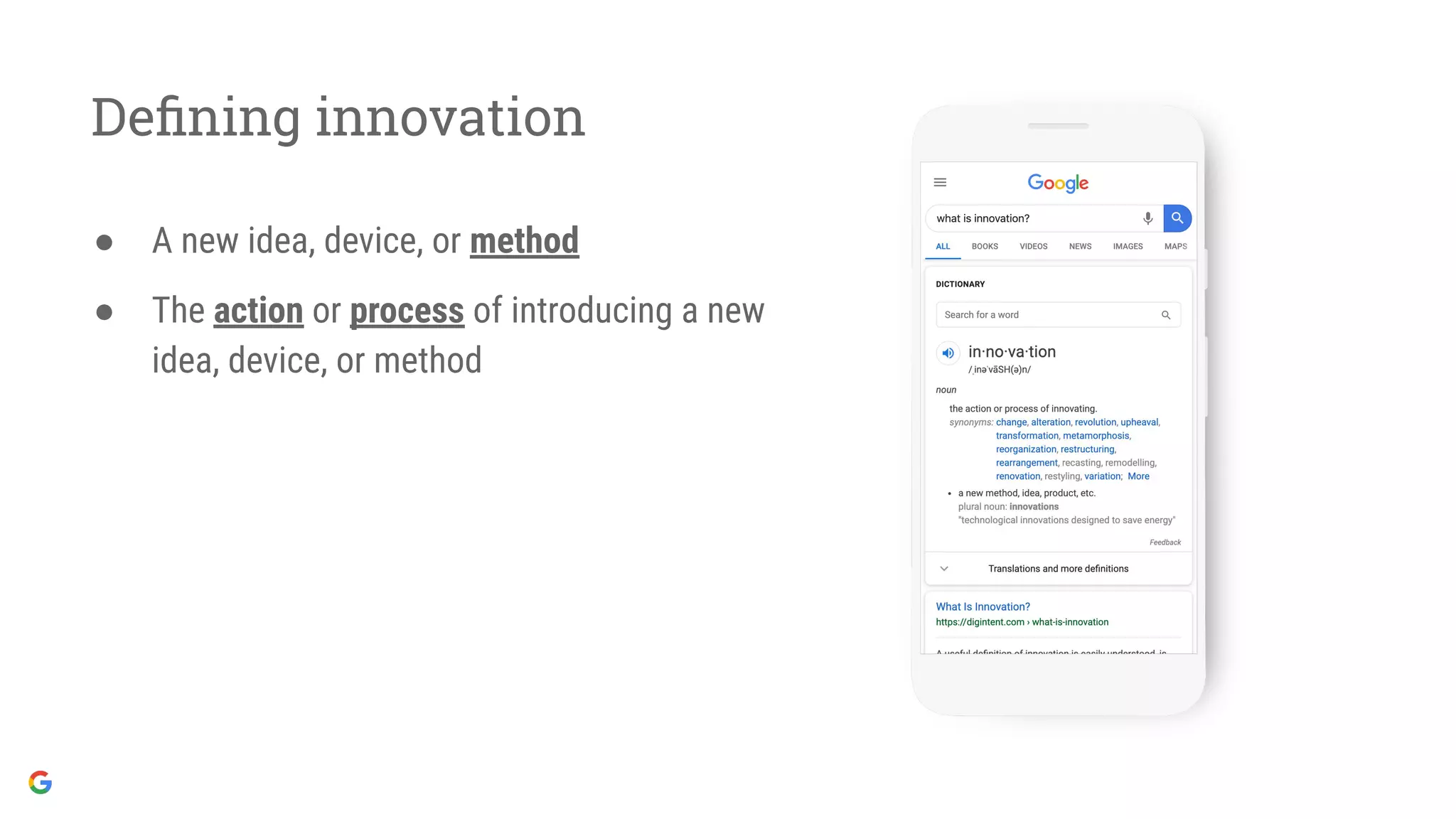
Defining innovation
● A new idea, device, or method
● The action or process of introducing a new
idea, device, or method
What about the everyday part?
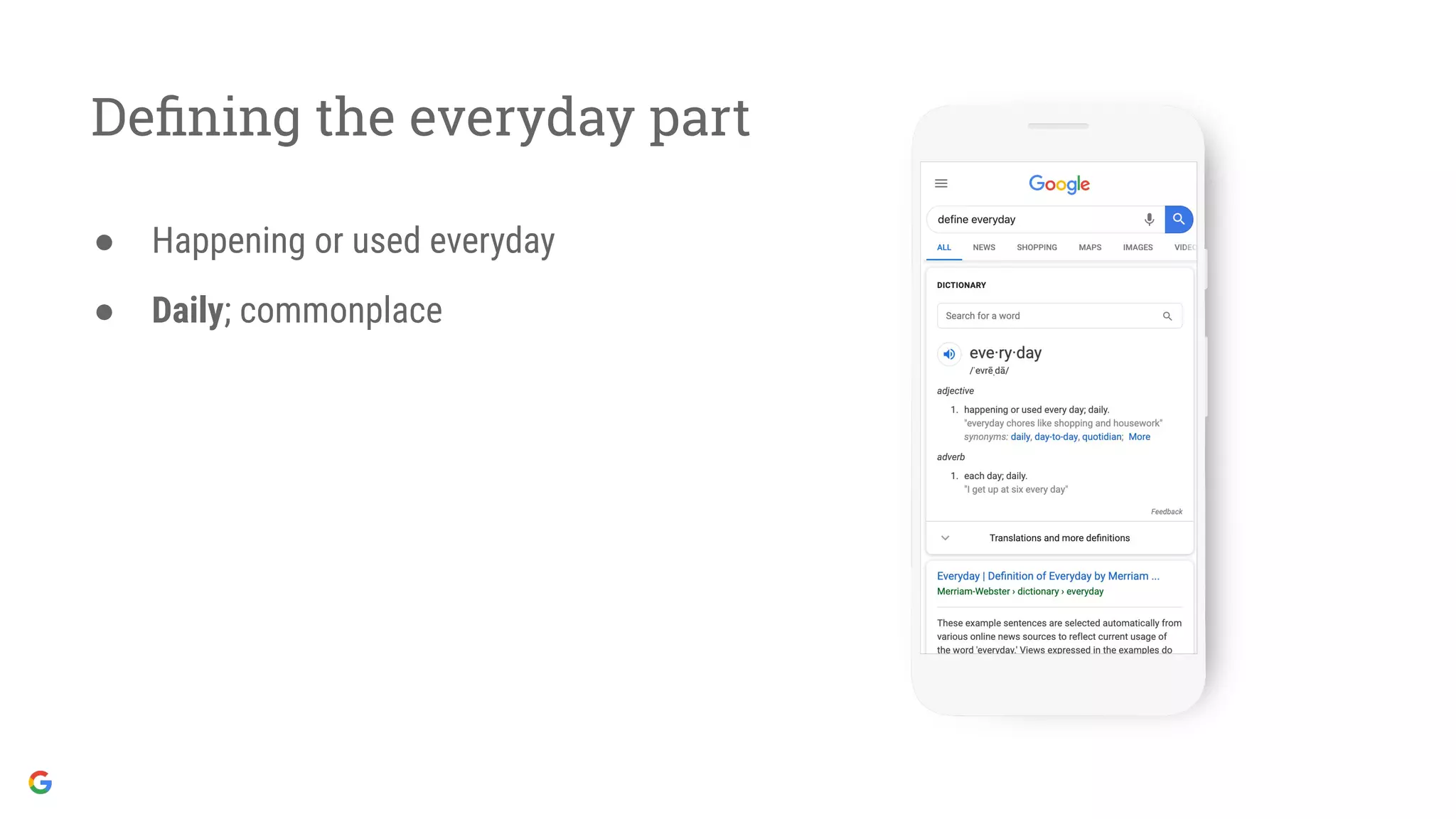
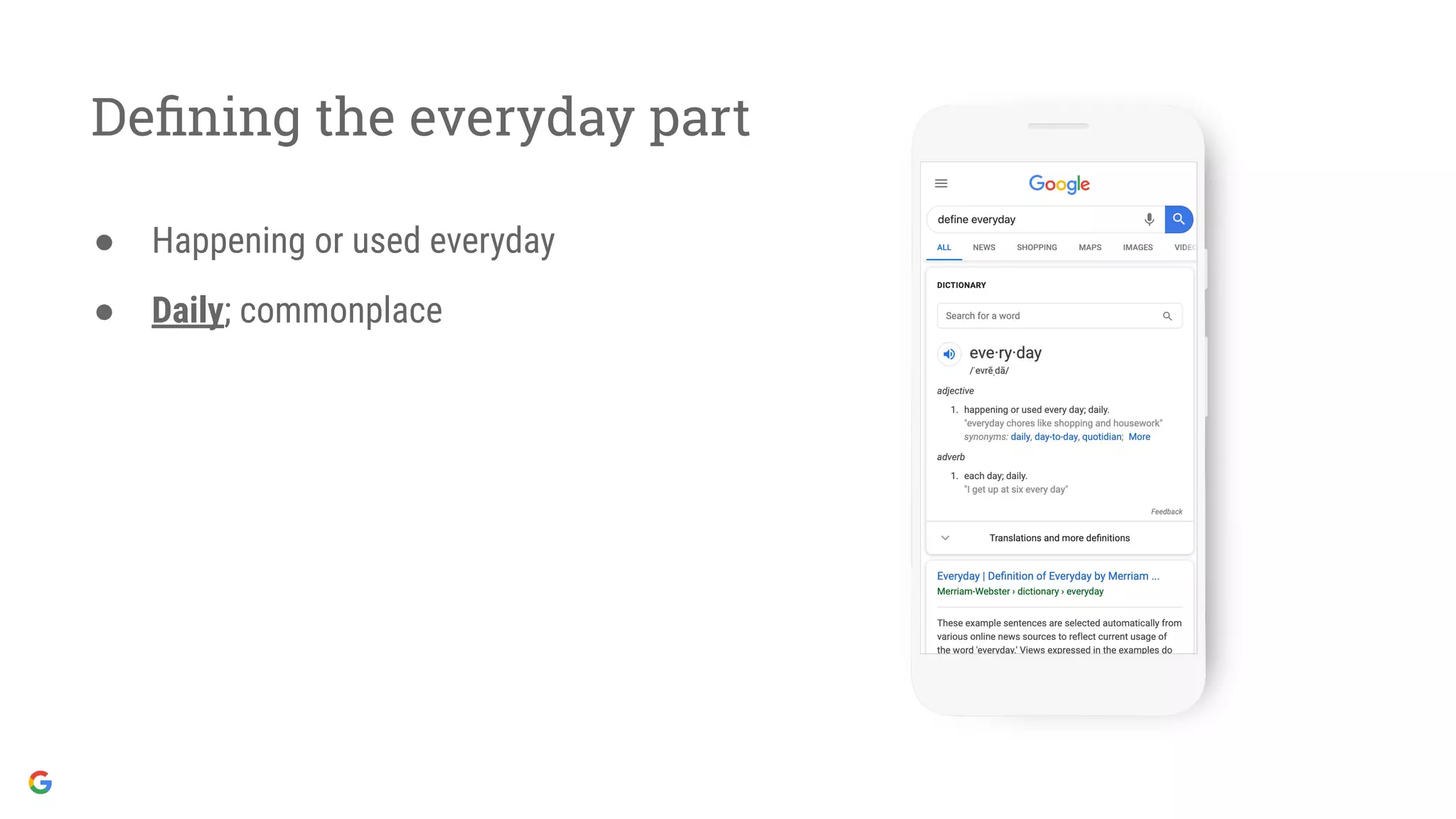
Defining the everyday part
● Happening or used everyday
● Daily; commonplace
You’ve heard about the
toothbrush test?
How do we define innovation?
We define innovation as...
● Making things more user-centered
● Finding unmet user needs
● Filling a gap in the market
● Creating differentiating technology
● Solving problems for our users
Let’s look at some examples…
All innovation is good, right?
Are there different
kinds of innovation?
Innovation comes in many forms
● Empowering innovation
● Sustaining innovation
● Efficiency innovation
● Disruptive innovation
● Innovation from above
- Clayton Christensen, Harvard
Empowering innovation
● Provides new tools for managing resources that are scarce and costly
● A breakthrough technology; something no one else has; 10x idea
● Generates whole new industries, jobs, and economic growth
● Must be genuinely exciting to customers
● Often has a ripple effect...
Sustaining innovation
● Improves an existing system
● May “disrupt” incumbents with new features
● Competitors and incumbents can respond quickly
● Drives revenue through constant updates
Efficiency innovation
● Does more with less
● Sells established products at lower prices
● Raises productivity, reduces costs, but might eliminate jobs
Disruptive innovation
● Disrupts an existing business model
● Targets the lowest tier of users first
● Competitors ignore it as it doesn’t affect business
● Slowly adds value and features
● Expands quickly to become a serious threat
Innovation from above
● Creating a premium product in an existing sector
● Makes it harder for competitors to sell their cheaper products
● Open to pressure from below
Wait, everyday innovation isn’t
on that list. What gives?
Defining innovation
● A new idea, device, or method
● The action or process of introducing a new
idea, device, or method
Defining the everyday part
● Happening or used everyday
● Daily; commonplace
Everyday innovation is a daily process
That’s it? Just build good habits?
Toothbrush journeys and everyday
innovations can seem small but have
a huge impact
How do we identify
opportunities to innovate?
Building the proper mindset for innovation
● Fight the imposter syndrome
● Find the right time, space, and tools
● Listen attentively
● Identify gaps, seams, and overlaps
● Reframe the problem
But, we don’t actually
collaborate very well...
What does effective
collaboration look like?
Sports vs. Collaboration
● Assigned a role and you often stick to it with
little compromise
● Rule book stays the same with few changes
over time
● Goal is to crush your opponent with a clear
idea of who is the winner and loser
● Flexible and creative - use your unique skills
in a way to adapt well to task at hand
● Collaboration evolves over time and can get
messy
● Goal is to foster ideas and contribute to the
big picture
Why does effective
collaboration matter?
The importance of effective collaboration
● Promotes self-awareness and self-analysis
● Helps us see the bigger picture
● Encourages continuous learning
● Results in problem solving
Yes, and...
Practice makes perfect, right?
Success is built on compounding failure
FEEDBACK IS THE
BREAKFAST OF CHAMPIONS!
Good feedback vs. bad feedback
How do we make
feedback more nutritious?
Great feedback is specific, goal oriented,
organized, relevant, and timely
Great feedback is specific
● Is the wording vague or open-ended?
● Would someone else understand?
● Am I identifying a problem?
● Could this be an actionable item?
Great feedback is goal oriented
● Why do I want to add this?
● How will this suggestion benefit a user?
● How does this help accomplish our goals?
Great feedback is organized
● Am I repeating myself? Can I consolidate my points?
● Are there clear patterns or categories that I can reuse?
● Have I prioritized my feedback appropriately?
● Is my feedback well formatted?
Great feedback is relevant and timely
● Is this the type of feedback requested?
● Am I sharing this with the right person?
● Is this related to the current stage of the project?
● Is this the right time or place for my feedback?
Receiving feedback is hard, too!
Why is this so hard to do?
● Miscommunication
● Limited experience
● Personal bias
● Lack of time
● Fear
Responding to feedback is a subtle art
● Review the strategy behind the decisions
that brought you to this point
● Analyze and explain the goals of this
step of the process
● Outline the type of feedback you’re
looking for
Inspire great feedback
● Establish and use a common vocabulary
● Send your work ahead of time to prevent churn
and maximize your returns
● Ask lots of qualifying questions to dig deeper
To recap...
Innovation comes in many forms
Everyday innovation is a daily process
Building the proper mindset for innovation
means finding the right time, space, and
tools to identify gaps, seams, and overlaps
Effective collaboration promotes
self-analysis, encourages continual
learning, and results in real problem
solving
Feedback is the breakfast of champions
when it is specific, goal oriented, organized,
relevant, and timely
Great communication is the key to
everyday innovation
Thanks!
Questions?

Everyday Innovation

  • 1.
    Confidential + Proprietary EverydayInnovation Carl Sziebert • FITC Toronto • 29 Apr 2019
  • 2.
  • 3.
    Defining innovation ● Anew idea, device, or method ● The action or process of introducing a new idea, device, or method
  • 4.
    What about theeveryday part?
  • 5.
    Defining the everydaypart ● Happening or used everyday ● Daily; commonplace
  • 6.
    You’ve heard aboutthe toothbrush test?
  • 8.
    How do wedefine innovation?
  • 9.
    We define innovationas... ● Making things more user-centered ● Finding unmet user needs ● Filling a gap in the market ● Creating differentiating technology ● Solving problems for our users
  • 10.
    Let’s look atsome examples…
  • 14.
    All innovation isgood, right?
  • 18.
  • 19.
    Innovation comes inmany forms ● Empowering innovation ● Sustaining innovation ● Efficiency innovation ● Disruptive innovation ● Innovation from above - Clayton Christensen, Harvard
  • 20.
    Empowering innovation ● Providesnew tools for managing resources that are scarce and costly ● A breakthrough technology; something no one else has; 10x idea ● Generates whole new industries, jobs, and economic growth ● Must be genuinely exciting to customers ● Often has a ripple effect...
  • 21.
    Sustaining innovation ● Improvesan existing system ● May “disrupt” incumbents with new features ● Competitors and incumbents can respond quickly ● Drives revenue through constant updates
  • 22.
    Efficiency innovation ● Doesmore with less ● Sells established products at lower prices ● Raises productivity, reduces costs, but might eliminate jobs
  • 23.
    Disruptive innovation ● Disruptsan existing business model ● Targets the lowest tier of users first ● Competitors ignore it as it doesn’t affect business ● Slowly adds value and features ● Expands quickly to become a serious threat
  • 24.
    Innovation from above ●Creating a premium product in an existing sector ● Makes it harder for competitors to sell their cheaper products ● Open to pressure from below
  • 25.
    Wait, everyday innovationisn’t on that list. What gives?
  • 26.
    Defining innovation ● Anew idea, device, or method ● The action or process of introducing a new idea, device, or method
  • 27.
    Defining the everydaypart ● Happening or used everyday ● Daily; commonplace
  • 28.
    Everyday innovation isa daily process
  • 29.
    That’s it? Justbuild good habits?
  • 30.
    Toothbrush journeys andeveryday innovations can seem small but have a huge impact
  • 31.
    How do weidentify opportunities to innovate?
  • 33.
    Building the propermindset for innovation ● Fight the imposter syndrome ● Find the right time, space, and tools ● Listen attentively ● Identify gaps, seams, and overlaps ● Reframe the problem
  • 37.
    But, we don’tactually collaborate very well...
  • 39.
  • 43.
    Sports vs. Collaboration ●Assigned a role and you often stick to it with little compromise ● Rule book stays the same with few changes over time ● Goal is to crush your opponent with a clear idea of who is the winner and loser ● Flexible and creative - use your unique skills in a way to adapt well to task at hand ● Collaboration evolves over time and can get messy ● Goal is to foster ideas and contribute to the big picture
  • 44.
  • 45.
    The importance ofeffective collaboration ● Promotes self-awareness and self-analysis ● Helps us see the bigger picture ● Encourages continuous learning ● Results in problem solving
  • 46.
  • 47.
  • 49.
    Success is builton compounding failure
  • 50.
  • 51.
    Good feedback vs.bad feedback
  • 52.
    How do wemake feedback more nutritious?
  • 53.
    Great feedback isspecific, goal oriented, organized, relevant, and timely
  • 54.
    Great feedback isspecific ● Is the wording vague or open-ended? ● Would someone else understand? ● Am I identifying a problem? ● Could this be an actionable item?
  • 55.
    Great feedback isgoal oriented ● Why do I want to add this? ● How will this suggestion benefit a user? ● How does this help accomplish our goals?
  • 56.
    Great feedback isorganized ● Am I repeating myself? Can I consolidate my points? ● Are there clear patterns or categories that I can reuse? ● Have I prioritized my feedback appropriately? ● Is my feedback well formatted?
  • 57.
    Great feedback isrelevant and timely ● Is this the type of feedback requested? ● Am I sharing this with the right person? ● Is this related to the current stage of the project? ● Is this the right time or place for my feedback?
  • 58.
  • 60.
    Why is thisso hard to do? ● Miscommunication ● Limited experience ● Personal bias ● Lack of time ● Fear
  • 62.
    Responding to feedbackis a subtle art ● Review the strategy behind the decisions that brought you to this point ● Analyze and explain the goals of this step of the process ● Outline the type of feedback you’re looking for
  • 63.
    Inspire great feedback ●Establish and use a common vocabulary ● Send your work ahead of time to prevent churn and maximize your returns ● Ask lots of qualifying questions to dig deeper
  • 64.
  • 65.
  • 69.
    Everyday innovation isa daily process
  • 70.
    Building the propermindset for innovation means finding the right time, space, and tools to identify gaps, seams, and overlaps
  • 71.
    Effective collaboration promotes self-analysis,encourages continual learning, and results in real problem solving
  • 72.
    Feedback is thebreakfast of champions when it is specific, goal oriented, organized, relevant, and timely
  • 73.
    Great communication isthe key to everyday innovation
  • 75.
  • 76.