What is Innovation?
Definition of Innovation
Innovation refers to the process of creating and
implementing new ideas, products, or methods that
bring value and improvements.
Importance of Innovation
Drives competitive advantage
Fuels growth and development
Addresses evolving market needs
Types of Innovation
1. Product Innovation
•Introduction of new or improved products.
•Example: Smartphones with advanced features.
2. Process Innovation
•Enhancements in how products or services are created or delivered.
•Example: Automated manufacturing processes.
3. Business Model Innovation
•Changes in the way a business captures, creates, or delivers value.
•Example: Subscription-based models (e.g., Netflix).
4. Organizational Innovation
•New organizational methods in business practices or workplace settings.
•Example: Remote work technologies.
Innovation vs. Invention
Invention
•Creation of a novel idea or concept.
•Example: The invention of the lightbulb.
Innovation
•The application and commercialization of inventions to solve
problems or meet market needs.
•Example: The widespread use of lightbulbs in various
applications.
The Innovation Process
1. Idea Generation
oSources: Market research, brainstorming sessions, customer feedback.
2. Idea Screening
oEvaluating ideas based on feasibility, potential impact, and alignment with goals.
3. Concept Development
oCreating detailed plans and prototypes.
4. Testing and Validation
oPiloting the concept to gather feedback and refine.
5. Commercialization
oLaunching the final product or process to the market.
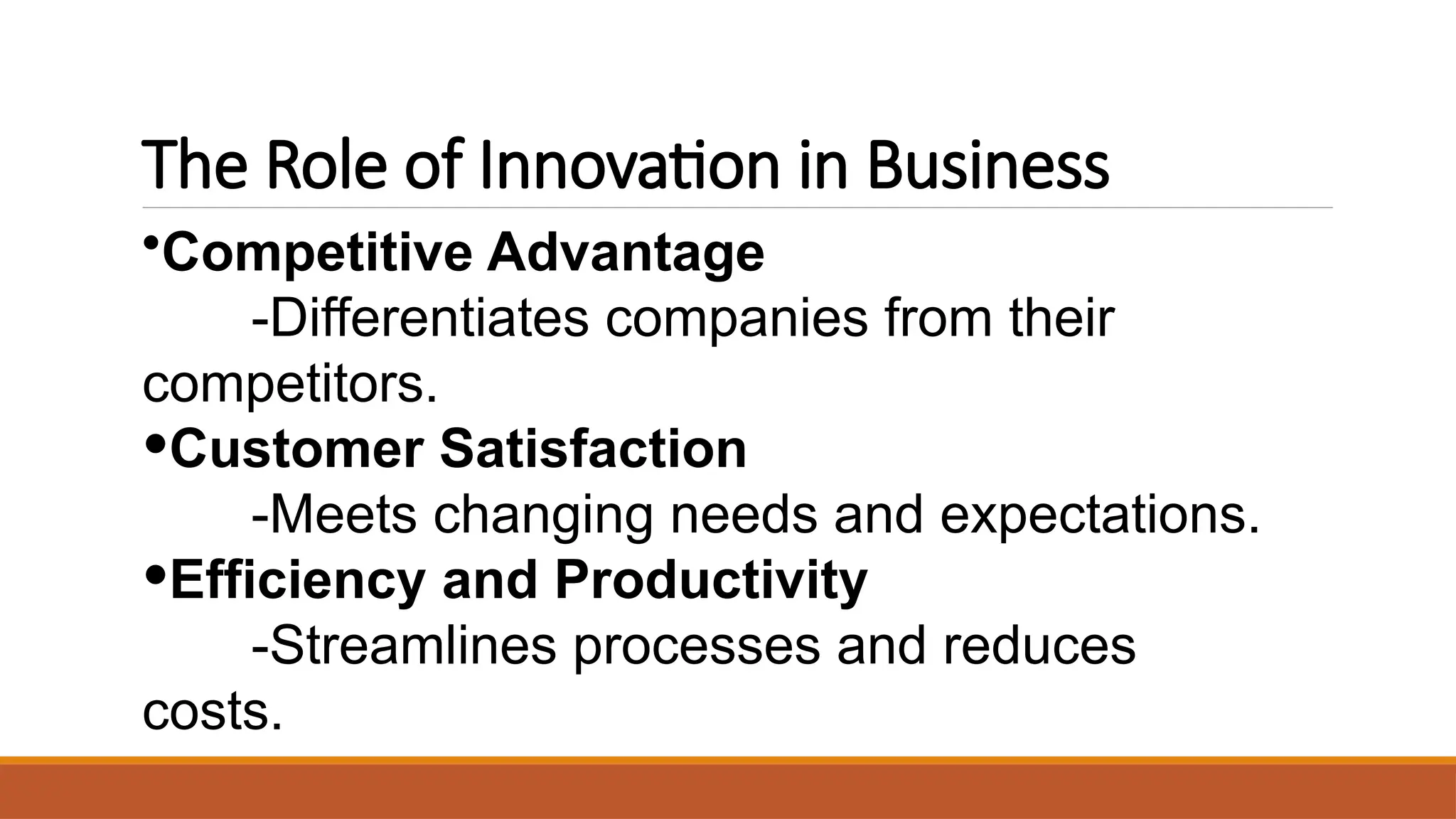
The Role of Innovation in Business
•Competitive Advantage
-Differentiates companies from their
competitors.
•Customer Satisfaction
-Meets changing needs and expectations.
•Efficiency and Productivity
-Streamlines processes and reduces
costs.
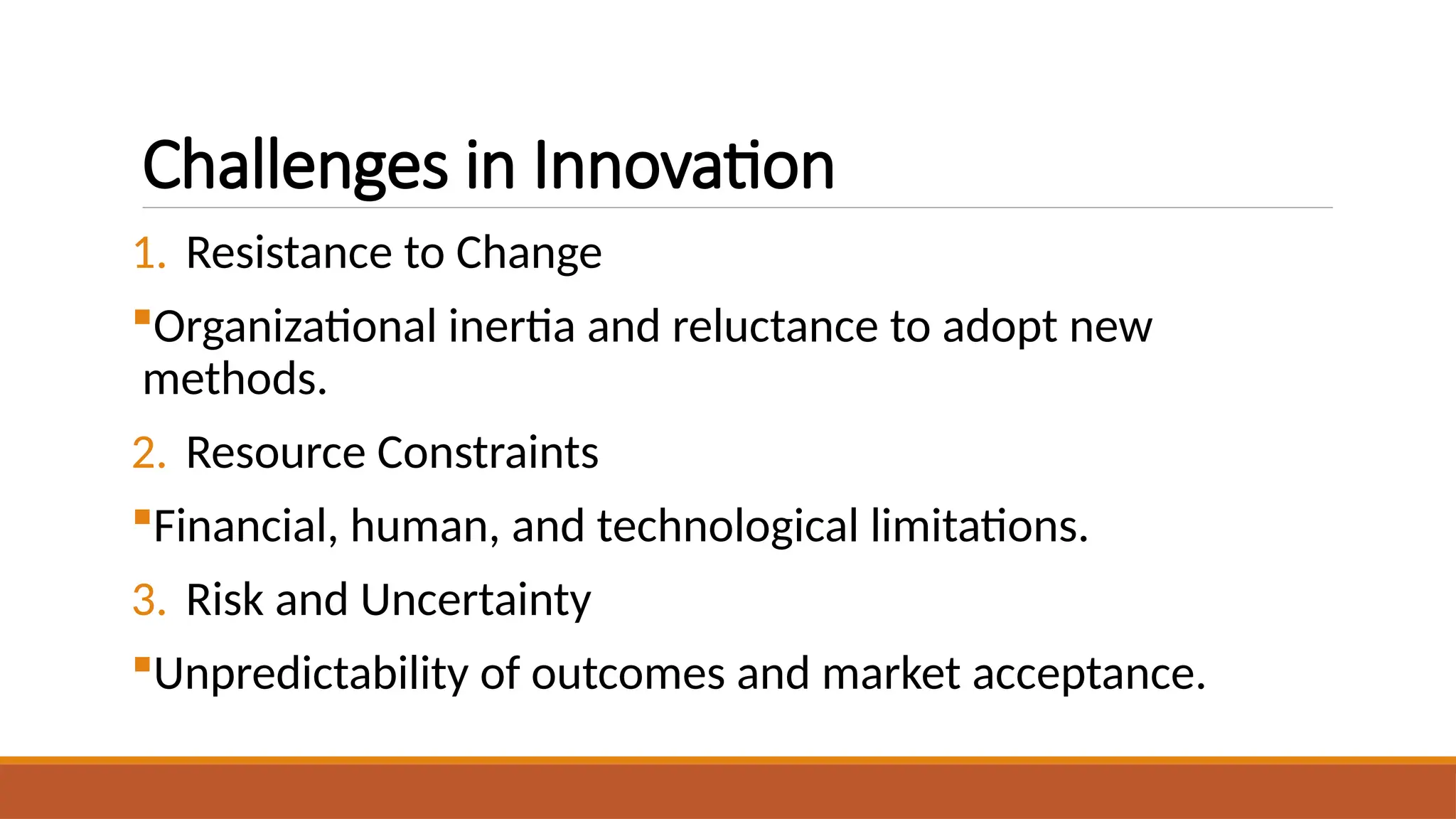
Challenges in Innovation
1. Resistance to Change
Organizational inertia and reluctance to adopt new
methods.
2. Resource Constraints
Financial, human, and technological limitations.
3. Risk and Uncertainty
Unpredictability of outcomes and market acceptance.
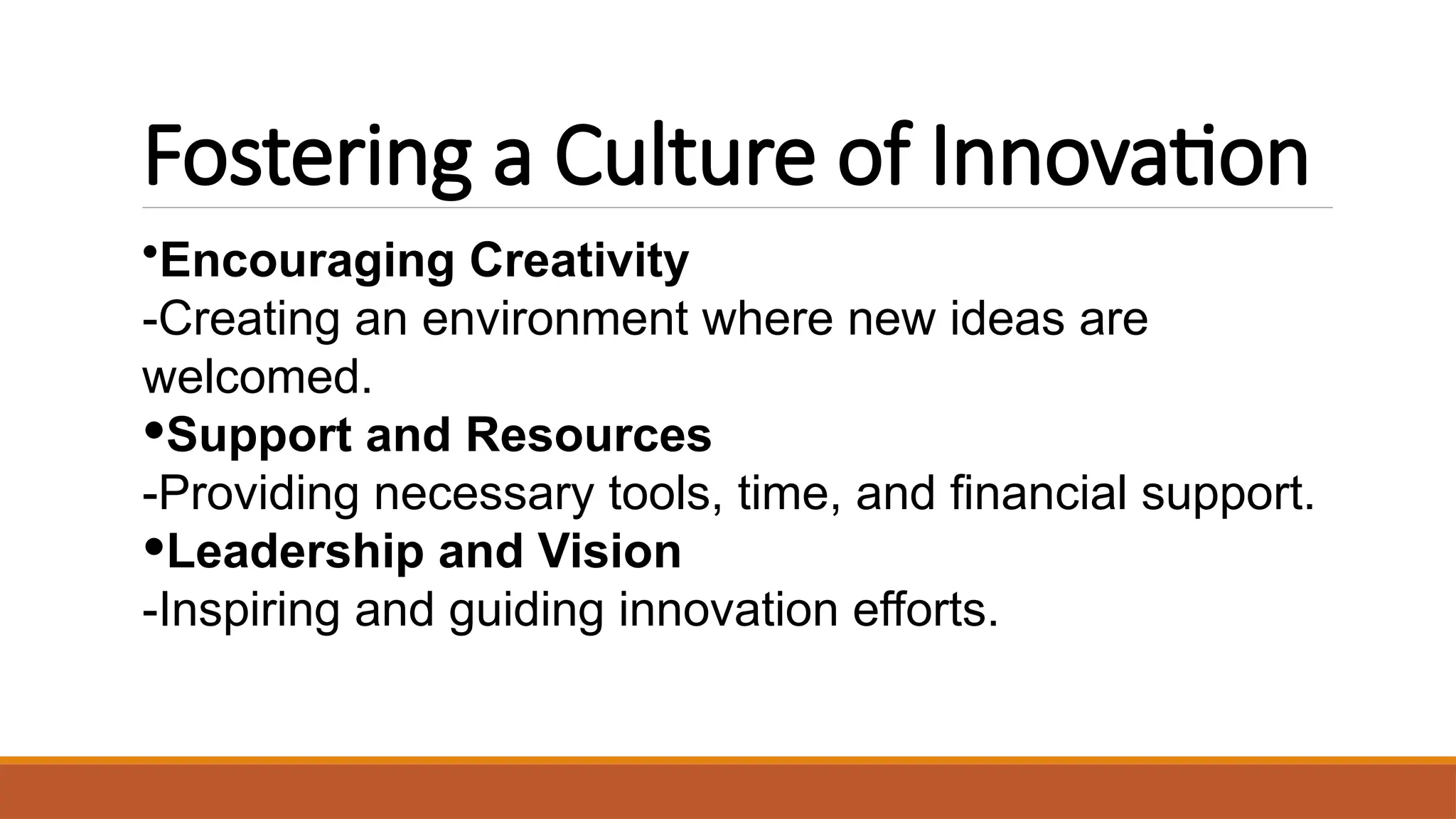
Fostering a Culture of Innovation
•Encouraging Creativity
-Creating an environment where new ideas are
welcomed.
•Support and Resources
-Providing necessary tools, time, and financial support.
•Leadership and Vision
-Inspiring and guiding innovation efforts.
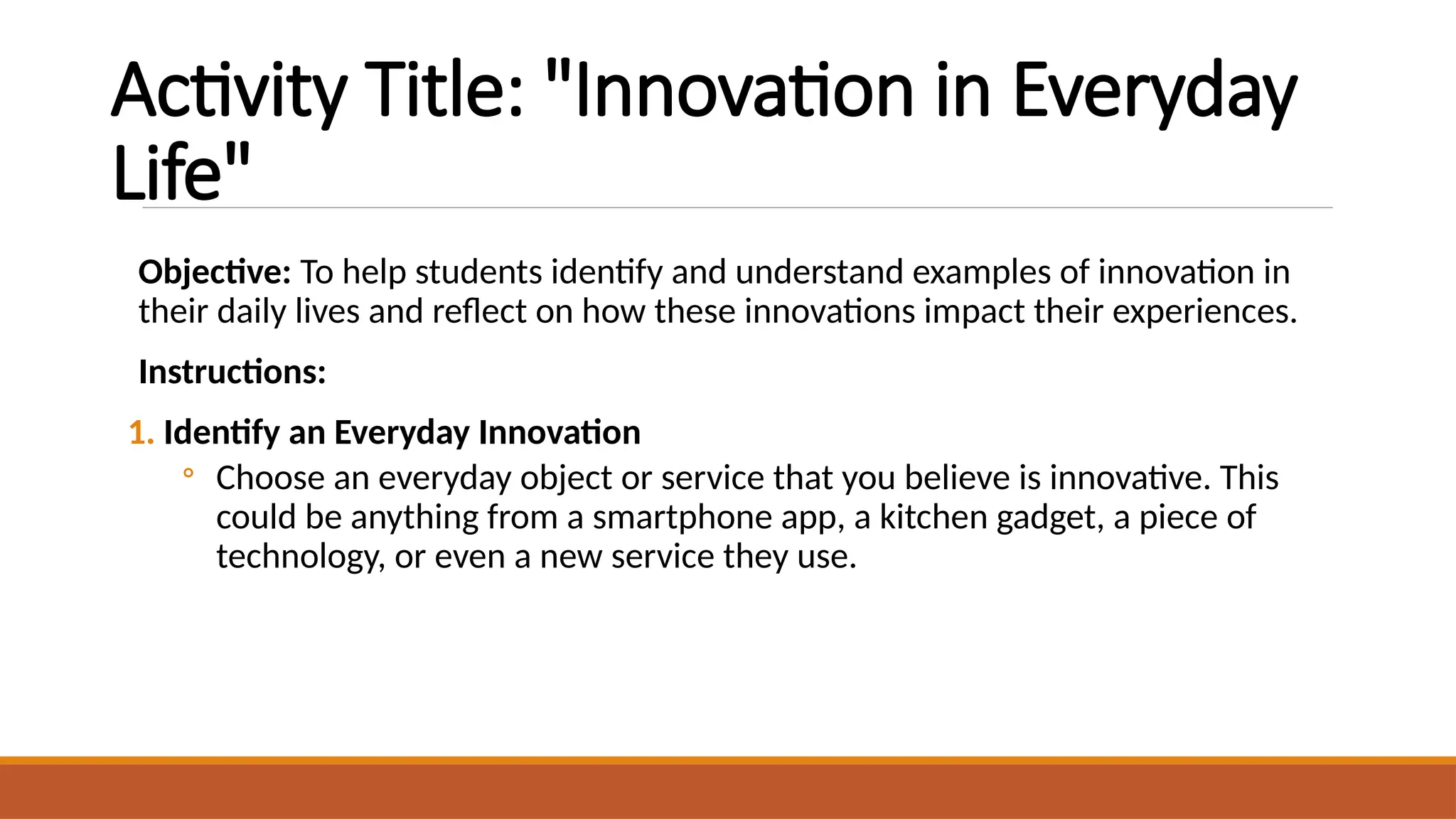
Activity Title: "Innovation in Everyday
Life"
Objective: To help students identify and understand examples of innovation in
their daily lives and reflect on how these innovations impact their experiences.
Instructions:
1. Identify an Everyday Innovation
◦ Choose an everyday object or service that you believe is innovative. This
could be anything from a smartphone app, a kitchen gadget, a piece of
technology, or even a new service they use.
2. Research and Reflection
Write a short paragraph (5-7 sentences) about your chosen innovation.
Address the following questions:
• What is the innovation? Describe the object or service.
• How does it work? Briefly explain its function or purpose.
• Why is it innovative? Discuss what makes it different from
previous versions or alternatives.
• How does it impact your daily life? Reflect on how this
innovation makes tasks easier, improves efficiency, or enhances
your experience.
Example for Guidance:
•Innovation Chosen: Smartphone App (e.g., a fitness tracking
app)
•Description: A mobile app that tracks physical activity and
monitors health metrics.
•How It Works: Uses GPS and sensors to record distance, speed,
and calories burned.
•Why It Is Innovative: Provides personalized health insights and
integrates with other devices.
•Impact on Daily Life: Helps in setting fitness goals, monitoring
progress, and staying motivated.

Week-2-What-is-Innovation (1).pptx Innovation

  • 1.
  • 2.
    Definition of Innovation Innovationrefers to the process of creating and implementing new ideas, products, or methods that bring value and improvements. Importance of Innovation Drives competitive advantage Fuels growth and development Addresses evolving market needs
  • 3.
    Types of Innovation 1.Product Innovation •Introduction of new or improved products. •Example: Smartphones with advanced features. 2. Process Innovation •Enhancements in how products or services are created or delivered. •Example: Automated manufacturing processes. 3. Business Model Innovation •Changes in the way a business captures, creates, or delivers value. •Example: Subscription-based models (e.g., Netflix). 4. Organizational Innovation •New organizational methods in business practices or workplace settings. •Example: Remote work technologies.
  • 4.
    Innovation vs. Invention Invention •Creationof a novel idea or concept. •Example: The invention of the lightbulb. Innovation •The application and commercialization of inventions to solve problems or meet market needs. •Example: The widespread use of lightbulbs in various applications.
  • 5.
    The Innovation Process 1.Idea Generation oSources: Market research, brainstorming sessions, customer feedback. 2. Idea Screening oEvaluating ideas based on feasibility, potential impact, and alignment with goals. 3. Concept Development oCreating detailed plans and prototypes. 4. Testing and Validation oPiloting the concept to gather feedback and refine. 5. Commercialization oLaunching the final product or process to the market.
  • 6.
    The Role ofInnovation in Business •Competitive Advantage -Differentiates companies from their competitors. •Customer Satisfaction -Meets changing needs and expectations. •Efficiency and Productivity -Streamlines processes and reduces costs.
  • 7.
    Challenges in Innovation 1.Resistance to Change Organizational inertia and reluctance to adopt new methods. 2. Resource Constraints Financial, human, and technological limitations. 3. Risk and Uncertainty Unpredictability of outcomes and market acceptance.
  • 8.
    Fostering a Cultureof Innovation •Encouraging Creativity -Creating an environment where new ideas are welcomed. •Support and Resources -Providing necessary tools, time, and financial support. •Leadership and Vision -Inspiring and guiding innovation efforts.
  • 9.
    Activity Title: "Innovationin Everyday Life" Objective: To help students identify and understand examples of innovation in their daily lives and reflect on how these innovations impact their experiences. Instructions: 1. Identify an Everyday Innovation ◦ Choose an everyday object or service that you believe is innovative. This could be anything from a smartphone app, a kitchen gadget, a piece of technology, or even a new service they use.
  • 10.
    2. Research andReflection Write a short paragraph (5-7 sentences) about your chosen innovation. Address the following questions: • What is the innovation? Describe the object or service. • How does it work? Briefly explain its function or purpose. • Why is it innovative? Discuss what makes it different from previous versions or alternatives. • How does it impact your daily life? Reflect on how this innovation makes tasks easier, improves efficiency, or enhances your experience.
  • 11.
    Example for Guidance: •InnovationChosen: Smartphone App (e.g., a fitness tracking app) •Description: A mobile app that tracks physical activity and monitors health metrics. •How It Works: Uses GPS and sensors to record distance, speed, and calories burned. •Why It Is Innovative: Provides personalized health insights and integrates with other devices. •Impact on Daily Life: Helps in setting fitness goals, monitoring progress, and staying motivated.