Word Formation Process (1)
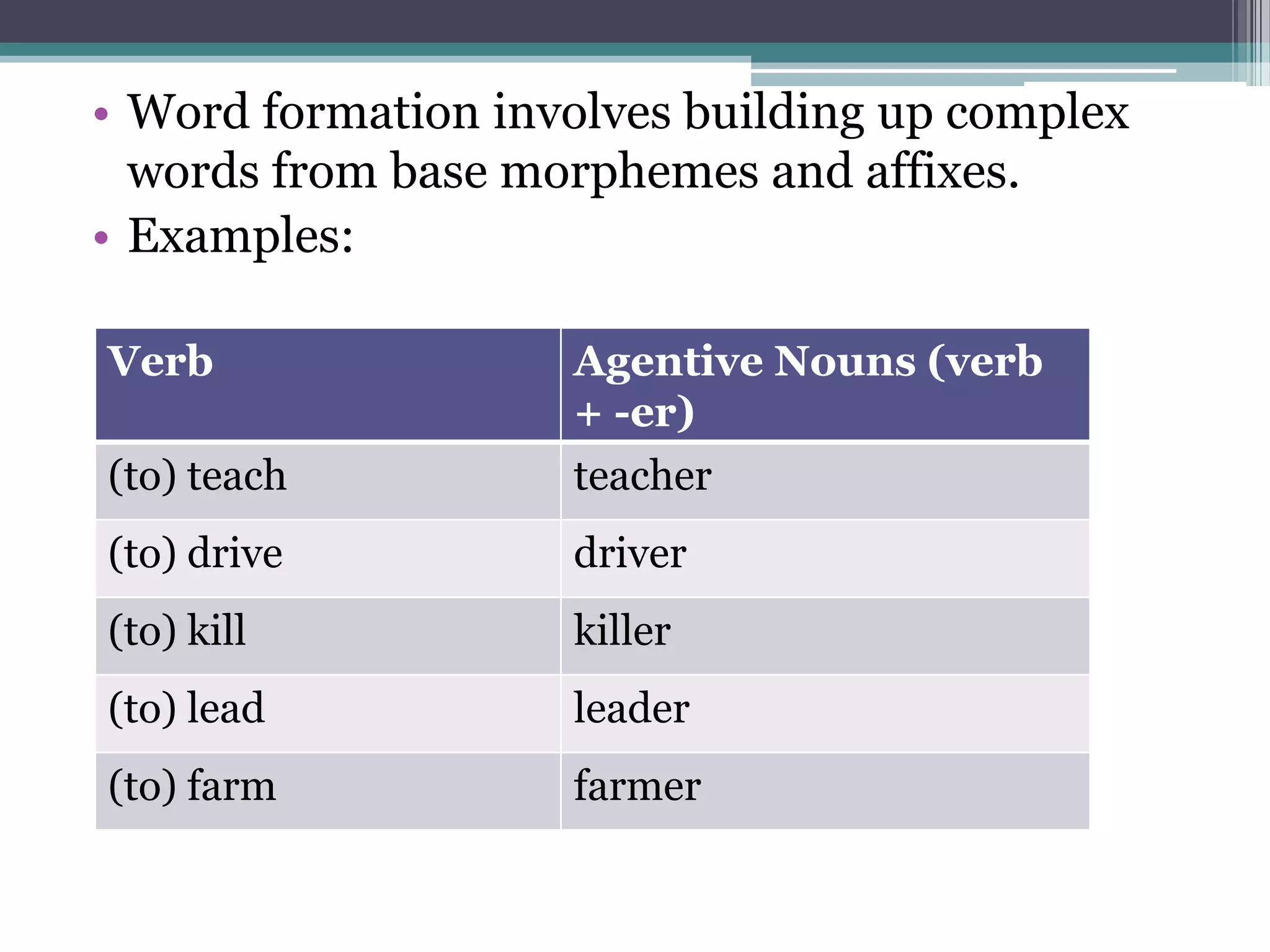
• Word formation involves building up complex
  words from base morphemes and affixes.
• Examples:

Verb                Agentive Nouns (verb
                    + -er)
(to) teach          teacher
(to) drive          driver
(to) kill           killer
(to) lead           leader
(to) farm           farmer
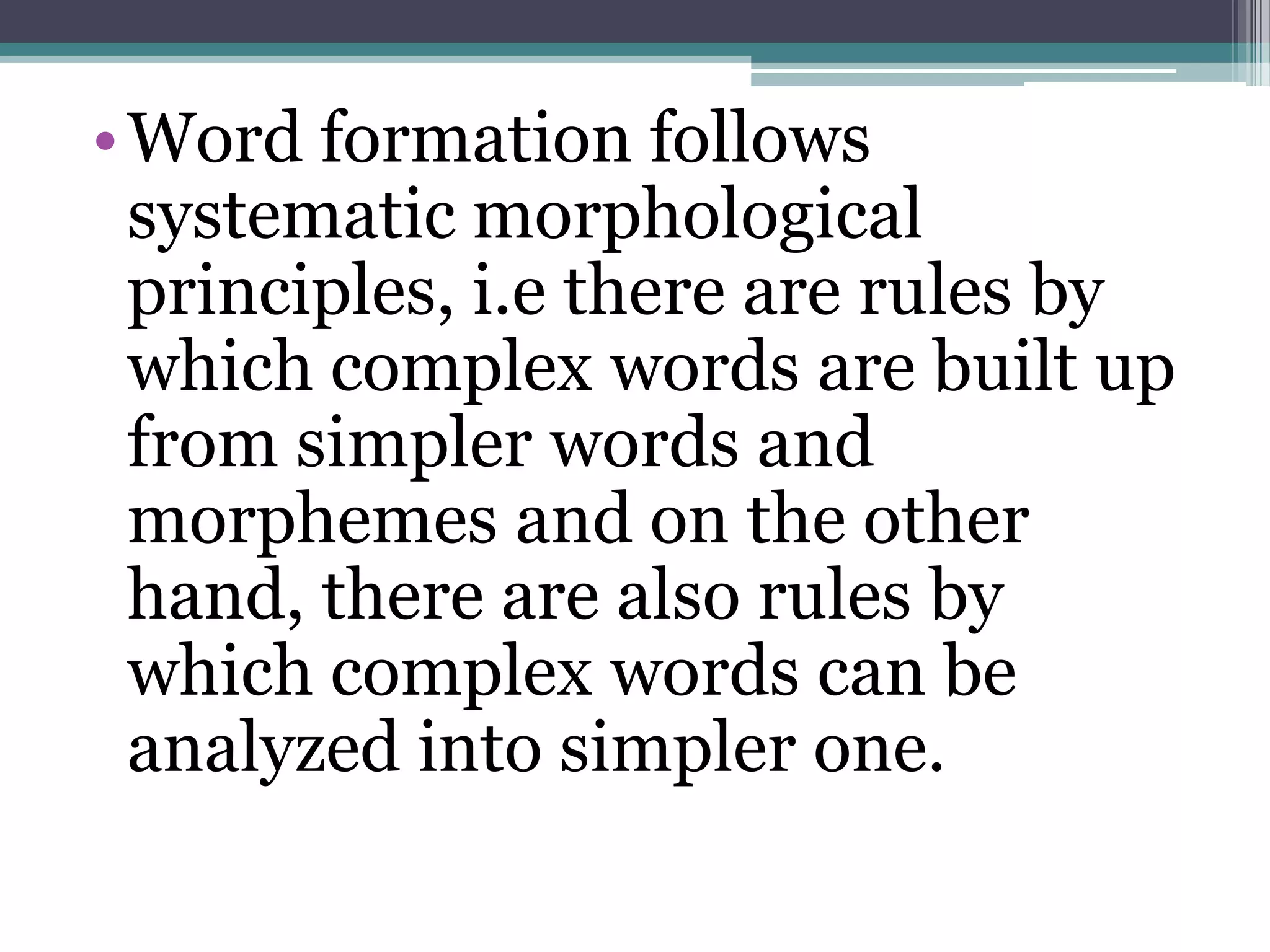
• Word formation follows
  systematic morphological
  principles, i.e there are rules by
  which complex words are built up
  from simpler words and
  morphemes and on the other
  hand, there are also rules by
  which complex words can be
  analyzed into simpler one.
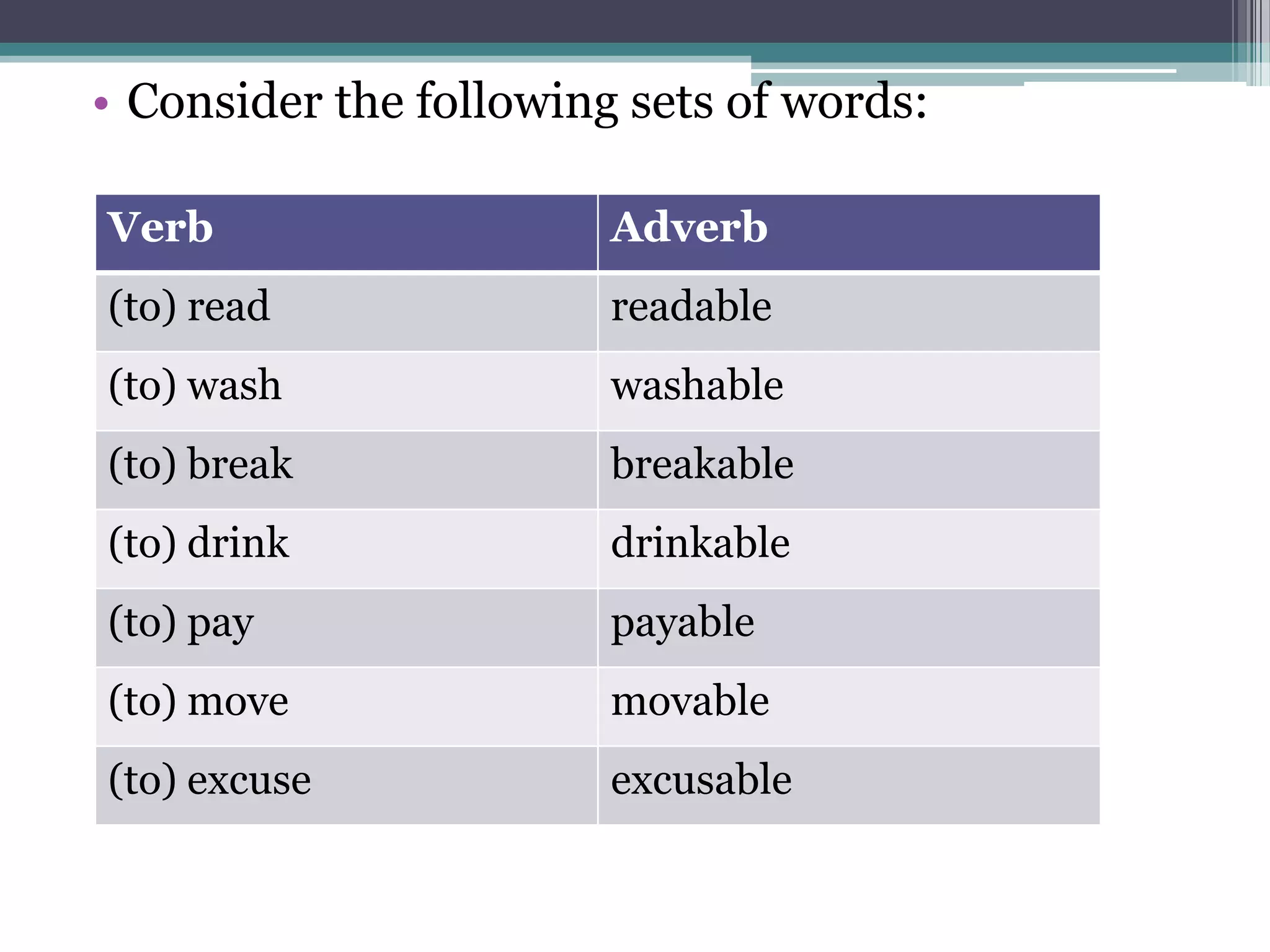
• Consider the following sets of words:

Verb                    Adverb
(to) read               readable
(to) wash               washable
(to) break              breakable
(to) drink              drinkable
(to) pay                payable
(to) move               movable
(to) excuse             excusable
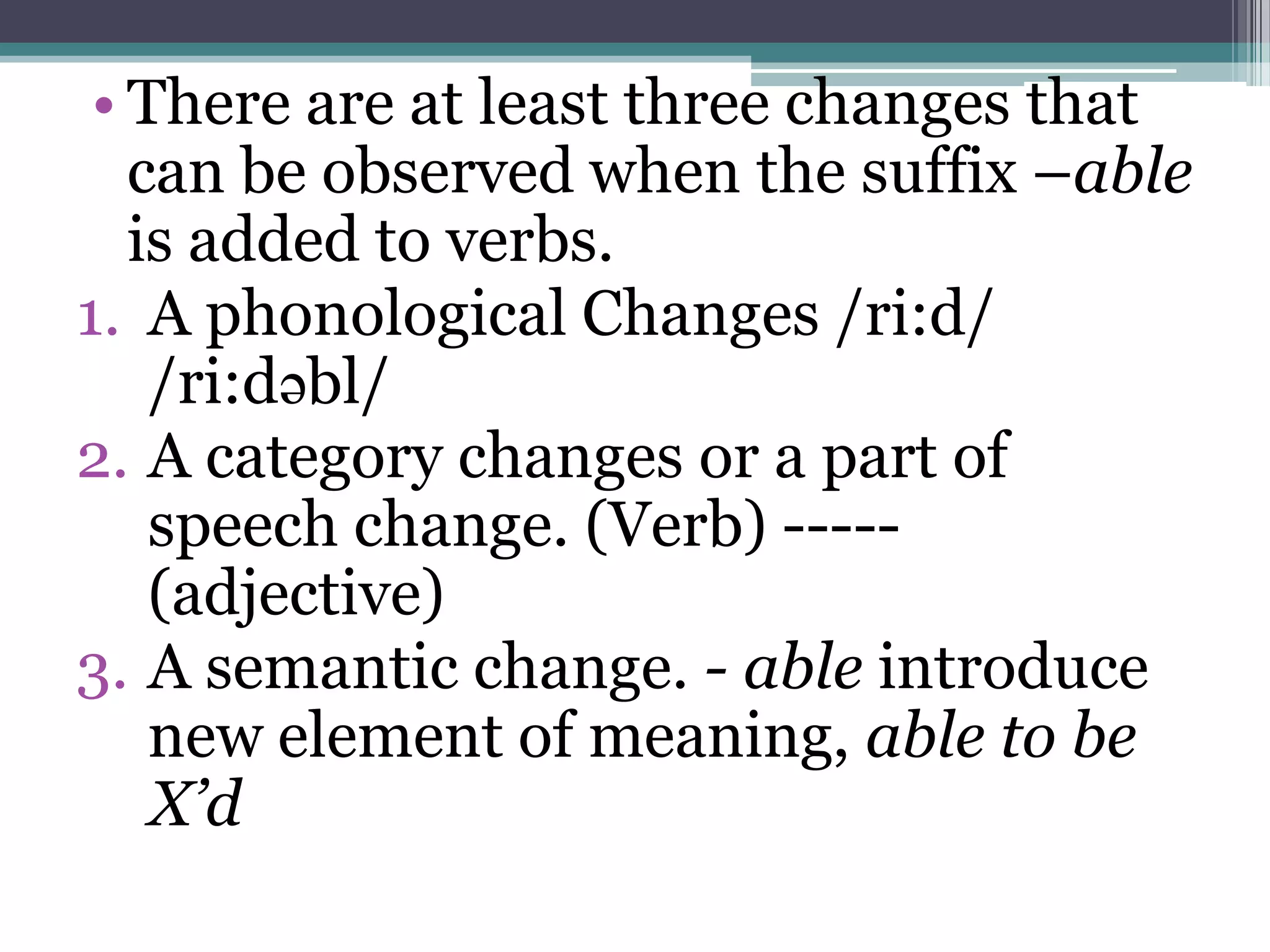
• There are at least three changes that
   can be observed when the suffix –able
   is added to verbs.
1. A phonological Changes /ri:d/
    /ri:dəbl/
2. A category changes or a part of
    speech change. (Verb) -----
    (adjective)
3. A semantic change. - able introduce
    new element of meaning, able to be
    X’d
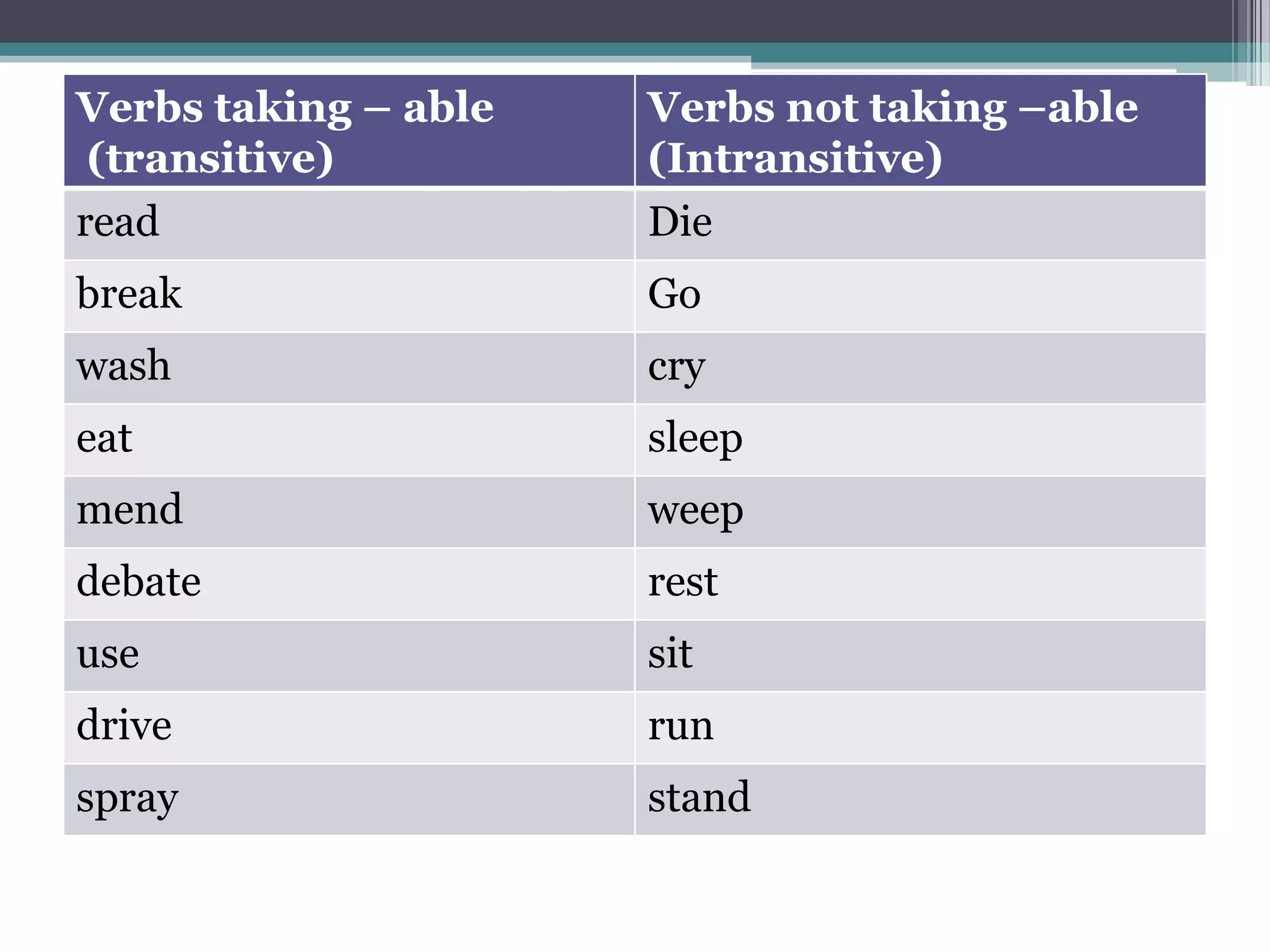
Verbs taking – able   Verbs not taking –able
 (transitive)         (Intransitive)
read                  Die
break                 Go
wash                  cry
eat                   sleep
mend                  weep
debate                rest
use                   sit
drive                 run
spray                 stand
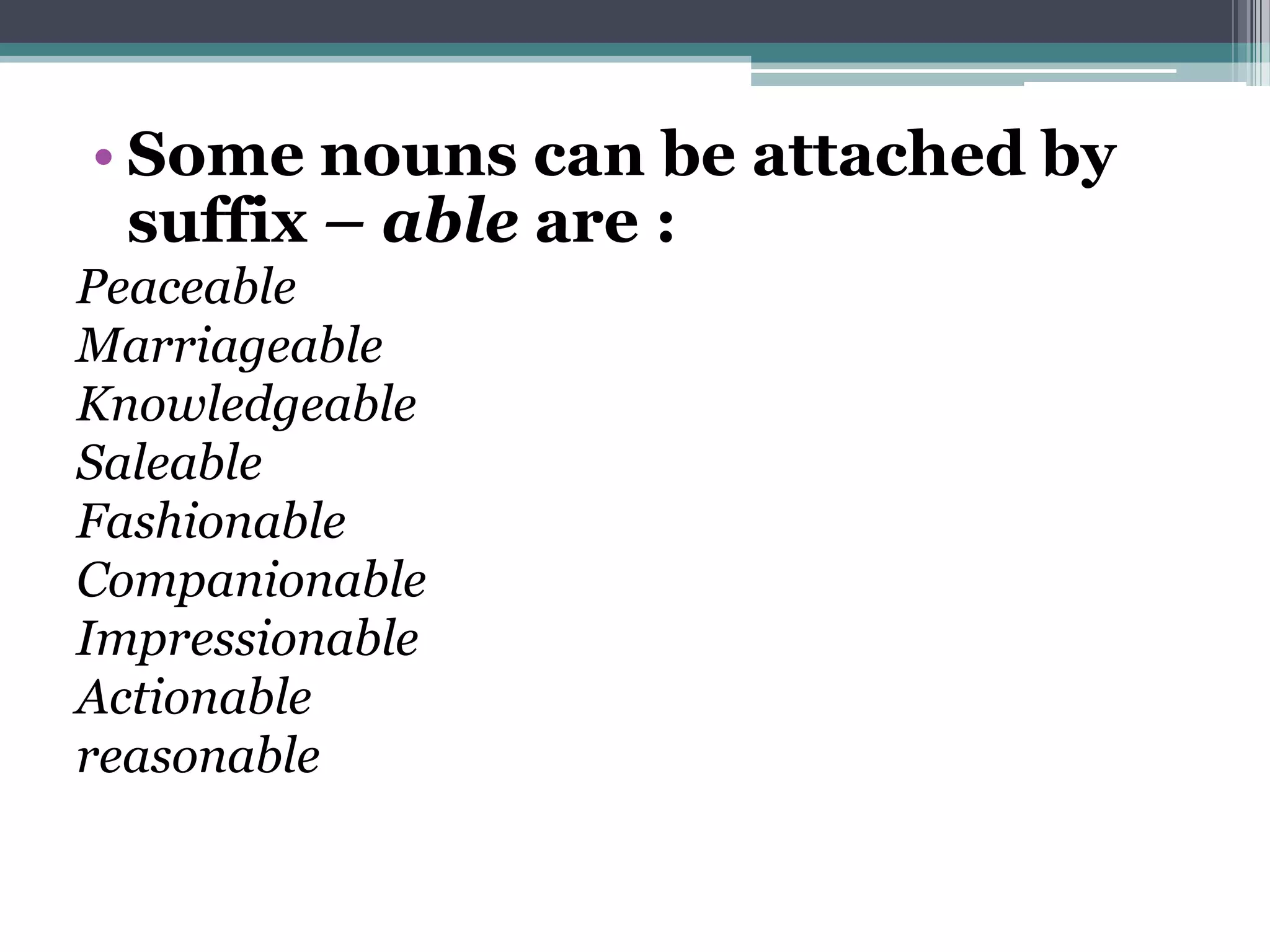
• Some nouns can be attached by
  suffix – able are :
Peaceable
Marriageable
Knowledgeable
Saleable
Fashionable
Companionable
Impressionable
Actionable
reasonable
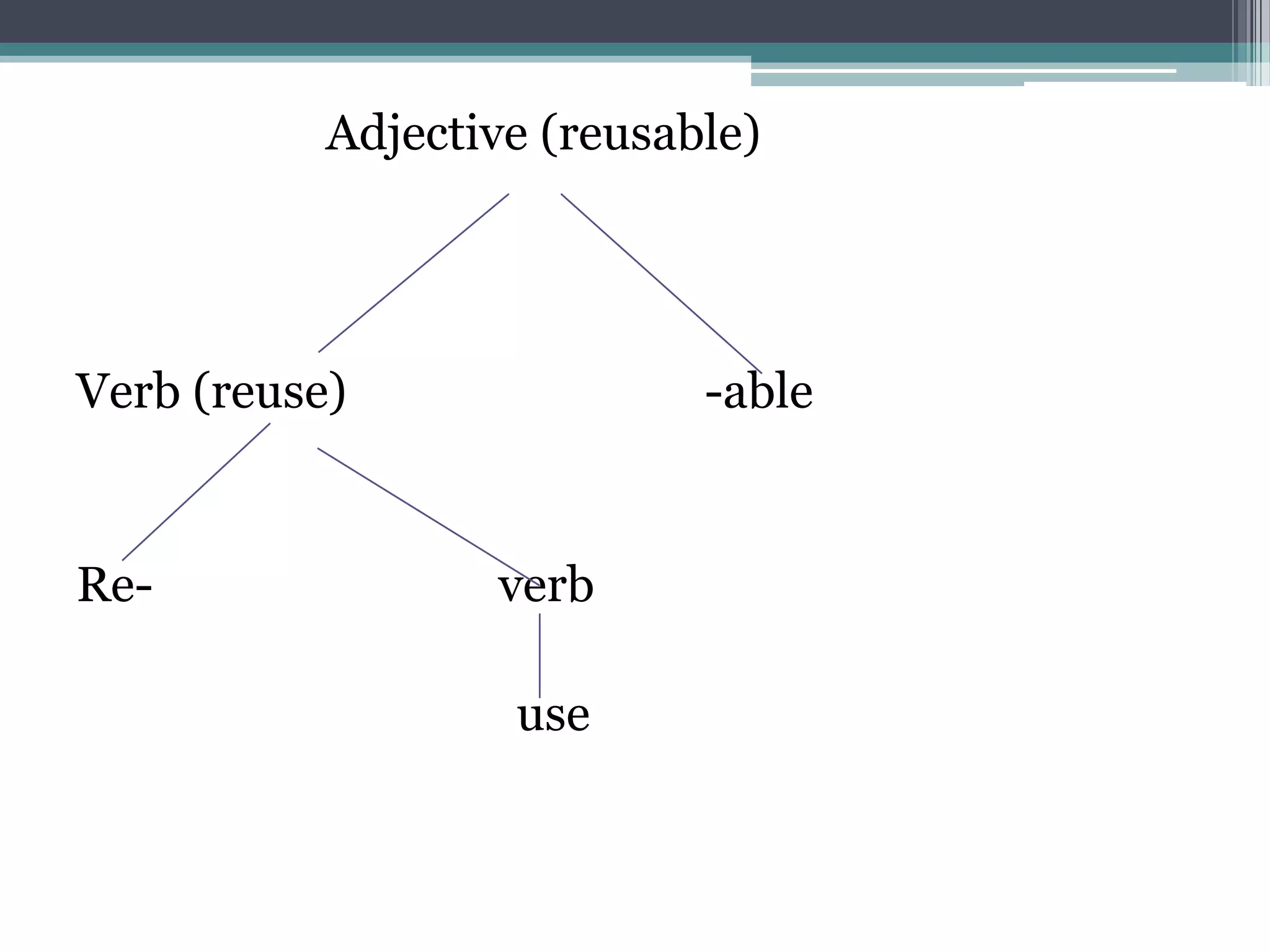
Adjective (reusable)


Verb (reuse)                -able


Re-               verb

                   use

Word formation process (1)

  • 1.
  • 2.
    • Word formationinvolves building up complex words from base morphemes and affixes. • Examples: Verb Agentive Nouns (verb + -er) (to) teach teacher (to) drive driver (to) kill killer (to) lead leader (to) farm farmer
  • 3.
    • Word formationfollows systematic morphological principles, i.e there are rules by which complex words are built up from simpler words and morphemes and on the other hand, there are also rules by which complex words can be analyzed into simpler one.
  • 4.
    • Consider thefollowing sets of words: Verb Adverb (to) read readable (to) wash washable (to) break breakable (to) drink drinkable (to) pay payable (to) move movable (to) excuse excusable
  • 5.
    • There areat least three changes that can be observed when the suffix –able is added to verbs. 1. A phonological Changes /ri:d/ /ri:dəbl/ 2. A category changes or a part of speech change. (Verb) ----- (adjective) 3. A semantic change. - able introduce new element of meaning, able to be X’d
  • 6.
    Verbs taking –able Verbs not taking –able (transitive) (Intransitive) read Die break Go wash cry eat sleep mend weep debate rest use sit drive run spray stand
  • 7.
    • Some nounscan be attached by suffix – able are : Peaceable Marriageable Knowledgeable Saleable Fashionable Companionable Impressionable Actionable reasonable
  • 8.