Guidelines for Development
in Reston Transit Station
Areas
Review of Draft
NVBIA/NAIOP
September 2018
Reston Guidelines – Background
• Urban Design Guidelines in Fairfax County date to 1990s
 Commercial Revitalization Districts/Areas
 Tysons
 Citizens and developers typically find them useful during county review
process
• Guidelines for Development help to:
 Implement and explain Comp Plan goals
 Illustrates the urban design vision of the Plan
• Encourage flexibility and ingenuity to achieve design goals
 Consistent w/ Strategic Plan for Economic Development
 Not one size fits all – flexibility in how/when to use a strategy
Reston Guidelines - Purpose
• The Guidelines ARE intended to:
 Enhance the goals of the Comprehensive
Plan and encourage flexibility, creativity,
and ingenuity while supporting
implementation of Plan policies.
 Aid developers, staff, and the community
during the development process for
Reston TSA applications.
 Guide the development of public projects
in the Reston TSAs including streetscape
and parks.
 Offer predictability and a common
starting point for applicants and the
community.
• The Guidelines are NOT intended to:
 Act as prescriptive or inflexible standards
or ordinances.
 Replace established Comprehensive Plan
policies or existing HOA covenants,
processes or guidelines.
 Apply to areas outside of the Reston
TSAs.
 Apply to individual homeowner design
decisions such as private yard design or
renovation projects
Reston Guidelines: Overview
• Urban Design Advisory Group
 Representatives of the development community and Reston residents
 Wide range of professional backgrounds including architects, engineers, planners
• Why a separate document?
 Reflect the unique character of Reston TSAs vs. county wide
 More flexible than Comp Plan or Zoning Ordinance
 Provide design details not appropriate for existing county documents
 Illustrate complex ideas, provide suggestions to implement existing Plan policies
 Easier to update best practices
• Format:
 Six chapters with appendix
 Divided into intent statements and possible design strategies to achieve them
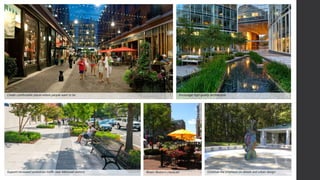
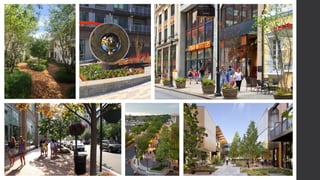
Create comfortable places where people want to be
Support increased pedestrian traffic near Metrorail stations Retain Reston’s character
Encourage high quality architecture
Continue the emphasis on details and urban design
Reston Guidelines – Overview
• Chapter 1 – Introduction
 Introduces the urban design vision for the
TSAs, provides an overview of the development
review process, explains the organization of the
document.
• Chapter 2 – Development Framework and
Vision
 Highlights the importance of beginning a
redevelopment project with an overall
framework which aligns with the Comp Plan
vision.
• Chapter 3 – TSA Character
 Provides a quick, “at a glance” summary of the
Comprehensive Plan guidance for each district
and sub-district.
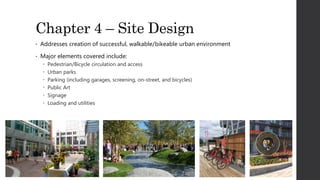
Chapter 4 – Site Design
• Addresses creation of successful, walkable/bikeable urban environment
• Major elements covered include:
 Pedestrian/Bicycle circulation and access
 Urban parks
 Parking (including garages, screening, on-street, and bicycles)
 Public Art
 Signage
 Loading and utilities
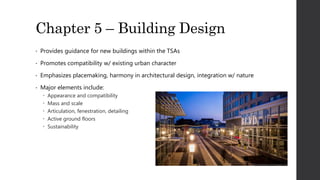
Chapter 5 – Building Design
• Provides guidance for new buildings within the TSAs
• Promotes compatibility w/ existing urban character
• Emphasizes placemaking, harmony in architectural design, integration w/ nature
• Major elements include:
 Appearance and compatibility
 Mass and scale
 Articulation, fenestration, detailing
 Active ground floors
 Sustainability
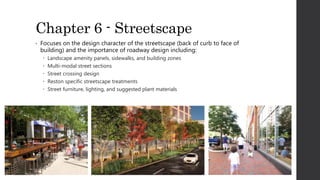
Chapter 6 - Streetscape
• Focuses on the design character of the streetscape (back of curb to face of
building) and the importance of roadway design including:
 Landscape amenity panels, sidewalks, and building zones
 Multi-modal street sections
 Street crossing design
 Reston specific streetscape treatments
 Street furniture, lighting, and suggested plant materials
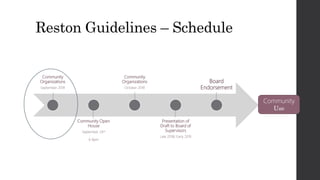
Reston Guidelines – Schedule
Community
Organizations
September 2018
Community Open
House
September 24th
6-8pm
Community
Organizations
October 2018
Presentation of
Draft to Board of
Supervisors
Late 2018/ Early 2019
Board
Endorsement
Community
Use
Thank you!
For additional information: www.fcrevite.org/programs/Reston_Guidelines.html
Please provide your feedback!
Lauren Murphy, Reston Revitalization Program Manager
Office of Community Revitalization
lauren.murphy@fairfaxcounty.gov
Attend our Open House on September 24th at the Rose Gallery!

Guidelines for Development in Reston Transit Station Areas

  • 1.
    Guidelines for Development inReston Transit Station Areas Review of Draft NVBIA/NAIOP September 2018
  • 3.
    Reston Guidelines –Background • Urban Design Guidelines in Fairfax County date to 1990s  Commercial Revitalization Districts/Areas  Tysons  Citizens and developers typically find them useful during county review process • Guidelines for Development help to:  Implement and explain Comp Plan goals  Illustrates the urban design vision of the Plan • Encourage flexibility and ingenuity to achieve design goals  Consistent w/ Strategic Plan for Economic Development  Not one size fits all – flexibility in how/when to use a strategy
  • 4.
    Reston Guidelines -Purpose • The Guidelines ARE intended to:  Enhance the goals of the Comprehensive Plan and encourage flexibility, creativity, and ingenuity while supporting implementation of Plan policies.  Aid developers, staff, and the community during the development process for Reston TSA applications.  Guide the development of public projects in the Reston TSAs including streetscape and parks.  Offer predictability and a common starting point for applicants and the community. • The Guidelines are NOT intended to:  Act as prescriptive or inflexible standards or ordinances.  Replace established Comprehensive Plan policies or existing HOA covenants, processes or guidelines.  Apply to areas outside of the Reston TSAs.  Apply to individual homeowner design decisions such as private yard design or renovation projects
  • 5.
    Reston Guidelines: Overview •Urban Design Advisory Group  Representatives of the development community and Reston residents  Wide range of professional backgrounds including architects, engineers, planners • Why a separate document?  Reflect the unique character of Reston TSAs vs. county wide  More flexible than Comp Plan or Zoning Ordinance  Provide design details not appropriate for existing county documents  Illustrate complex ideas, provide suggestions to implement existing Plan policies  Easier to update best practices • Format:  Six chapters with appendix  Divided into intent statements and possible design strategies to achieve them
  • 6.
    Create comfortable placeswhere people want to be Support increased pedestrian traffic near Metrorail stations Retain Reston’s character Encourage high quality architecture Continue the emphasis on details and urban design
  • 7.
    Reston Guidelines –Overview • Chapter 1 – Introduction  Introduces the urban design vision for the TSAs, provides an overview of the development review process, explains the organization of the document. • Chapter 2 – Development Framework and Vision  Highlights the importance of beginning a redevelopment project with an overall framework which aligns with the Comp Plan vision. • Chapter 3 – TSA Character  Provides a quick, “at a glance” summary of the Comprehensive Plan guidance for each district and sub-district.
  • 8.
    Chapter 4 –Site Design • Addresses creation of successful, walkable/bikeable urban environment • Major elements covered include:  Pedestrian/Bicycle circulation and access  Urban parks  Parking (including garages, screening, on-street, and bicycles)  Public Art  Signage  Loading and utilities
  • 9.
    Chapter 5 –Building Design • Provides guidance for new buildings within the TSAs • Promotes compatibility w/ existing urban character • Emphasizes placemaking, harmony in architectural design, integration w/ nature • Major elements include:  Appearance and compatibility  Mass and scale  Articulation, fenestration, detailing  Active ground floors  Sustainability
  • 10.
    Chapter 6 -Streetscape • Focuses on the design character of the streetscape (back of curb to face of building) and the importance of roadway design including:  Landscape amenity panels, sidewalks, and building zones  Multi-modal street sections  Street crossing design  Reston specific streetscape treatments  Street furniture, lighting, and suggested plant materials
  • 11.
    Reston Guidelines –Schedule Community Organizations September 2018 Community Open House September 24th 6-8pm Community Organizations October 2018 Presentation of Draft to Board of Supervisors Late 2018/ Early 2019 Board Endorsement Community Use
  • 13.
    Thank you! For additionalinformation: www.fcrevite.org/programs/Reston_Guidelines.html Please provide your feedback! Lauren Murphy, Reston Revitalization Program Manager Office of Community Revitalization lauren.murphy@fairfaxcounty.gov Attend our Open House on September 24th at the Rose Gallery!

Editor's Notes

  • #2 Welcome and thank you for having us Introduce staff: Me Chris Caperton Beth Beth I.
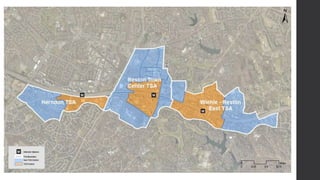
  • #3 This is the map of the Reston TSAs just so everyone is clear on the applicable areas.
  • #4 Description of volume one/two updates currently ongoing Tysons UDG created with adoption of the new Tysons plan and revised a few years ago Other areas of the county with special circumstances also have them – example, Lorton Comp plan was adopted in 2014, provided overarching design goals and principles but no details This document helps to illustrate the Plan goals Important to note that these are guidelines, not standards or code requirements. They are meant to foster ingenuity and are flexible.
  • #5 Go over the lists here. - Want to dispel any concern that this would impact individual homeowner decision making – this is not “another set of HOA documents” that the county enforces. These are guidelines to aid staff, developers, and the community during the legislative process.
  • #6 As mentioned, the Plan set the stage for overarching urban design principles On this process, OCR worked with an Advisory Group with representatives from different community organizations including RA, major property owners in the TSA like JBG, Comstock and Boston Properties, and reston residents Have been asked a few times why this detail cannot just be included in comp plan – Several reasons to avoid that including Easy to update these when new technologies or best practices are supported in the industry Including this detail in the comp plan eliminates flexibility Difficult to illustrate complex ideas in a more formal codified document
  • #7 Some imagery that demonstrates what the Guidelines are trying to achieve Create comfortable places Encourage high quality architecture Support increased pedestrian traffic Retain reston’s character Continue the emphasis on details and good urban design