




1
2





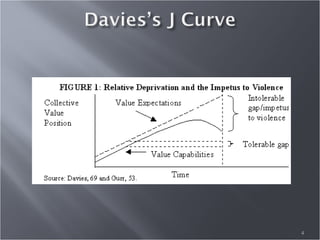
Marx and the utter deprivation of the working
class
Relative Deprivation
Rise and fall with Davies’s J-Curve

3
4
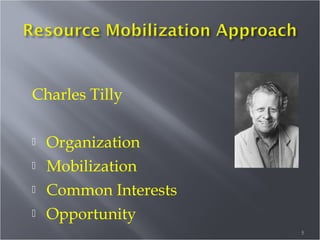
Charles Tilly





Organization
Mobilization
Common Interests
Opportunity
5
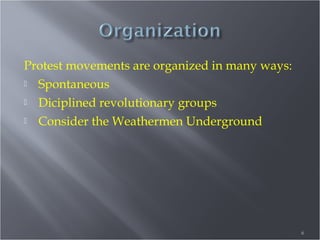
Protest movements are organized in many ways:
 Spontaneous
 Diciplined revolutionary groups
 Consider the Weathermen Underground

6






The acquisition of resources to make collective
action possible
Material goods
Political support
Weaponry

7




What are the possible gains and losses?
Common goals.
(Ideology?)

8





Special events
History itself
Chance and luck
Other social movements

9







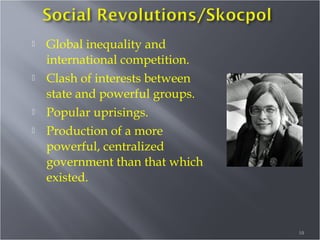
Global inequality and
international competition.
Clash of interests between
state and powerful groups.
Popular uprisings.
Production of a more
powerful, centralized
government than that which
existed.

10
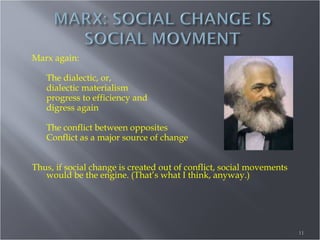
Marx again:
The dialectic, or,
dialectic materialism
progress to efficiency and
digress again
The conflict between opposites
Conflict as a major source of change
Thus, if social change is created out of conflict, social movements
would be the engine. (That’s what I think, anyway.)

11




Change is inevitable. There is a constant
struggle between classes such as the Proletariat
and the Bourgeoisie.
Change is violent and sudden from the strain
of conflicting forces. This will only end when
the Proletariat wins the final revolution and a
true socialist state is in place. Itself a social
movement.

12
1.

2.

3.

4.

While collective behavior is transitory (short
lived) social movements are longer lasting.
Mass hysteria and riots are spontaneous while
social movements are purposeful and goaloriented.
Social movements are structured rather than free
form.
Collective behavior may involve only a small
number of people, while social movements
involve large numbers.
13






Ideology
Revolutionary social movements
Reform movements
Resistance movements
Expressive movements

14
An ideology is a set of beliefs and principles
that serve to form the glue for revolutionary
behavior. It then is a paradigm, a shared
view of the world.
It contains the group purpose and
motivation for reform or change. That is, an
ideology maintains what things “should”
be, not necessarily what they are.
An ideology unites people with a single
cause.
15
Revolutionary social movements seek to
replace the existing value system with
something new (i.e. socialism for capitalism)
You do know what the Arab Spring was all
about? And Occupy Wall Street?
Reform movements, on the other hand, seek
changes that implement existing values
more adequately. (i.e. the civil rights
movement.)
16
Resistance movements arise to either
implement change or to resist change itself.
Should a government swing too far to the
right or the left, a resistance movement may
arise to thwart its domination of existing
values.
Expressive movements are less concerned
with political change than with “change
from within” such as the Pentecostalism and
the need for “rebirth”.
17






Centralized power of the state
Military’s allegiance to the state is weakened
A political crisis occurs (i.e. a foreign war going
badly)
Uprisings by a substantial portion of the public

18
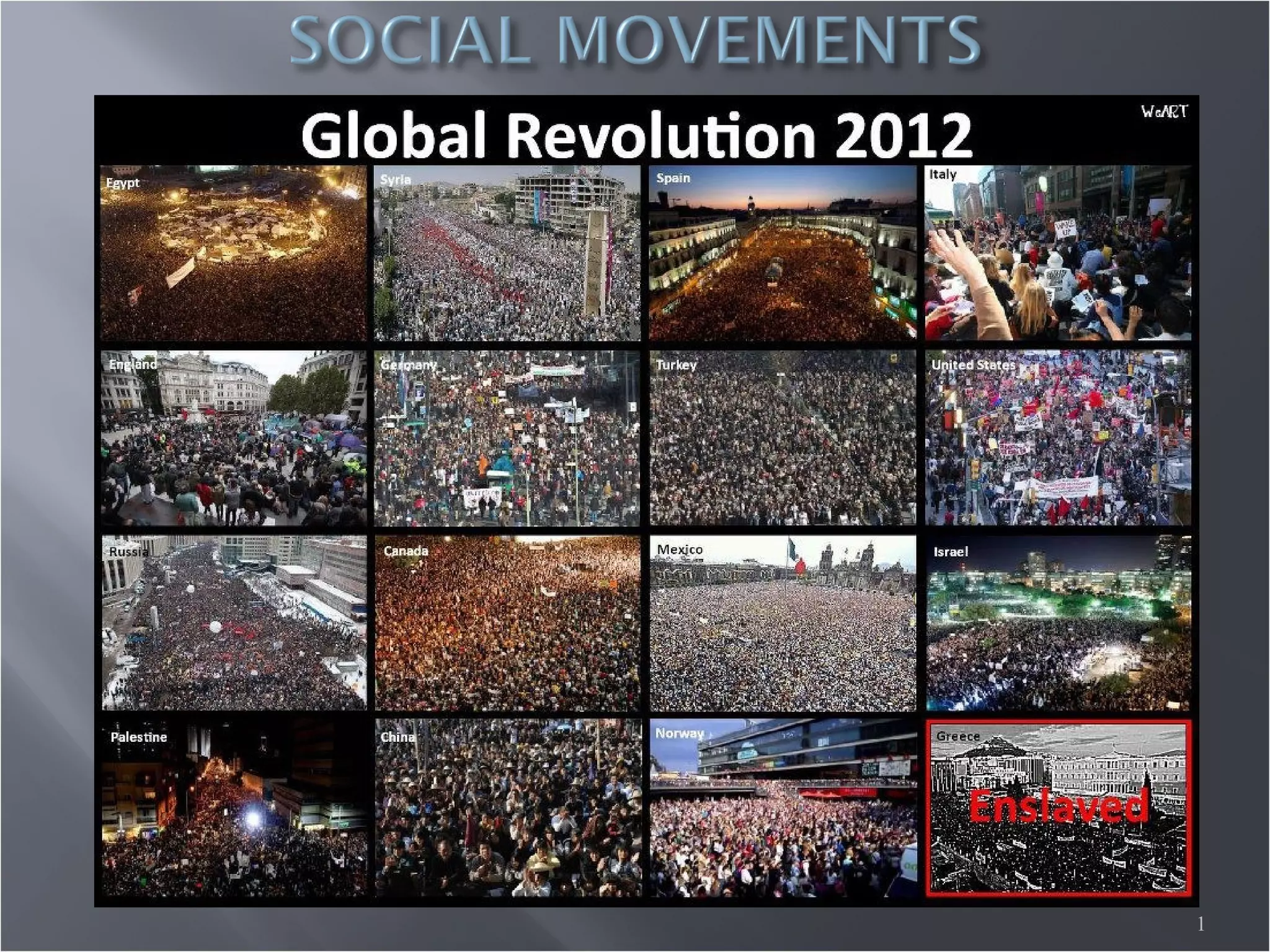
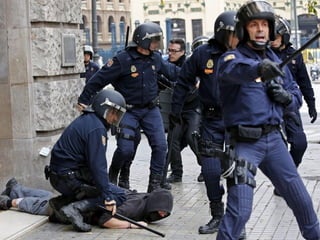
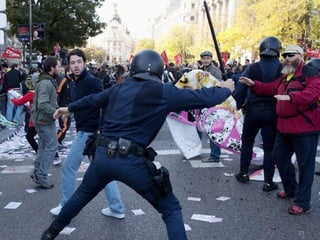
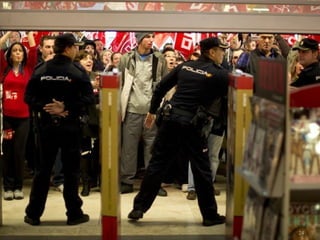
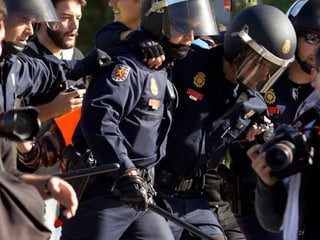
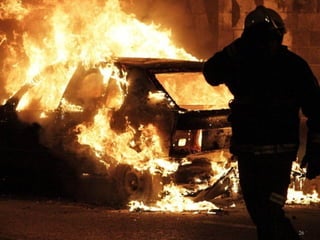
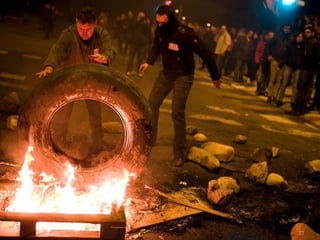
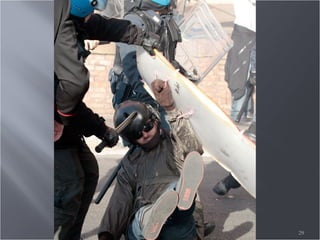
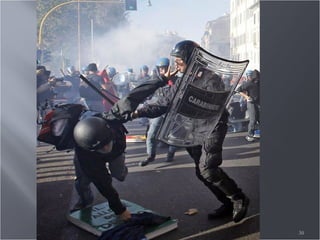
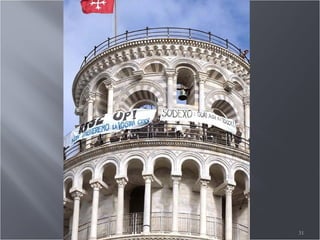
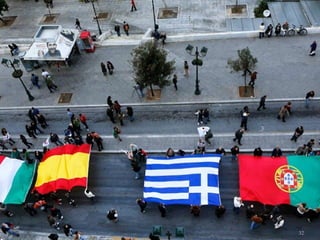
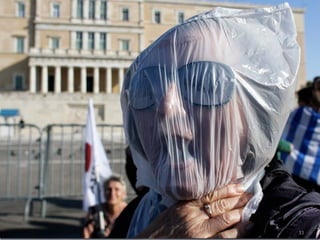
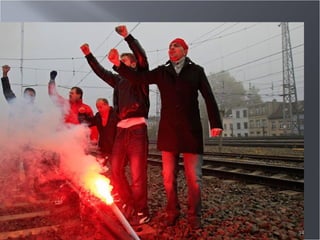
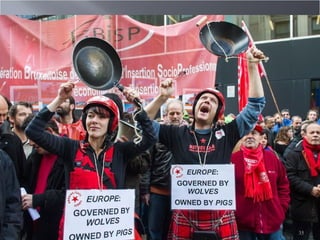
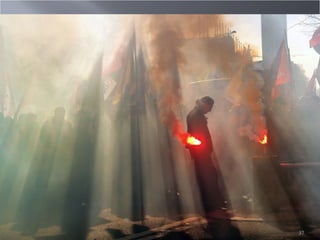
What is going on right now? Why, of all
things, a social revolution.
Since the 2008 financial crisis, the European Union
(EU) has been imposing what are called Austerity
Measures. This means a reduction in social services to
the majority of the populations in numerous countries,
most specifically Greece and Spain.
It does NOT mean that the wealthy contribute to
resolving the crisis through financial support, but it
DOES mean that the wealthy retain their wealth and
status.
19
20
21
22
23
24
25
26
27
28
29
30
31
32
33
34
35
36
37
38
See slide shows on Arab
Spring and Occupy Wall
Street (OWS)

39






Some of the material on social movements
comes from Gells and Levine, 1999.
Other comes from Hughes and Kroehler, 2005.
Still more from Macionis, 1995
And more from OpenStax

40

Social movements 11 30-13

  • 1.
  • 2.
  • 3.
       Marx and theutter deprivation of the working class Relative Deprivation Rise and fall with Davies’s J-Curve 3
  • 4.
  • 5.
  • 6.
    Protest movements areorganized in many ways:  Spontaneous  Diciplined revolutionary groups  Consider the Weathermen Underground 6
  • 7.
        The acquisition ofresources to make collective action possible Material goods Political support Weaponry 7
  • 8.
       What are thepossible gains and losses? Common goals. (Ideology?) 8
  • 9.
  • 10.
        Global inequality and internationalcompetition. Clash of interests between state and powerful groups. Popular uprisings. Production of a more powerful, centralized government than that which existed. 10
  • 11.
    Marx again: The dialectic,or, dialectic materialism progress to efficiency and digress again The conflict between opposites Conflict as a major source of change Thus, if social change is created out of conflict, social movements would be the engine. (That’s what I think, anyway.) 11
  • 12.
      Change is inevitable.There is a constant struggle between classes such as the Proletariat and the Bourgeoisie. Change is violent and sudden from the strain of conflicting forces. This will only end when the Proletariat wins the final revolution and a true socialist state is in place. Itself a social movement. 12
  • 13.
    1. 2. 3. 4. While collective behavioris transitory (short lived) social movements are longer lasting. Mass hysteria and riots are spontaneous while social movements are purposeful and goaloriented. Social movements are structured rather than free form. Collective behavior may involve only a small number of people, while social movements involve large numbers. 13
  • 14.
         Ideology Revolutionary social movements Reformmovements Resistance movements Expressive movements 14
  • 15.
    An ideology isa set of beliefs and principles that serve to form the glue for revolutionary behavior. It then is a paradigm, a shared view of the world. It contains the group purpose and motivation for reform or change. That is, an ideology maintains what things “should” be, not necessarily what they are. An ideology unites people with a single cause. 15
  • 16.
    Revolutionary social movementsseek to replace the existing value system with something new (i.e. socialism for capitalism) You do know what the Arab Spring was all about? And Occupy Wall Street? Reform movements, on the other hand, seek changes that implement existing values more adequately. (i.e. the civil rights movement.) 16
  • 17.
    Resistance movements ariseto either implement change or to resist change itself. Should a government swing too far to the right or the left, a resistance movement may arise to thwart its domination of existing values. Expressive movements are less concerned with political change than with “change from within” such as the Pentecostalism and the need for “rebirth”. 17
  • 18.
        Centralized power ofthe state Military’s allegiance to the state is weakened A political crisis occurs (i.e. a foreign war going badly) Uprisings by a substantial portion of the public 18
  • 19.
    What is goingon right now? Why, of all things, a social revolution. Since the 2008 financial crisis, the European Union (EU) has been imposing what are called Austerity Measures. This means a reduction in social services to the majority of the populations in numerous countries, most specifically Greece and Spain. It does NOT mean that the wealthy contribute to resolving the crisis through financial support, but it DOES mean that the wealthy retain their wealth and status. 19
  • 20.
  • 21.
  • 22.
  • 23.
  • 24.
  • 25.
  • 26.
  • 27.
  • 28.
  • 29.
  • 30.
  • 31.
  • 32.
  • 33.
  • 34.
  • 35.
  • 36.
  • 37.
  • 38.
  • 39.
    See slide showson Arab Spring and Occupy Wall Street (OWS) 39
  • 40.
        Some of thematerial on social movements comes from Gells and Levine, 1999. Other comes from Hughes and Kroehler, 2005. Still more from Macionis, 1995 And more from OpenStax 40