Nutritional Support in Critical illness Tianjin Medical University General Hospital  Emergency Center Shou songtao
Nutritional support   is the provision of nutrients to patients who cannot meet their nutritional requirements by eating standard diets. Definition
‘ A slender and restricted diet is always dangerous in chronic and in acute diseases’ Hippocrates 400 B.C.
Malnutrition occurs in  approx.40%  of hospitalized patients Can lead to increased morbidity and mortality Impairment of skeletal, cardiac, respiratory muscle function Impairment of immune function Atrophy of GIT Impaired healing
1970s: TPN - separate CH, AAs and Lipids 2500-3000kcals/day: Lactic acidosis, high glucose loads, fatty livers, high insulin  Single lumen C/Lines, no pumps Urinary urea measured, N calculated 1980s: Scientific studies of metabolism: recognition of overfeeding  1990s: nitrogen limitation: 0.2g/kg/24hr, start of immunonutrition trials 2000s: glucose control, specific nutrients
ICU Nutrition through the ages Overfeeding 1980s
4 basic questions to be answered: Who? When? How much? How?
 
 
Organisation of Nutrition Support 3. NICE Guidelines for Nutrition Support in Adults 2006 Screen Recognise Treat Oral Enteral Parenteral Monitor & Review
Screen Various nutritional screening tools Low risk: routine clinical care Medium risk: observe High risk: treat- refer to dietitian/local protocols
Screening in ICU Almost all patients require artificial nutrition- cannot ‘observe’ Needs adaptation using NICE Guidelines Adapted MUST for ICU: Uses BMI/weight loss/food intake + refeeding risk assessment; linked to feeding flowchart
Nutritional Assessment History  – 10% weight loss or more suggests protein malnutrition Exam  – Weight/Ideal body weight (<85% predicted), temporal muscle wasting, anthropometrics Nutritional markers - daily weight – more a measure of fluid status than nutritional status -24 hour urine urea nitrogen (cannot be used in renal failure) -albumin (<30mg/dl,t 1/2 21), prealbumin(<12mg/dl, 2), transferrin(<150mmol/L, 7) -albumin influenced by fluid status, acute phase response
Nutritional Assessment Immune function  – skin testing, anergy,total lymphocyte count<1800/mm 3 Anthropometric measures > 10 % loss of ‘well’ body weight Body mass index : weight (kg)/ height  2  (m 2 ) <18 kg/m 2  assoc. With prolonged ICU, increased post-operative complications, higher readmission rates Mid-arm circumference, skin fold thickness Poor accuracy, specificity, reproducibility
Nutritional assessment Serum proteins Albumin Reflects synthesis, degradation, losses, exchange between intracellular and extracellular compartments Half life 21 days – limited ability to reflect acute changes < 3.5 g/dL assoc. increased morbidity
Nutritional assessment Serum proteins Transferrin (1/2 life 7 days), Pre-albumin (1/2 life 2 days) More accurately reflect acute changes Limited by erratic responses to stress, sepsis, cancer
Nutritional assessment Nitrogen balance = N  intake  – N  loss = (dietary protein x 0.16) – (urea nitrogen (urine) + 4 g (stool/skin) ) Positive balance indicates anabolic state Negative balance indicates catabolic state Aim to provide non-protein sources of fuel to allow protein to be used for anabolic processes
How much to give in ICU? Schofield equation/Harris Benedict  e.g. for 65 year old woman: BMR = (9.2x weight in kg) + 687, = requirement in Kcal/24hr  Add Activity and Stress factors e.g. 10% for bedbound + 20-60% for sepsis/burns For 65kg ventilated woman with sepsis: 1670 Kcal = approx 25 Kcal/kg/d No dietitian?  Rough guide: 25 Kcal/kg/day total energy.  Increase to 30 as patient improves
How much to give? 0.2g/Kg/day of Nitrogen (1.25g/kg/day protein) 30 – 35ml fluid/kg/24 hours baseline  Add 2-2.5ml/kg/day of fluid for each degree of temperature  Account for excess fluid losses Adequate electrolytes, micronutrients, vitamins Avoid overfeeding  Obesity: feed to BMR, add stress factor only if severe i.e. burns/trauma
Types of nutrition support Routes of nutrition support Enteral nutrition Parenteral nutrition
Enteral nutrition In general, the preferred method of choice
Enteral Nutrition Nutrition delivered via the gut Includes oral feedings and tube feedings
Indications for Enteral Nutrition  Malnourished patient expected to be unable to eat >5-7 days Normally nourished patient expected to be unable to eat >7-9 days Adaptive phase of short bowel syndrome  Increased needs that cannot be met through oral intake (burns, trauma) Inadequate oral intake resulting in deterioration of nutritional status or delayed recovery from illness ASPEN. The science and practice of nutrition support. A case-Based Core curriculum. 2001; 143
Contraindications for EN Severe acute pancreatitis High output proximal fistula Inability to gain access Intractable vomiting or diarrhea Aggressive therapy not warranted ASPEN. The science and practice of nutrition support. A case-based core curriculum. 2001; 143
Contraindications for EN Inadequate resuscitation or hypotension; hemodynamic instability Ileus Intestinal obstruction Severe G.I. Bleed Expected need less than 5-7 days if malnourished or 7-9 days if normally nourished
Long-term nutrition Gastrostomy Jejunostomy Short-term nutrition Nasogastric feeding Nasoduodenal feeding Nasojejunal feeding Enteral nutrition
 
Diagram of enteral tube placement.
With/without endoscopic Long time with endoscopic operation Gastric tube duodenal tube gastrostomy Gastrostomy  Duodenum  feeding Jejunostomy feeding Decision of Selecting The Modes of Administration Enteral Nutrition Short time Tube Percutaneous tube


Enteral Formulas Liquid diets intended for oral use or for tube feeding Ready-to-use or powdered form Designed to meet variety of medical and nutrition needs Can be used alone or given with foods
Formula Selection The suitability of a feeding formula should be evaluated based on  Functional status of GI tract Digestion and absorption capability of patient  Physical characteristics of formula (osmolality, fiber content, caloric density, viscosity) Macronutrient ratios Specific metabolic needs Contribution of the feeding to fluid and electrolyte needs or restriction  Cost effectiveness
Enteral Formulas Determine best choice by medical and nutrition assessment Meet specific nutrition needs
Enteral Formula Categories Polymeric Monomeric Fiber-containing Disease-specific Rehydration Modular
Enteral Formula Categories Polymeric Whole protein nitrogen source For use in patients with normal or near normal GI function Protein isolate formulas Protein that has been separated from a food  (casein from milk, albumin from egg) Blenderized formulas May contain pureed meat, vegetables, fruits, milk, starches with v/m added Made at home or purchased commercially
Enteral Formula Categories Polymeric
Enteral Formula Categories Monomeric Elemental/hydrolyzed Predigested nutrients  Free amino acids and/or short peptide chains Has low fat content or high percentage of MCT, LCT, structured lipids
Enteral Formula Categories Monomeric
Enteral Formula Categories Monomeric Use in patients with compromised digestive and/or absorptive capacity More expensive than standard formulas Tend to be more hyperosmolar because of small particle size
Enteral Formula Categories Fiber-Containing Fiber-containing: containing a source of fiber; reportedly beneficial for prevention/treatment of altered bowel function in enterally fed patients Soy polysaccharide is the most common fiber additive in enteral feedings ASPEN. The science and practice of nutrition support. A case-based core curriculum. 2001; 148
Enteral Formula Categories Fiber-Containing Soluble fiber (guar gum, oat fiber, pectin) may exert trophic effect on colonic mucosa and be useful in normalizing bowel function  Patients with impaired gastric emptying should not be fed fiber-containing formula into the stomach ASPEN. The science and practice of nutrition support. A case-based core curriculum. 2001; 148
Enteral Formula Categories Fiber-Containing
Enteral Formulas: Calorie Dense May be used in fluid-restricted or volume-sensitive patients Calorie density ranges from 1.3 to 2 kcals/ml Monitor fluid/hydration status
Enteral Formulas: Calorie Dense
Enteral Formula Categories Disease Specific Designed for patients with specific disease states.  Available for patients with respiratory disease, ARDS, diabetes, renal failure, hepatic failure, and immune compromise.
Enteral Formula Categories Disease Specific
Disease Specific Formulas Diabetic Amount and type of CHO modified to reduce blood glucose response Increased fat content (may have increased monounsaturated fats) May be worth trying diabetes formulas in patients who have failed to achieve good blood glucose control on standard formulas
Disease Specific Formulas: Diabetic
Disease Specific Formulas Hepatic Generally have reduced aromatic amino acids and increased branched chain amino acids More expensive than standard products Often lower in protein than standard formulas (may be too low for most liver patients)
Disease Specific Formulas Renal Typically are calorie dense (2.0 kcal/cc) products with relatively low protein levels and modified electrolytes Generally too low in protein for dialyzed patients and acutely ill patients May be useful for short term use as supplement or calorie source in pre-dialysis chronic renal failure patients
Disease-Specific Formulas Renal Novasource Renal
Disease Specific Formulas Immune-Enhancing Have added “immune-enhancing” nutrients (arginine, glutamine, omega-3 fatty acids, nucleotides) Meta-analysis suggests that they might be most beneficial in surgical patients
Immune-Enhancing Formulas
Disease-Specific Formula Pulmonary Contain higher percentage of total calories from fat to reduce respiratory quotient and make it easier to wean from respirator High fat gastric feedings may cause delayed emptying in critically ill patients
Disease-Specific Formulas: Pulmonary
Enteral Formula Nutrient Sources Carbohydrate CHO content ranges from 40-90% of total calories Fiber: soy polysaccharide (most common) guar gum, oat fiber, pectin
Enteral Formula Nutrient Sources Lipids Fat provides isotonic, concentrated energy source Corn and soybean oil common May include MCTs; more easily digested and absorbed Fat content ranges from <10% to >50% of calories ASPEN. The science and practice of nutrition support. A case-based core curriculum. 2001; 148
Enteral Formulas Nutrient Sources Protein Whole protein, hydrolyzed protein, free amino acids  Casein, soy protein, lactalbumin, whey, egg white albumin Small peptides absorbed as efficiently as free amino acids Free amino acids are more hyperosmolar
Initiation of Feeds Approaches Bolus vs continuous feeds Full feeds vs graded regimens
Assessment of Clinical Response Anthropometric measurements Feeding tolerance
Enteral nutrition Complications Gastrointestinal Mechanical Metabolic Formula related
GI Complications Vomiting Diarrhea Constipation Abdominal pain / bloating Gastric irritation Aspiration
Mechanical Complications Tube occlusion Nasopharyngeal effects Tube fractures Leakage Obstruction Irritation
Metabolic Complications Hypovolemia Hyperkalemia Hypophosphatemia Hypertonic dehydration Fluid overload
Formula Complications Incompatibility with medications Hyperosmolality Contamination
Application Criterion of EN “ When the gut works,  and can be used  safely,  use it ”
Parenteral Nutrition
Parenteral Nutrition Allows greater caloric intake BUT Is more expensive Has more complications Needs more technical expertise
Who Will  Benefit From Parenteral Nutrition? Patients with/who   Abnormal gut function Cannot consume adequate amounts of nutrients by enteral feeding
Two Main Forms of  Parenteral Nutrition Peripheral Parenteral Nutrition Central (Total) Parenteral Nutrition Both differ in  composition of feed primary caloric source potential complications method of administration
Peripheral Parenteral Nutrition Given through peripheral vein Short term use  Mildly stressed patients Low caloric requirements  Contraindications to central TPN
What to Do Before Starting TPN Nutritional Assessment Venous access evaluation Baseline weight Baseline lab investigations
Venous Access for TPN Need venous access to a “large” central line with fast flow to avoid thrombophlebitis Superior Vena Cava Subclavian approach Internal jugular approach External jugular approach
 
Baseline Lab Investigations Full blood count Coagulation screen Ca ++ , Mg ++ , PO 4 2- Lipid Other tests when indicated
Steps to Ordering TPN Decide how much fat & carbohydrate to give Determine Total Fluid Volume Determine Non-N Caloric needs Determine Protein requirements Determine Electrolyte and Trace element requirements Determine need for additives
How Much Volume to Give? Cater for maintenance & on going losses  Normal maintenance requirements  By body weight alternatively, 30 to 50 ml/kg/day Add on going losses based on I/O chart Consider insensible fluid losses also e.g. add 10% for every  o C rise in temperature
Steps to Ordering TPN Determine Total Fluid Volume Determine  Caloric needs Determine Protein requirements Decide how much fat & carbohydrate to give Determine Electrolyte and Trace element requirements Determine need for additives
Caloric Requirements Based on Total Energy Expenditure Can be estimated using predictive equations TEE = REE + Stress Factor + Activity Factor Can be measured using metabolic cart
Stress Factor Caloric Requirements Malnutrition -  30% Peritonitis + 15% Soft tissue trauma + 15% Fracture + 20% Fever (per  o c rise) + 13% Moderate infection +  20% Severe infection  + 40% <20% BSA burns + 50% 20-40% BSA burns + 80% >40% BSA burns + 100%
Activity Factor Bed-bound + 20% Ambulant  + 30%  Active  + 50% Caloric Requirements
How Much CHO & Fats? “ Too much of a good thing causes problems” Not more than 4 mg / kg / min Dextrose (less than 6 g / kg / day) Not more than 0.7 mg / kg / min Lipid (less than 1 g / kg / day)
Fats usually form 25 to 30% of calories Not more than 40 to 50% Increase usually in severe stress Aim for serum TG levels < 350 mg/dl or 3.95 mmol/L CHO usually form 70-75 % of  calories How Much CHO & Fats?
Steps to Ordering TPN Determine Total Fluid Volume Determine  Caloric needs Determine Protein requirements Decide how much fat & carbohydrate to give Determine Electrolyte and Trace element requirements Determine need for additives
How Much Protein to Give? Based on calorie : nitrogen ratio Based on degree of stress & body weight Based on Nitrogen Balance
Calorie : Nitrogen Ratio Normal ratio is  150 cal : 1g Nitrogen Critically ill patients 85 to 100 cal : 1 g Nitrogen in
Based on Stress & BW Non-stress patients 0.8 g / kg / day Mild stress  1.0 to 1.2 g / kg / day Moderate stress 1.3 to 1.75 g / kg / day Severe stress 2 to 2.5 g / kg / day
Based on Nitrogen Balance Aim for positive balance of  1.5 to 2g / kg / day
Steps to Ordering TPN Decide how much fat & carbohydrate to give Determine Total Fluid Volume Determine Protein requirements Determine Non-N Caloric needs Determine Electrolyte and Trace element requirements Determine need for additives
Electrolyte Requirements Cater for maintenance + replacement needs Na + 1 to 2 mmol/kg/d  (or 60-120 meq/d) K + 0.5 to 1 mmol/kg/d  (or 30 - 60 meq/d) Mg ++ 0.35 to 0.45 meq/kg/d (or 10 to 20 meq /d) Ca ++ 0.2 to 0.3 meq/kg/d (or 10 to 15 meq/d) PO 4 2- 20 to 30 mmol/d
Trace Elements Total requirements not well established Commercial preparations exist to provide RDA Zn 2-4 mg/day Cr 10-15 ug/day Cu 0.3 to 0.5 mg/day Mn 0.4 to 0.8 mg/day
Steps to Ordering TPN Decide how much fat & carbohydrate to give Determine Total Fluid Volume Determine Protein requirements Determine Non-N Caloric needs Determine Electrolyte and Trace element requirements Determine need for additives
Other Additives Vitamins Give that recommended for oral intake 1 ampoule MultiVit per bag of TPN MultiVit does not include Vit K can give 1 mg/day or 5-10 mg/wk
Other Additives Medications Insulin 0.1 u per g dextrose in TPN 10 u per litre TPN initial dose Other medications
TPN Monitoring Clinical Review Lab investigations Adjust TPN order accordingly
Clinical Review Clinical examination Vital signs Fluid balance Catheter care Sepsis review Blood sugar profile Body weight
Lab investigations Full Blood Count  Renal Panel # 1  Ca++, Mg++, PO42-  Liver Function Test  Iron Panel  Lipid Panel  Nitrogen Balance weekly, unless indicated daily until stable, then 2x/wk daily until stable, then 2x/wk weekly weekly 1-2x/wk weekly
Complications Related to TPN Mechanical Complications Metabolic Complications Infectious Complications
Mechanical Complications Related to vascular access technique pneumothorax air embolism arterial injury bleeding brachial plexus injury catheter malplacement catheter embolism thoracic duct injury
Mechanical Complications Venous thrombosis Catheter occlusion Related to catheter in situ
Metabolic Complications Abnormalities related to excessive or inadequate administration hyper / hypoglycaemia electrolyte abnormalities acid-base disorders hyperlipidaemia
Metabolic Complications Hepatic complications Biochemical abnormalities Cholestatic jaundice too much calories (carbohydrate intake) too much fat Acalculous cholecystitis
Infectious Complications Insertion site contamination Catheter contamination improper insertion technique use of catheter for non-feeding purposes contaminated TPN solution  contaminated tubing Secondary contamination septicaemia
Stopping TPN Stop TPN when enteral feeding can restart  Wean slowly to avoid hypoglycaemia Monitor during wean Give IV Dextrose 10% solution at previous infusion rate for at least 4 to 6h  Alternatively, wean TPN while introducing enteral feeding and stop when enteral intake meets TEE
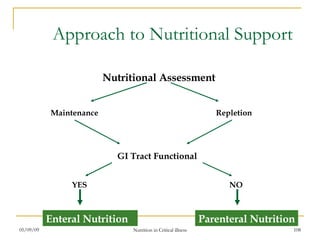
Approach to Nutritional Support Nutritional Assessment Maintenance Repletion GI Tract Functional YES NO Enteral Nutrition Parenteral Nutrition
Advantages  - Enteral vs PN Preserves gut integrity Possibly decreases bacterial translocation Preserves immunological function of gut Reduces costs Fewer infectious complications in critically ill  patients Safer and more cost effective in many settings ASPEN. The science and practice of nutrition support. A case-based core curriculum. 2001; 147 ADA EAL, Critical Illness, accessed 8-07
Single nutrient supplementation L-glutamine Used in purine, pyrimidine, lymphocyte and macrophage function, gut integrity and gut barrier function If given, reduces nitrogen loss Reduced length of stay, following colorectal surgery in elective setting Other studies shown reduced risk of pneumonia, bacteraemia, sepsis following major trauma ? Role in short gut syndrome – improving GI absorbtion
Single nutrient supplementation Essential fatty acids Variety of functions, key role in maintaining membrane structure and function Alter immune function (n-3 FA suppress immune function) Preliminary studies using n-3 FA in inflammatory bowel disease showed improvement in histological appearance, reduction in disease activity, decreased steroid requirement
 
Importants: Definition of nutritional support Routs of nutritional support Advantages of EN Common complications of TPN
Maintains Stimulates  the environment defences FEEDING Provides energy
Thank you !!
Essential  Nonessential Arginine  Alanine Histidine  Asparagine Isoleucine  Aspartate Leucine  Cysteine Lysine  Glutamate Methionine  Glutamine Phenylalanine  Glycine Threonine  Proline Tryptophan  Serine Valine  Tyrosine

Nutritional Support

  • 1.
    Nutritional Support inCritical illness Tianjin Medical University General Hospital Emergency Center Shou songtao
  • 2.
    Nutritional support is the provision of nutrients to patients who cannot meet their nutritional requirements by eating standard diets. Definition
  • 3.
    ‘ A slenderand restricted diet is always dangerous in chronic and in acute diseases’ Hippocrates 400 B.C.
  • 4.
    Malnutrition occurs in approx.40% of hospitalized patients Can lead to increased morbidity and mortality Impairment of skeletal, cardiac, respiratory muscle function Impairment of immune function Atrophy of GIT Impaired healing
  • 5.
    1970s: TPN -separate CH, AAs and Lipids 2500-3000kcals/day: Lactic acidosis, high glucose loads, fatty livers, high insulin Single lumen C/Lines, no pumps Urinary urea measured, N calculated 1980s: Scientific studies of metabolism: recognition of overfeeding 1990s: nitrogen limitation: 0.2g/kg/24hr, start of immunonutrition trials 2000s: glucose control, specific nutrients
  • 6.
    ICU Nutrition throughthe ages Overfeeding 1980s
  • 7.
    4 basic questionsto be answered: Who? When? How much? How?
  • 8.
  • 9.
  • 10.
    Organisation of NutritionSupport 3. NICE Guidelines for Nutrition Support in Adults 2006 Screen Recognise Treat Oral Enteral Parenteral Monitor & Review
  • 11.
    Screen Various nutritionalscreening tools Low risk: routine clinical care Medium risk: observe High risk: treat- refer to dietitian/local protocols
  • 12.
    Screening in ICUAlmost all patients require artificial nutrition- cannot ‘observe’ Needs adaptation using NICE Guidelines Adapted MUST for ICU: Uses BMI/weight loss/food intake + refeeding risk assessment; linked to feeding flowchart
  • 13.
    Nutritional Assessment History – 10% weight loss or more suggests protein malnutrition Exam – Weight/Ideal body weight (<85% predicted), temporal muscle wasting, anthropometrics Nutritional markers - daily weight – more a measure of fluid status than nutritional status -24 hour urine urea nitrogen (cannot be used in renal failure) -albumin (<30mg/dl,t 1/2 21), prealbumin(<12mg/dl, 2), transferrin(<150mmol/L, 7) -albumin influenced by fluid status, acute phase response
  • 14.
    Nutritional Assessment Immunefunction – skin testing, anergy,total lymphocyte count<1800/mm 3 Anthropometric measures > 10 % loss of ‘well’ body weight Body mass index : weight (kg)/ height 2 (m 2 ) <18 kg/m 2 assoc. With prolonged ICU, increased post-operative complications, higher readmission rates Mid-arm circumference, skin fold thickness Poor accuracy, specificity, reproducibility
  • 15.
    Nutritional assessment Serumproteins Albumin Reflects synthesis, degradation, losses, exchange between intracellular and extracellular compartments Half life 21 days – limited ability to reflect acute changes < 3.5 g/dL assoc. increased morbidity
  • 16.
    Nutritional assessment Serumproteins Transferrin (1/2 life 7 days), Pre-albumin (1/2 life 2 days) More accurately reflect acute changes Limited by erratic responses to stress, sepsis, cancer
  • 17.
    Nutritional assessment Nitrogenbalance = N intake – N loss = (dietary protein x 0.16) – (urea nitrogen (urine) + 4 g (stool/skin) ) Positive balance indicates anabolic state Negative balance indicates catabolic state Aim to provide non-protein sources of fuel to allow protein to be used for anabolic processes
  • 18.
    How much togive in ICU? Schofield equation/Harris Benedict e.g. for 65 year old woman: BMR = (9.2x weight in kg) + 687, = requirement in Kcal/24hr Add Activity and Stress factors e.g. 10% for bedbound + 20-60% for sepsis/burns For 65kg ventilated woman with sepsis: 1670 Kcal = approx 25 Kcal/kg/d No dietitian? Rough guide: 25 Kcal/kg/day total energy. Increase to 30 as patient improves
  • 19.
    How much togive? 0.2g/Kg/day of Nitrogen (1.25g/kg/day protein) 30 – 35ml fluid/kg/24 hours baseline Add 2-2.5ml/kg/day of fluid for each degree of temperature Account for excess fluid losses Adequate electrolytes, micronutrients, vitamins Avoid overfeeding Obesity: feed to BMR, add stress factor only if severe i.e. burns/trauma
  • 20.
    Types of nutritionsupport Routes of nutrition support Enteral nutrition Parenteral nutrition
  • 21.
    Enteral nutrition Ingeneral, the preferred method of choice
  • 22.
    Enteral Nutrition Nutritiondelivered via the gut Includes oral feedings and tube feedings
  • 23.
    Indications for EnteralNutrition Malnourished patient expected to be unable to eat >5-7 days Normally nourished patient expected to be unable to eat >7-9 days Adaptive phase of short bowel syndrome Increased needs that cannot be met through oral intake (burns, trauma) Inadequate oral intake resulting in deterioration of nutritional status or delayed recovery from illness ASPEN. The science and practice of nutrition support. A case-Based Core curriculum. 2001; 143
  • 24.
    Contraindications for ENSevere acute pancreatitis High output proximal fistula Inability to gain access Intractable vomiting or diarrhea Aggressive therapy not warranted ASPEN. The science and practice of nutrition support. A case-based core curriculum. 2001; 143
  • 25.
    Contraindications for ENInadequate resuscitation or hypotension; hemodynamic instability Ileus Intestinal obstruction Severe G.I. Bleed Expected need less than 5-7 days if malnourished or 7-9 days if normally nourished
  • 26.
    Long-term nutrition GastrostomyJejunostomy Short-term nutrition Nasogastric feeding Nasoduodenal feeding Nasojejunal feeding Enteral nutrition
  • 27.
  • 28.
    Diagram of enteraltube placement.
  • 29.
    With/without endoscopic Longtime with endoscopic operation Gastric tube duodenal tube gastrostomy Gastrostomy Duodenum feeding Jejunostomy feeding Decision of Selecting The Modes of Administration Enteral Nutrition Short time Tube Percutaneous tube
  • 30.
  • 31.
  • 32.
  • 33.
    Enteral Formulas Liquiddiets intended for oral use or for tube feeding Ready-to-use or powdered form Designed to meet variety of medical and nutrition needs Can be used alone or given with foods
  • 34.
    Formula Selection Thesuitability of a feeding formula should be evaluated based on Functional status of GI tract Digestion and absorption capability of patient Physical characteristics of formula (osmolality, fiber content, caloric density, viscosity) Macronutrient ratios Specific metabolic needs Contribution of the feeding to fluid and electrolyte needs or restriction Cost effectiveness
  • 35.
    Enteral Formulas Determinebest choice by medical and nutrition assessment Meet specific nutrition needs
  • 36.
    Enteral Formula CategoriesPolymeric Monomeric Fiber-containing Disease-specific Rehydration Modular
  • 37.
    Enteral Formula CategoriesPolymeric Whole protein nitrogen source For use in patients with normal or near normal GI function Protein isolate formulas Protein that has been separated from a food (casein from milk, albumin from egg) Blenderized formulas May contain pureed meat, vegetables, fruits, milk, starches with v/m added Made at home or purchased commercially
  • 38.
  • 39.
    Enteral Formula CategoriesMonomeric Elemental/hydrolyzed Predigested nutrients Free amino acids and/or short peptide chains Has low fat content or high percentage of MCT, LCT, structured lipids
  • 40.
  • 41.
    Enteral Formula CategoriesMonomeric Use in patients with compromised digestive and/or absorptive capacity More expensive than standard formulas Tend to be more hyperosmolar because of small particle size
  • 42.
    Enteral Formula CategoriesFiber-Containing Fiber-containing: containing a source of fiber; reportedly beneficial for prevention/treatment of altered bowel function in enterally fed patients Soy polysaccharide is the most common fiber additive in enteral feedings ASPEN. The science and practice of nutrition support. A case-based core curriculum. 2001; 148
  • 43.
    Enteral Formula CategoriesFiber-Containing Soluble fiber (guar gum, oat fiber, pectin) may exert trophic effect on colonic mucosa and be useful in normalizing bowel function Patients with impaired gastric emptying should not be fed fiber-containing formula into the stomach ASPEN. The science and practice of nutrition support. A case-based core curriculum. 2001; 148
  • 44.
  • 45.
    Enteral Formulas: CalorieDense May be used in fluid-restricted or volume-sensitive patients Calorie density ranges from 1.3 to 2 kcals/ml Monitor fluid/hydration status
  • 46.
  • 47.
    Enteral Formula CategoriesDisease Specific Designed for patients with specific disease states. Available for patients with respiratory disease, ARDS, diabetes, renal failure, hepatic failure, and immune compromise.
  • 48.
  • 49.
    Disease Specific FormulasDiabetic Amount and type of CHO modified to reduce blood glucose response Increased fat content (may have increased monounsaturated fats) May be worth trying diabetes formulas in patients who have failed to achieve good blood glucose control on standard formulas
  • 50.
  • 51.
    Disease Specific FormulasHepatic Generally have reduced aromatic amino acids and increased branched chain amino acids More expensive than standard products Often lower in protein than standard formulas (may be too low for most liver patients)
  • 52.
    Disease Specific FormulasRenal Typically are calorie dense (2.0 kcal/cc) products with relatively low protein levels and modified electrolytes Generally too low in protein for dialyzed patients and acutely ill patients May be useful for short term use as supplement or calorie source in pre-dialysis chronic renal failure patients
  • 53.
  • 54.
    Disease Specific FormulasImmune-Enhancing Have added “immune-enhancing” nutrients (arginine, glutamine, omega-3 fatty acids, nucleotides) Meta-analysis suggests that they might be most beneficial in surgical patients
  • 55.
  • 56.
    Disease-Specific Formula PulmonaryContain higher percentage of total calories from fat to reduce respiratory quotient and make it easier to wean from respirator High fat gastric feedings may cause delayed emptying in critically ill patients
  • 57.
  • 58.
    Enteral Formula NutrientSources Carbohydrate CHO content ranges from 40-90% of total calories Fiber: soy polysaccharide (most common) guar gum, oat fiber, pectin
  • 59.
    Enteral Formula NutrientSources Lipids Fat provides isotonic, concentrated energy source Corn and soybean oil common May include MCTs; more easily digested and absorbed Fat content ranges from <10% to >50% of calories ASPEN. The science and practice of nutrition support. A case-based core curriculum. 2001; 148
  • 60.
    Enteral Formulas NutrientSources Protein Whole protein, hydrolyzed protein, free amino acids Casein, soy protein, lactalbumin, whey, egg white albumin Small peptides absorbed as efficiently as free amino acids Free amino acids are more hyperosmolar
  • 61.
    Initiation of FeedsApproaches Bolus vs continuous feeds Full feeds vs graded regimens
  • 62.
    Assessment of ClinicalResponse Anthropometric measurements Feeding tolerance
  • 63.
    Enteral nutrition ComplicationsGastrointestinal Mechanical Metabolic Formula related
  • 64.
    GI Complications VomitingDiarrhea Constipation Abdominal pain / bloating Gastric irritation Aspiration
  • 65.
    Mechanical Complications Tubeocclusion Nasopharyngeal effects Tube fractures Leakage Obstruction Irritation
  • 66.
    Metabolic Complications HypovolemiaHyperkalemia Hypophosphatemia Hypertonic dehydration Fluid overload
  • 67.
    Formula Complications Incompatibilitywith medications Hyperosmolality Contamination
  • 68.
    Application Criterion ofEN “ When the gut works, and can be used safely, use it ”
  • 69.
  • 70.
    Parenteral Nutrition Allowsgreater caloric intake BUT Is more expensive Has more complications Needs more technical expertise
  • 71.
    Who Will Benefit From Parenteral Nutrition? Patients with/who Abnormal gut function Cannot consume adequate amounts of nutrients by enteral feeding
  • 72.
    Two Main Formsof Parenteral Nutrition Peripheral Parenteral Nutrition Central (Total) Parenteral Nutrition Both differ in composition of feed primary caloric source potential complications method of administration
  • 73.
    Peripheral Parenteral NutritionGiven through peripheral vein Short term use Mildly stressed patients Low caloric requirements Contraindications to central TPN
  • 74.
    What to DoBefore Starting TPN Nutritional Assessment Venous access evaluation Baseline weight Baseline lab investigations
  • 75.
    Venous Access forTPN Need venous access to a “large” central line with fast flow to avoid thrombophlebitis Superior Vena Cava Subclavian approach Internal jugular approach External jugular approach
  • 76.
  • 77.
    Baseline Lab InvestigationsFull blood count Coagulation screen Ca ++ , Mg ++ , PO 4 2- Lipid Other tests when indicated
  • 78.
    Steps to OrderingTPN Decide how much fat & carbohydrate to give Determine Total Fluid Volume Determine Non-N Caloric needs Determine Protein requirements Determine Electrolyte and Trace element requirements Determine need for additives
  • 79.
    Steps to OrderingTPN Decide how much fat & carbohydrate to give Determine Total Fluid Volume Determine Non-N Caloric needs Determine Protein requirements Determine Electrolyte and Trace element requirements Determine need for additives
  • 80.
    How Much Volumeto Give? Cater for maintenance & on going losses Normal maintenance requirements By body weight alternatively, 30 to 50 ml/kg/day Add on going losses based on I/O chart Consider insensible fluid losses also e.g. add 10% for every o C rise in temperature
  • 81.
    Steps to OrderingTPN Determine Total Fluid Volume Determine Caloric needs Determine Protein requirements Decide how much fat & carbohydrate to give Determine Electrolyte and Trace element requirements Determine need for additives
  • 82.
    Caloric Requirements Basedon Total Energy Expenditure Can be estimated using predictive equations TEE = REE + Stress Factor + Activity Factor Can be measured using metabolic cart
  • 83.
    Stress Factor CaloricRequirements Malnutrition - 30% Peritonitis + 15% Soft tissue trauma + 15% Fracture + 20% Fever (per o c rise) + 13% Moderate infection + 20% Severe infection + 40% <20% BSA burns + 50% 20-40% BSA burns + 80% >40% BSA burns + 100%
  • 84.
    Activity Factor Bed-bound+ 20% Ambulant + 30% Active + 50% Caloric Requirements
  • 85.
    How Much CHO& Fats? “ Too much of a good thing causes problems” Not more than 4 mg / kg / min Dextrose (less than 6 g / kg / day) Not more than 0.7 mg / kg / min Lipid (less than 1 g / kg / day)
  • 86.
    Fats usually form25 to 30% of calories Not more than 40 to 50% Increase usually in severe stress Aim for serum TG levels < 350 mg/dl or 3.95 mmol/L CHO usually form 70-75 % of calories How Much CHO & Fats?
  • 87.
    Steps to OrderingTPN Determine Total Fluid Volume Determine Caloric needs Determine Protein requirements Decide how much fat & carbohydrate to give Determine Electrolyte and Trace element requirements Determine need for additives
  • 88.
    How Much Proteinto Give? Based on calorie : nitrogen ratio Based on degree of stress & body weight Based on Nitrogen Balance
  • 89.
    Calorie : NitrogenRatio Normal ratio is 150 cal : 1g Nitrogen Critically ill patients 85 to 100 cal : 1 g Nitrogen in
  • 90.
    Based on Stress& BW Non-stress patients 0.8 g / kg / day Mild stress 1.0 to 1.2 g / kg / day Moderate stress 1.3 to 1.75 g / kg / day Severe stress 2 to 2.5 g / kg / day
  • 91.
    Based on NitrogenBalance Aim for positive balance of 1.5 to 2g / kg / day
  • 92.
    Steps to OrderingTPN Decide how much fat & carbohydrate to give Determine Total Fluid Volume Determine Protein requirements Determine Non-N Caloric needs Determine Electrolyte and Trace element requirements Determine need for additives
  • 93.
    Electrolyte Requirements Caterfor maintenance + replacement needs Na + 1 to 2 mmol/kg/d (or 60-120 meq/d) K + 0.5 to 1 mmol/kg/d (or 30 - 60 meq/d) Mg ++ 0.35 to 0.45 meq/kg/d (or 10 to 20 meq /d) Ca ++ 0.2 to 0.3 meq/kg/d (or 10 to 15 meq/d) PO 4 2- 20 to 30 mmol/d
  • 94.
    Trace Elements Totalrequirements not well established Commercial preparations exist to provide RDA Zn 2-4 mg/day Cr 10-15 ug/day Cu 0.3 to 0.5 mg/day Mn 0.4 to 0.8 mg/day
  • 95.
    Steps to OrderingTPN Decide how much fat & carbohydrate to give Determine Total Fluid Volume Determine Protein requirements Determine Non-N Caloric needs Determine Electrolyte and Trace element requirements Determine need for additives
  • 96.
    Other Additives VitaminsGive that recommended for oral intake 1 ampoule MultiVit per bag of TPN MultiVit does not include Vit K can give 1 mg/day or 5-10 mg/wk
  • 97.
    Other Additives MedicationsInsulin 0.1 u per g dextrose in TPN 10 u per litre TPN initial dose Other medications
  • 98.
    TPN Monitoring ClinicalReview Lab investigations Adjust TPN order accordingly
  • 99.
    Clinical Review Clinicalexamination Vital signs Fluid balance Catheter care Sepsis review Blood sugar profile Body weight
  • 100.
    Lab investigations FullBlood Count Renal Panel # 1 Ca++, Mg++, PO42- Liver Function Test Iron Panel Lipid Panel Nitrogen Balance weekly, unless indicated daily until stable, then 2x/wk daily until stable, then 2x/wk weekly weekly 1-2x/wk weekly
  • 101.
    Complications Related toTPN Mechanical Complications Metabolic Complications Infectious Complications
  • 102.
    Mechanical Complications Relatedto vascular access technique pneumothorax air embolism arterial injury bleeding brachial plexus injury catheter malplacement catheter embolism thoracic duct injury
  • 103.
    Mechanical Complications Venousthrombosis Catheter occlusion Related to catheter in situ
  • 104.
    Metabolic Complications Abnormalitiesrelated to excessive or inadequate administration hyper / hypoglycaemia electrolyte abnormalities acid-base disorders hyperlipidaemia
  • 105.
    Metabolic Complications Hepaticcomplications Biochemical abnormalities Cholestatic jaundice too much calories (carbohydrate intake) too much fat Acalculous cholecystitis
  • 106.
    Infectious Complications Insertionsite contamination Catheter contamination improper insertion technique use of catheter for non-feeding purposes contaminated TPN solution contaminated tubing Secondary contamination septicaemia
  • 107.
    Stopping TPN StopTPN when enteral feeding can restart Wean slowly to avoid hypoglycaemia Monitor during wean Give IV Dextrose 10% solution at previous infusion rate for at least 4 to 6h Alternatively, wean TPN while introducing enteral feeding and stop when enteral intake meets TEE
  • 108.
    Approach to NutritionalSupport Nutritional Assessment Maintenance Repletion GI Tract Functional YES NO Enteral Nutrition Parenteral Nutrition
  • 109.
    Advantages -Enteral vs PN Preserves gut integrity Possibly decreases bacterial translocation Preserves immunological function of gut Reduces costs Fewer infectious complications in critically ill patients Safer and more cost effective in many settings ASPEN. The science and practice of nutrition support. A case-based core curriculum. 2001; 147 ADA EAL, Critical Illness, accessed 8-07
  • 110.
    Single nutrient supplementationL-glutamine Used in purine, pyrimidine, lymphocyte and macrophage function, gut integrity and gut barrier function If given, reduces nitrogen loss Reduced length of stay, following colorectal surgery in elective setting Other studies shown reduced risk of pneumonia, bacteraemia, sepsis following major trauma ? Role in short gut syndrome – improving GI absorbtion
  • 111.
    Single nutrient supplementationEssential fatty acids Variety of functions, key role in maintaining membrane structure and function Alter immune function (n-3 FA suppress immune function) Preliminary studies using n-3 FA in inflammatory bowel disease showed improvement in histological appearance, reduction in disease activity, decreased steroid requirement
  • 112.
  • 113.
    Importants: Definition ofnutritional support Routs of nutritional support Advantages of EN Common complications of TPN
  • 114.
    Maintains Stimulates the environment defences FEEDING Provides energy
  • 115.
  • 116.
    Essential NonessentialArginine Alanine Histidine Asparagine Isoleucine Aspartate Leucine Cysteine Lysine Glutamate Methionine Glutamine Phenylalanine Glycine Threonine Proline Tryptophan Serine Valine Tyrosine