
Stanley Primary School
A brief history of boats.
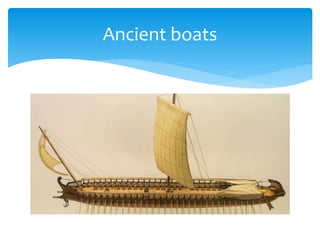
Ancient boats
Ancient Egyptians invented cargo ships that could hold
500 ton of rocks. The Egyptians learnt how to build
large and steady cargo ships. Cargo ships from the
modern era are made out of metal but Egyptians made
their cargo boats out of wood.
The Egyptian learned how to build large and steady
cargo ships; the first sailing boats were made by the
Egyptian in 4000 BC.
Egyptians Cargo Boats
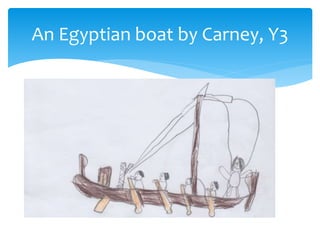
An Egyptian boat by Carney, Y3
The Egyptians did not build
roads because they had their
wooden boats to sail instead.
Did you know…
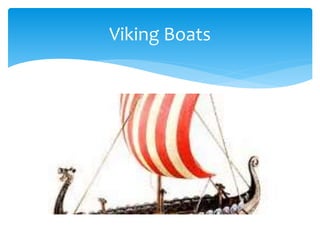
Viking Boats
What boats are there
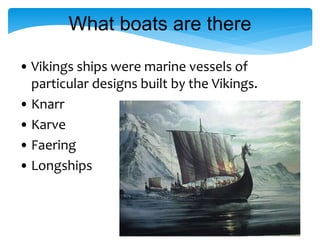
• Vikings ships were marine vessels of
particular designs built by the Vikings.
• Knarr
• Karve
• Faering
• Longships
When rowing, Vikings probably sat on sea
chests (wooden boxes with their belongings
inside)
Vikings ships could sail at around 18 km
The Vikings built fast ships for raiding and
war. These ships were dragon ships or
longships. The Vikings also had slower
passenger and cargo ships called Knarrs.
They built small boats for fishing or short
trips.
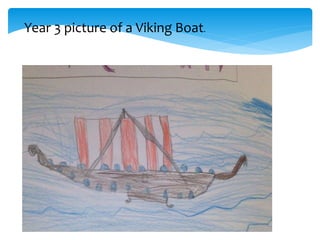
Year 3 picture of a Viking Boat.
That Longships were known as
dragon ships in Viking times?
They were known as dragon
ships because of their decorative
designs.
Did you know?
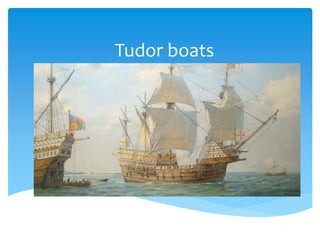
Tudor boats
 The boats were powered by wind.
 Tudor ships could travel across oceans to both
trade and fight.
 The food on ships included: salted beef, fish,
bread, dry biscuits and cheese. The food often had
maggots in it and the drinking water went stale. On
long journeys, many sailors died of scurvy
because they did not have enough vitamin C
from fresh fruit and vegetables.
Tudor boats
Henry VIII was the first king to build ships especially
for war since the times of Alfred the Great. He also
encouraged people to build merchant ships for trade.
Henry VIII continued this. Ships were high and
narrow and carried large numbers of guns. Some
were carried on the upper decks whilst heavy guns
were put between decks and were fired through
holes cut in the sides of the ships.
Henry the V111
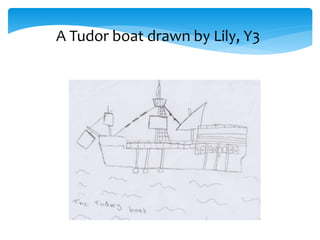
A Tudor boat drawn by Lily, Y3
Tudor boats were powered by
the wind and were extremely
slow.
Did you know?
Tudor ships could travel across
the oceans to both trade or
fight.
Did you know?
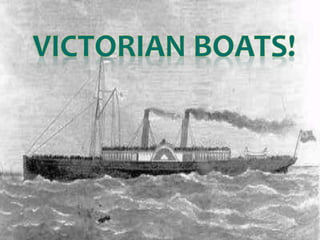
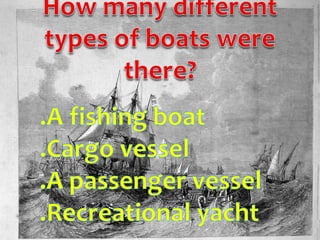
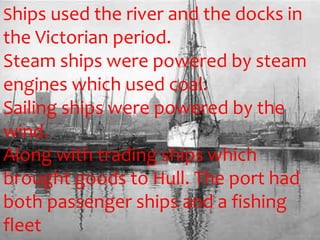
Ships used the river and the docks in
the Victorian period.
Steam ships were powered by steam
engines which used coal.
Sailing ships were powered by the
wind.
Along with trading ships which
brought goods to Hull. The port had
both passenger ships and a fishing
fleet
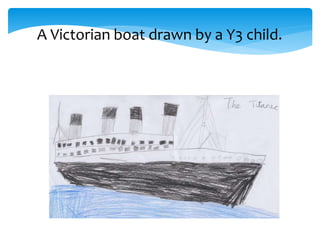
A Victorian boat drawn by a Y3 child.
Modern Boats
Speed Boats
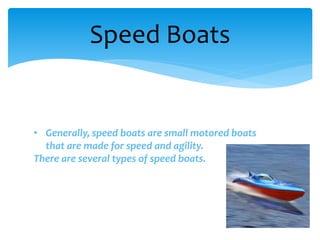
• Generally, speed boats are small motored boats
that are made for speed and agility.
There are several types of speed boats.
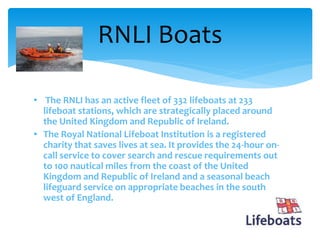
• The RNLI has an active fleet of 332 lifeboats at 233
lifeboat stations, which are strategically placed around
the United Kingdom and Republic of Ireland.
• The Royal National Lifeboat Institution is a registered
charity that saves lives at sea. It provides the 24-hour on-
call service to cover search and rescue requirements out
to 100 nautical miles from the coast of the United
Kingdom and Republic of Ireland and a seasonal beach
lifeguard service on appropriate beaches in the south
west of England.
RNLI Boats
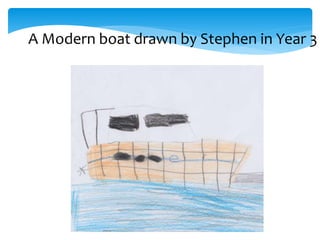
A Modern boat drawn by Stephen in Year 3
Some motor boats are fitted
with indoor engines.
Did you know?
That a jet boat is a boat
propelled by a jet of water.
Did you know?
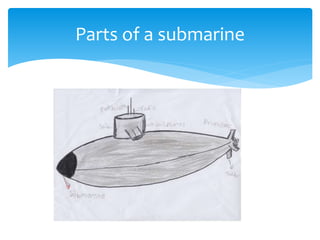
Parts of a submarine
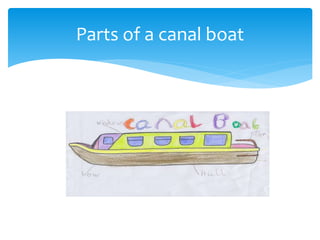
Parts of a canal boat
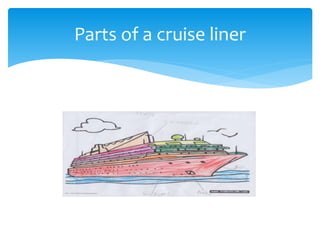
Parts of a cruise liner
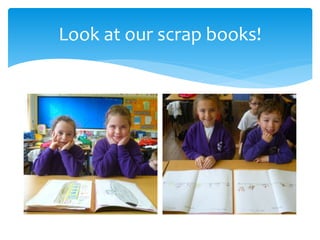
Look at our scrap books!
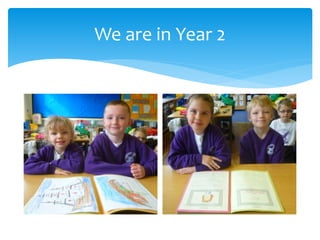
We are in Year 2
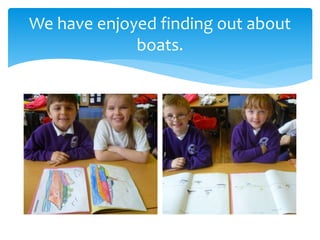
We have enjoyed finding out about
boats.

Stanley boats presentation

  • 1.
    Stanley Primary School Abrief history of boats.
  • 3.
  • 4.
    Ancient Egyptians inventedcargo ships that could hold 500 ton of rocks. The Egyptians learnt how to build large and steady cargo ships. Cargo ships from the modern era are made out of metal but Egyptians made their cargo boats out of wood. The Egyptian learned how to build large and steady cargo ships; the first sailing boats were made by the Egyptian in 4000 BC. Egyptians Cargo Boats
  • 5.
    An Egyptian boatby Carney, Y3
  • 6.
    The Egyptians didnot build roads because they had their wooden boats to sail instead. Did you know…
  • 7.
  • 8.
    What boats arethere • Vikings ships were marine vessels of particular designs built by the Vikings. • Knarr • Karve • Faering • Longships
  • 9.
    When rowing, Vikingsprobably sat on sea chests (wooden boxes with their belongings inside) Vikings ships could sail at around 18 km The Vikings built fast ships for raiding and war. These ships were dragon ships or longships. The Vikings also had slower passenger and cargo ships called Knarrs. They built small boats for fishing or short trips.
  • 10.
    Year 3 pictureof a Viking Boat.
  • 11.
    That Longships wereknown as dragon ships in Viking times? They were known as dragon ships because of their decorative designs. Did you know?
  • 12.
  • 13.
     The boatswere powered by wind.  Tudor ships could travel across oceans to both trade and fight.  The food on ships included: salted beef, fish, bread, dry biscuits and cheese. The food often had maggots in it and the drinking water went stale. On long journeys, many sailors died of scurvy because they did not have enough vitamin C from fresh fruit and vegetables. Tudor boats
  • 14.
    Henry VIII wasthe first king to build ships especially for war since the times of Alfred the Great. He also encouraged people to build merchant ships for trade. Henry VIII continued this. Ships were high and narrow and carried large numbers of guns. Some were carried on the upper decks whilst heavy guns were put between decks and were fired through holes cut in the sides of the ships. Henry the V111
  • 15.
    A Tudor boatdrawn by Lily, Y3
  • 16.
    Tudor boats werepowered by the wind and were extremely slow. Did you know?
  • 17.
    Tudor ships couldtravel across the oceans to both trade or fight. Did you know?
  • 20.
    Ships used theriver and the docks in the Victorian period. Steam ships were powered by steam engines which used coal. Sailing ships were powered by the wind. Along with trading ships which brought goods to Hull. The port had both passenger ships and a fishing fleet
  • 21.
    A Victorian boatdrawn by a Y3 child.
  • 22.
  • 23.
    Speed Boats • Generally,speed boats are small motored boats that are made for speed and agility. There are several types of speed boats.
  • 24.
    • The RNLIhas an active fleet of 332 lifeboats at 233 lifeboat stations, which are strategically placed around the United Kingdom and Republic of Ireland. • The Royal National Lifeboat Institution is a registered charity that saves lives at sea. It provides the 24-hour on- call service to cover search and rescue requirements out to 100 nautical miles from the coast of the United Kingdom and Republic of Ireland and a seasonal beach lifeguard service on appropriate beaches in the south west of England. RNLI Boats
  • 25.
    A Modern boatdrawn by Stephen in Year 3
  • 26.
    Some motor boatsare fitted with indoor engines. Did you know?
  • 27.
    That a jetboat is a boat propelled by a jet of water. Did you know?
  • 28.
    Parts of asubmarine
  • 29.
    Parts of acanal boat
  • 30.
    Parts of acruise liner
  • 31.
    Look at ourscrap books!
  • 32.
    We are inYear 2
  • 33.
    We have enjoyedfinding out about boats.