Application of marker assisted
selection: A strategy to improve
cassava production in Tanzania

Esther Andrew Masumba
Root/Tuber Research Program
Tanzania
Importance of Cassava
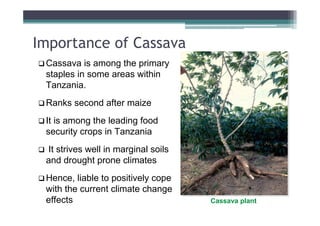
Cassava is among the primary
staples in some areas within
Tanzania.
Ranks second after maize
It is among the leading food
security crops in Tanzania
It strives well in marginal soils
and drought prone climates
Hence, liable to positively cope
with the current climate change
effects

Cassava plant
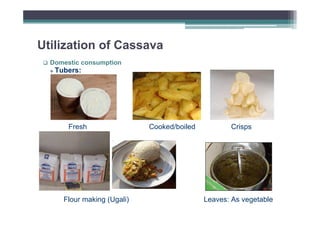
Utilization of Cassava
Domestic consumption

Tubers:

Fresh

Flour making (Ugali)

Cooked/boiled

Crisps

Leaves: As vegetable
Utilization cont.
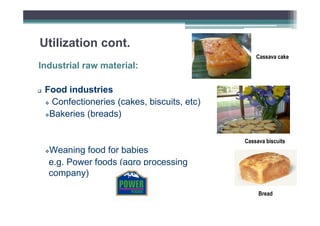
Cassava cake

Industrial raw material:
Food industries
Confectioneries (cakes, biscuits, etc)
Bakeries (breads)
Cassava biscuits

Weaning food for babies
e.g. Power foods (agro processing
company)
Bread
Utilization
cont.

Starch production

Ethanol production
e.g. 280 L (222kgs) of 96% pure ethanol
from 1 ton of cassava roots with 30%
starch
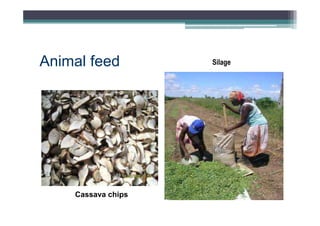
Animal feed

Cassava chips

Silage
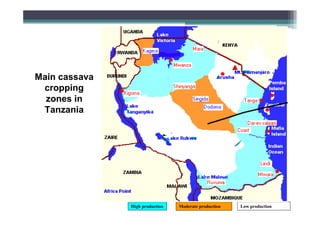
Main cassava
cropping
zones in
Tanzania

High production

Moderate production

Low production
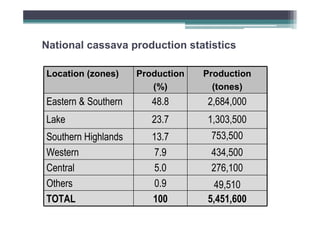
National cassava production statistics
Location (zones)

Production
(%)

Production
(tones)

Eastern & Southern

48.8

2,684,000

Lake

23.7

1,303,500

Southern Highlands
Western
Central
Others
TOTAL

13.7
7.9
5.0
0.9
100

753,500
434,500
276,100
49,510
5,451,600
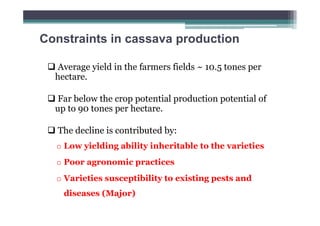
Constraints in cassava production
Average yield in the farmers fields ~ 10.5 tones per
hectare.
Far below the crop potential production potential of
up to 90 tones per hectare.
The decline is contributed by:
o Low yielding ability inheritable to the varieties
o Poor agronomic practices
o Varieties susceptibility to existing pests and
diseases (Major)
Important diseases
1. Cassava mosaic disease (CMD)
Symptoms:
o

Distortion of leaf shape

o

Reduction in leaflet size

o

General stunting

Yield reduction of up to
95 percent
o
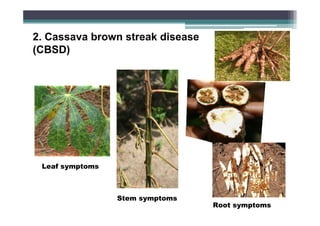
2. Cassava brown streak disease
(CBSD)

Leaf symptoms

Stem symptoms
Root symptoms
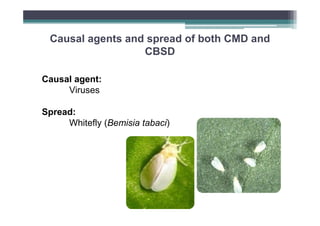
Causal agents and spread of both CMD and
CBSD
Causal agent:
Viruses
Spread:
Whitefly (Bemisia tabaci)
Control of CMD and CBSD
Phytosanitation
Selection of healthy planting materials
Up rooting of diseased plants

Use of tolerant/resistant varieties
Developed through conventional breeding
Marker assisted selection
EFFORTS DONE BY ROOT/TUBER
RESEARCH PROGRAM IN TANZANIA

Molecular Marker-Assisted and Farmer Participatory
Improvement of Cassava Germplasm for Farmer/Market
Preferred Traits in Tanzania Project
Phase 1: 2003 – 2006 (Rockefeller foundation funded)
Phase 2: 2007 – 2009 (Alliance for Green Revolution in Africa funded)
Objectives
Improve local germplasm for cassava mosaic
resistance using improved genotypes from CIAT
Impalement Molecular Marker-Assisted (MAS) for
Cassava Mosaic Disease to increase cost-effectiveness
Train NARS breeders in Molecular breeding methods
Involve end users and trade intermediaries in uptake
Identification of markers associated with
CMD resistance (CIAT)
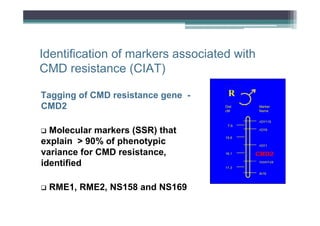
Tagging of CMD resistance gene CMD2

R
Dist
cM

Marker
Name
rGY115

Molecular markers (SSR) that
explain > 90% of phenotypic
variance for CMD resistance,
identified

7.9
rGY9
15.6
rGY1
16.1

CMD2
rSSRY28

11.3
Ai19

RME1, RME2, NS158 and NS169
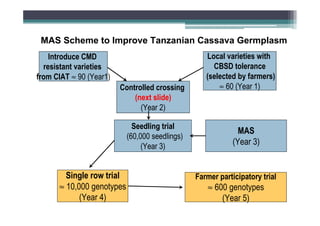
MAS Scheme to Improve Tanzanian Cassava Germplasm
Introduce CMD
resistant varieties
from CIAT ≈ 90 (Year1)
Controlled crossing
(next slide)
(Year 2)
Seedling trial
(60,000 seedlings)
(Year 3)

Single row trial
≈ 10,000 genotypes
(Year 4)

Local varieties with
CBSD tolerance
(selected by farmers)
≈ 60 (Year 1)

MAS
(Year 3)

Farmer participatory trial

≈ 600 genotypes
(Year 5)
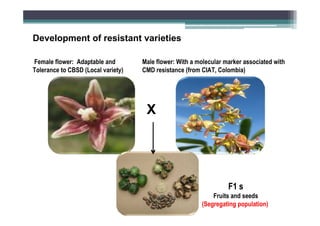
Development of resistant varieties
Female flower: Adaptable and
Tolerance to CBSD (Local variety)

Male flower: With a molecular marker associated with
CMD resistance (from CIAT, Colombia)

X

F1 s
Fruits and seeds
(Segregating population)
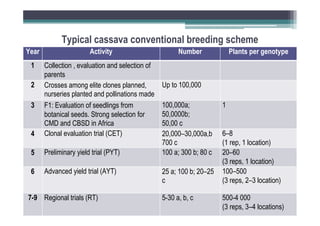
Typical cassava conventional breeding scheme
Year

Activity

1

4

Collection , evaluation and selection of
parents
Crosses among elite clones planned,
nurseries planted and pollinations made
F1: Evaluation of seedlings from
botanical seeds. Strong selection for
CMD and CBSD in Africa
Clonal evaluation trial (CET)

5

Preliminary yield trial (PYT)

6

Advanced yield trial (AYT)

2
3

7-9 Regional trials (RT)

Number

Plants per genotype

Up to 100,000
100,000a;
50,0000b;
50,00 c
20,000–30,000a,b
700 c
100 a; 300 b; 80 c
25 a; 100 b; 20–25
c
5-30 a, b, c

1

6–8
(1 rep, 1 location)
20–60
(3 reps, 1 location)
100–500
(3 reps, 2–3 location)
500-4 000
(3 reps, 3–4 locations)
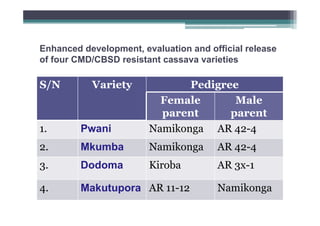
Enhanced development, evaluation and official release
of four CMD/CBSD resistant cassava varieties

S/N

Variety

1.

Pwani

Pedigree
Female
Male
parent
parent
Namikonga AR 42-4

2.

Mkumba

Namikonga

AR 42-4

3.

Dodoma

Kiroba

AR 3x-1

4.

Makutupora AR 11-12

Namikonga
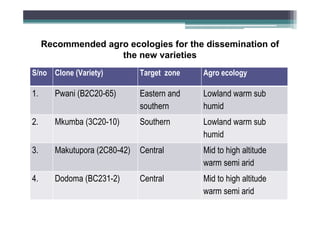
Recommended agro ecologies for the dissemination of
the new varieties
S/no Clone (Variety)

Target zone

Agro ecology

1.

Pwani (B2C20-65)

Eastern and
southern

Lowland warm sub
humid

2.

Mkumba (3C20-10)

Southern

Lowland warm sub
humid

3.

Makutupora (2C80-42)

Central

Mid to high altitude
warm semi arid

4.

Dodoma (BC231-2)

Central

Mid to high altitude
warm semi arid
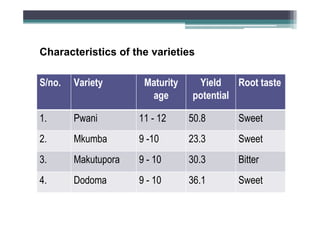
Characteristics of the varieties
S/no.

Variety

Maturity
age

Yield
Root taste
potential

1.

Pwani

11 - 12

50.8

Sweet

2.

Mkumba

9 -10

23.3

Sweet

3.

Makutupora

9 - 10

30.3

Bitter

4.

Dodoma

9 - 10

36.1

Sweet
Thank you
FUTURE PLANS
Multiplication and dissemination of the officially
released varieties to the farming communities

B4FA 2012 Tanzania: Marker-assisted selection in cassava production - Esther Masumba

  • 1.
    Application of markerassisted selection: A strategy to improve cassava production in Tanzania Esther Andrew Masumba Root/Tuber Research Program Tanzania
  • 2.
    Importance of Cassava Cassavais among the primary staples in some areas within Tanzania. Ranks second after maize It is among the leading food security crops in Tanzania It strives well in marginal soils and drought prone climates Hence, liable to positively cope with the current climate change effects Cassava plant
  • 3.
    Utilization of Cassava Domesticconsumption Tubers: Fresh Flour making (Ugali) Cooked/boiled Crisps Leaves: As vegetable
  • 4.
    Utilization cont. Cassava cake Industrialraw material: Food industries Confectioneries (cakes, biscuits, etc) Bakeries (breads) Cassava biscuits Weaning food for babies e.g. Power foods (agro processing company) Bread
  • 5.
    Utilization cont. Starch production Ethanol production e.g.280 L (222kgs) of 96% pure ethanol from 1 ton of cassava roots with 30% starch
  • 6.
  • 7.
    Main cassava cropping zones in Tanzania Highproduction Moderate production Low production
  • 8.
    National cassava productionstatistics Location (zones) Production (%) Production (tones) Eastern & Southern 48.8 2,684,000 Lake 23.7 1,303,500 Southern Highlands Western Central Others TOTAL 13.7 7.9 5.0 0.9 100 753,500 434,500 276,100 49,510 5,451,600
  • 9.
    Constraints in cassavaproduction Average yield in the farmers fields ~ 10.5 tones per hectare. Far below the crop potential production potential of up to 90 tones per hectare. The decline is contributed by: o Low yielding ability inheritable to the varieties o Poor agronomic practices o Varieties susceptibility to existing pests and diseases (Major)
  • 10.
    Important diseases 1. Cassavamosaic disease (CMD) Symptoms: o Distortion of leaf shape o Reduction in leaflet size o General stunting Yield reduction of up to 95 percent o
  • 11.
    2. Cassava brownstreak disease (CBSD) Leaf symptoms Stem symptoms Root symptoms
  • 12.
    Causal agents andspread of both CMD and CBSD Causal agent: Viruses Spread: Whitefly (Bemisia tabaci)
  • 13.
    Control of CMDand CBSD Phytosanitation Selection of healthy planting materials Up rooting of diseased plants Use of tolerant/resistant varieties Developed through conventional breeding Marker assisted selection
  • 14.
    EFFORTS DONE BYROOT/TUBER RESEARCH PROGRAM IN TANZANIA Molecular Marker-Assisted and Farmer Participatory Improvement of Cassava Germplasm for Farmer/Market Preferred Traits in Tanzania Project Phase 1: 2003 – 2006 (Rockefeller foundation funded) Phase 2: 2007 – 2009 (Alliance for Green Revolution in Africa funded)
  • 15.
    Objectives Improve local germplasmfor cassava mosaic resistance using improved genotypes from CIAT Impalement Molecular Marker-Assisted (MAS) for Cassava Mosaic Disease to increase cost-effectiveness Train NARS breeders in Molecular breeding methods Involve end users and trade intermediaries in uptake
  • 16.
    Identification of markersassociated with CMD resistance (CIAT) Tagging of CMD resistance gene CMD2 R Dist cM Marker Name rGY115 Molecular markers (SSR) that explain > 90% of phenotypic variance for CMD resistance, identified 7.9 rGY9 15.6 rGY1 16.1 CMD2 rSSRY28 11.3 Ai19 RME1, RME2, NS158 and NS169
  • 17.
    MAS Scheme toImprove Tanzanian Cassava Germplasm Introduce CMD resistant varieties from CIAT ≈ 90 (Year1) Controlled crossing (next slide) (Year 2) Seedling trial (60,000 seedlings) (Year 3) Single row trial ≈ 10,000 genotypes (Year 4) Local varieties with CBSD tolerance (selected by farmers) ≈ 60 (Year 1) MAS (Year 3) Farmer participatory trial ≈ 600 genotypes (Year 5)
  • 18.
    Development of resistantvarieties Female flower: Adaptable and Tolerance to CBSD (Local variety) Male flower: With a molecular marker associated with CMD resistance (from CIAT, Colombia) X F1 s Fruits and seeds (Segregating population)
  • 19.
    Typical cassava conventionalbreeding scheme Year Activity 1 4 Collection , evaluation and selection of parents Crosses among elite clones planned, nurseries planted and pollinations made F1: Evaluation of seedlings from botanical seeds. Strong selection for CMD and CBSD in Africa Clonal evaluation trial (CET) 5 Preliminary yield trial (PYT) 6 Advanced yield trial (AYT) 2 3 7-9 Regional trials (RT) Number Plants per genotype Up to 100,000 100,000a; 50,0000b; 50,00 c 20,000–30,000a,b 700 c 100 a; 300 b; 80 c 25 a; 100 b; 20–25 c 5-30 a, b, c 1 6–8 (1 rep, 1 location) 20–60 (3 reps, 1 location) 100–500 (3 reps, 2–3 location) 500-4 000 (3 reps, 3–4 locations)
  • 20.
    Enhanced development, evaluationand official release of four CMD/CBSD resistant cassava varieties S/N Variety 1. Pwani Pedigree Female Male parent parent Namikonga AR 42-4 2. Mkumba Namikonga AR 42-4 3. Dodoma Kiroba AR 3x-1 4. Makutupora AR 11-12 Namikonga
  • 21.
    Recommended agro ecologiesfor the dissemination of the new varieties S/no Clone (Variety) Target zone Agro ecology 1. Pwani (B2C20-65) Eastern and southern Lowland warm sub humid 2. Mkumba (3C20-10) Southern Lowland warm sub humid 3. Makutupora (2C80-42) Central Mid to high altitude warm semi arid 4. Dodoma (BC231-2) Central Mid to high altitude warm semi arid
  • 22.
    Characteristics of thevarieties S/no. Variety Maturity age Yield Root taste potential 1. Pwani 11 - 12 50.8 Sweet 2. Mkumba 9 -10 23.3 Sweet 3. Makutupora 9 - 10 30.3 Bitter 4. Dodoma 9 - 10 36.1 Sweet
  • 23.
  • 24.
    FUTURE PLANS Multiplication anddissemination of the officially released varieties to the farming communities