OBJECTIVES
 define evolution and biodiversity
 analyze the pattern of evolution
 illustrate the mechanisms of evolution
Mammalian species
diversity exercise
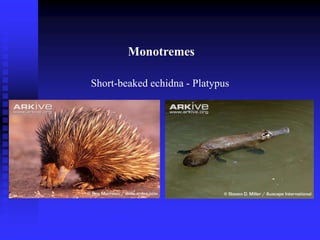
Monotremes
Short-beaked echidna - Platypus
Monotremes
Perissodactyls
Lowland tapir – Black rhinoceros
Odd-toed ungulates (Perissodactyls)
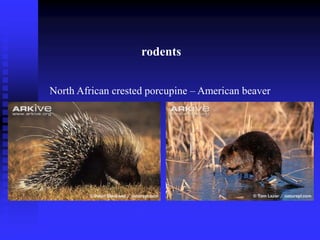
North African crested porcupine – American beaver
Rodents
rodents
African elephant - Rock hyrax
Afrotheria
afrotheria
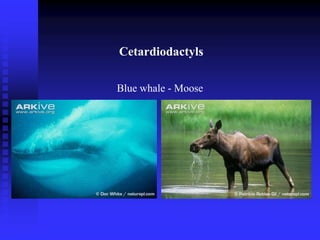
Blue whale - Moose
Cetaceans + artiodactyls = Cetartiodactyls
Cetardiodactyls
Evolution and Origin of
Diversity
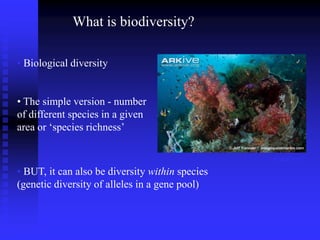
What is biodiversity?
• Biological diversity
• The simple version - number
of different species in a given
area or ‘species richness’
• BUT, it can also be diversity within species
(genetic diversity of alleles in a gene pool)
Coral reef
The Earth’s geological life may
simply be subdivided this way;
Why is there so much diversity?
• Overlaps - convergent evolution
Little goblin bat White-capped albatross
Why is there so much diversity?
→ EVOLUTION
• Evolution is the process by which change occurs in the heritable
characteristics (genes) of a population over successive generations
• Evolution results in diversity at every level (from
genes to species)
• This process happens naturally over a long period of time
• The result is a huge amount of diversity even between related
groups with a common ancestor
Charles Darwin
How do you think Darwin came
up with his theory?
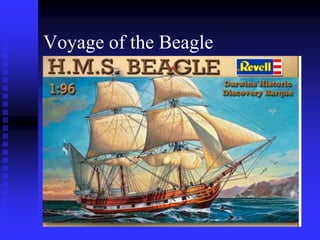
Voyage of the Beagle
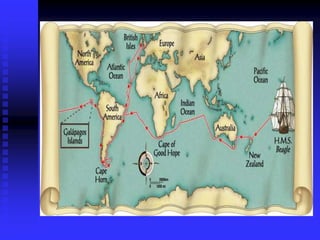
Voyage of Beagle
 Dates: February 12th, 1831
 Captain: Charles Darwin
 Ship: H.M.S. Beagle
 Destination: Voyage around the world.
 Findings: evidence to propose a
revolutionary hypothesis about how life
changes over time
Activity
 The students will be divided into five groups and
using the given materials they will illustrate the
concept on mechanism of evolution.

 Group 1. Natural selection
 Group 2. Mutation
 Group 3. Genetic drift
 Group 4. Gene flow
 Group 5. Recombination
 CRITERIA
 Correctness of answer
 50%
 Interpretation
 40%
 Visual appearance
 10%
 TOTAL
 100%
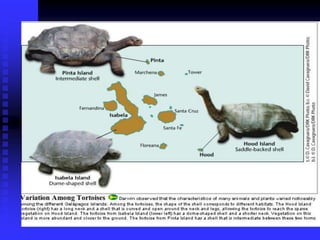
The Galapagos Island
 Darwin was fascinated in particular by the land
tortoises and marine iguanas in the Galápagos.
 Giant tortoises varied in predictable ways from
one island to another.
 The shape of a tortoise's shell could be used to
identify which island a particular tortoise
inhabited.
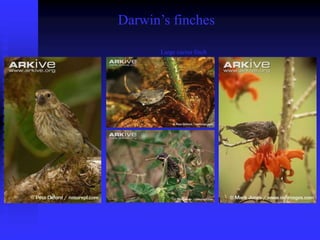
Darwin’s finches
Vegetarian finch
Large cactus finch
Medium ground finch Common cactus-finch
The Journey Home
 Darwin Observed that characteristics
of many plants and animals vary
greatly among the islands
 Hypothesis: Separate species may
have arose from an original ancestor
Basic Mechanism of Evolution
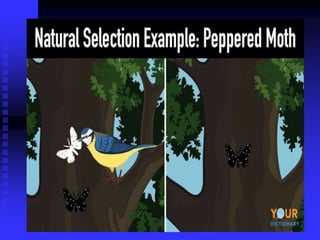
Natural Selection
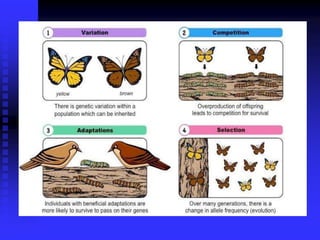
 Natural variation—the process of
organisms with certain more favorable,
characteristics tending to reproduce more
successfully.
 differences among individuals of a species
Three Principles of Natural
Selection
 the characteristics of organisms are
inherited, or passed from parent to
offspring.
 Second, more offspring are produced than
are able to survive (resources for survival
and reproduction are limited).
 Third, offspring vary among each other in
regard to their characteristics and those
variations are inherited.
Types of Natural Selection
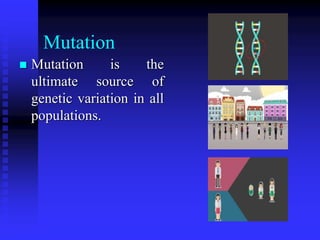
Mutation
 Mutation is the
ultimate source of
genetic variation in all
populations.
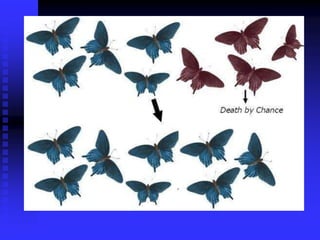
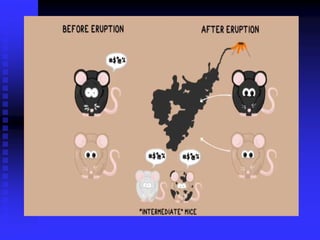
3. Genetic Drift
 Genetic drift occurs because the alleles in
an offspring generation are a random
sample of the alleles in the parent
generation.
4. Gene Flow
 Gene flow can occur when an individual
travels from one geographic location to
another and joins a different population of
the specie
Recombination
 - It occurs during meiosis when
chromosomes exchange genes. This process
ultimately leads to the formation of unique
gametes with chromosomes that are
different from those in parents.
Quiz
 How does natural selection can lead to
evolution?
 What is the relationship of mutation in
natural selection?
 How does genetic drift and gene flow affect
the diversity in organisms?
Assignment
 Study about Evolution and Origin of
Biodiversity: Patterns of Descent with
Modification
Evidence of Evolution
 The Fossil Record
 Geographic Distribution of Living Things
 Homologous Body Structures
 Similarities in Early Development
Evidence for Evolution
 The Fossil Record-
Layer show change
 Geographic
Distribution of Living
Things
 Homologous Body
Structures
 Similarities in Early
Development
Evidence of Evolution
 The Fossil Record
 Geographic
Distribution of
Living Things-similar
environments have
similar types of
organisms
 Homologous Body
Structures
 Similarities in Early
Development
Homologous Structures
 Homologous Structures-structures that
have different mature forms in different
organisms, but develop from the same
embryonic tissue
Evidence for Evolution
 Vestigial organs-organs that serve
no useful function in an organism
 i.e.) appendix, miniature legs, arms
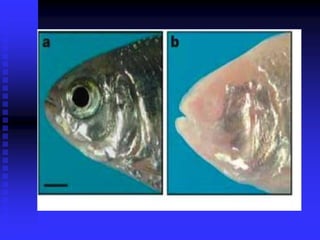
Similarities in Early
Development
Summary of Darwin’s Theory
 Individuals in nature differ from one
another
 Organisms in nature produce more offspring
than can survive, and many of those who do
not survive do not reproduce.
Summary of Darwin’s Theory
 Because more organisms are produce than
can survive, each species must struggle for
resources
 Each organism is unique, each has
advantages and disadvantages in the
struggle for existence
Summary (cont.)
 Individuals best suited for the environment
survive and reproduce most successful
 Species change over time
Summary (cont.)
 Species alive today descended with modification
from species that lived in the past
 All organisms on earth are united into a single
family tree of life by common descent
darwin evolution ppt.pptx

darwin evolution ppt.pptx

  • 1.
    OBJECTIVES  define evolutionand biodiversity  analyze the pattern of evolution  illustrate the mechanisms of evolution
  • 2.
  • 3.
  • 4.
    Perissodactyls Lowland tapir –Black rhinoceros Odd-toed ungulates (Perissodactyls)
  • 5.
    North African crestedporcupine – American beaver Rodents rodents
  • 6.
    African elephant -Rock hyrax Afrotheria afrotheria
  • 7.
    Blue whale -Moose Cetaceans + artiodactyls = Cetartiodactyls Cetardiodactyls
  • 8.
  • 9.
    What is biodiversity? •Biological diversity • The simple version - number of different species in a given area or ‘species richness’ • BUT, it can also be diversity within species (genetic diversity of alleles in a gene pool) Coral reef
  • 10.
    The Earth’s geologicallife may simply be subdivided this way;
  • 12.
    Why is thereso much diversity? • Overlaps - convergent evolution Little goblin bat White-capped albatross
  • 13.
    Why is thereso much diversity? → EVOLUTION • Evolution is the process by which change occurs in the heritable characteristics (genes) of a population over successive generations • Evolution results in diversity at every level (from genes to species) • This process happens naturally over a long period of time • The result is a huge amount of diversity even between related groups with a common ancestor
  • 14.
  • 15.
    How do youthink Darwin came up with his theory?
  • 16.
  • 17.
    Voyage of Beagle Dates: February 12th, 1831  Captain: Charles Darwin  Ship: H.M.S. Beagle  Destination: Voyage around the world.  Findings: evidence to propose a revolutionary hypothesis about how life changes over time
  • 19.
    Activity  The studentswill be divided into five groups and using the given materials they will illustrate the concept on mechanism of evolution.   Group 1. Natural selection  Group 2. Mutation  Group 3. Genetic drift  Group 4. Gene flow  Group 5. Recombination
  • 20.
     CRITERIA  Correctnessof answer  50%  Interpretation  40%  Visual appearance  10%  TOTAL  100%
  • 21.
    The Galapagos Island Darwin was fascinated in particular by the land tortoises and marine iguanas in the Galápagos.  Giant tortoises varied in predictable ways from one island to another.  The shape of a tortoise's shell could be used to identify which island a particular tortoise inhabited.
  • 23.
    Darwin’s finches Vegetarian finch Largecactus finch Medium ground finch Common cactus-finch
  • 24.
    The Journey Home Darwin Observed that characteristics of many plants and animals vary greatly among the islands  Hypothesis: Separate species may have arose from an original ancestor
  • 25.
  • 26.
    Natural Selection  Naturalvariation—the process of organisms with certain more favorable, characteristics tending to reproduce more successfully.  differences among individuals of a species
  • 27.
    Three Principles ofNatural Selection  the characteristics of organisms are inherited, or passed from parent to offspring.
  • 28.
     Second, moreoffspring are produced than are able to survive (resources for survival and reproduction are limited).
  • 29.
     Third, offspringvary among each other in regard to their characteristics and those variations are inherited.
  • 31.
  • 38.
    Mutation  Mutation isthe ultimate source of genetic variation in all populations.
  • 39.
    3. Genetic Drift Genetic drift occurs because the alleles in an offspring generation are a random sample of the alleles in the parent generation.
  • 43.
    4. Gene Flow Gene flow can occur when an individual travels from one geographic location to another and joins a different population of the specie
  • 46.
    Recombination  - Itoccurs during meiosis when chromosomes exchange genes. This process ultimately leads to the formation of unique gametes with chromosomes that are different from those in parents.
  • 47.
    Quiz  How doesnatural selection can lead to evolution?  What is the relationship of mutation in natural selection?  How does genetic drift and gene flow affect the diversity in organisms?
  • 48.
    Assignment  Study aboutEvolution and Origin of Biodiversity: Patterns of Descent with Modification
  • 49.
    Evidence of Evolution The Fossil Record  Geographic Distribution of Living Things  Homologous Body Structures  Similarities in Early Development
  • 50.
    Evidence for Evolution The Fossil Record- Layer show change  Geographic Distribution of Living Things  Homologous Body Structures  Similarities in Early Development
  • 51.
    Evidence of Evolution The Fossil Record  Geographic Distribution of Living Things-similar environments have similar types of organisms  Homologous Body Structures  Similarities in Early Development
  • 52.
    Homologous Structures  HomologousStructures-structures that have different mature forms in different organisms, but develop from the same embryonic tissue
  • 54.
    Evidence for Evolution Vestigial organs-organs that serve no useful function in an organism  i.e.) appendix, miniature legs, arms
  • 56.
  • 57.
    Summary of Darwin’sTheory  Individuals in nature differ from one another  Organisms in nature produce more offspring than can survive, and many of those who do not survive do not reproduce.
  • 58.
    Summary of Darwin’sTheory  Because more organisms are produce than can survive, each species must struggle for resources  Each organism is unique, each has advantages and disadvantages in the struggle for existence
  • 59.
    Summary (cont.)  Individualsbest suited for the environment survive and reproduce most successful  Species change over time
  • 60.
    Summary (cont.)  Speciesalive today descended with modification from species that lived in the past  All organisms on earth are united into a single family tree of life by common descent