First conditional (If )with  modals verbs would, could, should
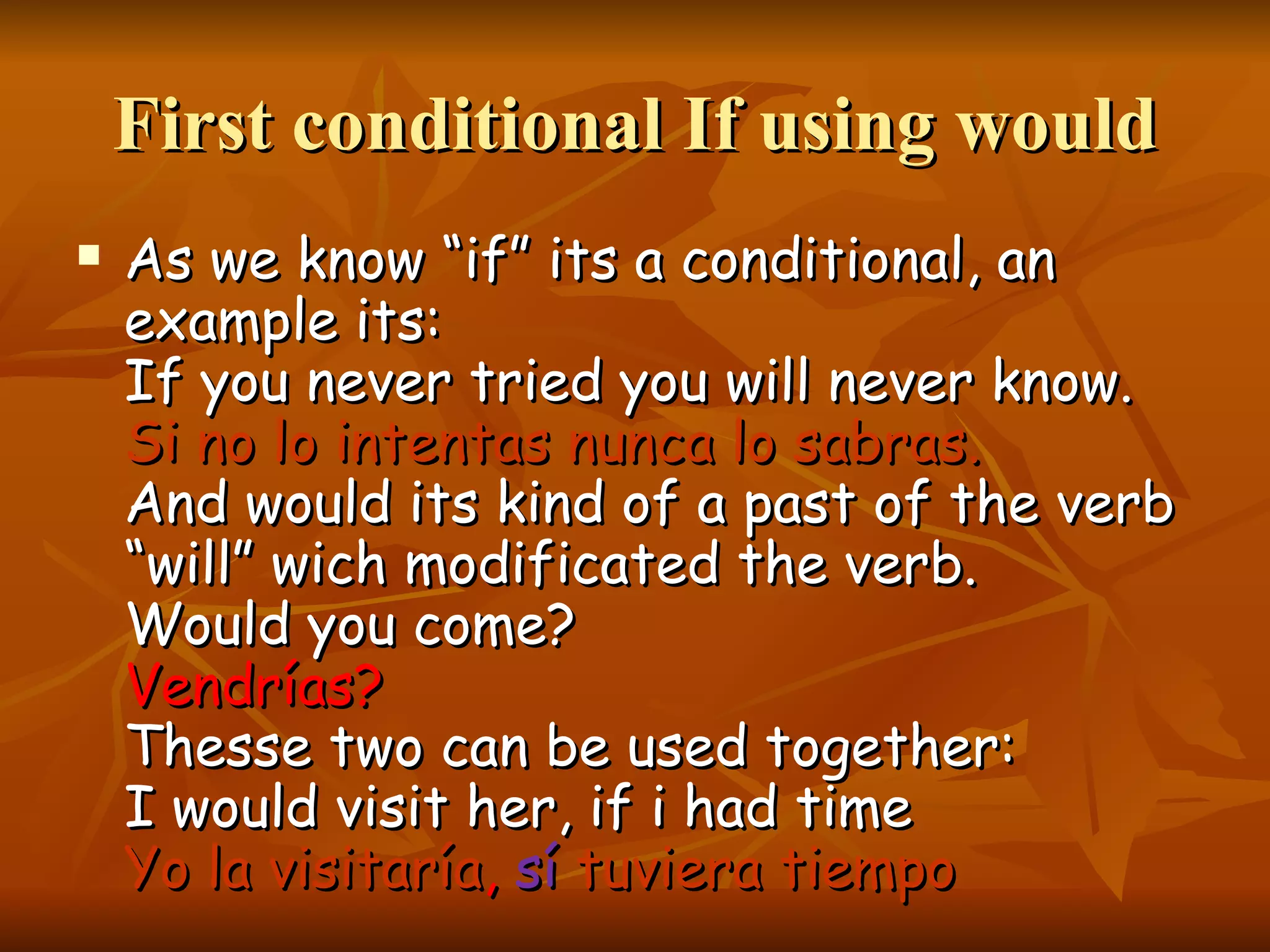
First conditional If using would As we know “if” its a conditional, an example its: If you never tried you will never know. Si no lo intentas nunca lo sabras. And would its kind of a past of the verb “will” wich modificated the verb. Would you come? Vendrías? Thesse two can be used together: I would visit her, if i had time Yo la visitaría ,  sí  tuviera tiempo
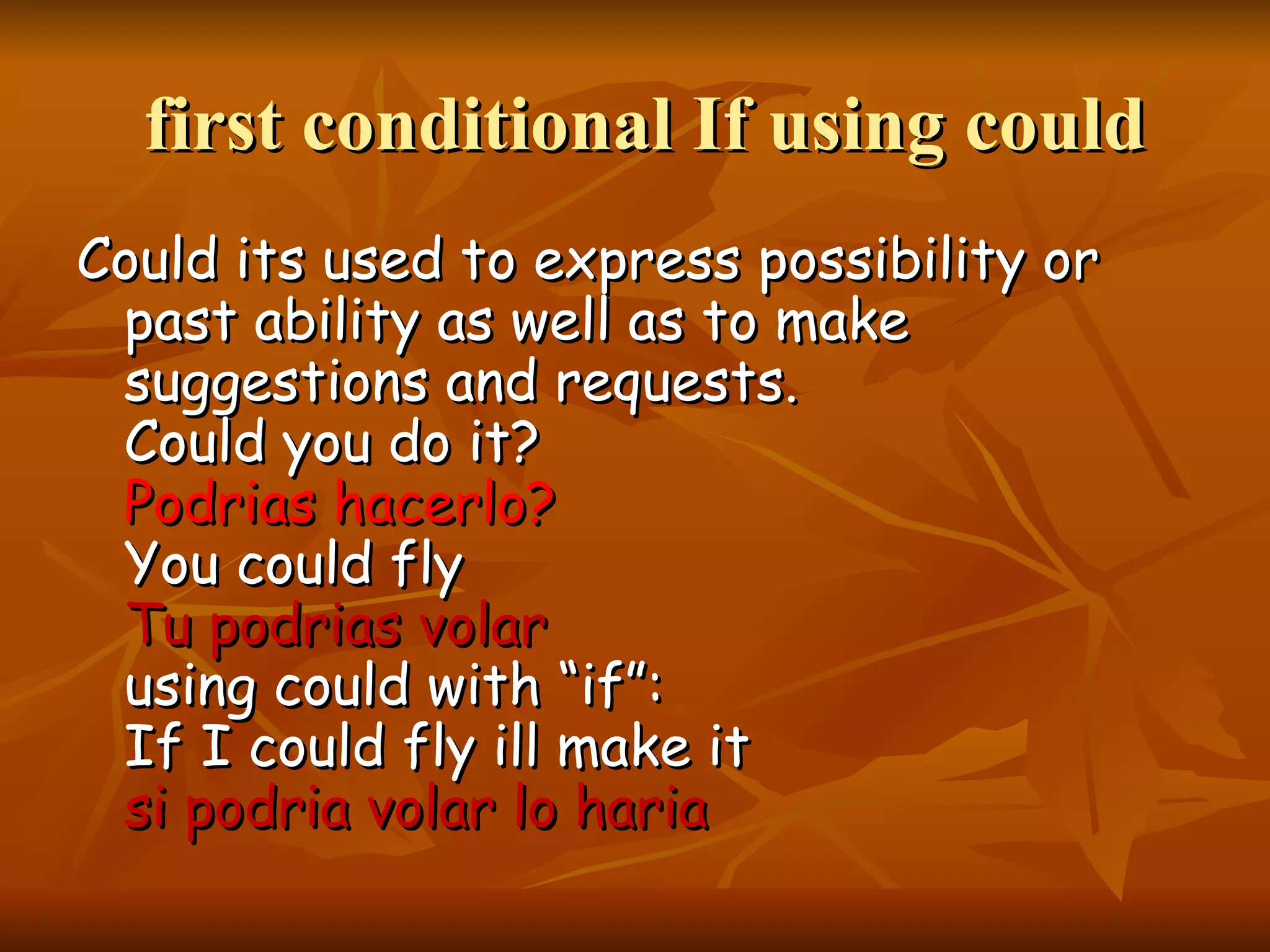
first conditional If using could Could its used to  express possibility or past ability as well as to make suggestions and requests. Could you do it? Podrias hacerlo? You could fly Tu podrias volar using could with “if”: If I could fly ill make it si podria volar lo haria
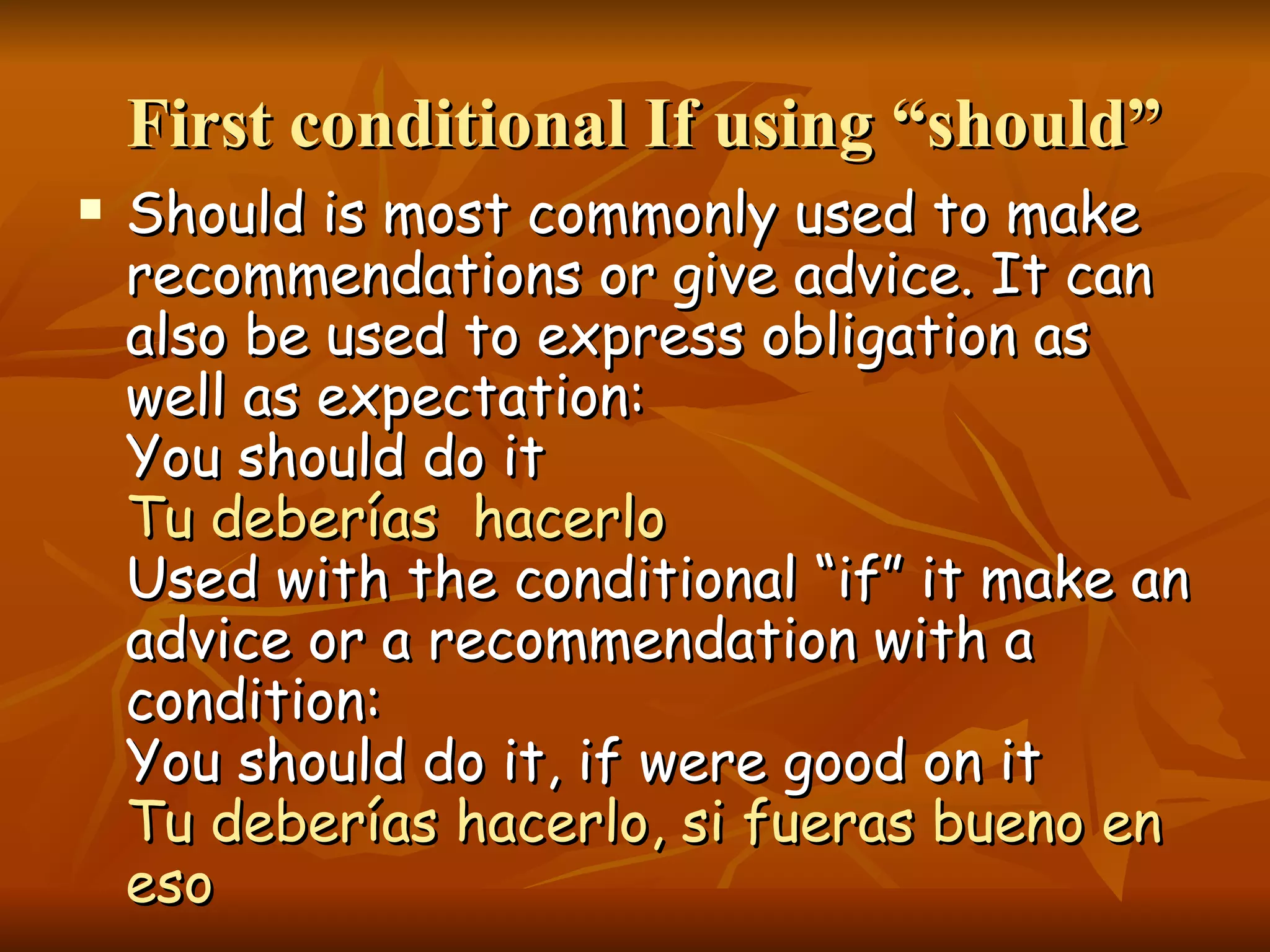
First conditional If using “should” Should  is most commonly used to make recommendations or give advice. It can also be used to express obligation as well as expectation: You should do it Tu deberías  hacerlo Used with the conditional “if” it make an advice or a recommendation with a condition: You should do it, if were good on it Tu deberías hacerlo, si fueras bueno en eso
First conditional If  using must Must  express an obligation or a prohibition, something you have or not do. Example: You must go to the concert Tu debes ir al concierto Using this modal with the  conditional  “if” makes a conditional  sentence  with an obligation or a prohibition. Example: If you must go, then go si debes, pues ve If you must not go, then why did you go? Si no deberias ir, entonces porque vas?
Power point  presentation by Riveros Arredondo Eduardo (ERA_KNIK)

First Conditional With Modals Verbs By Riveros Arredondo 3 Ap

  • 1.
    First conditional (If)with modals verbs would, could, should
  • 2.
    First conditional Ifusing would As we know “if” its a conditional, an example its: If you never tried you will never know. Si no lo intentas nunca lo sabras. And would its kind of a past of the verb “will” wich modificated the verb. Would you come? Vendrías? Thesse two can be used together: I would visit her, if i had time Yo la visitaría , sí tuviera tiempo
  • 3.
    first conditional Ifusing could Could its used to express possibility or past ability as well as to make suggestions and requests. Could you do it? Podrias hacerlo? You could fly Tu podrias volar using could with “if”: If I could fly ill make it si podria volar lo haria
  • 4.
    First conditional Ifusing “should” Should is most commonly used to make recommendations or give advice. It can also be used to express obligation as well as expectation: You should do it Tu deberías hacerlo Used with the conditional “if” it make an advice or a recommendation with a condition: You should do it, if were good on it Tu deberías hacerlo, si fueras bueno en eso
  • 5.
    First conditional If using must Must express an obligation or a prohibition, something you have or not do. Example: You must go to the concert Tu debes ir al concierto Using this modal with the conditional “if” makes a conditional sentence with an obligation or a prohibition. Example: If you must go, then go si debes, pues ve If you must not go, then why did you go? Si no deberias ir, entonces porque vas?
  • 6.
    Power point presentation by Riveros Arredondo Eduardo (ERA_KNIK)