LITERATURE SURVEY
Conventional Methods & Recent
Trends
Presented by :- ANAMIKA BANERJEE , 115217
LAYOUT OF PRESENTATION
1
•INTRODUCTION
2
•SIGNIFICANCE
3 •SEARCH STRATEGY
4
•SOURCES OF LITERATURE
5
•REFERENCES
WHAT IS A LITERATURE SURVEY???
“A systematic and thorough search of all
types of published literature as well as other
sources including dissertation, theses in
order to identify as many items as possible
that are relevant to a particular topic .”
- GASH, 1989
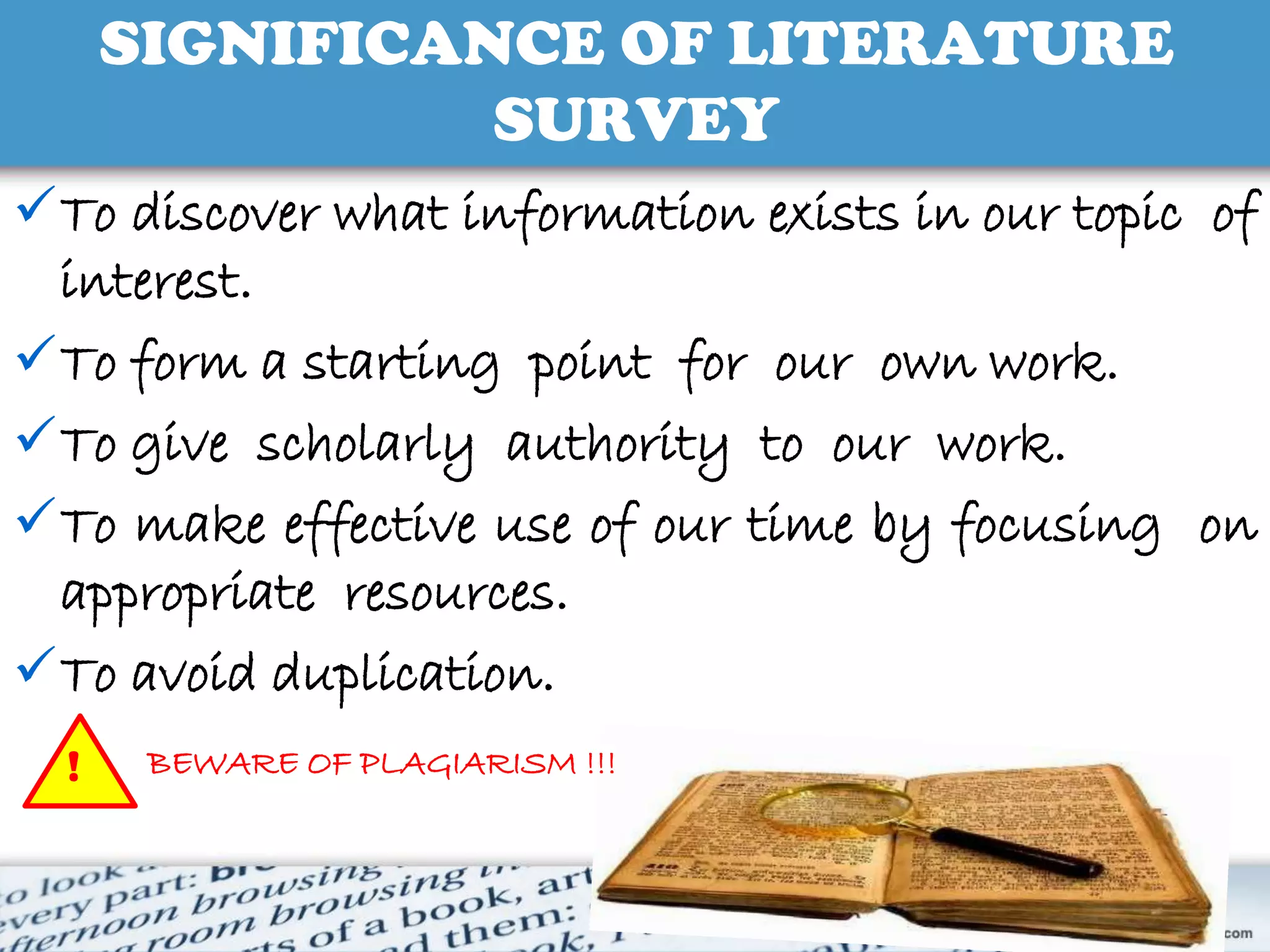
SIGNIFICANCE OF LITERATURE
SURVEY
To discover what information exists in our topic of
interest.
To form a starting point for our own work.
To give scholarly authority to our work.
To make effective use of our time by focusing on
appropriate resources.
To avoid duplication.
! BEWARE OF PLAGIARISM !!!
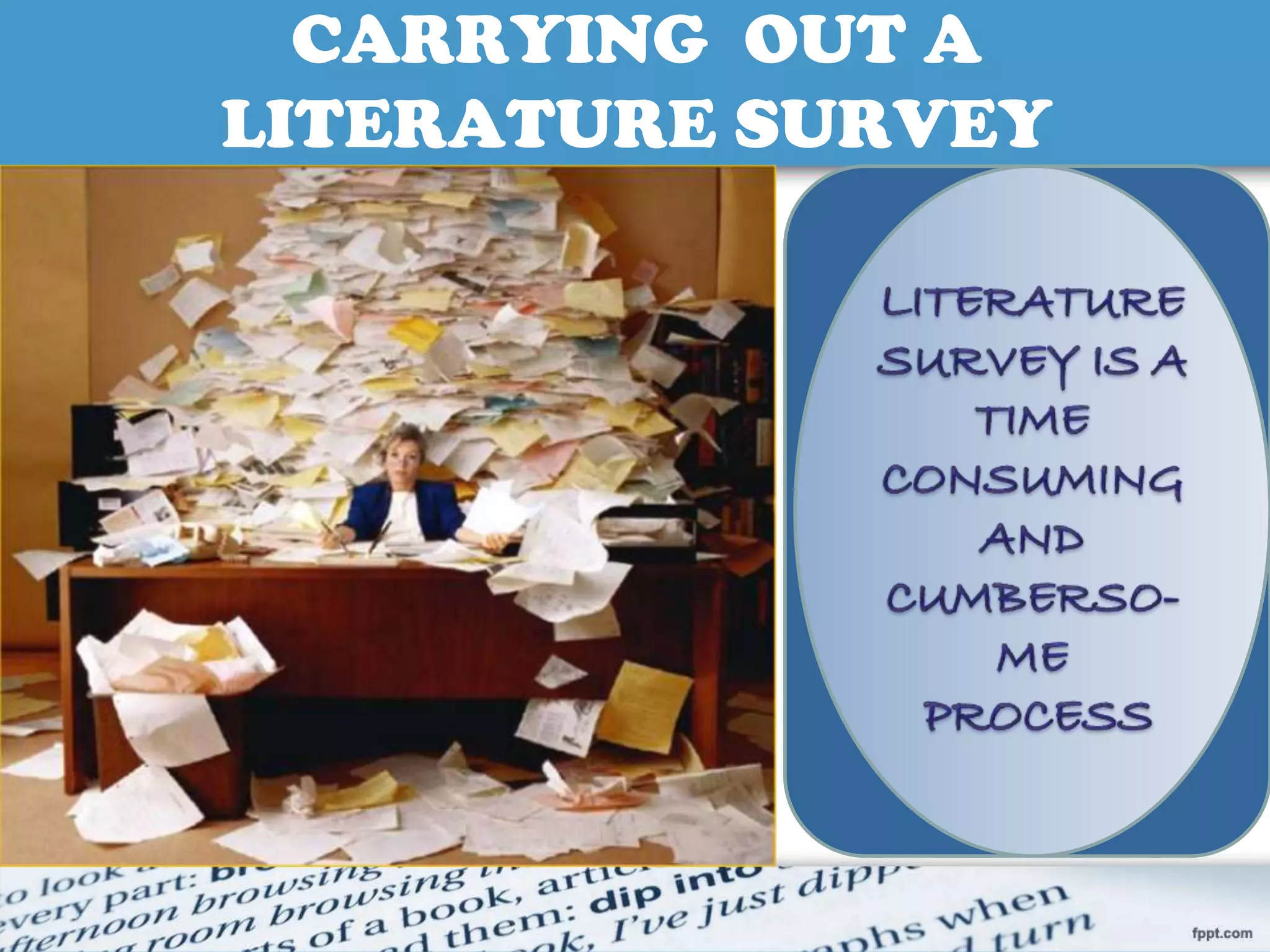
CARRYING OUT A
LITERATURE SURVEY
GETTING STARTED…
FIRST, DEFINE THE TERMS
One Can Also Take The Help Of Online Available
References and Dictionaries!!!
ALSO,
ENCYCLOPAEDIAS are
one of the most important
sources of gaining
information. They cover
areas such as physical
properties, manufacturing
processes, uses, economic,
health and environmental
issues.
SEARCH STRATEGY:
SETTING LIMITS TO THE RESEARCH
How far back we want our research to go???
Avoid too long a time period.
Decide how widespread our search should be.
Eliminate the languages we don’t
understand.
BE FLEXIBLE
Be prepared to be flexible as
the search progresses, we might
re- think the scope and terms
of our research.
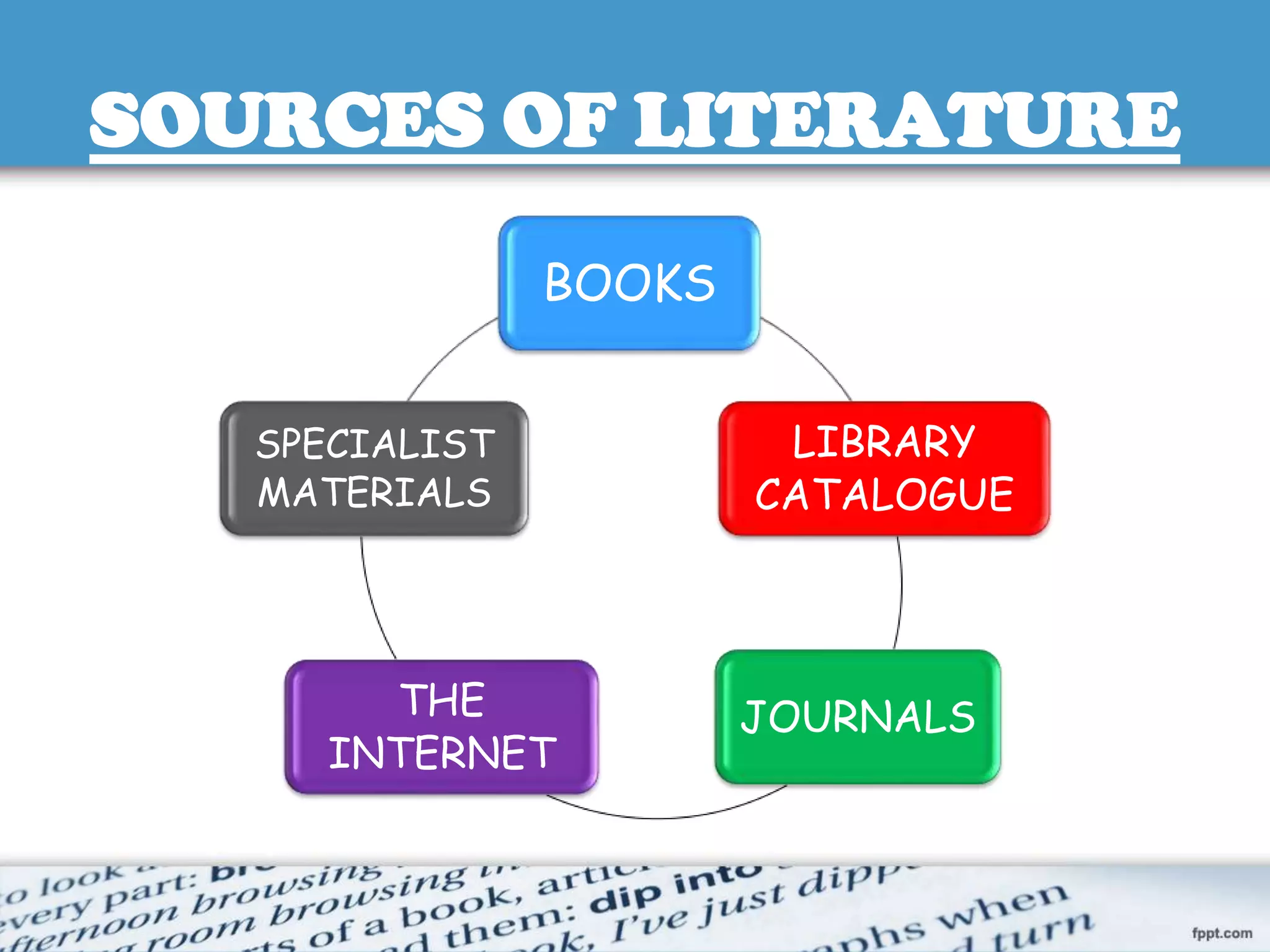
SOURCES OF LITERATURE
BOOKS
LIBRARY
CATALOGUE
JOURNALSTHE
INTERNET
SPECIALIST
MATERIALS
BOOKS
 TEXTBOOKS
DICTIONARIES & ENCYCLOPEDIAS
HANDBOOKS
 Basic understanding of topic
 Topic overview / introduction /
summary
 Accessible writing style
 Authoritative
 written by subject experts
 specialist publishers
 Publication Delay
LIBRARY
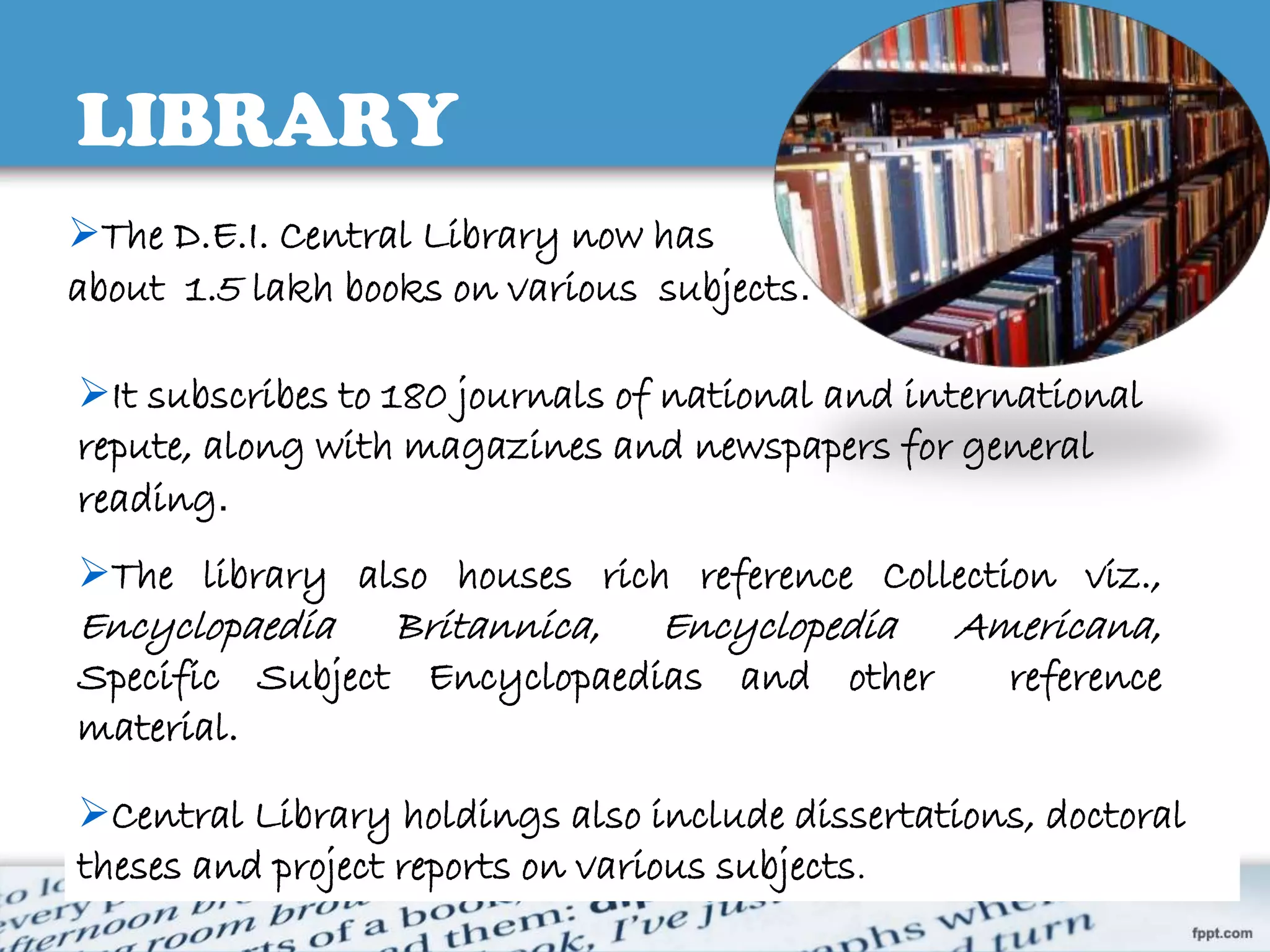
The D.E.I. Central Library now has
about 1.5 lakh books on various subjects.
It subscribes to 180 journals of national and international
repute, along with magazines and newspapers for general
reading.
The library also houses rich reference Collection viz.,
Encyclopaedia Britannica, Encyclopedia Americana,
Specific Subject Encyclopaedias and other reference
material.
Central Library holdings also include dissertations, doctoral
theses and project reports on various subjects.
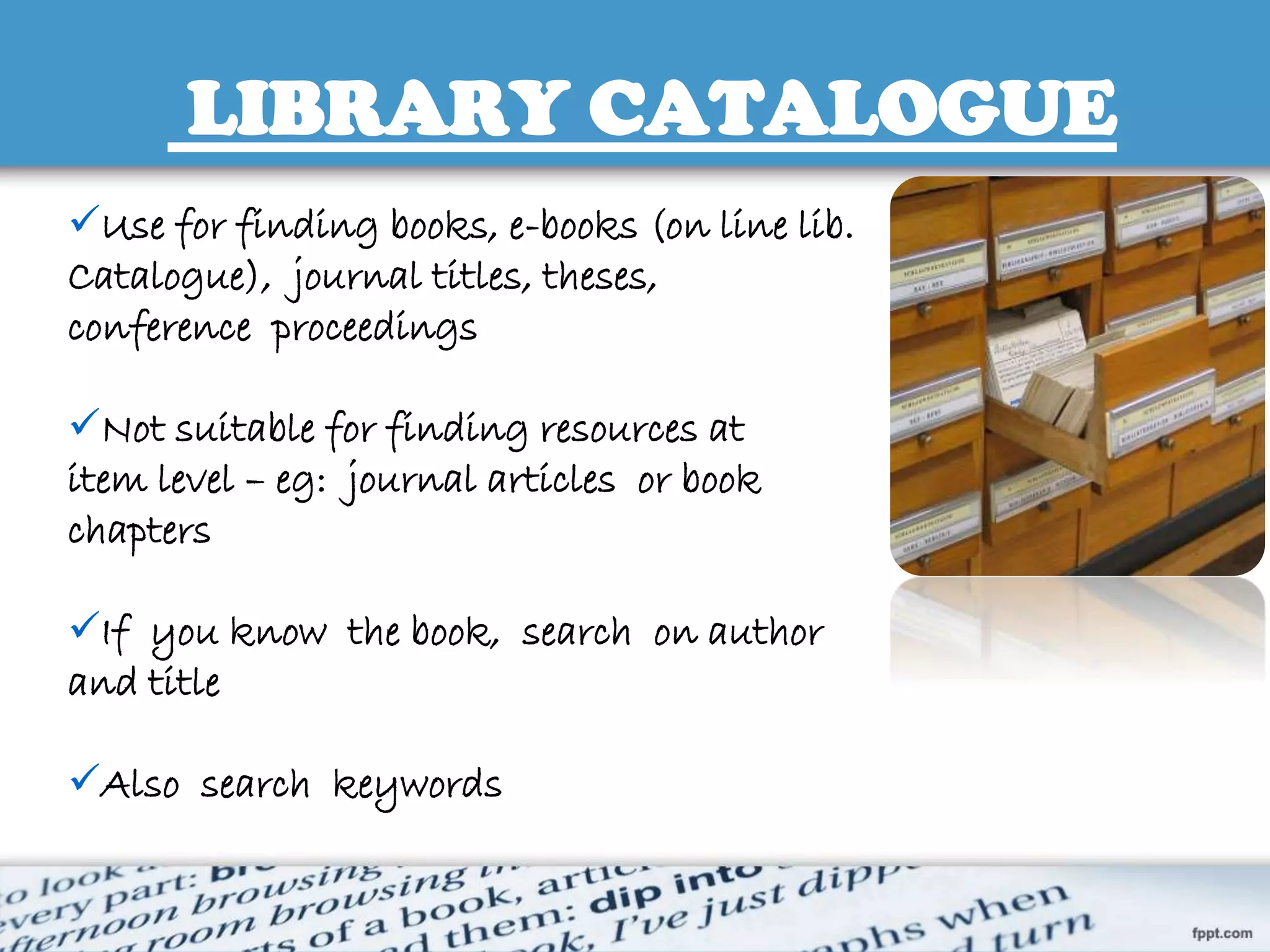
LIBRARY CATALOGUE
Use for finding books, e-books (on line lib.
Catalogue), journal titles, theses,
conference proceedings
Not suitable for finding resources at
item level – eg: journal articles or book
chapters
If you know the book, search on author
and title
Also search keywords
E- JOURNAL SERVICE AT CENTRAL
LIBRARY
We can access full text databases of the popular
international publishers and span through several
journals of international repute.
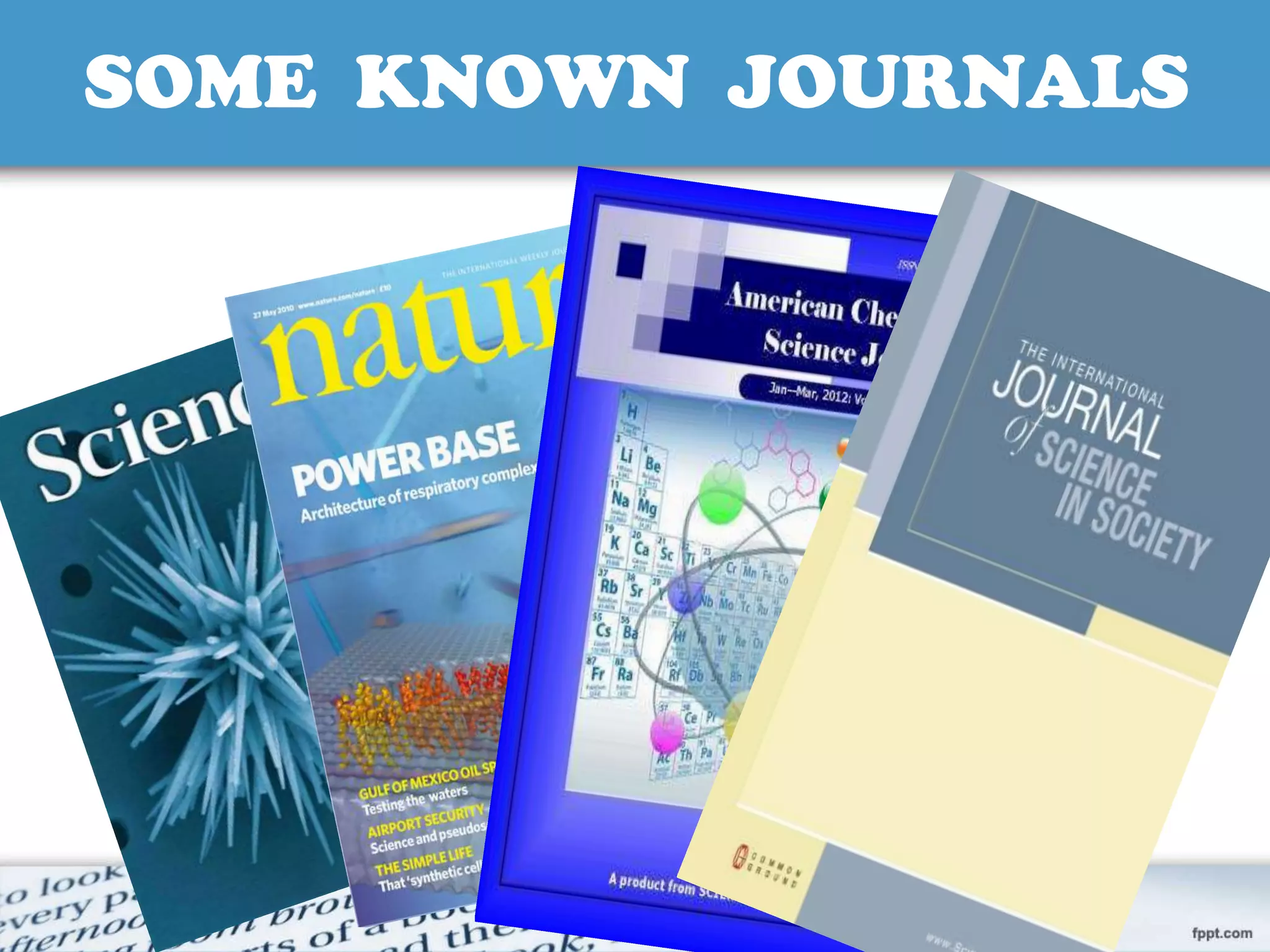
JOURNALS
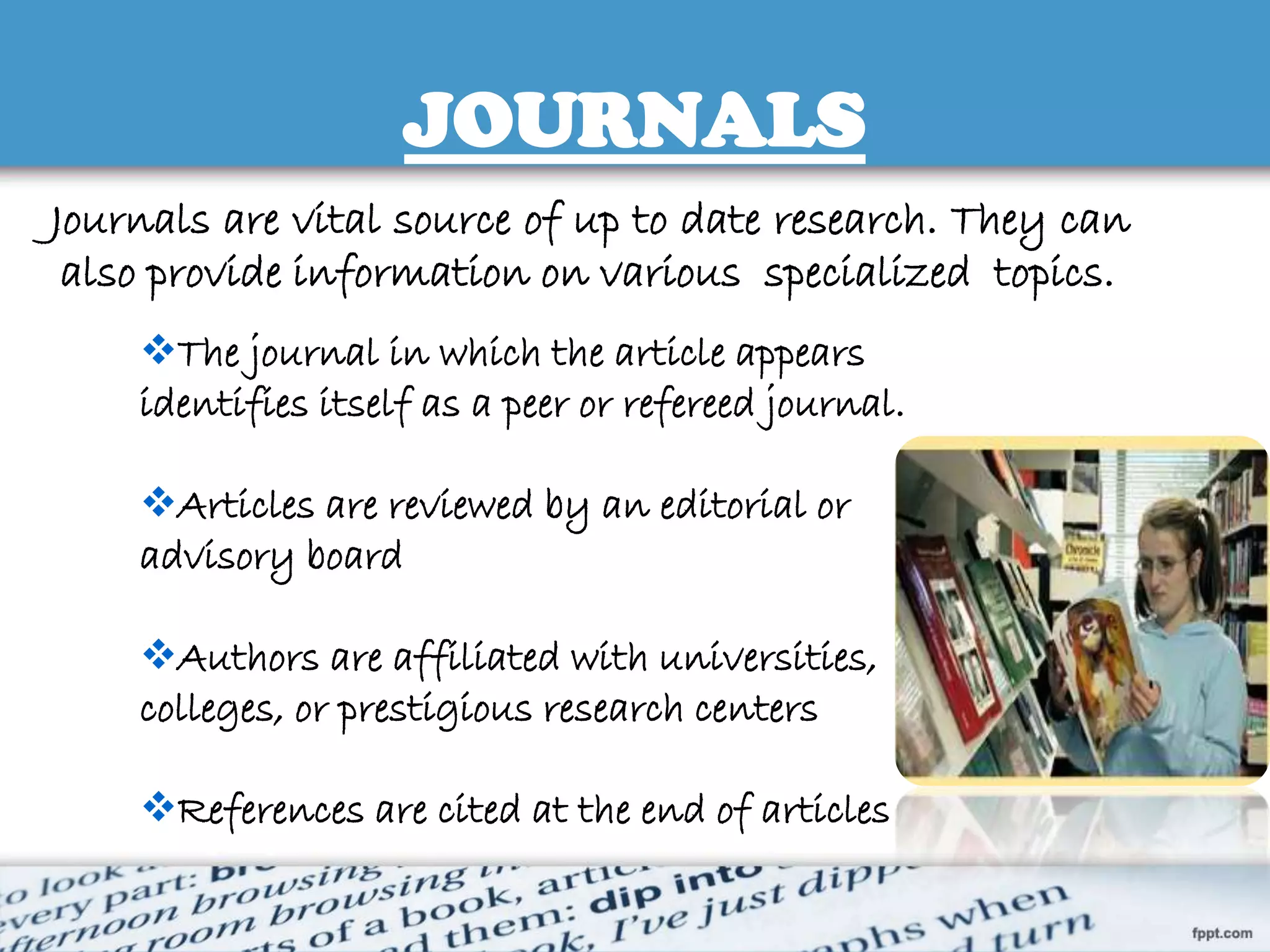
Journals are vital source of up to date research. They can
also provide information on various specialized topics.
The journal in which the article appears
identifies itself as a peer or refereed journal.
Articles are reviewed by an editorial or
advisory board
Authors are affiliated with universities,
colleges, or prestigious research centers
References are cited at the end of articles
SOME KNOWN JOURNALS
INTERNET SOURCES
The internet is widely used and readily accessible. It
can provide practically instant information on most of
the topics .
Bear in mind that anyone can post information on the
Internet so the quality may not be reliable.
The information you find may be intended for a general
audience and is usually less detailed.!
!
GOOGLE
SCHOLAR
Can search for
books and articles
Can do an
advanced search
Title links to
abstracts and
possible source
of full text.
Link to articles
that cited the
work
& Link to
Related articles
SPECIALIST MATERIALS
 CONFERENCE PROCEEDINGS: These can be
useful in providing the latest research, or research that
has not been published.
They are also helpful in providing information about
people in different research areas, and so can be helpful in
tracking down other works by the same researcher.
 GOVERNMENT/CORPORATE REPORTS:
Many government departments and corporation
commissions carry out research. Their published
findings can provide a useful source of information,
depending on our field of study.
ALSO,
THESES AND DISSERTATIONS: These can be
useful sources of information. However there are
disadvantages:
 they can be difficult to obtain since they are not
published, but are generally only available from the
library or inter - library systems
 the student who carried out the research may not be an
experienced researcher and therefore we might have to
treat their findings with more caution than published
research.
REFERENCES
 Conducting Research – Dr. Rasha Salama
 Conducting a Literature Survey - Nola du Toit
 http://services.unimelb.edu.au/academicskills/reading/lite
rature
 http://www.iris.ethz.ch/msrl/education/iris_studies/pdf/lit
erature_review.pdf
 http://openmed.nic.in/1175/01/Literature_search.pdf
 http://www.dei.ac.in/SetupWeb/Central%20Library/Onlin
e_Resources.htm
 Multiple purpose of a literature review – Sarah Gash
THANK
YOU

Literature survey

  • 1.
    LITERATURE SURVEY Conventional Methods& Recent Trends Presented by :- ANAMIKA BANERJEE , 115217
  • 2.
    LAYOUT OF PRESENTATION 1 •INTRODUCTION 2 •SIGNIFICANCE 3•SEARCH STRATEGY 4 •SOURCES OF LITERATURE 5 •REFERENCES
  • 3.
    WHAT IS ALITERATURE SURVEY??? “A systematic and thorough search of all types of published literature as well as other sources including dissertation, theses in order to identify as many items as possible that are relevant to a particular topic .” - GASH, 1989
  • 4.
    SIGNIFICANCE OF LITERATURE SURVEY Todiscover what information exists in our topic of interest. To form a starting point for our own work. To give scholarly authority to our work. To make effective use of our time by focusing on appropriate resources. To avoid duplication. ! BEWARE OF PLAGIARISM !!!
  • 5.
  • 6.
    GETTING STARTED… FIRST, DEFINETHE TERMS One Can Also Take The Help Of Online Available References and Dictionaries!!!
  • 7.
    ALSO, ENCYCLOPAEDIAS are one ofthe most important sources of gaining information. They cover areas such as physical properties, manufacturing processes, uses, economic, health and environmental issues.
  • 8.
    SEARCH STRATEGY: SETTING LIMITSTO THE RESEARCH How far back we want our research to go??? Avoid too long a time period. Decide how widespread our search should be. Eliminate the languages we don’t understand.
  • 9.
    BE FLEXIBLE Be preparedto be flexible as the search progresses, we might re- think the scope and terms of our research.
  • 10.
  • 11.
    BOOKS  TEXTBOOKS DICTIONARIES &ENCYCLOPEDIAS HANDBOOKS  Basic understanding of topic  Topic overview / introduction / summary  Accessible writing style  Authoritative  written by subject experts  specialist publishers  Publication Delay
  • 12.
    LIBRARY The D.E.I. CentralLibrary now has about 1.5 lakh books on various subjects. It subscribes to 180 journals of national and international repute, along with magazines and newspapers for general reading. The library also houses rich reference Collection viz., Encyclopaedia Britannica, Encyclopedia Americana, Specific Subject Encyclopaedias and other reference material. Central Library holdings also include dissertations, doctoral theses and project reports on various subjects.
  • 13.
    LIBRARY CATALOGUE Use forfinding books, e-books (on line lib. Catalogue), journal titles, theses, conference proceedings Not suitable for finding resources at item level – eg: journal articles or book chapters If you know the book, search on author and title Also search keywords
  • 14.
    E- JOURNAL SERVICEAT CENTRAL LIBRARY We can access full text databases of the popular international publishers and span through several journals of international repute.
  • 15.
    JOURNALS Journals are vitalsource of up to date research. They can also provide information on various specialized topics. The journal in which the article appears identifies itself as a peer or refereed journal. Articles are reviewed by an editorial or advisory board Authors are affiliated with universities, colleges, or prestigious research centers References are cited at the end of articles
  • 16.
  • 17.
    INTERNET SOURCES The internetis widely used and readily accessible. It can provide practically instant information on most of the topics . Bear in mind that anyone can post information on the Internet so the quality may not be reliable. The information you find may be intended for a general audience and is usually less detailed.! !
  • 18.
    GOOGLE SCHOLAR Can search for booksand articles Can do an advanced search
  • 19.
    Title links to abstractsand possible source of full text. Link to articles that cited the work & Link to Related articles
  • 20.
    SPECIALIST MATERIALS  CONFERENCEPROCEEDINGS: These can be useful in providing the latest research, or research that has not been published. They are also helpful in providing information about people in different research areas, and so can be helpful in tracking down other works by the same researcher.  GOVERNMENT/CORPORATE REPORTS: Many government departments and corporation commissions carry out research. Their published findings can provide a useful source of information, depending on our field of study.
  • 21.
    ALSO, THESES AND DISSERTATIONS:These can be useful sources of information. However there are disadvantages:  they can be difficult to obtain since they are not published, but are generally only available from the library or inter - library systems  the student who carried out the research may not be an experienced researcher and therefore we might have to treat their findings with more caution than published research.
  • 22.
    REFERENCES  Conducting Research– Dr. Rasha Salama  Conducting a Literature Survey - Nola du Toit  http://services.unimelb.edu.au/academicskills/reading/lite rature  http://www.iris.ethz.ch/msrl/education/iris_studies/pdf/lit erature_review.pdf  http://openmed.nic.in/1175/01/Literature_search.pdf  http://www.dei.ac.in/SetupWeb/Central%20Library/Onlin e_Resources.htm  Multiple purpose of a literature review – Sarah Gash
  • 23.