Stereotypes

An introduction
What is a stereotype?
• A simplified representation which focuses on
  certain characteristics of a group and assumes
  these to be shared across all group members.
• Inherent within a stereotype is a judgement
  on this characteristic (usually negative – but
  not always).
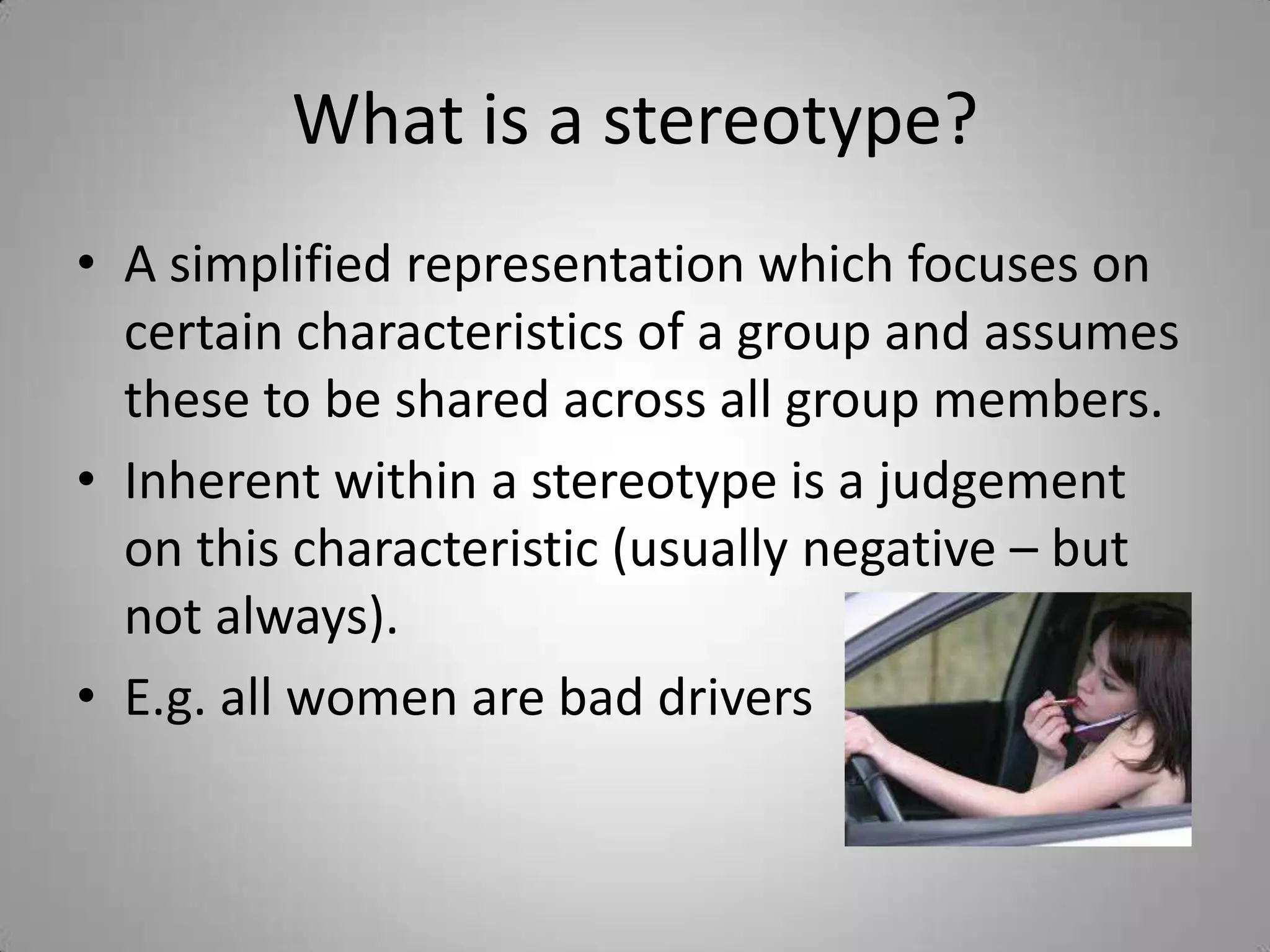
• E.g. all women are bad drivers
How does the media use stereotypes?
• To communicate complex information about a
  character, time period, location etc. as quickly as
  possible (narrative shortcut)
• They are able to do this as, they do not simply create
  stereotypes, they reflect the stereotypes that already
  exist within a culture.
• By using these stereotypes, the media can be said to be
  reinforcing the ideas behind the and consolidating the
  views they contain.
• Often the media is criticised for creating
  stereotypes, but they are usually part of the audience’s
  way of thinking about the world anyway.
Stereotypes can be truthful
• Stereotypes are assumptions about all members of a particular
  group. ‘All women enjoy a gossip’ is a flawed statement. There will
  inevitably be some women that don’t – or indeed some men that
  do.
• However, the theorist Perkins noted that stereotypes usually have
  an element of truth in them which makes them plausible. Some
  women do like to gossip… women may also be more comfortable
  doing so than men as it is more culturally acceptable for them as it
  is seen as a feminine trait.
• What is often overlooked are the historical or cultural reasons for
  perceived shared traits within a group. Until relatively recently
  females were not encouraged to engage in discussions that were
  not based in the domestic (family, home, relationships) and men
  were not expected to show interest in these things. These were
  part of gender role expectations.
Stereotypes can be negative
• The judgement making the basis of the stereotype is
  usually a negative one – gossip is a bad thing, a waste of
  time.
• They do not allow for individual traits to exist in members
  of the group – some women may not be interested in other
  people’s domestic lives.
• They are created by those outside the stereotyped group
  and are often seen to be an exertion of power – the
  stereotyped group often has no way to answer back,
• The stereotype gives a ‘complete picture’ about the group
  and implies a knowledge and understanding that can be
  applied to all members of the group.
Stereotypes can also be positive
• Positive representations are called corrective
  stereotypes or countertypes where the
  representations are trying to create new ideas about a
  previously stereotyped group.
• Contemporary culture has become more aware of
  stereotypes and the effects they have – particularly
  negative ones.
• Many media texts have attempted to construct new
  approaches to old stereotypes. E.g. Buffy the Vampire
  Slayer - despite being a young blonde
  female, (typically the victim in a horror), Buffy is the
  hero and rescuer.
What makes a stereotype?
• Appearance
• Behaviour
• Attitude
Appearance
• This can include physical appearance and clothing as
  well as the sound of the voice.
• In your own lives you may have noticed that people are
  judged on what they look like or what they wear. The
  news media has recently focussed on the ‘hoodie’ and
  it is often used as an indicator of youth crime. This
  then confirms the idea that young people are likely to
  be trouble makers and petty criminals and the
  stereotype is linked to a specific article of clothing. This
  stereotype assumes that all young people who choose
  to wear a hoodie will have criminal tendencies. Clearly
  this is inaccurate.
Behaviour
• Typical things that people in this group are
  assumed to do.
• It is, of course, a stereotype to show males as
  being interested in football. Some men enjoy
  rugby, some hockey and some find all sports
  boring. The assumption is as flawed as the
  gossiping women stereotype but evidence of
  this assumption can be found in many media
  texts, especially magazines like Zoo.
Attitude
• Closely linked to behaviour, stereotypes can be
  assumptions about the way a group is perceived
  as thinking – the attitudes they hold towards
  certain situations.
• Again, gender is a good place to look for
  attitudinal stereotypes. Males are often depicted
  as trying to avoid serious romantic relationships
  whilst females are often represented as being
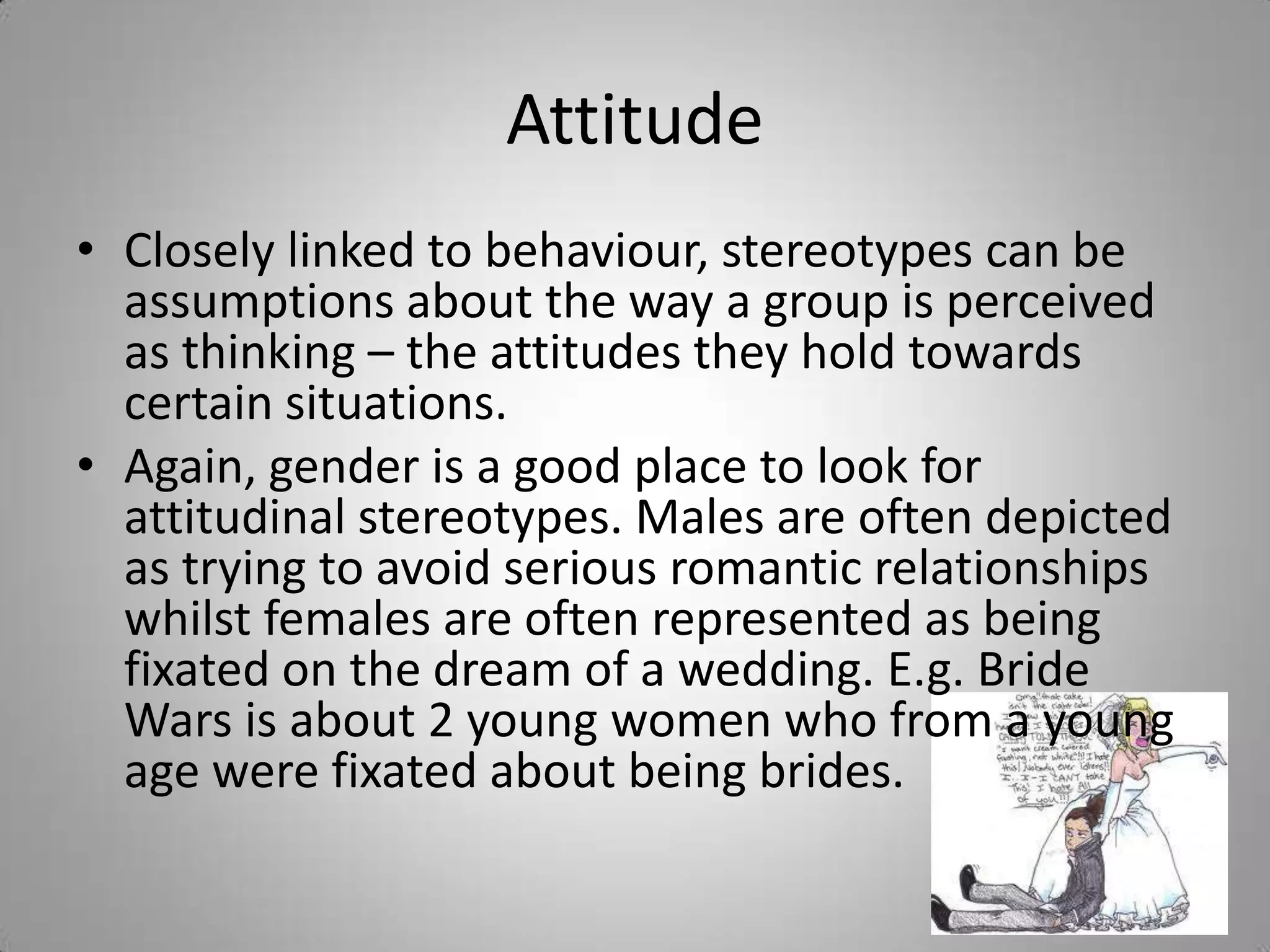
  fixated on the dream of a wedding. E.g. Bride
  Wars is about 2 young women who from a young
  age were fixated about being brides.
List of stereotypes
Task
• Choose a well known stereotype and make a
  list of the characteristics (appearance,
  behaviour and attitude) associated with it.
• Name as many film/TV characters who play
  your chosen stereotype as possible.
Summary
• Media audiences need to be familiar with the stereotypes used, otherwise
  they would be unable to interpret the assumptions that lie behind them.
• If the concept of men being sports fans did not already exist any media
  text that used this aspect of masculinity to create easily recognisable
  characters would fail to communicate its meaning to the audience.
  Similarly, if the audience did not understand the significance of the
  hoody, it could not be used as a narrative shorthand.
• Identifying where this cycle above begins and ends is impossible. The
  media clearly has an impact on audience’s ideas about stereotyped groups
  but this is in conjunction with other influential aspects of a person’s
  development of understanding the world – peer
  groups, families, social/religious backgrounds etc.
• The media is just one of many ways the audience experiences life and
  learns about the world.
Exam Hint
• When analysing texts or writing essays it is
  important to question why a particular
  stereotype has been used and consider the
  practical reasons that may exist.
• It is also crucial to think about the effect that the
  stereotype may have. Does it create a negative
  representation that may have a wider social
  impact? Does it play on existing prejudices?
• Students often simply identify the stereotypes
  rather than analyse them and this leads to a loss
  of marks in exams.

Stereotypes

  • 1.
  • 2.
    What is astereotype? • A simplified representation which focuses on certain characteristics of a group and assumes these to be shared across all group members. • Inherent within a stereotype is a judgement on this characteristic (usually negative – but not always). • E.g. all women are bad drivers
  • 3.
    How does themedia use stereotypes? • To communicate complex information about a character, time period, location etc. as quickly as possible (narrative shortcut) • They are able to do this as, they do not simply create stereotypes, they reflect the stereotypes that already exist within a culture. • By using these stereotypes, the media can be said to be reinforcing the ideas behind the and consolidating the views they contain. • Often the media is criticised for creating stereotypes, but they are usually part of the audience’s way of thinking about the world anyway.
  • 4.
    Stereotypes can betruthful • Stereotypes are assumptions about all members of a particular group. ‘All women enjoy a gossip’ is a flawed statement. There will inevitably be some women that don’t – or indeed some men that do. • However, the theorist Perkins noted that stereotypes usually have an element of truth in them which makes them plausible. Some women do like to gossip… women may also be more comfortable doing so than men as it is more culturally acceptable for them as it is seen as a feminine trait. • What is often overlooked are the historical or cultural reasons for perceived shared traits within a group. Until relatively recently females were not encouraged to engage in discussions that were not based in the domestic (family, home, relationships) and men were not expected to show interest in these things. These were part of gender role expectations.
  • 5.
    Stereotypes can benegative • The judgement making the basis of the stereotype is usually a negative one – gossip is a bad thing, a waste of time. • They do not allow for individual traits to exist in members of the group – some women may not be interested in other people’s domestic lives. • They are created by those outside the stereotyped group and are often seen to be an exertion of power – the stereotyped group often has no way to answer back, • The stereotype gives a ‘complete picture’ about the group and implies a knowledge and understanding that can be applied to all members of the group.
  • 6.
    Stereotypes can alsobe positive • Positive representations are called corrective stereotypes or countertypes where the representations are trying to create new ideas about a previously stereotyped group. • Contemporary culture has become more aware of stereotypes and the effects they have – particularly negative ones. • Many media texts have attempted to construct new approaches to old stereotypes. E.g. Buffy the Vampire Slayer - despite being a young blonde female, (typically the victim in a horror), Buffy is the hero and rescuer.
  • 7.
    What makes astereotype? • Appearance • Behaviour • Attitude
  • 8.
    Appearance • This caninclude physical appearance and clothing as well as the sound of the voice. • In your own lives you may have noticed that people are judged on what they look like or what they wear. The news media has recently focussed on the ‘hoodie’ and it is often used as an indicator of youth crime. This then confirms the idea that young people are likely to be trouble makers and petty criminals and the stereotype is linked to a specific article of clothing. This stereotype assumes that all young people who choose to wear a hoodie will have criminal tendencies. Clearly this is inaccurate.
  • 9.
    Behaviour • Typical thingsthat people in this group are assumed to do. • It is, of course, a stereotype to show males as being interested in football. Some men enjoy rugby, some hockey and some find all sports boring. The assumption is as flawed as the gossiping women stereotype but evidence of this assumption can be found in many media texts, especially magazines like Zoo.
  • 10.
    Attitude • Closely linkedto behaviour, stereotypes can be assumptions about the way a group is perceived as thinking – the attitudes they hold towards certain situations. • Again, gender is a good place to look for attitudinal stereotypes. Males are often depicted as trying to avoid serious romantic relationships whilst females are often represented as being fixated on the dream of a wedding. E.g. Bride Wars is about 2 young women who from a young age were fixated about being brides.
  • 11.
  • 12.
    Task • Choose awell known stereotype and make a list of the characteristics (appearance, behaviour and attitude) associated with it. • Name as many film/TV characters who play your chosen stereotype as possible.
  • 13.
    Summary • Media audiencesneed to be familiar with the stereotypes used, otherwise they would be unable to interpret the assumptions that lie behind them. • If the concept of men being sports fans did not already exist any media text that used this aspect of masculinity to create easily recognisable characters would fail to communicate its meaning to the audience. Similarly, if the audience did not understand the significance of the hoody, it could not be used as a narrative shorthand. • Identifying where this cycle above begins and ends is impossible. The media clearly has an impact on audience’s ideas about stereotyped groups but this is in conjunction with other influential aspects of a person’s development of understanding the world – peer groups, families, social/religious backgrounds etc. • The media is just one of many ways the audience experiences life and learns about the world.
  • 14.
    Exam Hint • Whenanalysing texts or writing essays it is important to question why a particular stereotype has been used and consider the practical reasons that may exist. • It is also crucial to think about the effect that the stereotype may have. Does it create a negative representation that may have a wider social impact? Does it play on existing prejudices? • Students often simply identify the stereotypes rather than analyse them and this leads to a loss of marks in exams.