Exam Advice
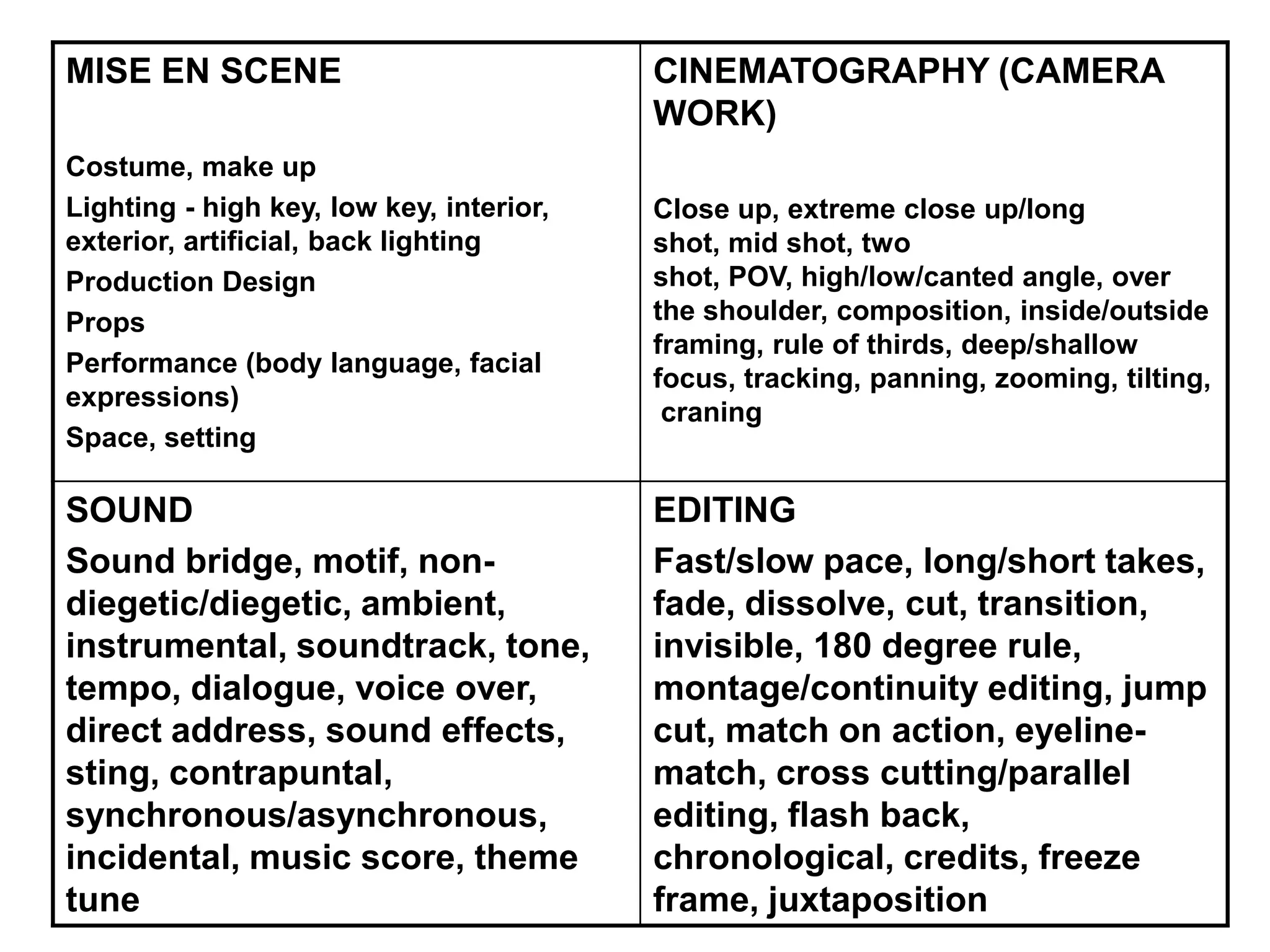
MISE EN SCENE
Costume, make up
Lighting - high key, low key, interior,
exterior, artificial, back lighting
Production Design
Props
Performance (body language, facial
expressions)
Space, setting
CINEMATOGRAPHY (CAMERA
WORK)
Close up, extreme close up/long
shot, mid shot, two
shot, POV, high/low/canted angle, over
the shoulder, composition, inside/outside
framing, rule of thirds, deep/shallow
focus, tracking, panning, zooming, tilting,
craning
SOUND
Sound bridge, motif, non-
diegetic/diegetic, ambient,
instrumental, soundtrack, tone,
tempo, dialogue, voice over,
direct address, sound effects,
sting, contrapuntal,
synchronous/asynchronous,
incidental, music score, theme
tune
EDITING
Fast/slow pace, long/short takes,
fade, dissolve, cut, transition,
invisible, 180 degree rule,
montage/continuity editing, jump
cut, match on action, eyeline-
match, cross cutting/parallel
editing, flash back,
chronological, credits, freeze
frame, juxtaposition
Marking Criteria
Frequent and Accurate use of
media terminology
Consistent evidence from the extract offered. Offers
frequent relevant examples from the extract
Clear analysis of how the technical
aspects are used to
construct the particular representation
Understanding of the constructed
nature of representation
10
Terminology
20
20
Use of Examples
Analysis/Explanation
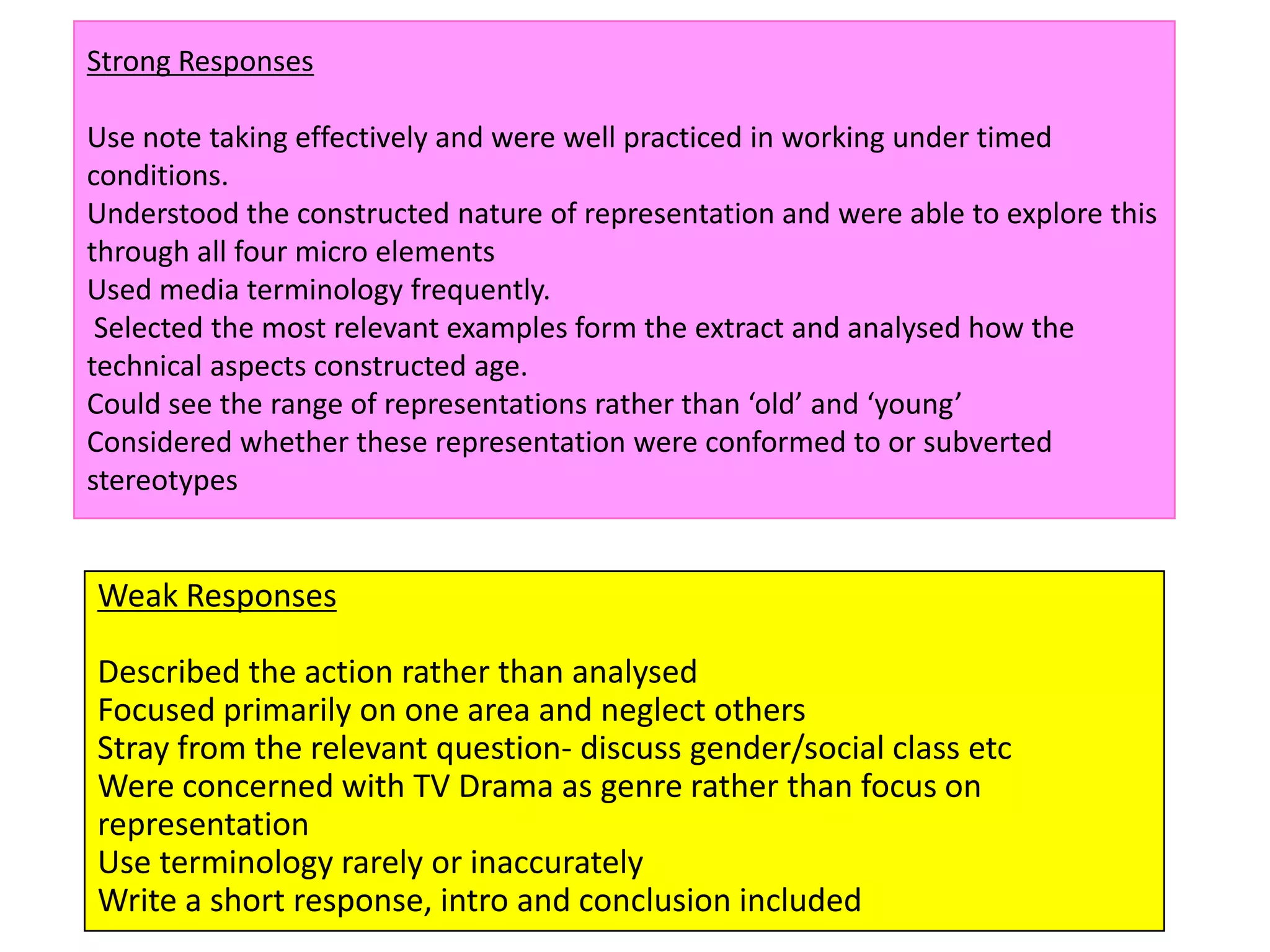
Weak Responses
Described the action rather than analysed
Focused primarily on one area and neglect others
Stray from the relevant question- discuss gender/social class etc
Were concerned with TV Drama as genre rather than focus on
representation
Use terminology rarely or inaccurately
Write a short response, intro and conclusion included
Strong Responses
Use note taking effectively and were well practiced in working under timed
conditions.
Understood the constructed nature of representation and were able to explore this
through all four micro elements
Used media terminology frequently.
Selected the most relevant examples form the extract and analysed how the
technical aspects constructed age.
Could see the range of representations rather than ‘old’ and ‘young’
Considered whether these representation were conformed to or subverted
stereotypes
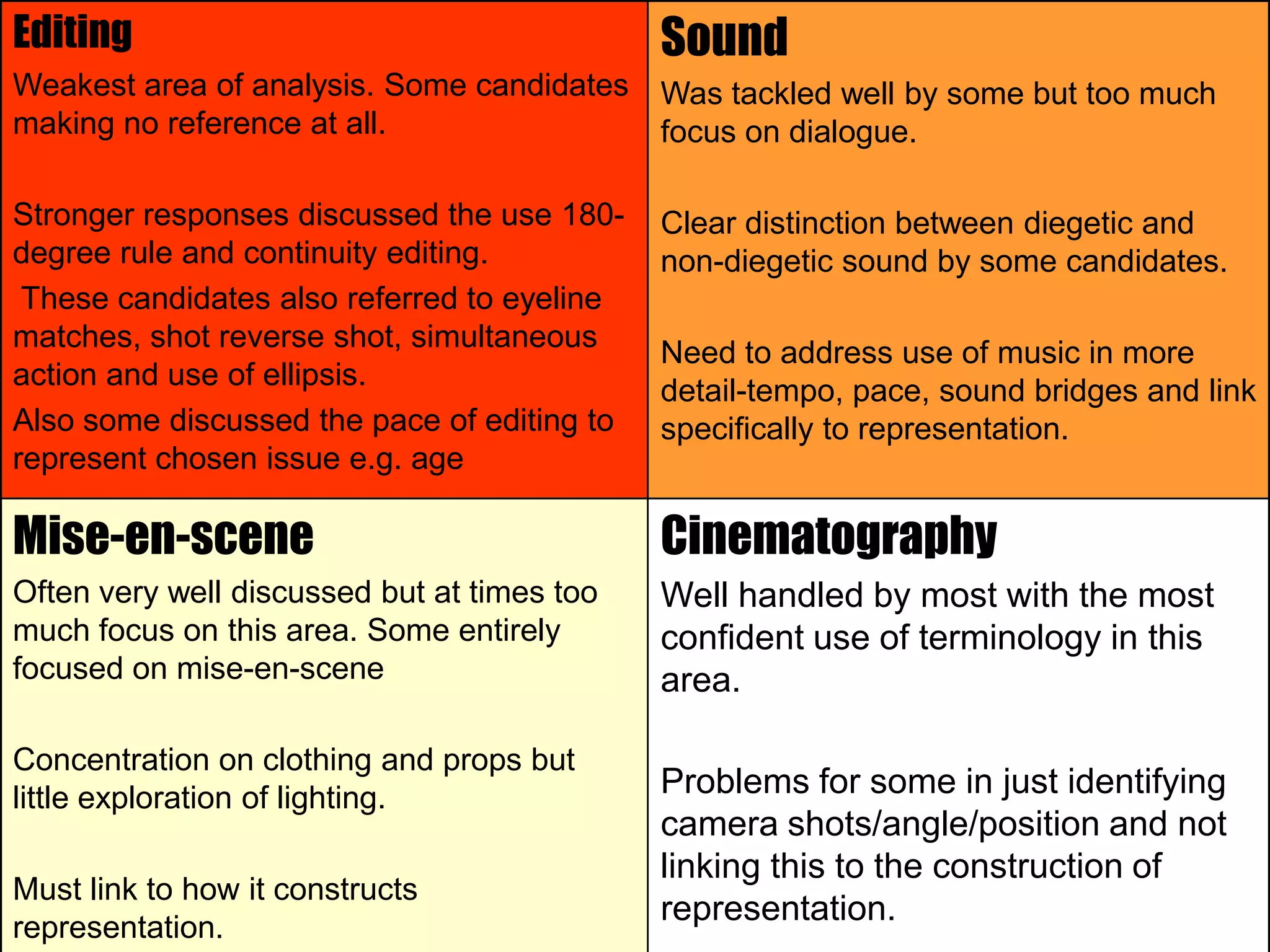
Editing
Weakest area of analysis. Some candidates
making no reference at all.
Stronger responses discussed the use 180-
degree rule and continuity editing.
These candidates also referred to eyeline
matches, shot reverse shot, simultaneous
action and use of ellipsis.
Also some discussed the pace of editing to
represent chosen issue e.g. age
Sound
Was tackled well by some but too much
focus on dialogue.
Clear distinction between diegetic and
non-diegetic sound by some candidates.
Need to address use of music in more
detail-tempo, pace, sound bridges and link
specifically to representation.
Mise-en-scene
Often very well discussed but at times too
much focus on this area. Some entirely
focused on mise-en-scene
Concentration on clothing and props but
little exploration of lighting.
Must link to how it constructs
representation.
Cinematography
Well handled by most with the most
confident use of terminology in this
area.
Problems for some in just identifying
camera shots/angle/position and not
linking this to the construction of
representation.
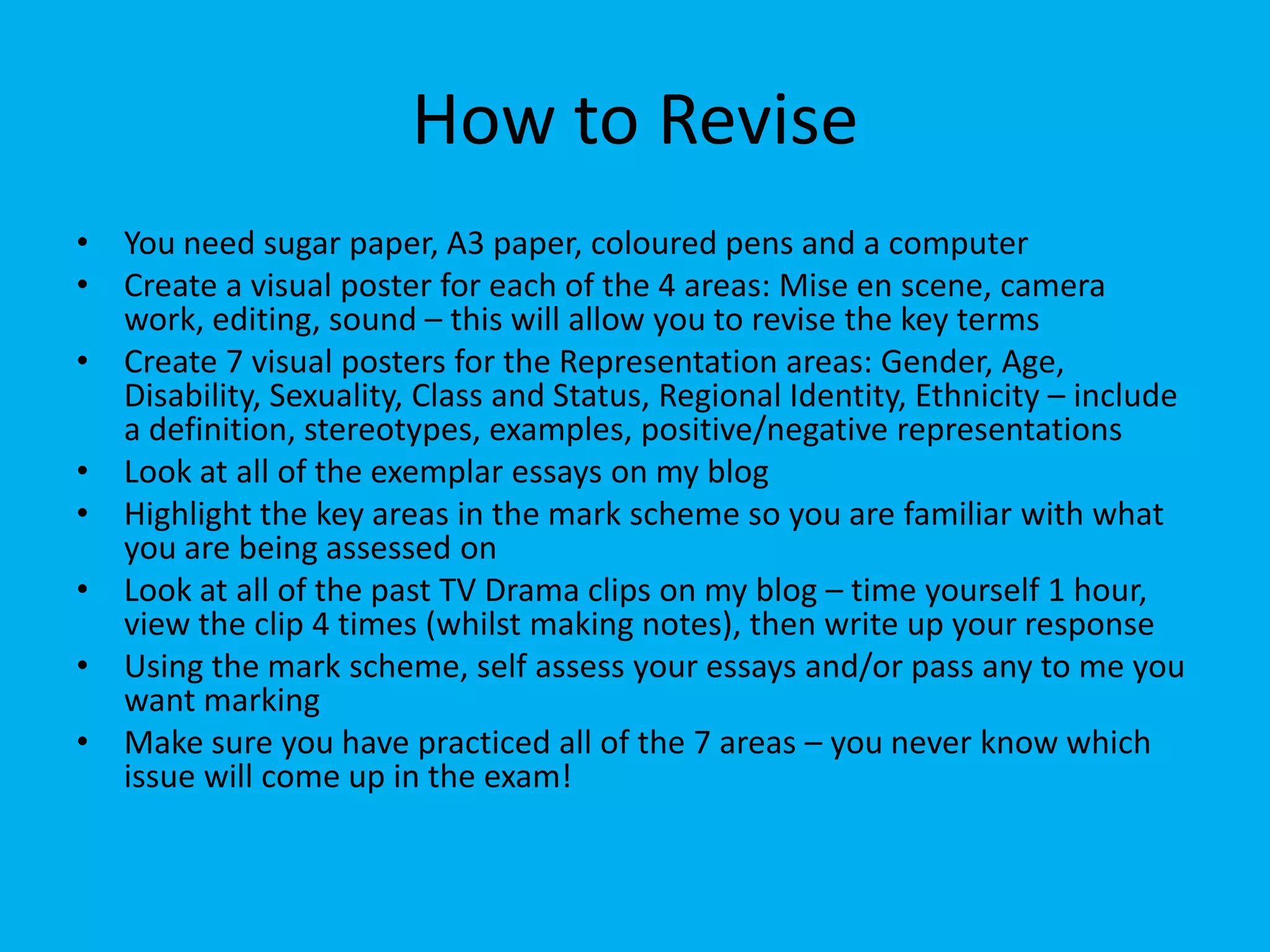
How to Revise
• You need sugar paper, A3 paper, coloured pens and a computer
• Create a visual poster for each of the 4 areas: Mise en scene, camera
work, editing, sound – this will allow you to revise the key terms
• Create 7 visual posters for the Representation areas: Gender, Age,
Disability, Sexuality, Class and Status, Regional Identity, Ethnicity – include
a definition, stereotypes, examples, positive/negative representations
• Look at all of the exemplar essays on my blog
• Highlight the key areas in the mark scheme so you are familiar with what
you are being assessed on
• Look at all of the past TV Drama clips on my blog – time yourself 1 hour,
view the clip 4 times (whilst making notes), then write up your response
• Using the mark scheme, self assess your essays and/or pass any to me you
want marking
• Make sure you have practiced all of the 7 areas – you never know which
issue will come up in the exam!

Exam advice

  • 1.
  • 2.
    MISE EN SCENE Costume,make up Lighting - high key, low key, interior, exterior, artificial, back lighting Production Design Props Performance (body language, facial expressions) Space, setting CINEMATOGRAPHY (CAMERA WORK) Close up, extreme close up/long shot, mid shot, two shot, POV, high/low/canted angle, over the shoulder, composition, inside/outside framing, rule of thirds, deep/shallow focus, tracking, panning, zooming, tilting, craning SOUND Sound bridge, motif, non- diegetic/diegetic, ambient, instrumental, soundtrack, tone, tempo, dialogue, voice over, direct address, sound effects, sting, contrapuntal, synchronous/asynchronous, incidental, music score, theme tune EDITING Fast/slow pace, long/short takes, fade, dissolve, cut, transition, invisible, 180 degree rule, montage/continuity editing, jump cut, match on action, eyeline- match, cross cutting/parallel editing, flash back, chronological, credits, freeze frame, juxtaposition
  • 3.
    Marking Criteria Frequent andAccurate use of media terminology Consistent evidence from the extract offered. Offers frequent relevant examples from the extract Clear analysis of how the technical aspects are used to construct the particular representation Understanding of the constructed nature of representation 10 Terminology 20 20 Use of Examples Analysis/Explanation
  • 4.
    Weak Responses Described theaction rather than analysed Focused primarily on one area and neglect others Stray from the relevant question- discuss gender/social class etc Were concerned with TV Drama as genre rather than focus on representation Use terminology rarely or inaccurately Write a short response, intro and conclusion included Strong Responses Use note taking effectively and were well practiced in working under timed conditions. Understood the constructed nature of representation and were able to explore this through all four micro elements Used media terminology frequently. Selected the most relevant examples form the extract and analysed how the technical aspects constructed age. Could see the range of representations rather than ‘old’ and ‘young’ Considered whether these representation were conformed to or subverted stereotypes
  • 6.
    Editing Weakest area ofanalysis. Some candidates making no reference at all. Stronger responses discussed the use 180- degree rule and continuity editing. These candidates also referred to eyeline matches, shot reverse shot, simultaneous action and use of ellipsis. Also some discussed the pace of editing to represent chosen issue e.g. age Sound Was tackled well by some but too much focus on dialogue. Clear distinction between diegetic and non-diegetic sound by some candidates. Need to address use of music in more detail-tempo, pace, sound bridges and link specifically to representation. Mise-en-scene Often very well discussed but at times too much focus on this area. Some entirely focused on mise-en-scene Concentration on clothing and props but little exploration of lighting. Must link to how it constructs representation. Cinematography Well handled by most with the most confident use of terminology in this area. Problems for some in just identifying camera shots/angle/position and not linking this to the construction of representation.
  • 7.
    How to Revise •You need sugar paper, A3 paper, coloured pens and a computer • Create a visual poster for each of the 4 areas: Mise en scene, camera work, editing, sound – this will allow you to revise the key terms • Create 7 visual posters for the Representation areas: Gender, Age, Disability, Sexuality, Class and Status, Regional Identity, Ethnicity – include a definition, stereotypes, examples, positive/negative representations • Look at all of the exemplar essays on my blog • Highlight the key areas in the mark scheme so you are familiar with what you are being assessed on • Look at all of the past TV Drama clips on my blog – time yourself 1 hour, view the clip 4 times (whilst making notes), then write up your response • Using the mark scheme, self assess your essays and/or pass any to me you want marking • Make sure you have practiced all of the 7 areas – you never know which issue will come up in the exam!