

Note-taking
in
Lectures and Seminars
Language & Culture
Wenzao Ursuline University of
Languages
http://sites.tamuc.edu/innovations/files/2014/02/Class-notes.jpg
Goals
• List the reasons why students should take notes
• Evaluate which information is useful and
important and which is not
• Organise lecture or reading notes using a mind-
mapping tool
• Demonstrate good note taking practice in the
context of your subject area
• Understand how to effectively store and review
your notes
http://education.exeter.ac.uk/dll/studyskills/note_taking_skills.htm
Importance of Good note-taking
• enables you to avoid unintentional plagiarism
• - helps you to focus on what is important in what you are
reading or hearing
• - helps you to understand and remember material, and
make connections
• - helps you to structure the assignments you're
researching
• - provides a personal record of what you've learnt (more
useful than your lecturer's or friends' notes) and records
your questions and ideas
• - sets you up for exam revision
http://www.reading.ac.uk/internal/studyadvice/StudyResources/Reading/sta-effective.aspx
Some drawbacks
• note-taking can distract you from listening
to lectures
• - note-taking can put additional stress on
those who do not write naturally
• - you can end up with so many notes that
you have to spend twice the amount of
time going through them again to find out
the important points!
http://www.reading.ac.uk/internal/studyadvice/StudyResources/Reading/sta-effective.aspx
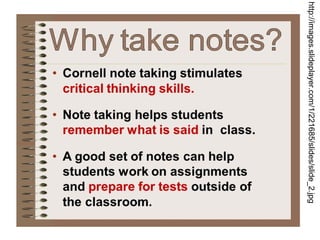
http://images.slideplayer.com/1/221685/slides/slide_2.jpg
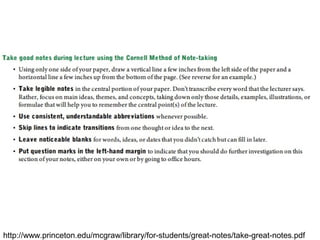
http://www.princeton.edu/mcgraw/library/for-students/great-notes/take-great-notes.pdf
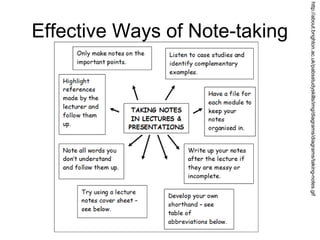
Effective Ways of Note-taking
http://about.brighton.ac.uk/pabsstudyskills/img/diagrams/diagrams/taking-notes.gif
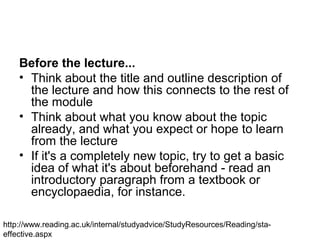
Before the lecture...
• Think about the title and outline description of
the lecture and how this connects to the rest of
the module
• Think about what you know about the topic
already, and what you expect or hope to learn
from the lecture
• If it's a completely new topic, try to get a basic
idea of what it's about beforehand - read an
introductory paragraph from a textbook or
encyclopaedia, for instance.
http://www.reading.ac.uk/internal/studyadvice/StudyResources/Reading/sta-
effective.aspx
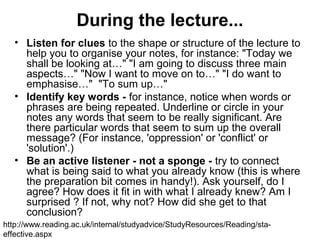
During the lecture...
• Listen for clues to the shape or structure of the lecture to
help you to organise your notes, for instance: "Today we
shall be looking at…" "I am going to discuss three main
aspects…" "Now I want to move on to…" "I do want to
emphasise…" "To sum up…"
• Identify key words - for instance, notice when words or
phrases are being repeated. Underline or circle in your
notes any words that seem to be really significant. Are
there particular words that seem to sum up the overall
message? (For instance, 'oppression' or 'conflict' or
'solution'.)
• Be an active listener - not a sponge - try to connect
what is being said to what you already know (this is where
the preparation bit comes in handy!). Ask yourself, do I
agree? How does it fit in with what I already knew? Am I
surprised ? If not, why not? How did she get to that
conclusion?
http://www.reading.ac.uk/internal/studyadvice/StudyResources/Reading/sta-
effective.aspx
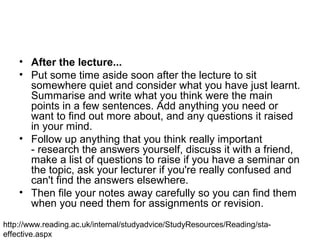
• After the lecture...
• Put some time aside soon after the lecture to sit
somewhere quiet and consider what you have just learnt.
Summarise and write what you think were the main
points in a few sentences. Add anything you need or
want to find out more about, and any questions it raised
in your mind.
• Follow up anything that you think really important
- research the answers yourself, discuss it with a friend,
make a list of questions to raise if you have a seminar on
the topic, ask your lecturer if you're really confused and
can't find the answers elsewhere.
• Then file your notes away carefully so you can find them
when you need them for assignments or revision.
http://www.reading.ac.uk/internal/studyadvice/StudyResources/Reading/sta-
effective.aspx
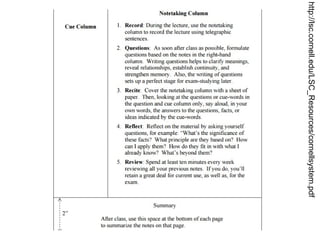
http://lsc.cornell.edu/LSC_Resources/cornellsystem.pdf
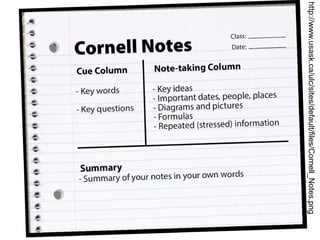
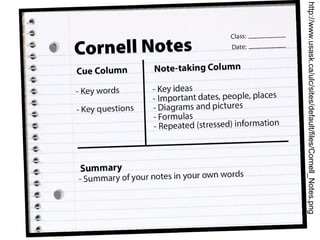
http://www.usask.ca/ulc/sites/default/files/Cornell_Notes.png
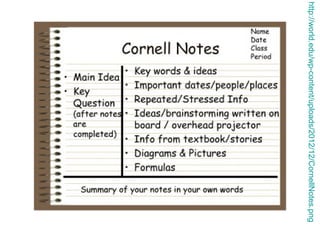
http://world.edu/wp-content/uploads/2012/12/CornellNotes.png
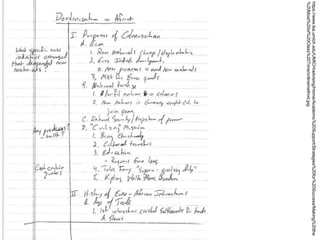
https://www.lsa.umich.edu/UMICH/advising/Home/Academic%20Support/Strategies%20for%20Success/Making%20the
%20Most%20of%20Class%20Time/onlinemethod.jpg
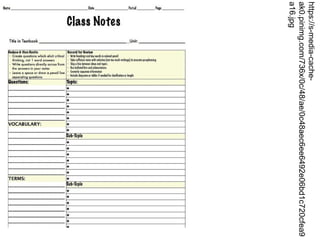
https://s-media-cache-
ak0.pinimg.com/736x/0c/48/ae/0c48aec6ee6492e06bd1c720cfea9
a16.jpg
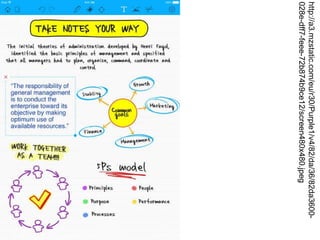
http://a3.mzstatic.com/eu/r30/Purple1/v4/82/da/36/82da3600-
028e-dff7-feee-72b874b9ce12/screen480x480.jpeg
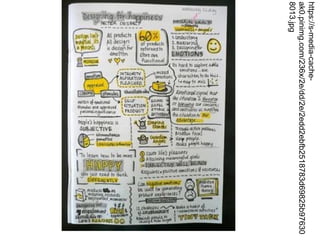
https://s-media-cache-
ak0.pinimg.com/236x/2e/dd/2e/2edd2ebfb2518783d69825b97630
8013.jpg
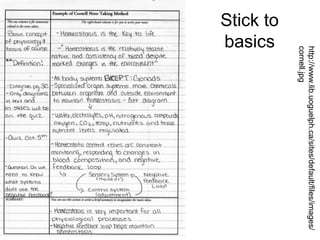
Stick to
basics
http://www.lib.uoguelph.ca/sites/default/files/images/
cornell.jpg
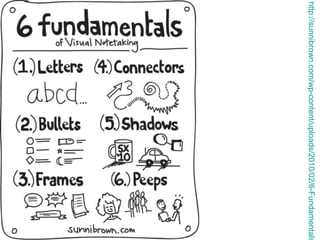
http://sunnibrown.com/wp-content/uploads/2010/02/6-Fundamentals
http://www.usask.ca/ulc/sites/default/files/Cornell_Notes.png
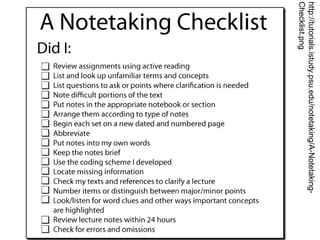
http://tutorials.istudy.psu.edu/notetaking/A-Notetaking-
Checklist.png
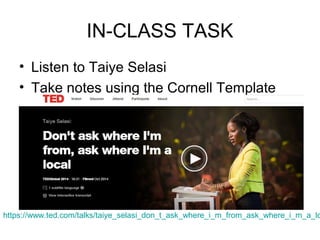
IN-CLASS TASK
• Listen to Taiye Selasi
• Take notes using the Cornell Template
https://www.ted.com/talks/taiye_selasi_don_t_ask_where_i_m_from_ask_where_i_m_a_lo

Note taking