1
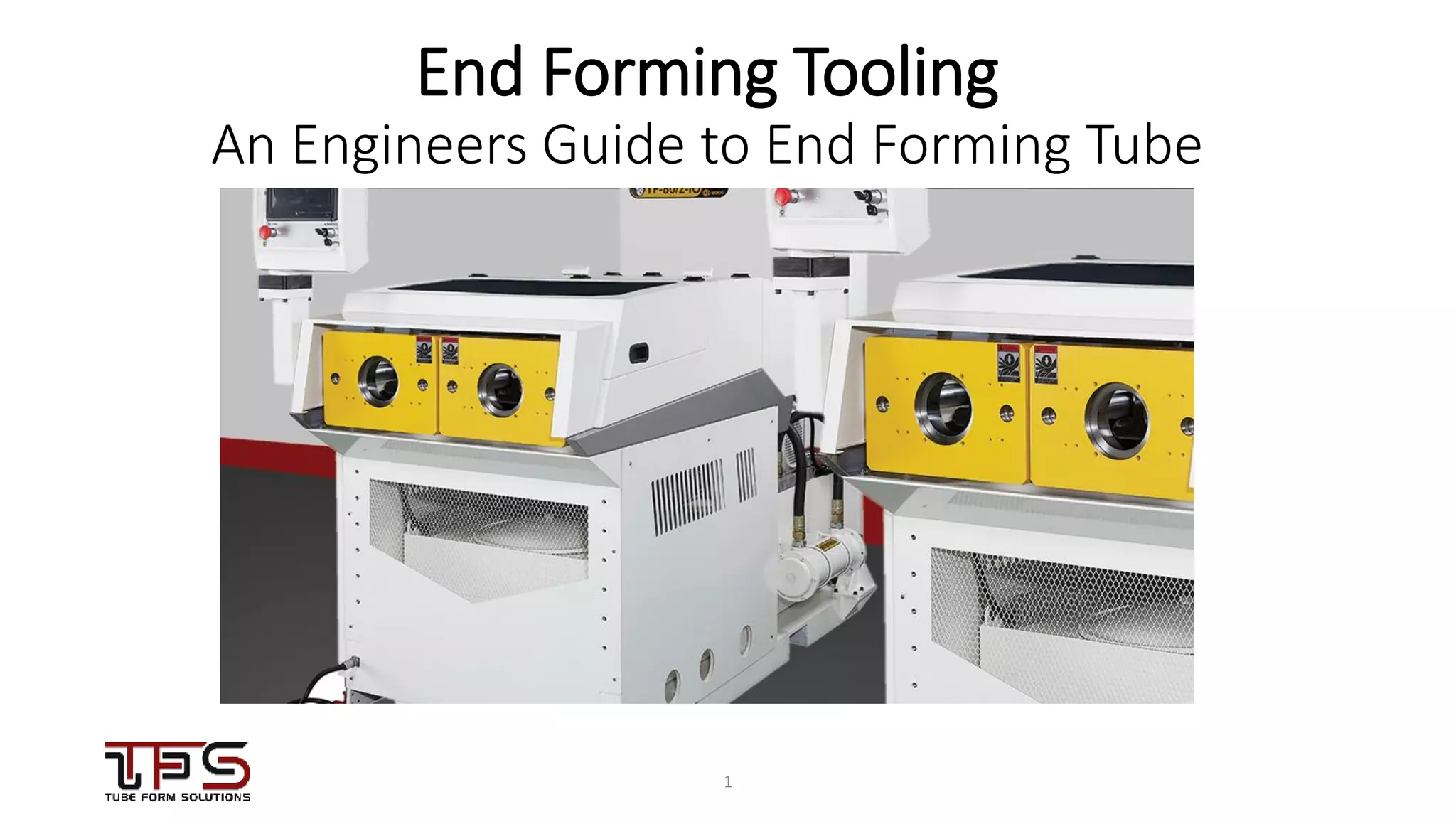
End Forming Tooling
An Engineers Guide to End Forming Tube
22
What is End Forming?
• End Forming (also called End Finishing) are the types of
processes that can be done to change a tube’s shape.
• Examples of end forming:
• Ram Forming
• Flaring
• Expanding
• Reducing
• IO Sizing
• Beading
33
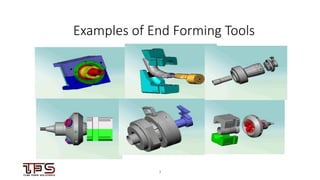
Examples of End Forming Tools
44
The Basics of End Forming
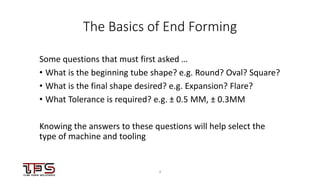
Some questions that must first asked …
• What is the beginning tube shape? e.g. Round? Oval? Square?
• What is the final shape desired? e.g. Expansion? Flare?
• What Tolerance is required? e.g. ± 0.5 MM, ± 0.3MM
Knowing the answers to these questions will help select the
type of machine and tooling
55
The Basics of End Forming
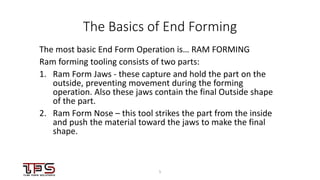
The most basic End Form Operation is… RAM FORMING
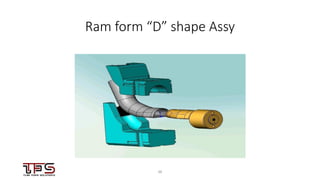
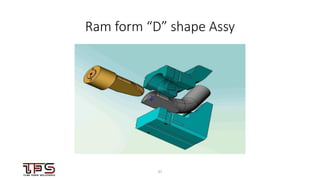
Ram forming tooling consists of two parts:
1. Ram Form Jaws - these capture and hold the part on the
outside, preventing movement during the forming
operation. Also these jaws contain the final Outside shape
of the part.
2. Ram Form Nose – this tool strikes the part from the inside
and push the material toward the jaws to make the final
shape.
66
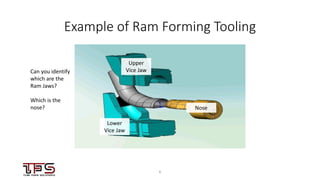
Example of Ram Forming Tooling
Can you identify
which are the
Ram Jaws?
Which is the
nose?
Upper
Vice Jaw
Lower
Vice Jaw
Nose
77
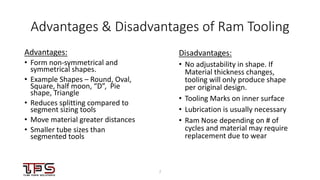
Advantages & Disadvantages of Ram Tooling
Advantages:
• Form non-symmetrical and
symmetrical shapes.
• Example Shapes – Round, Oval,
Square, half moon, “D”, Pie
shape, Triangle
• Reduces splitting compared to
segment sizing tools
• Move material greater distances
• Smaller tube sizes than
segmented tools
Disadvantages:
• No adjustability in shape. If
Material thickness changes,
tooling will only produce shape
per original design.
• Tooling Marks on inner surface
• Lubrication is usually necessary
• Ram Nose depending on # of
cycles and material may require
replacement due to wear
88
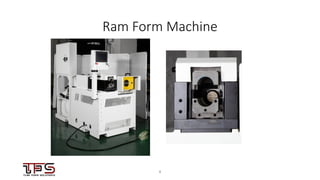
Ram Form Machine
99
Ram Form Machine
TF80 – E / F Machine Specs:
• The E machine is designed for ram forming parts up to 76 / 80
MM in diameter?
• This machine also has the option to Flare (F) using a cluster
roller toolset.
1010
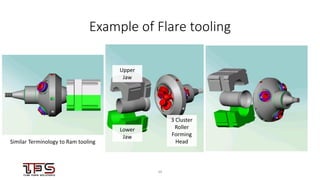
Example of Flare tooling
Similar Terminology to Ram tooling
Upper
Jaw
Lower
Jaw
3 Cluster
Roller
Forming
Head
1111
End Forming Basics
Your customer wants a round shape that is concentrically larger
or smaller than the original shape. You would be correct to
state this can be done in a Ram Former, however what if the
customer does not have control over the incoming material
thickness, or it varies too much for Ram forming to meet the
tolerance?
What do you do?
1212
Machines Designed for Round Sizing
Two types of machines to address round sizing:
1. E/R – Expand Reduce – This machine either expands a tube
to make it a larger round size, or reduces it to make it
smaller.
2. I/O – Inside Outside – This machine combines what would
be separate tooling for an E/R machine, and supports the
material simultaneously on the inside and outside.
1313
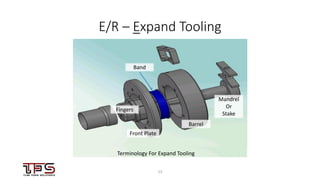
E/R – Expand Tooling
Terminology For Expand Tooling
Fingers
Front Plate
Mandrel
Or
Stake
Barrel
Band
1414
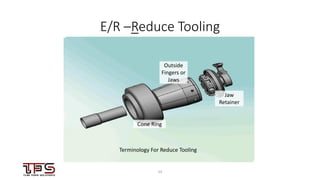
E/R –Reduce Tooling
Outside
Fingers or
Jaws
Cone Ring
Jaw
Retainer
Terminology For Reduce Tooling
1515
Advantages & Disadvantages of E/R
Advantages:
• Less expensive than IO
• Adjustability of tooling for
final shape
Disadvantages:
• Tool is only able to touch
inside or outside – not able
for simultaneous support
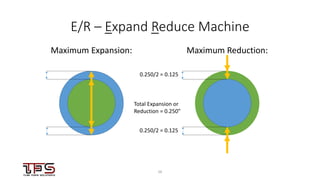
• Maximum expansion or
reduction is limited to .250”
in all directions *
*Explained on next slide
1616
E/R – Expand Reduce Machine
Maximum Expansion: Maximum Reduction:
0.250/2 = 0.125
0.250/2 = 0.125
Total Expansion or
Reduction = 0.250”
1717
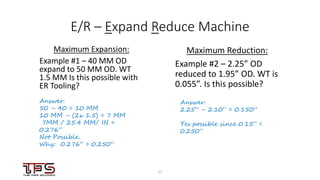
E/R – Expand Reduce Machine
Maximum Expansion:
Example #1 – 40 MM OD
expand to 50 MM OD. WT
1.5 MM Is this possible with
ER Tooling?
Maximum Reduction:
Example #2 – 2.25” OD
reduced to 1.95” OD. WT is
0.055”. Is this possible?
Answer:
50 – 40 = 10 MM
10 MM – (2x 1.5) = 7 MM
7MM / 25.4 MM/ IN =
0.276”
Not Possible.
Why: 0.276” > 0.250”
Answer:
2.25” – 2.10” = 0.150”
Yes possible since 0.15” <
0.250”
1818
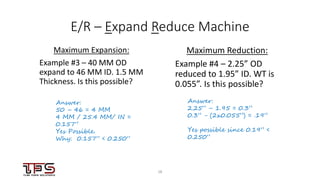
E/R – Expand Reduce Machine
Maximum Expansion:
Example #3 – 40 MM OD
expand to 46 MM ID. 1.5 MM
Thickness. Is this possible?
Maximum Reduction:
Example #4 – 2.25” OD
reduced to 1.95” ID. WT is
0.055”. Is this possible?
Answer:
50 – 46 = 4 MM
4 MM / 25.4 MM/ IN =
0.157”
Yes Possible.
Why: 0.157” < 0.250”
Answer:
2.25” – 1.95 = 0.3”
0.3” - (2x0.055”) = .19”
Yes possible since 0.19” <
0.250”
1919
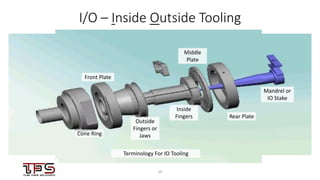
I/O – Inside Outside Tooling
Cone Ring
Front Plate
Outside
Fingers or
Jaws
Terminology For IO Tooling
Inside
Fingers
Middle
Plate
Rear Plate
Mandrel or
IO Stake
2020
Advantages & Disadvantages of I/O
Advantages:
• ± 0.10” OD / ID tolerance
• More accurate and versatile than ER
• Provides better roundness
• Faster Cycle time than Ram Forming
• Ability to adjust tooling size slightly (± 0.010)
from nominal size
• Sequencing IOIO, OIOI for trying to hold ID or
OD tolerances
• Ability to make several forms: expand,
reduce, pre-form, dimples, kink bend, oval
expand / reduce, turn up, turn down, bead,
Norma, Re-strike
Disadvantages:
• Tool Limits smallest tube to size. 1.75”(45
MM MM) OD. Minimum expansion starting
with 1.5”(38MM) OD
• Material is stretched between fingers, and
may split.
• To achieve roundness, Sequence is cycle,
rotate cycle.
2121
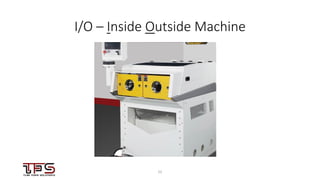
I/O – Inside Outside Machine
2222
Multiple I/O Applications
• expand,
• reduce,
• pre-form,
• dimples,
• Dimple lock cones
• kink bend,
• oval expand / reduce
• turn up, turn down,
• bead,
• Norma,
• Re-strike
Need some pictures of each of
these applications
2323
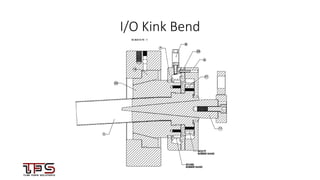
I/O Kink Bend
2424
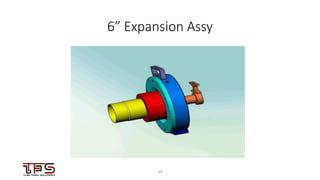
6” Expansion Assy
2525
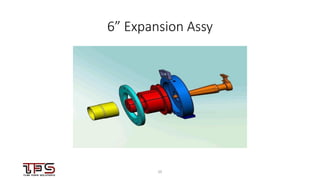
6” Expansion Assy
2626
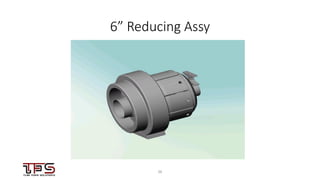
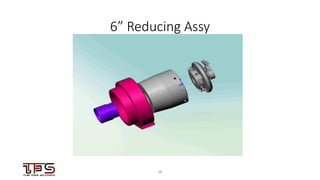
6” Reducing Assy
2727
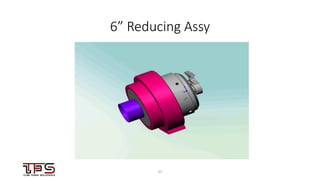
6” Reducing Assy
2828
6” Reducing Assy
2929
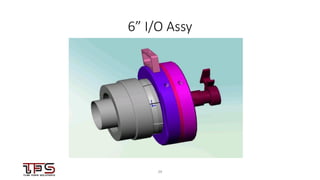
6” I/O Assy
3030
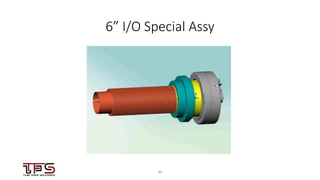
6” I/O Special Assy
3131
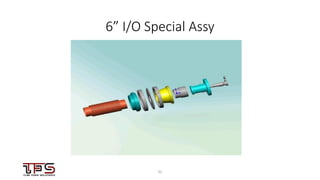
6” I/O Special Assy
3232
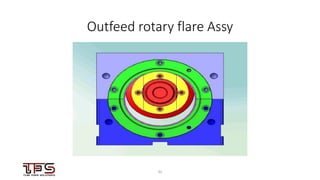
Outfeed rotary flare Assy
3333
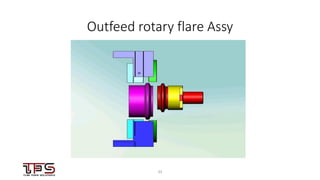
Outfeed rotary flare Assy
3434
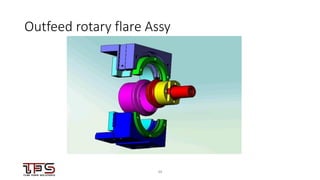
Outfeed rotary flare Assy
3535
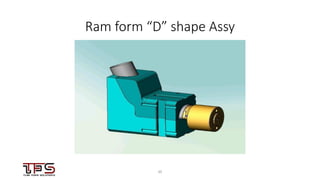
Ram form “D” shape Assy
3636
Ram form “D” shape Assy
3737
Ram form “D” shape Assy
3838
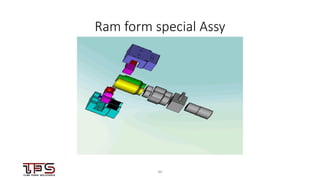
Ram form special Assy
3939
Ram form special Assy
4040
Ram form special Assy
41
Leading Tube Bending and End Forming Company
Our goal at Tube Form Solutions is to empower people who design. Our
focus is to help our customers materialize their ideas by providing the tools
and information to help them transform their concepts into reality.
We are a tube bending company dedicated to providing exceptional,
innovative products, technical support, and customer service.
We do not just sell CNC Tube Benders; Tooling or Fixtures’ we provide
solutions to Tube Forming.
We help you get everything you need quickly and accurately for precise
bending and end forming so you can continue to lead the tube forming
industry

An Engineers Guide to End Forming Tube

  • 1.
    1 End Forming Tooling AnEngineers Guide to End Forming Tube
  • 2.
    22 What is EndForming? • End Forming (also called End Finishing) are the types of processes that can be done to change a tube’s shape. • Examples of end forming: • Ram Forming • Flaring • Expanding • Reducing • IO Sizing • Beading
  • 3.
    33 Examples of EndForming Tools
  • 4.
    44 The Basics ofEnd Forming Some questions that must first asked … • What is the beginning tube shape? e.g. Round? Oval? Square? • What is the final shape desired? e.g. Expansion? Flare? • What Tolerance is required? e.g. ± 0.5 MM, ± 0.3MM Knowing the answers to these questions will help select the type of machine and tooling
  • 5.
    55 The Basics ofEnd Forming The most basic End Form Operation is… RAM FORMING Ram forming tooling consists of two parts: 1. Ram Form Jaws - these capture and hold the part on the outside, preventing movement during the forming operation. Also these jaws contain the final Outside shape of the part. 2. Ram Form Nose – this tool strikes the part from the inside and push the material toward the jaws to make the final shape.
  • 6.
    66 Example of RamForming Tooling Can you identify which are the Ram Jaws? Which is the nose? Upper Vice Jaw Lower Vice Jaw Nose
  • 7.
    77 Advantages & Disadvantagesof Ram Tooling Advantages: • Form non-symmetrical and symmetrical shapes. • Example Shapes – Round, Oval, Square, half moon, “D”, Pie shape, Triangle • Reduces splitting compared to segment sizing tools • Move material greater distances • Smaller tube sizes than segmented tools Disadvantages: • No adjustability in shape. If Material thickness changes, tooling will only produce shape per original design. • Tooling Marks on inner surface • Lubrication is usually necessary • Ram Nose depending on # of cycles and material may require replacement due to wear
  • 8.
  • 9.
    99 Ram Form Machine TF80– E / F Machine Specs: • The E machine is designed for ram forming parts up to 76 / 80 MM in diameter? • This machine also has the option to Flare (F) using a cluster roller toolset.
  • 10.
    1010 Example of Flaretooling Similar Terminology to Ram tooling Upper Jaw Lower Jaw 3 Cluster Roller Forming Head
  • 11.
    1111 End Forming Basics Yourcustomer wants a round shape that is concentrically larger or smaller than the original shape. You would be correct to state this can be done in a Ram Former, however what if the customer does not have control over the incoming material thickness, or it varies too much for Ram forming to meet the tolerance? What do you do?
  • 12.
    1212 Machines Designed forRound Sizing Two types of machines to address round sizing: 1. E/R – Expand Reduce – This machine either expands a tube to make it a larger round size, or reduces it to make it smaller. 2. I/O – Inside Outside – This machine combines what would be separate tooling for an E/R machine, and supports the material simultaneously on the inside and outside.
  • 13.
    1313 E/R – ExpandTooling Terminology For Expand Tooling Fingers Front Plate Mandrel Or Stake Barrel Band
  • 14.
    1414 E/R –Reduce Tooling Outside Fingersor Jaws Cone Ring Jaw Retainer Terminology For Reduce Tooling
  • 15.
    1515 Advantages & Disadvantagesof E/R Advantages: • Less expensive than IO • Adjustability of tooling for final shape Disadvantages: • Tool is only able to touch inside or outside – not able for simultaneous support • Maximum expansion or reduction is limited to .250” in all directions * *Explained on next slide
  • 16.
    1616 E/R – ExpandReduce Machine Maximum Expansion: Maximum Reduction: 0.250/2 = 0.125 0.250/2 = 0.125 Total Expansion or Reduction = 0.250”
  • 17.
    1717 E/R – ExpandReduce Machine Maximum Expansion: Example #1 – 40 MM OD expand to 50 MM OD. WT 1.5 MM Is this possible with ER Tooling? Maximum Reduction: Example #2 – 2.25” OD reduced to 1.95” OD. WT is 0.055”. Is this possible? Answer: 50 – 40 = 10 MM 10 MM – (2x 1.5) = 7 MM 7MM / 25.4 MM/ IN = 0.276” Not Possible. Why: 0.276” > 0.250” Answer: 2.25” – 2.10” = 0.150” Yes possible since 0.15” < 0.250”
  • 18.
    1818 E/R – ExpandReduce Machine Maximum Expansion: Example #3 – 40 MM OD expand to 46 MM ID. 1.5 MM Thickness. Is this possible? Maximum Reduction: Example #4 – 2.25” OD reduced to 1.95” ID. WT is 0.055”. Is this possible? Answer: 50 – 46 = 4 MM 4 MM / 25.4 MM/ IN = 0.157” Yes Possible. Why: 0.157” < 0.250” Answer: 2.25” – 1.95 = 0.3” 0.3” - (2x0.055”) = .19” Yes possible since 0.19” < 0.250”
  • 19.
    1919 I/O – InsideOutside Tooling Cone Ring Front Plate Outside Fingers or Jaws Terminology For IO Tooling Inside Fingers Middle Plate Rear Plate Mandrel or IO Stake
  • 20.
    2020 Advantages & Disadvantagesof I/O Advantages: • ± 0.10” OD / ID tolerance • More accurate and versatile than ER • Provides better roundness • Faster Cycle time than Ram Forming • Ability to adjust tooling size slightly (± 0.010) from nominal size • Sequencing IOIO, OIOI for trying to hold ID or OD tolerances • Ability to make several forms: expand, reduce, pre-form, dimples, kink bend, oval expand / reduce, turn up, turn down, bead, Norma, Re-strike Disadvantages: • Tool Limits smallest tube to size. 1.75”(45 MM MM) OD. Minimum expansion starting with 1.5”(38MM) OD • Material is stretched between fingers, and may split. • To achieve roundness, Sequence is cycle, rotate cycle.
  • 21.
    2121 I/O – InsideOutside Machine
  • 22.
    2222 Multiple I/O Applications •expand, • reduce, • pre-form, • dimples, • Dimple lock cones • kink bend, • oval expand / reduce • turn up, turn down, • bead, • Norma, • Re-strike Need some pictures of each of these applications
  • 23.
  • 24.
  • 25.
  • 26.
  • 27.
  • 28.
  • 29.
  • 30.
  • 31.
  • 32.
  • 33.
  • 34.
  • 35.
  • 36.
  • 37.
  • 38.
  • 39.
  • 40.
  • 41.
    41 Leading Tube Bendingand End Forming Company Our goal at Tube Form Solutions is to empower people who design. Our focus is to help our customers materialize their ideas by providing the tools and information to help them transform their concepts into reality. We are a tube bending company dedicated to providing exceptional, innovative products, technical support, and customer service. We do not just sell CNC Tube Benders; Tooling or Fixtures’ we provide solutions to Tube Forming. We help you get everything you need quickly and accurately for precise bending and end forming so you can continue to lead the tube forming industry