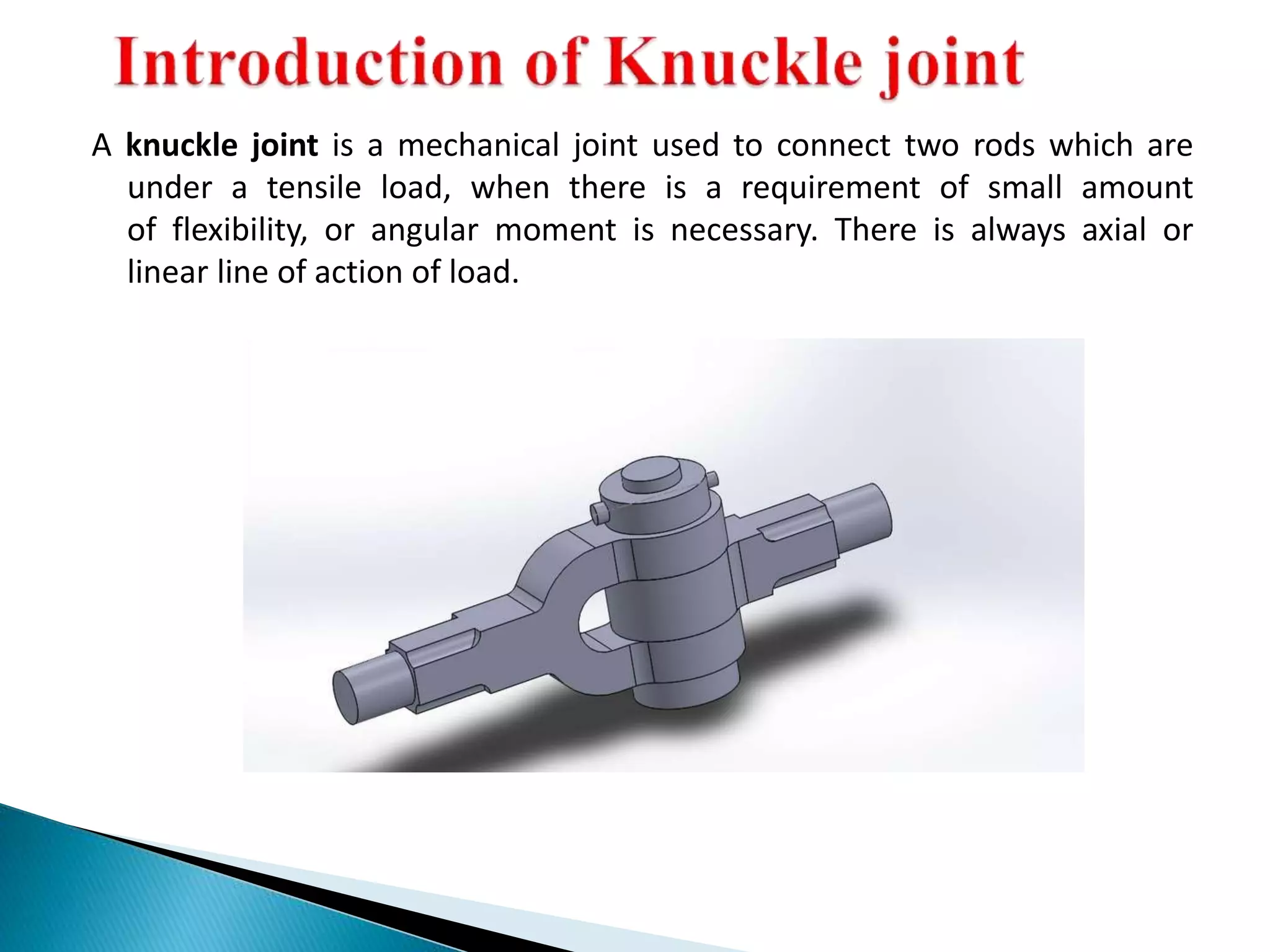
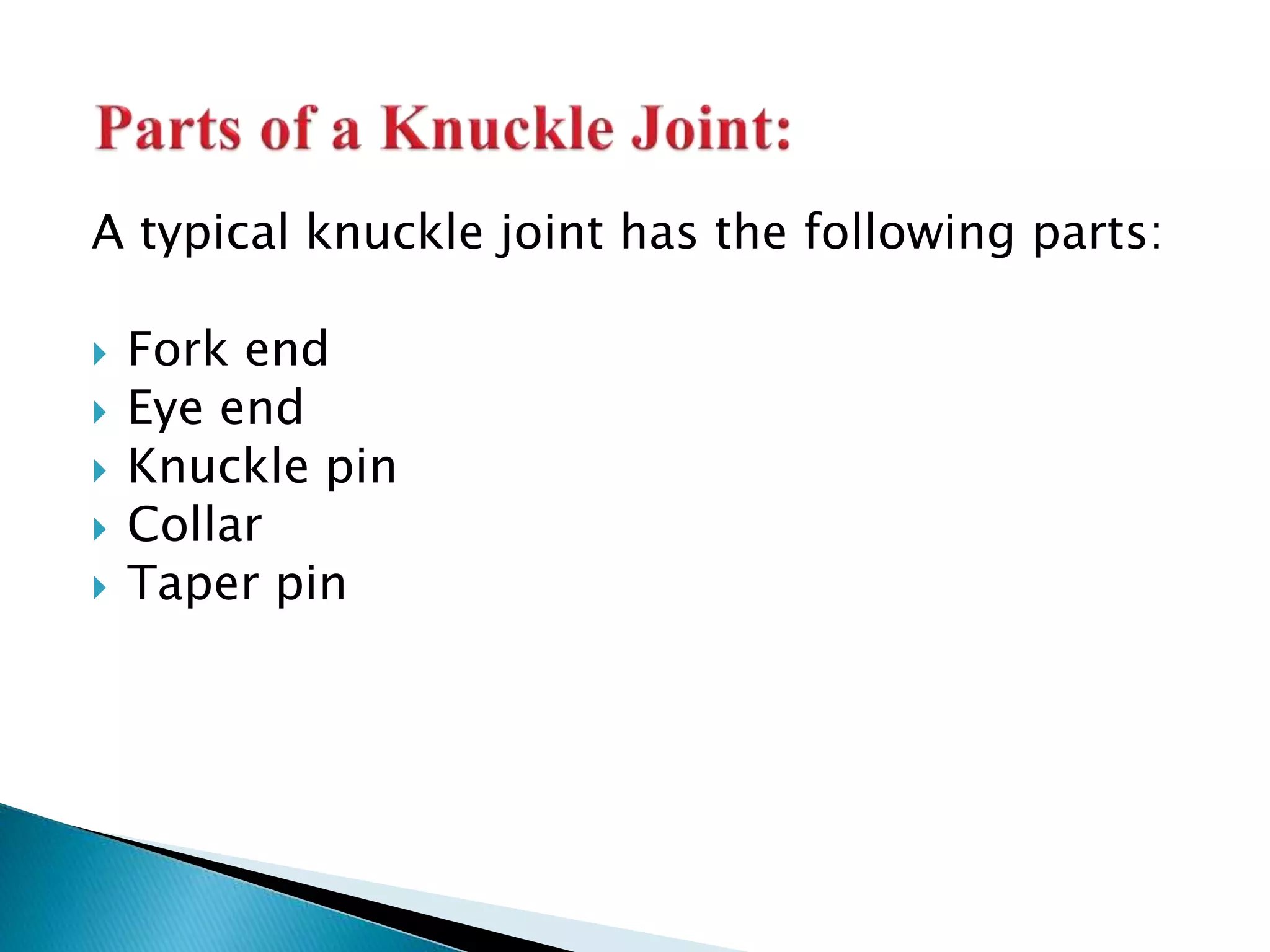
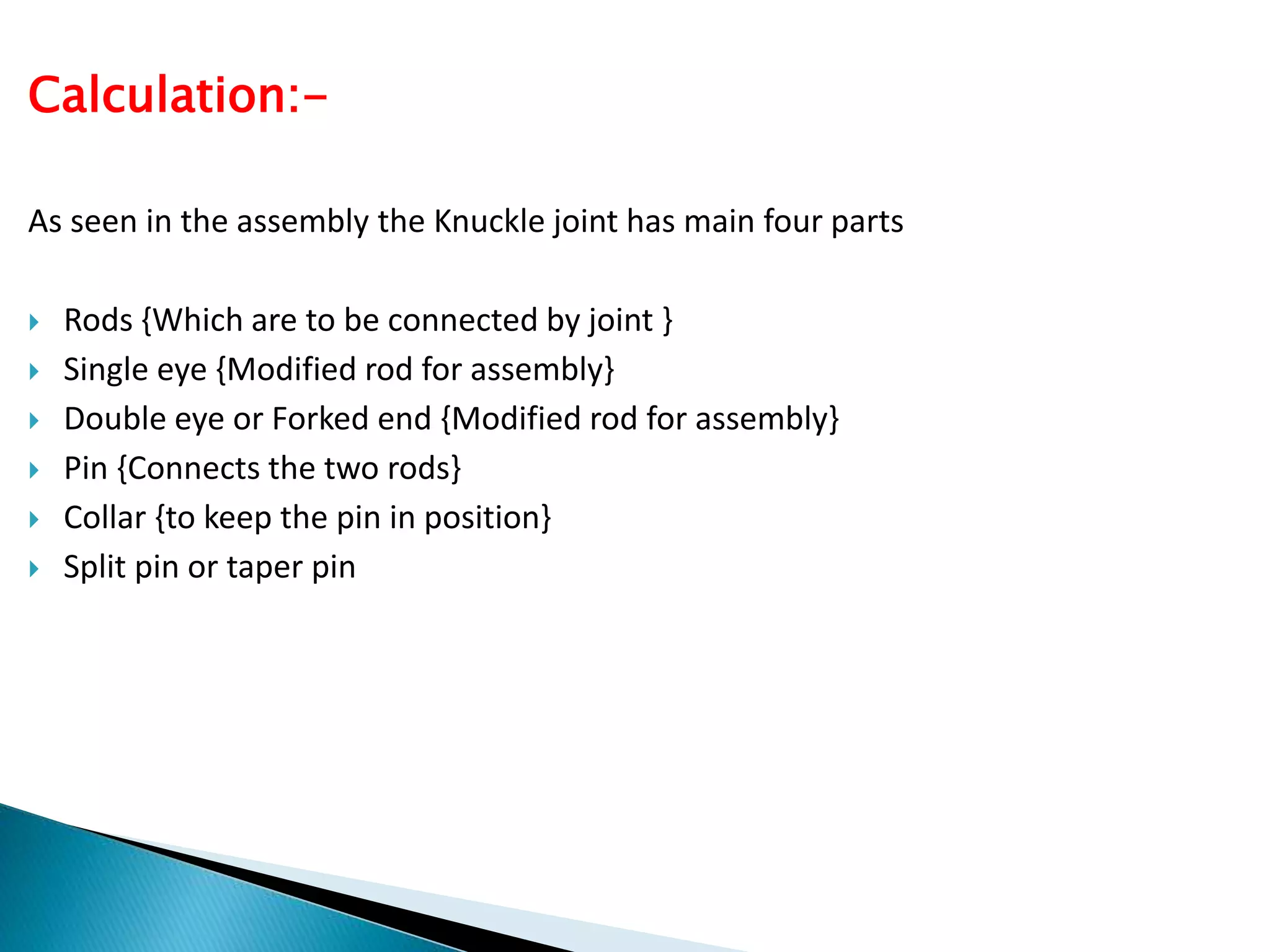
This document discusses the design and preparation of a knuckle joint. It includes an introduction to knuckle joints, their parts, calculations for design, applications, and advantages/disadvantages. A knuckle joint connects two rods under tension and allows for a small amount of flexibility. Key parts are the fork end, eye end, knuckle pin, and collar. Design calculations include checking for tensile, shear, and crushing failures of different parts based on the applied load and material properties. Knuckle joints are commonly used where some angular movement is required under tensile loading.