Internet Ecosystem and
the internet
By Shreedeep Rayamajhi
Presentation for Awareness and Capacity building for Prime college
5th January 2018
What is internet ?
 Networks of Networks
 The Internet is the global system of interconnected computer networks that
use the Internet protocol suite (TCP/IP) to link devices worldwide.
What is the Internet
Penetration of Nepal ?
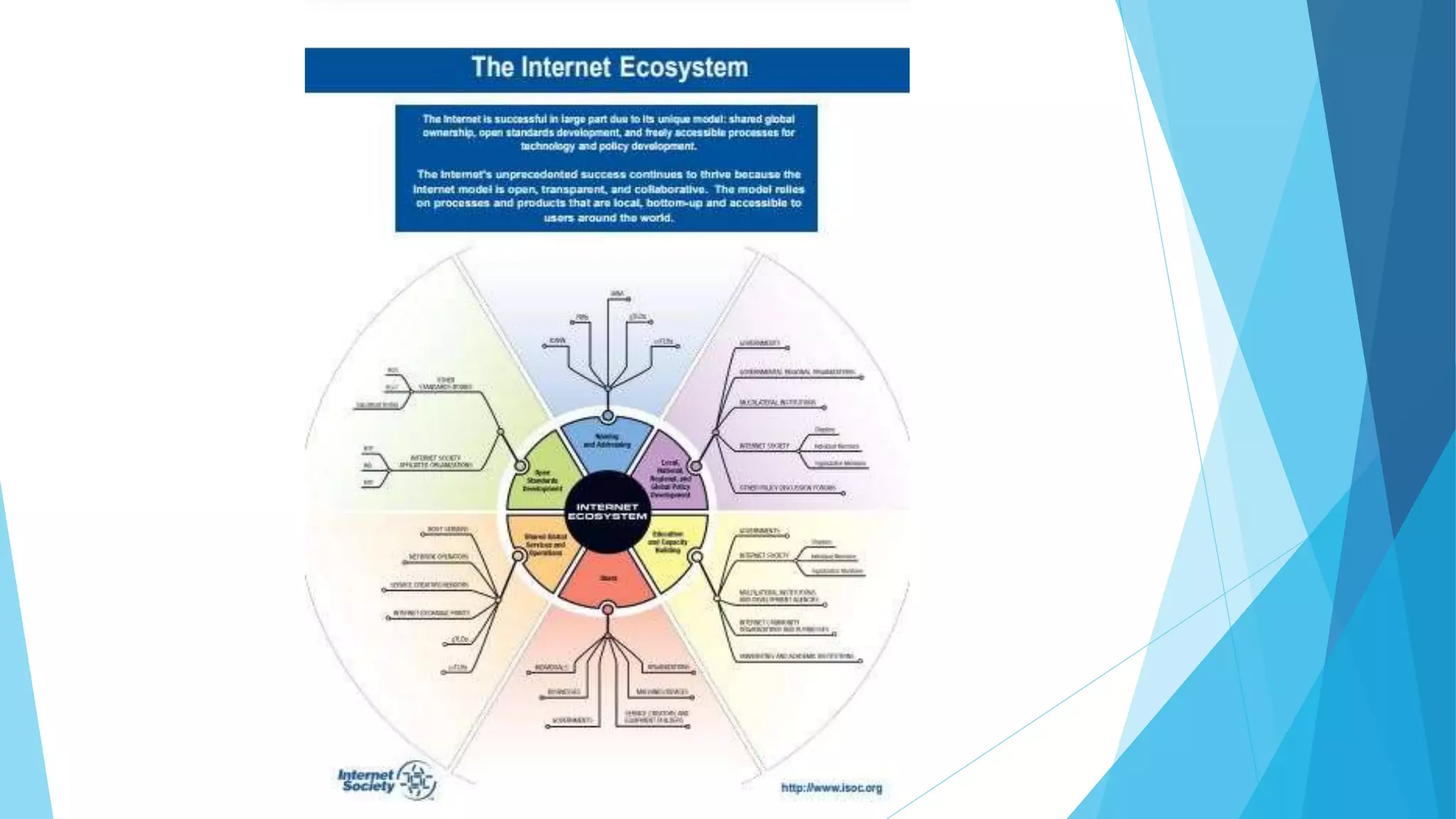
What is internet Ecosystem?
 The “Internet Ecosystem” is a term used to describe the organizations and communities that
help the Internet work and evolve.
Internet Governance
Internet governance is the process of managing
the Internet ecosystem adapting various values
of standardization and multistakeholderism
within the concept of diversity and equality.
The Internet Governance Forum (IGF) serves
to bring people together from various
stakeholder groups as equals, in discussions on
public policy issues relating to the Internet.
Internet Rights and Principles
The Internet Rights and Principles Dynamic Coalition is an international, open
network of individuals and organizations working to uphold human rights in the
online environment and across the spectrum of internet policy-making domains. It
is based at the UN Internet Governance Forum, an open “multistakeholder” forum for
government, business, and civil society groups to come together to discuss mutual
points of concern that fall under the rubric of internet governance
(http://www.intgovforum.org/cms/aboutigf ).
 Since 2008, the IRP Coalition has been active in promoting rights-based principles
for internet governance, at the global IGF as well as in regional meetings and
related events.
The Charter of Human Rights and Principles for the Internet
Internet Rights and Principles Dynamic Coalition - UN Internet Governance Forum
Compiled and edited by Marianne Franklin, with Robert Bodle and Dixie Hawtin
What is the purpose of Charter of Human
rights and Principles for the Internet?
 Standardization of law
 Digital Equality
 Better coordination and cooperation
 Dynamics of internet
 Growth & Development
 Sustainability
10 Rights and Principles
1. Universality and Equality
All humans are born free and equal in dignity and rights, which must be
respected, protected and fulfilled in the online environment.
2. Rights and Social Justice
The Internet is a space for the promotion, protection and fulfilment of
human rights and the advancement of social justice. Everyone has the
duty to respect the human rights of all others in the online environment.
3. Accessibility
Everyone has an equal right to access and use a secure and open
Internet.
4) Expression and Association
Everyone has the right to seek, receive, and impart information freely on the Internet
without censorship or other interference. Everyone also has the right to associate freely
through and on the Internet, for social, political, cultural or other purposes.
5) Privacy and Data Protection
Everyone has the right to privacy online. This includes freedom from surveillance, the
right to use encryption, and the right to online anonymity. Everyone also has the right to
data protection, including control over personal data collection, retention, processing,
disposal and disclosure.
6) Life, Liberty and Security
The rights to life, liberty, and security must be respected, protected and fulfilled online.
These rights must not be infringed upon, or used to infringe other rights, in the online
environment.
7) Diversity
Cultural and linguistic diversity on the Internet must be promoted, and technical and
policy innovation should be encouraged to facilitate plurality of expression.
8) Network Equality
Everyone shall have universal and open access to the Internet’s content, free from
discriminatory prioritisation, filtering or traffic control on commercial, political or other
grounds.
9) Standards and Regulation
The Internet’s architecture, communication systems, and document and data formats
shall be based on open standards that ensure complete interoperability, inclusion and
equal opportunity for all.
10) Governance
Human rights and social justice must form the legal and normative foundations upon
which the Internet operates and is governed. This shall happen in a transparent and
multilateral manner, based on principles of openness, inclusive participation and
accountability.
ICANN
ICANN, or the Internet Corporation for Assigned Names and Numbers, is a global multi-
stakeholder organization that was created by the U.S. government and its Department of
Commerce. It coordinates the Internet DNS, IP addresses and autonomous system numbers,
which involves a continued management of these evolving systems and the protocols that
underlie them.
ICANN collaborates with a variety of stakeholders including companies, individuals, and
governments to ensure the continued success of the Internet. the Internet’s Domain Name
System, coordinates allocation and assignment of the Internet’s unique identifiers, such as
Internet Protocol addresses, accredits generic top-level domain (gTLD) name registrars, and
helps facilitate the voices of volunteers worldwide who are dedicated to keeping the
Internet secure, stable and interoperable. ICANN promotes competition in the domain
name space and helps develop Internet policy
ICANN Fellowships
 Open fellowships
 Next Generation fellowship under 25
 Constituencies Fellowship
Engagement
 Policy work
 Online capacity building
 Multistakeholder model
 Diversity
 Collaboration

Internet ecosystem and the internet

  • 1.
    Internet Ecosystem and theinternet By Shreedeep Rayamajhi Presentation for Awareness and Capacity building for Prime college 5th January 2018
  • 2.
    What is internet?  Networks of Networks  The Internet is the global system of interconnected computer networks that use the Internet protocol suite (TCP/IP) to link devices worldwide. What is the Internet Penetration of Nepal ?
  • 3.
    What is internetEcosystem?  The “Internet Ecosystem” is a term used to describe the organizations and communities that help the Internet work and evolve.
  • 5.
    Internet Governance Internet governanceis the process of managing the Internet ecosystem adapting various values of standardization and multistakeholderism within the concept of diversity and equality. The Internet Governance Forum (IGF) serves to bring people together from various stakeholder groups as equals, in discussions on public policy issues relating to the Internet.
  • 6.
    Internet Rights andPrinciples The Internet Rights and Principles Dynamic Coalition is an international, open network of individuals and organizations working to uphold human rights in the online environment and across the spectrum of internet policy-making domains. It is based at the UN Internet Governance Forum, an open “multistakeholder” forum for government, business, and civil society groups to come together to discuss mutual points of concern that fall under the rubric of internet governance (http://www.intgovforum.org/cms/aboutigf ).  Since 2008, the IRP Coalition has been active in promoting rights-based principles for internet governance, at the global IGF as well as in regional meetings and related events. The Charter of Human Rights and Principles for the Internet Internet Rights and Principles Dynamic Coalition - UN Internet Governance Forum Compiled and edited by Marianne Franklin, with Robert Bodle and Dixie Hawtin
  • 7.
    What is thepurpose of Charter of Human rights and Principles for the Internet?  Standardization of law  Digital Equality  Better coordination and cooperation  Dynamics of internet  Growth & Development  Sustainability
  • 8.
    10 Rights andPrinciples 1. Universality and Equality All humans are born free and equal in dignity and rights, which must be respected, protected and fulfilled in the online environment. 2. Rights and Social Justice The Internet is a space for the promotion, protection and fulfilment of human rights and the advancement of social justice. Everyone has the duty to respect the human rights of all others in the online environment. 3. Accessibility Everyone has an equal right to access and use a secure and open Internet.
  • 9.
    4) Expression andAssociation Everyone has the right to seek, receive, and impart information freely on the Internet without censorship or other interference. Everyone also has the right to associate freely through and on the Internet, for social, political, cultural or other purposes. 5) Privacy and Data Protection Everyone has the right to privacy online. This includes freedom from surveillance, the right to use encryption, and the right to online anonymity. Everyone also has the right to data protection, including control over personal data collection, retention, processing, disposal and disclosure. 6) Life, Liberty and Security The rights to life, liberty, and security must be respected, protected and fulfilled online. These rights must not be infringed upon, or used to infringe other rights, in the online environment.
  • 10.
    7) Diversity Cultural andlinguistic diversity on the Internet must be promoted, and technical and policy innovation should be encouraged to facilitate plurality of expression. 8) Network Equality Everyone shall have universal and open access to the Internet’s content, free from discriminatory prioritisation, filtering or traffic control on commercial, political or other grounds. 9) Standards and Regulation The Internet’s architecture, communication systems, and document and data formats shall be based on open standards that ensure complete interoperability, inclusion and equal opportunity for all. 10) Governance Human rights and social justice must form the legal and normative foundations upon which the Internet operates and is governed. This shall happen in a transparent and multilateral manner, based on principles of openness, inclusive participation and accountability.
  • 11.
    ICANN ICANN, or theInternet Corporation for Assigned Names and Numbers, is a global multi- stakeholder organization that was created by the U.S. government and its Department of Commerce. It coordinates the Internet DNS, IP addresses and autonomous system numbers, which involves a continued management of these evolving systems and the protocols that underlie them. ICANN collaborates with a variety of stakeholders including companies, individuals, and governments to ensure the continued success of the Internet. the Internet’s Domain Name System, coordinates allocation and assignment of the Internet’s unique identifiers, such as Internet Protocol addresses, accredits generic top-level domain (gTLD) name registrars, and helps facilitate the voices of volunteers worldwide who are dedicated to keeping the Internet secure, stable and interoperable. ICANN promotes competition in the domain name space and helps develop Internet policy
  • 13.
    ICANN Fellowships  Openfellowships  Next Generation fellowship under 25  Constituencies Fellowship Engagement  Policy work  Online capacity building  Multistakeholder model  Diversity  Collaboration