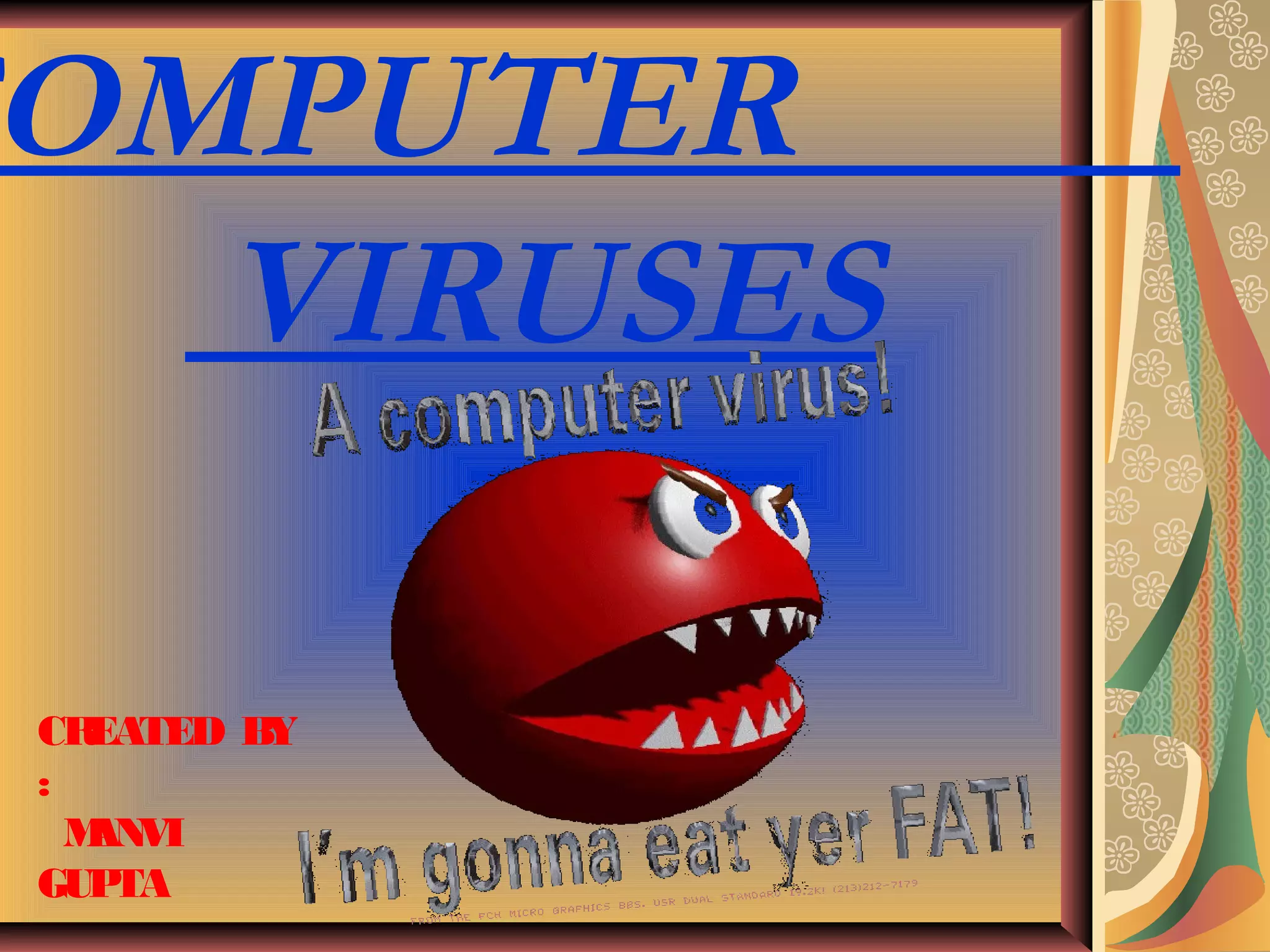
COMPUTER 
VIRUSES 
CREATED BY 
: 
MANVI 
GUPTA
WHAT IS VIRUS ? 
Computer virus refers to a 
program which damages 
computer systems and/or 
destroys or erases data 
files.
TYPES OF VIRUSES 
 TIME BOMB 
 LOGICAL BOMB 
 WORM 
 BOOT SECTOR VIRUS 
 MACROS VIRUS 
 SCRIPT VIRUS 
 TROJAN HORSE
TIME BOMB 
A time bomb is a virus program that 
performs an activity on a particular date. 
LOGICAL BOMB 
A logical bomb is a destructive program 
that performs an activity when a certain 
action has occurred.
WORM VIRUS 
A worm is also a destructive program that fills a 
computer system with self-replicating information, 
clogging the system so that its operations are 
slowed down or stopped . 
BOOT SECTOR VIRUS 
A boot sector virus infects boot sector of 
computers. During system boot, boot sector virus is 
loaded into main memory and destroys data stored in 
hard disk.
MACRO VIRUS 
A macro virus is associated with application 
software like word and excel. When opening the 
infected document, macro virus is loaded into main 
memory and destroys the data stored in hard disk. 
SCRIPT VIRUS 
Commonly found script viruses are written using 
the Visual Basic Scripting edition (VBS) and the 
JavaScript programming languages.
TROJAN HORSE 
Trojan Horse usually 
comes with monitoring tools 
and key loggers . 
Trojan Horse is a destructive 
program. It usually pretends as computer 
games or application software. If executed, 
computer system will be damaged.
Actions to prevent virus 
infection 
• Always update your anti-virus software 
at least weekly. 
• Back up your important files and ensure 
that they can be restored. 
• Change the computer's boot sequence 
to always start the PC from its hard drive 
• Don't share Drive C: without a password 
and without read-only restrictions.
• Empty floppy drives of diskettes before 
turning on computers, especially laptops. 
• Install security updates for your operating 
system and programs as soon as possible. 
• Jump at the chance to learn more about 
your computer. This will help you spot viruses.

Computer viruses

  • 1.
    COMPUTER VIRUSES CREATEDBY : MANVI GUPTA
  • 2.
    WHAT IS VIRUS? Computer virus refers to a program which damages computer systems and/or destroys or erases data files.
  • 3.
    TYPES OF VIRUSES  TIME BOMB  LOGICAL BOMB  WORM  BOOT SECTOR VIRUS  MACROS VIRUS  SCRIPT VIRUS  TROJAN HORSE
  • 4.
    TIME BOMB Atime bomb is a virus program that performs an activity on a particular date. LOGICAL BOMB A logical bomb is a destructive program that performs an activity when a certain action has occurred.
  • 5.
    WORM VIRUS Aworm is also a destructive program that fills a computer system with self-replicating information, clogging the system so that its operations are slowed down or stopped . BOOT SECTOR VIRUS A boot sector virus infects boot sector of computers. During system boot, boot sector virus is loaded into main memory and destroys data stored in hard disk.
  • 6.
    MACRO VIRUS Amacro virus is associated with application software like word and excel. When opening the infected document, macro virus is loaded into main memory and destroys the data stored in hard disk. SCRIPT VIRUS Commonly found script viruses are written using the Visual Basic Scripting edition (VBS) and the JavaScript programming languages.
  • 7.
    TROJAN HORSE TrojanHorse usually comes with monitoring tools and key loggers . Trojan Horse is a destructive program. It usually pretends as computer games or application software. If executed, computer system will be damaged.
  • 9.
    Actions to preventvirus infection • Always update your anti-virus software at least weekly. • Back up your important files and ensure that they can be restored. • Change the computer's boot sequence to always start the PC from its hard drive • Don't share Drive C: without a password and without read-only restrictions.
  • 10.
    • Empty floppydrives of diskettes before turning on computers, especially laptops. • Install security updates for your operating system and programs as soon as possible. • Jump at the chance to learn more about your computer. This will help you spot viruses.