BA-ENGLISH
LIB440
Dr. Russell Rodrigo
WEEK 4
RESPONDING TO RHETORICAL
SITUATIONS
Rhetorical Situations:
Exigence, Audience, Constraints
1. Exigence is the circumstance or condition that invites a response; or, in other words,
rhetorical discourse is usually responding to some kind of problem.
 You can begin to understand a piece’s exigence by asking, “What is this rhetoric
responding to?” “What might have happened to make the rhetor (the person who
creates the rhetoric) respond in this way?”
 The exigence can be extremely complex, like the need for a new Supreme Court
justice, or it can be much simpler, like receiving an email that asks you where you and
your friends should go for your road trip this weekend.
 Understanding the exigence is important because it helps you begin to discover the
purpose of the rhetoric. It helps you understand what the discourse is trying to
accomplish.
2. Audience
 Another part of the rhetorical context is audience, those who are the (intended or unintended) recipients of the
rhetorical message.
 The audience should be able to respond to the exigence.
 Example:
 You might be very frustrated with your campus’s requirement that all first-year students purchase a meal plan for on-
campus dining. You might even send an email to a good friend back home voicing that frustration.
 However, if you want to address the exigence of the meal plans, the most appropriate audience would be the
person/office on campus that oversees meal plans.
 Your friend back home cannot solve the problem (though she may be able to offer sympathy or give you some
good suggestions), but the person who can change the meal plan requirements is probably on campus.
 Rhetors make all sorts of choices based on their audience. Audience can determine the type of language
used, the formality of the discourse, the medium or delivery of the rhetoric, and even the types of reasons
used the make the rhetor’s argument.
 Understanding the audience helps you begin to see and understand the rhetorical moves that the rhetor
makes.
3. Constraints
 The constraints of the rhetorical situation are those things that limit the way the
discourse is delivered or communicated.
 Limitations or restrictions
 Constraints may be something as simple as your instructor limiting your proposal to
one thousand words, or they may be far more complex like the kinds of language
you need to use to persuade a certain community.
Claims and Assumptions
 Aristotle’s artistic appeals are not the only way to understand the argument of rhetoric.
 You might choose to look at the claim or the unstated assumptions of a piece; someone
else might consider the visual appeal of the rhetoric, like the font, page layout, types of
paper, or images; another person might focus on the language use and the specific word
choice and sentence structure of a piece.
 Logos, pathos, and ethos can provide a nice framework for analysis, but there are
numerous ways to understand how a piece of rhetoric persuades (or fails to persuade).
 Looking at the context and components of a piece of rhetoric often isn’t enough, though,
because it is important to draw conclusions about the rhetoric—does it successfully
respond to the exigence? Is it an ethical approach? Is it persuasive?
 These kinds of questions let you begin to create your own claims, your own rhetoric, as
you take a stand on what other people say, do, or write.
Asking Questions
Use these questions to guide you along as you begin to
conduct a rhetorical analysis.
1. What is the rhetorical situation?
 What occasion gives rise to the need or opportunity for
persuasion?
 What is the historical occasion that would give rise to the
composition of this text?
2. Who is the author/speaker?
 How does he or she establish ethos (personal
credibility)?
 Does he/she come across as knowledgeable? fair?
 Does the speaker’s reputation convey a certain
authority?
3. What is his/her intention in
speaking?
To attack or defend?
To exhort or dissuade from certain
action?
To praise or blame?
To teach, to delight, or to
persuade?
4. Who make up the audience?
 Who is the intended audience?
 What values does the audience hold that the author or speaker appeals to?
 Who have been or might be secondary audiences?
 If this is a work of fiction, what is the nature of the audience within the fiction?
5. What is the content of the message?
 Can you summarize the main idea?
 What are the principal lines of reasoning or kinds of arguments used?
 What topics of invention are employed?
 How does the author or speaker appeal to reason? to emotion?
6. What is the form in which it is conveyed?
 What is the structure of the communication; how
is it arranged?
 What oral or literary genre is it following?
 What figures of speech (schemes and tropes)
are used?
 What kind of style and tone is used and for
what purpose?
7. How do form and content correspond?
 Does the form complement the content?
 What effect could the form have, and does this
aid or hinder the author’s intention?
8. Does the message/speech/text succeed in fulfilling the
author’s or speaker’s intentions?
 For whom?
 Does the author/speaker effectively fit his/her
message to the circumstances, times, and audience?
 Can you identify the responses of historical or
contemporary audiences?
9. What does the nature of the communication reveal
about the culture that produced it?
 What kinds of values or customs would the people
have that would produce this?
 How do the allusions, historical references, or kinds of
words used place this in a certain time and location?
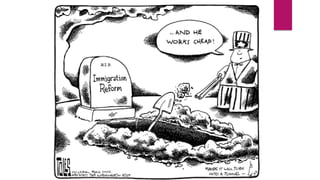
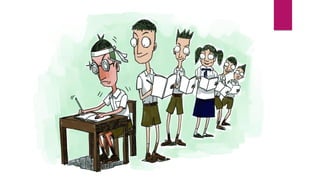
Practice
1.Analyze the rhetorical appeals
2. Identify and analyze the rhetorical situations
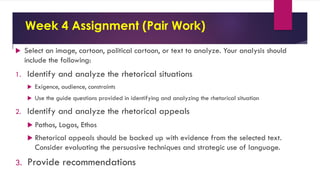
Week 4 Assignment (Pair Work)
 Select an image, cartoon, political cartoon, or text to analyze. Your analysis should
include the following:
1. Identify and analyze the rhetorical situations
 Exigence, audience, constraints
 Use the guide questions provided in identifying and analyzing the rhetorical situation
2. Identify and analyze the rhetorical appeals
 Pathos, Logos, Ethos
 Rhetorical appeals should be backed up with evidence from the selected text.
Consider evaluating the persuasive techniques and strategic use of language.
3. Provide recommendations
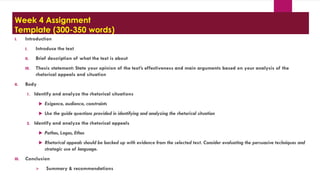
Week 4 Assignment
Template (300-350 words)
I. Introduction
I. Introduce the text
II. Brief description of what the text is about
III. Thesis statement: State your opinion of the text’s effectiveness and main arguments based on your analysis of the
rhetorical appeals and situation
II. Body
1. Identify and analyze the rhetorical situations
 Exigence, audience, constraints
 Use the guide questions provided in identifying and analyzing the rhetorical situation
2. Identify and analyze the rhetorical appeals
 Pathos, Logos, Ethos
 Rhetorical appeals should be backed up with evidence from the selected text. Consider evaluating the persuasive techniques and
strategic use of language.
III. Conclusion
 Summary & recommendations
Assignment 2 (5%)
 Presentation of Assignment 1
 Prepare an 8-10 minutes presentation of your work.

Week 4.1 responding to rhetorical situations copy

  • 1.
    BA-ENGLISH LIB440 Dr. Russell Rodrigo WEEK4 RESPONDING TO RHETORICAL SITUATIONS
  • 3.
    Rhetorical Situations: Exigence, Audience,Constraints 1. Exigence is the circumstance or condition that invites a response; or, in other words, rhetorical discourse is usually responding to some kind of problem.  You can begin to understand a piece’s exigence by asking, “What is this rhetoric responding to?” “What might have happened to make the rhetor (the person who creates the rhetoric) respond in this way?”  The exigence can be extremely complex, like the need for a new Supreme Court justice, or it can be much simpler, like receiving an email that asks you where you and your friends should go for your road trip this weekend.  Understanding the exigence is important because it helps you begin to discover the purpose of the rhetoric. It helps you understand what the discourse is trying to accomplish.
  • 4.
    2. Audience  Anotherpart of the rhetorical context is audience, those who are the (intended or unintended) recipients of the rhetorical message.  The audience should be able to respond to the exigence.  Example:  You might be very frustrated with your campus’s requirement that all first-year students purchase a meal plan for on- campus dining. You might even send an email to a good friend back home voicing that frustration.  However, if you want to address the exigence of the meal plans, the most appropriate audience would be the person/office on campus that oversees meal plans.  Your friend back home cannot solve the problem (though she may be able to offer sympathy or give you some good suggestions), but the person who can change the meal plan requirements is probably on campus.  Rhetors make all sorts of choices based on their audience. Audience can determine the type of language used, the formality of the discourse, the medium or delivery of the rhetoric, and even the types of reasons used the make the rhetor’s argument.  Understanding the audience helps you begin to see and understand the rhetorical moves that the rhetor makes.
  • 5.
    3. Constraints  Theconstraints of the rhetorical situation are those things that limit the way the discourse is delivered or communicated.  Limitations or restrictions  Constraints may be something as simple as your instructor limiting your proposal to one thousand words, or they may be far more complex like the kinds of language you need to use to persuade a certain community.
  • 6.
    Claims and Assumptions Aristotle’s artistic appeals are not the only way to understand the argument of rhetoric.  You might choose to look at the claim or the unstated assumptions of a piece; someone else might consider the visual appeal of the rhetoric, like the font, page layout, types of paper, or images; another person might focus on the language use and the specific word choice and sentence structure of a piece.  Logos, pathos, and ethos can provide a nice framework for analysis, but there are numerous ways to understand how a piece of rhetoric persuades (or fails to persuade).  Looking at the context and components of a piece of rhetoric often isn’t enough, though, because it is important to draw conclusions about the rhetoric—does it successfully respond to the exigence? Is it an ethical approach? Is it persuasive?  These kinds of questions let you begin to create your own claims, your own rhetoric, as you take a stand on what other people say, do, or write.
  • 7.
    Asking Questions Use thesequestions to guide you along as you begin to conduct a rhetorical analysis. 1. What is the rhetorical situation?  What occasion gives rise to the need or opportunity for persuasion?  What is the historical occasion that would give rise to the composition of this text? 2. Who is the author/speaker?  How does he or she establish ethos (personal credibility)?  Does he/she come across as knowledgeable? fair?  Does the speaker’s reputation convey a certain authority? 3. What is his/her intention in speaking? To attack or defend? To exhort or dissuade from certain action? To praise or blame? To teach, to delight, or to persuade?
  • 8.
    4. Who makeup the audience?  Who is the intended audience?  What values does the audience hold that the author or speaker appeals to?  Who have been or might be secondary audiences?  If this is a work of fiction, what is the nature of the audience within the fiction? 5. What is the content of the message?  Can you summarize the main idea?  What are the principal lines of reasoning or kinds of arguments used?  What topics of invention are employed?  How does the author or speaker appeal to reason? to emotion?
  • 9.
    6. What isthe form in which it is conveyed?  What is the structure of the communication; how is it arranged?  What oral or literary genre is it following?  What figures of speech (schemes and tropes) are used?  What kind of style and tone is used and for what purpose? 7. How do form and content correspond?  Does the form complement the content?  What effect could the form have, and does this aid or hinder the author’s intention? 8. Does the message/speech/text succeed in fulfilling the author’s or speaker’s intentions?  For whom?  Does the author/speaker effectively fit his/her message to the circumstances, times, and audience?  Can you identify the responses of historical or contemporary audiences? 9. What does the nature of the communication reveal about the culture that produced it?  What kinds of values or customs would the people have that would produce this?  How do the allusions, historical references, or kinds of words used place this in a certain time and location?
  • 10.
    Practice 1.Analyze the rhetoricalappeals 2. Identify and analyze the rhetorical situations
  • 14.
    Week 4 Assignment(Pair Work)  Select an image, cartoon, political cartoon, or text to analyze. Your analysis should include the following: 1. Identify and analyze the rhetorical situations  Exigence, audience, constraints  Use the guide questions provided in identifying and analyzing the rhetorical situation 2. Identify and analyze the rhetorical appeals  Pathos, Logos, Ethos  Rhetorical appeals should be backed up with evidence from the selected text. Consider evaluating the persuasive techniques and strategic use of language. 3. Provide recommendations
  • 15.
    Week 4 Assignment Template(300-350 words) I. Introduction I. Introduce the text II. Brief description of what the text is about III. Thesis statement: State your opinion of the text’s effectiveness and main arguments based on your analysis of the rhetorical appeals and situation II. Body 1. Identify and analyze the rhetorical situations  Exigence, audience, constraints  Use the guide questions provided in identifying and analyzing the rhetorical situation 2. Identify and analyze the rhetorical appeals  Pathos, Logos, Ethos  Rhetorical appeals should be backed up with evidence from the selected text. Consider evaluating the persuasive techniques and strategic use of language. III. Conclusion  Summary & recommendations
  • 16.
    Assignment 2 (5%) Presentation of Assignment 1  Prepare an 8-10 minutes presentation of your work.