Stative and
Dynamic Verbs
   Some verbs are only (or mostly)
    used in simple tenses, and are
    not used in continuous.
   Such as: agree, appear, believe,
    belong, concern, consist,
    contain, depend, deserve,
    doubt, fit, hate, hear, imagine,
    impress, include, involve, know,
    like, love, matter…
   mean, mind, need, owe, own,
    prefer, promise, realize,
    recognize, remember, seem,
    sound, suppose, surprise,
    understand, want, weigh, wish,
    etc.
For example,

   It appears to be raining.
   This book belonged to my
    grandfather.
   This shirt fits me well.
   Do you hear the music?
Dynamic verbs

   are used to describe skills and
    accomplishments that you have
    gained through professional
    experience.
   Some verbs can be both stative
    and dynamic:
be   be is usually a
     stative verb, but
     when it is used in
     the continuous it
     means ‘behaving’
     or ‘acting’:
     You are stupid =
     it’s a part of your
     personality.
     You are being
     stupid = only now,
     not usually.
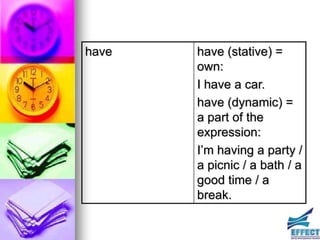
have   have (stative) =
       own:
       I have a car.
       have (dynamic) =
       a part of the
       expression:
       I’m having a party /
       a picnic / a bath / a
       good time / a
       break.
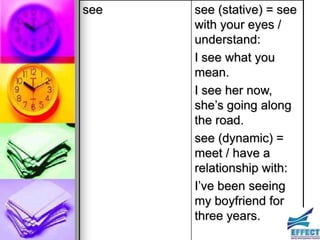
see   see (stative) = see
      with your eyes /
      understand:
      I see what you
      mean.
      I see her now,
      she’s going along
      the road.
      see (dynamic) =
      meet / have a
      relationship with:
      I’ve been seeing
      my boyfriend for
      three years.
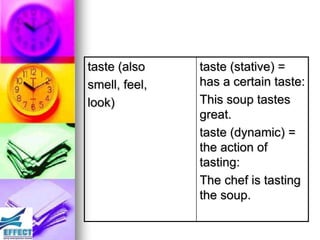
taste (also    taste (stative) =
smell, feel,   has a certain taste:
look)          This soup tastes
               great.
               taste (dynamic) =
               the action of
               tasting:
               The chef is tasting
               the soup.
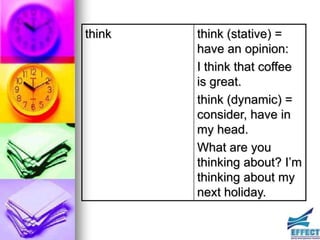
think   think (stative) =
        have an opinion:
        I think that coffee
        is great.
        think (dynamic) =
        consider, have in
        my head.
        What are you
        thinking about? I’m
        thinking about my
        next holiday.

Stative and dynamic verbs

  • 1.
  • 2.
    Some verbs are only (or mostly) used in simple tenses, and are not used in continuous.
  • 3.
    Such as: agree, appear, believe, belong, concern, consist, contain, depend, deserve, doubt, fit, hate, hear, imagine, impress, include, involve, know, like, love, matter…
  • 4.
    mean, mind, need, owe, own, prefer, promise, realize, recognize, remember, seem, sound, suppose, surprise, understand, want, weigh, wish, etc.
  • 5.
    For example,  It appears to be raining.  This book belonged to my grandfather.  This shirt fits me well.  Do you hear the music?
  • 6.
    Dynamic verbs  are used to describe skills and accomplishments that you have gained through professional experience.  Some verbs can be both stative and dynamic:
  • 7.
    be be is usually a stative verb, but when it is used in the continuous it means ‘behaving’ or ‘acting’: You are stupid = it’s a part of your personality. You are being stupid = only now, not usually.
  • 8.
    have have (stative) = own: I have a car. have (dynamic) = a part of the expression: I’m having a party / a picnic / a bath / a good time / a break.
  • 9.
    see see (stative) = see with your eyes / understand: I see what you mean. I see her now, she’s going along the road. see (dynamic) = meet / have a relationship with: I’ve been seeing my boyfriend for three years.
  • 10.
    taste (also taste (stative) = smell, feel, has a certain taste: look) This soup tastes great. taste (dynamic) = the action of tasting: The chef is tasting the soup.
  • 11.
    think think (stative) = have an opinion: I think that coffee is great. think (dynamic) = consider, have in my head. What are you thinking about? I’m thinking about my next holiday.