Introducing social
media
March 2011
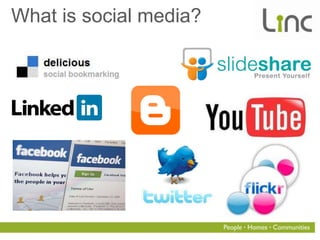
What is social media?
Social media and Web 2.0


“The same rules still apply: We are just
  working on a broader canvas with a
         richer set of colours”

                  Mohan Sawhney, Kellogg School of Management
Social media and Web 2.0

  Interrupt          Engage
    Push               Pull
   Viewer           Participant
  Solitude       Social network
  Authority     Recommendation
Brand control   Brand co-creation
  Dialogue         relationship
Key Challenges?
• Time?

• Control?

• Sensitive Information?

• Positive and negative comments?

• Reputation Management?
Blogs
• One of the oldest forms of user-generated
content

• Easily negotiated platform to publish thoughts,
  opinion, professional updates interests, photo or
  video content

• Helps create thought leadership,
  attract „thinkers and linkers‟

• Promotes events, and drives readers
  to other content
Micro-blogging
• 5 years old this month – currently in its most
  significant period of growth to date

• An abbreviated blog- regular messages
  comprising of 140 characters or less

• Rated #1 on the 2010 list of the
  top 100 tools for learning by the
  Centre for learning and
  performance technologies
Facebook

• Events & Invitations

• Organisation Updates

• Contact Information

• Useful links

• Conversation
Linked in.
• Business orientated social networking site

• 100m users, current join rate of 1 professional / sec

• Find job candidates and research prospective
  businesses

• „Connections‟ interest groups

• Find industry experts
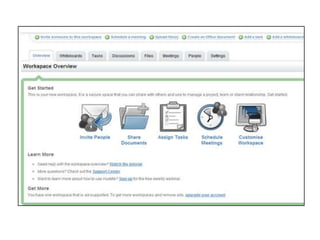
Huddle
• Web based collaboration tool

• Support non-traditional (freelance) employee or
  remote-working structure

• Shared working structure – document
  management/ libraries

• Dashboard (Learning Pool)
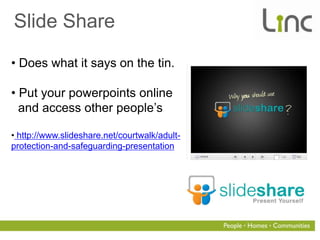
Slide Share

• Does what it says on the tin.

• Put your powerpoints online
  and access other people‟s

• http://www.slideshare.net/courtwalk/adult-
protection-and-safeguarding-presentation
What about L&D?
• “Adult learning is essentially a social process”

• Sharing experience and learning leads to a
  better input for learning

• Social Media should make it easier for trainers to
  become facilitators not teachers i.e. the learner
  can choose to access their preferred medium
  that will allow them to get the best understanding
  of the content.

• A „personal learning network‟
Key Questions?
• Does the media allow you to reach a large % of
  your target audience?

• Is there an opportunity for sharing knowledge,
  working together or providing feedback?

• Will you regularly engage in this channel?

• What kind of access does your user have, do
  they need to be digital experts to participate?
Promoting the Medium
• Links from website homepage

• Learning Pool? Introduce at initial induction

• Finding and following relevant users

• Grapevine articles

• Prompting from H/Officers, FI/Officers

• Buy-in from senior management
Any questions?

Introducing Social Media

  • 1.
  • 2.
  • 3.
    Social media andWeb 2.0 “The same rules still apply: We are just working on a broader canvas with a richer set of colours” Mohan Sawhney, Kellogg School of Management
  • 4.
    Social media andWeb 2.0 Interrupt Engage Push Pull Viewer Participant Solitude Social network Authority Recommendation Brand control Brand co-creation Dialogue relationship
  • 5.
    Key Challenges? • Time? •Control? • Sensitive Information? • Positive and negative comments? • Reputation Management?
  • 6.
    Blogs • One ofthe oldest forms of user-generated content • Easily negotiated platform to publish thoughts, opinion, professional updates interests, photo or video content • Helps create thought leadership, attract „thinkers and linkers‟ • Promotes events, and drives readers to other content
  • 7.
    Micro-blogging • 5 yearsold this month – currently in its most significant period of growth to date • An abbreviated blog- regular messages comprising of 140 characters or less • Rated #1 on the 2010 list of the top 100 tools for learning by the Centre for learning and performance technologies
  • 8.
    Facebook • Events &Invitations • Organisation Updates • Contact Information • Useful links • Conversation
  • 9.
    Linked in. • Businessorientated social networking site • 100m users, current join rate of 1 professional / sec • Find job candidates and research prospective businesses • „Connections‟ interest groups • Find industry experts
  • 10.
    Huddle • Web basedcollaboration tool • Support non-traditional (freelance) employee or remote-working structure • Shared working structure – document management/ libraries • Dashboard (Learning Pool)
  • 12.
    Slide Share • Doeswhat it says on the tin. • Put your powerpoints online and access other people‟s • http://www.slideshare.net/courtwalk/adult- protection-and-safeguarding-presentation
  • 13.
    What about L&D? •“Adult learning is essentially a social process” • Sharing experience and learning leads to a better input for learning • Social Media should make it easier for trainers to become facilitators not teachers i.e. the learner can choose to access their preferred medium that will allow them to get the best understanding of the content. • A „personal learning network‟
  • 14.
    Key Questions? • Doesthe media allow you to reach a large % of your target audience? • Is there an opportunity for sharing knowledge, working together or providing feedback? • Will you regularly engage in this channel? • What kind of access does your user have, do they need to be digital experts to participate?
  • 15.
    Promoting the Medium •Links from website homepage • Learning Pool? Introduce at initial induction • Finding and following relevant users • Grapevine articles • Prompting from H/Officers, FI/Officers • Buy-in from senior management
  • 16.