NLP 
• The neuro part of NLP is concerned with how we 
experience the world through our five senses and 
represent it in our minds through our neurogical 
process. 
• The linguistic part of NLP is concerned with the way 
the language we use shapes, as well as reflects, our 
experience of the world. If we change the way we 
speak and think about things, we can change our 
behaviour. 
• The programming part of NLP is concerned with 
training ourselves to think, speak and act in new and 
positive ways.
The map is not a territory 
There is the 
world. And there 
is our experience 
of the world. 
They are not the 
same thing. We 
all experience 
‟reality” in our 
own way.
There is no failure, only feedback 
• Help students to welcome feedback. Learners 
need constructive feedback at the level of 
behaviour rather than identiy. 
• Think of mistakes as useful feedback for your 
teaching.
The importance of positive messages 
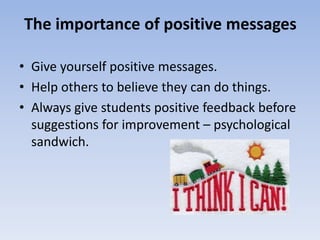
• Give yourself positive messages. 
• Help others to believe they can do things. 
• Always give students positive feedback before 
suggestions for improvement – psychological 
sandwich.
Outcomes – knowing where you are 
going 
• Have classroom outcomes for yourself and 
your students. 
• Share your outcome with your students. 
• Break down the big outcomes into a series of 
smaller steps which are more easily 
achievable.
A good practice – Stories and guided 
fantasies 
• They are wonderful vehicles for delivering 
powerful metaphors to your students. 
• The simplest level is to tell a story about ‟your 
friend”. 
• It is important to decide on the message you 
want to give.
Everything has started with this book…
Thank you for your attention!

Nlp

  • 2.
    NLP • Theneuro part of NLP is concerned with how we experience the world through our five senses and represent it in our minds through our neurogical process. • The linguistic part of NLP is concerned with the way the language we use shapes, as well as reflects, our experience of the world. If we change the way we speak and think about things, we can change our behaviour. • The programming part of NLP is concerned with training ourselves to think, speak and act in new and positive ways.
  • 4.
    The map isnot a territory There is the world. And there is our experience of the world. They are not the same thing. We all experience ‟reality” in our own way.
  • 6.
    There is nofailure, only feedback • Help students to welcome feedback. Learners need constructive feedback at the level of behaviour rather than identiy. • Think of mistakes as useful feedback for your teaching.
  • 7.
    The importance ofpositive messages • Give yourself positive messages. • Help others to believe they can do things. • Always give students positive feedback before suggestions for improvement – psychological sandwich.
  • 8.
    Outcomes – knowingwhere you are going • Have classroom outcomes for yourself and your students. • Share your outcome with your students. • Break down the big outcomes into a series of smaller steps which are more easily achievable.
  • 9.
    A good practice– Stories and guided fantasies • They are wonderful vehicles for delivering powerful metaphors to your students. • The simplest level is to tell a story about ‟your friend”. • It is important to decide on the message you want to give.
  • 11.
    Everything has startedwith this book…
  • 12.
    Thank you foryour attention!