Welcome To
Presentation
Group ID:
103-33-335
102-33-202
102-33-219
102-33-206
102-33-203
102-33-230
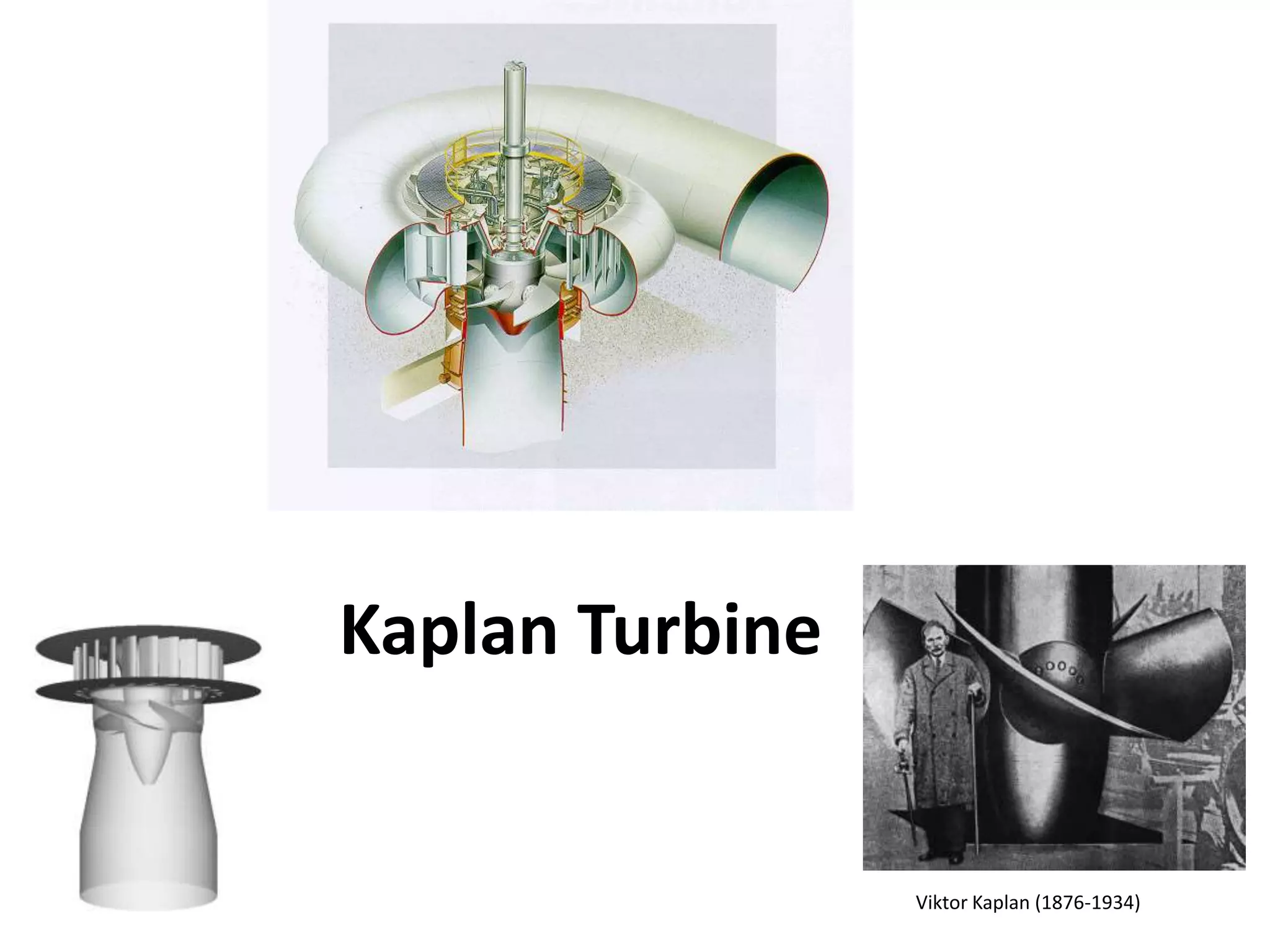
Kaplan Turbine
Viktor Kaplan (1876-1934)
Kaplan Turbine
• The Kaplan turbine is a great
development of early 19th
century.
• Invented by Prof. Viktor Kaplan
of Austria during 1913 – 1922.
• The Kaplan is of the propeller
type, similar to an airplane
propeller.
• Kaplan turbine is a low head
turbine and used for heads of
less than 80 meters.
• It is a pure axial flow turbine
uses basic aerofoil theory.
Main Parts of a Kaplan Turbine
Scroll Casing:
It is the Casing in which guides the water and control
the water passage.
Guide Vanes:
It is the blade in which guides the water and control the water
passage.
Draft Tube:
After passing through the runner the
water is discharged to the tail race
through a gradually expanding tube.
Runner:
It is connected to the shaft of the
generator.
Hub:
It is the part of the runner in which
blades are mounted.
Working Principle:
• Water under pressure flush draft
tube through the guide vanes and
falls on the adjustable blades,
which enables adjust the flow.
• After crossing propeller is the
kinetic energy of water converted
into rotational motion shaft.
The shaft powered generator
producing electric power.
Classification of kaplan Turbine:
• The Kaplan turbine can be divided in double and single
regulated turbines.
• A Kaplan turbine with adjustable runner blades and
adjustable guide vanes is double regulated while one with
only adjustable runner blades is single regulated.
• The double regulated Kaplan turbines can work between 15%
and 100% of the maximum design discharge;
• the single regulated turbines can only work between 30% and
100% of the maximum design discharge.
Advantages:
• It can be used for the sites having very low Head.
• The advantage of the double regulated turbines is that
they can be used in a wider field.
• At part loads there is reduced loss of efficiency.
• Kaplan turbine has efficiency up to 90 percent
• Because of small dimension of the power house
there is saving in excavation and civil Engineering works.
Disadvantages:
• Leakage of water into generator chamber and
Condensation are source of trouble.
• Cost is very high for maintenance.
Kaplan turbine
Kaplan turbine
Kaplan turbine

Kaplan turbine

  • 1.
  • 2.
  • 3.
    Kaplan Turbine • TheKaplan turbine is a great development of early 19th century. • Invented by Prof. Viktor Kaplan of Austria during 1913 – 1922. • The Kaplan is of the propeller type, similar to an airplane propeller. • Kaplan turbine is a low head turbine and used for heads of less than 80 meters. • It is a pure axial flow turbine uses basic aerofoil theory.
  • 5.
    Main Parts ofa Kaplan Turbine Scroll Casing: It is the Casing in which guides the water and control the water passage. Guide Vanes: It is the blade in which guides the water and control the water passage. Draft Tube: After passing through the runner the water is discharged to the tail race through a gradually expanding tube. Runner: It is connected to the shaft of the generator. Hub: It is the part of the runner in which blades are mounted.
  • 6.
    Working Principle: • Waterunder pressure flush draft tube through the guide vanes and falls on the adjustable blades, which enables adjust the flow. • After crossing propeller is the kinetic energy of water converted into rotational motion shaft. The shaft powered generator producing electric power.
  • 7.
    Classification of kaplanTurbine: • The Kaplan turbine can be divided in double and single regulated turbines. • A Kaplan turbine with adjustable runner blades and adjustable guide vanes is double regulated while one with only adjustable runner blades is single regulated. • The double regulated Kaplan turbines can work between 15% and 100% of the maximum design discharge; • the single regulated turbines can only work between 30% and 100% of the maximum design discharge.
  • 8.
    Advantages: • It canbe used for the sites having very low Head. • The advantage of the double regulated turbines is that they can be used in a wider field. • At part loads there is reduced loss of efficiency. • Kaplan turbine has efficiency up to 90 percent • Because of small dimension of the power house there is saving in excavation and civil Engineering works.
  • 9.
    Disadvantages: • Leakage ofwater into generator chamber and Condensation are source of trouble. • Cost is very high for maintenance.