Thyroid function tests 
DrNehaMahajan 
MD Pathology
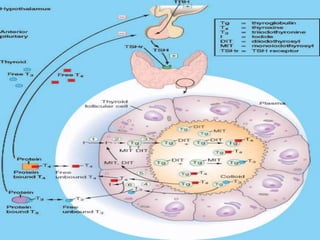
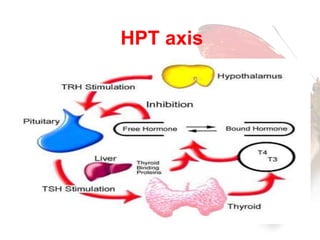
HPT axis
CLASSIFICATION OF TESTS BASED ON FUNCTIONS OF THYROID 
Tests measuring blood levels of thyroid hormones: 
•Sr PBI 
•Circulating T3 and T4 level 
•Circulating TSH level 
•Plasma tyrosine level 
Tests based on primary function if thyroid viz substrate input & 
hormone synthesis: 
• RIU(Radioiodine uptake studies) 
•PBI131 
•T3 suppression test 
•TSH stimulation test 
•TRH stimulation test 
Tests based on metabolic effects of thyroid hormones 
•BMR 
•Sr cholestrol 
•Sr creatine level 
•Sr uric acid level 
•Sr CK enzyme
Scanning of thyroid gland 
Immunological tests to detect autoimmune diseases of thyroid gland: 
•Agar gel diffusion test(PPT test) 
•TRCH test: tanned red cell haemagglutination test 
•Complement fixation test
Indications of TFT 
• Diagnosing thyroid disorder in symptomatic person 
• Screening newborns for hypothyroidism 
• Monitoring thyroid replacement therapy in 
hypothyroidism patients 
• Diagnosis & monitoring female infertility patients 
• Screening adults for thyroid disorders
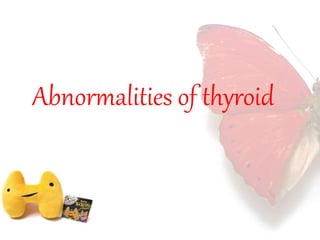
Abnormalities of thyroid
Hypothyroidism 
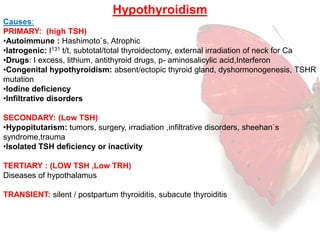
Causes: 
PRIMARY: (high TSH) 
•Autoimmune : Hashimoto`s, Atrophic 
•Iatrogenic: I131 t/t, subtotal/total thyroidectomy, external irradiation of neck for Ca 
•Drugs: I excess, lithium, antithyroid drugs, p- aminosalicylic acid,Interferon 
•Congenital hypothyroidism: absent/ectopic thyroid gland, dyshormonogenesis, TSHR 
mutation 
•Iodine deficiency 
•Infiltrative disorders 
SECONDARY: (Low TSH) 
•Hypopitutarism: tumors, surgery, irradiation ,infiltrative disorders, sheehan`s 
syndrome,trauma 
•Isolated TSH deficiency or inactivity 
TERTIARY : (LOW TSH ,Low TRH) 
Diseases of hypothalamus 
TRANSIENT: silent / postpartum thyroiditis, subacute thyroiditis
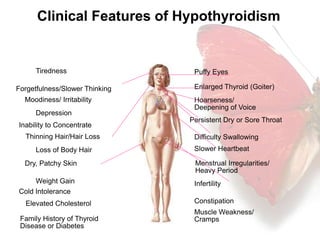
Clinical Features of Hypothyroidism 
Tiredness 
Forgetfulness/Slower Thinking 
Moodiness/ Irritability 
Depression 
Inability to Concentrate 
Thinning Hair/Hair Loss 
Loss of Body Hair 
Dry, Patchy Skin 
Weight Gain 
Cold Intolerance 
Elevated Cholesterol 
Family History of Thyroid 
Disease or Diabetes 
Puffy Eyes 
Enlarged Thyroid (Goiter) 
Hoarseness/ 
Deepening of Voice 
Persistent Dry or Sore Throat 
Difficulty Swallowing 
Slower Heartbeat 
Menstrual Irregularities/ 
Heavy Period 
Infertility 
Constipation 
Muscle Weakness/ 
Cramps
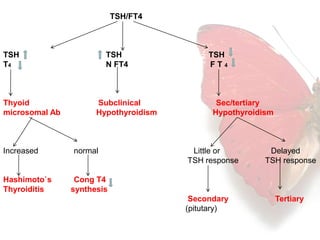
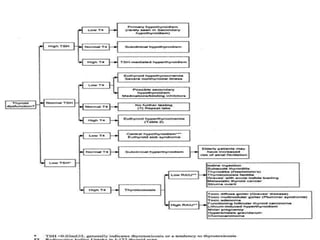
TSH/FT4 
TSH TSH TSH 
T4 N FT4 F T 4 
Thyoid Subclinical Sec/tertiary 
microsomal Ab Hypothyroidism Hypothyroidism 
Increased normal Little or Delayed 
TSH response TSH response 
Hashimoto`s Cong T4 
Thyroiditis synthesis 
Secondary Tertiary 
(pitutary)
Hyperthyroidism 
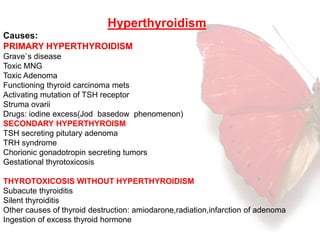
Causes: 
PRIMARY HYPERTHYROIDISM 
Grave`s disease 
Toxic MNG 
Toxic Adenoma 
Functioning thyroid carcinoma mets 
Activating mutation of TSH receptor 
Struma ovarii 
Drugs: iodine excess(Jod basedow phenomenon) 
SECONDARY HYPERTHYROISM 
TSH secreting pitutary adenoma 
TRH syndrome 
Chorionic gonadotropin secreting tumors 
Gestational thyrotoxicosis 
THYROTOXICOSIS WITHOUT HYPERTHYROIDISM 
Subacute thyroiditis 
Silent thyroiditis 
Other causes of thyroid destruction: amiodarone,radiation,infarction of adenoma 
Ingestion of excess thyroid hormone
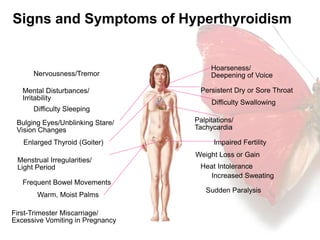
Signs and Symptoms of Hyperthyroidism 
Nervousness/Tremor 
Mental Disturbances/ 
Irritability 
Difficulty Sleeping 
Bulging Eyes/Unblinking Stare/ 
Vision Changes 
Enlarged Thyroid (Goiter) 
Menstrual Irregularities/ 
Light Period 
Frequent Bowel Movements 
Warm, Moist Palms 
First-Trimester Miscarriage/ 
Excessive Vomiting in Pregnancy 
Hoarseness/ 
Deepening of Voice 
Persistent Dry or Sore Throat 
Difficulty Swallowing 
Palpitations/ 
Tachycardia 
Impaired Fertility 
Weight Loss or Gain 
Heat Intolerance 
Increased Sweating 
Sudden Paralysis 
Family History of 
Thyroid Disease 
or Diabetes
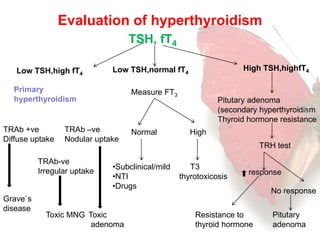
Evaluation of hyperthyroidism 
TSH, fT4 
Low TSH,high fT4 Low TSH,normal fT4 
High TSH,highfT4 
Primary 
hyperthyroidism 
TRAb +ve 
Diffuse uptake 
TRAb –ve 
Nodular uptake 
TRAb-ve 
Irregular uptake 
Grave`s 
disease 
Toxic 
adenoma 
Toxic MNG 
Measure FT3 
Normal High 
T3 
thyrotoxicosis 
•Subclinical/mild 
•NTI 
•Drugs 
Pitutary adenoma 
(secondary hyperthyroidism 
Thyroid hormone resistance 
TRH test 
response 
Resistance to 
thyroid hormone 
No response 
Pitutary 
adenoma
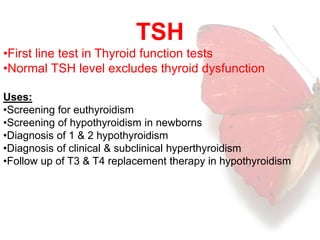
TSH 
•First line test in Thyroid function tests 
•Normal TSH level excludes thyroid dysfunction 
Uses: 
•Screening for euthyroidism 
•Screening of hypothyroidism in newborns 
•Diagnosis of 1 & 2 hypothyroidism 
•Diagnosis of clinical & subclinical hyperthyroidism 
•Follow up of T3 & T4 replacement therapy in hypothyroidism
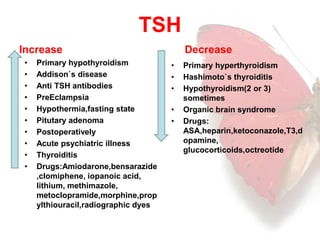
TSH 
Increase 
• Primary hypothyroidism 
• Addison`s disease 
• Anti TSH antibodies 
• PreEclampsia 
• Hypothermia,fasting state 
• Pitutary adenoma 
• Postoperatively 
• Acute psychiatric illness 
• Thyroiditis 
• Drugs:Amiodarone,bensarazide 
,clomiphene, iopanoic acid, 
lithium, methimazole, 
metoclopramide,morphine,prop 
ylthiouracil,radiographic dyes 
Decrease 
• Primary hyperthyroidism 
• Hashimoto`s thyroiditis 
• Hypothyroidism(2 or 3) 
sometimes 
• Organic brain syndrome 
• Drugs: 
ASA,heparin,ketoconazole,T3,d 
opamine, 
glucocorticoids,octreotide
Methods of TSH estimation 
•Radioimmunoassay 
•Immunometric assay 
•Chemiluminiscent & flourescent techniques(3rd gen) 
•Normal values: TSH 0.4 to 4mU/L
Total thyroxine 
•Total thyroxine includes free as well as protein bound 
thyroxine. 
•Normal levels:5 to 12.5ug/dL, largely bound to transport 
protein espTBG. 
• T4 combined with TSH gives the best measurement of thyroid 
function.
Thyroxine 
Increase 
• Hyperthyroidism 
• Factitious 
hyperthyroidism 
• Pitutary TSH secreting 
pitutary tumor 
• Raised TBG 
Decrease 
• Primary hypothyroidism 
• Secondary/pitutary 
hypothyroidism 
• Severe non thyroidal 
illness 
• Decrease TBG
Free T4 
•Small fraction of total T4 unbound to protein 
•Metabolically active form 
•0.05% of total T4 
•Do not get affected by TBG levels or NTI 
•Measurement useful in conditions where TBG levels 
are affected 
•Normal levels:0.89- 1.76ng/dL
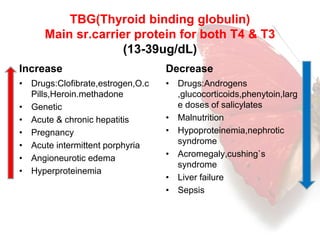
TBG(Thyroid binding globulin) 
Main sr.carrier protein for both T4 & T3 
(13-39ug/dL) 
Increase 
• Drugs:Clofibrate,estrogen,O.c 
Pills,Heroin.methadone 
• Genetic 
• Acute & chronic hepatitis 
• Pregnancy 
• Acute intermittent porphyria 
• Angioneurotic edema 
• Hyperproteinemia 
Decrease 
• Drugs:Androgens 
,glucocorticoids,phenytoin,larg 
e doses of salicylates 
• Malnutrition 
• Hypoproteinemia,nephrotic 
syndrome 
• Acromegaly,cushing`s 
syndrome 
• Liver failure 
• Sepsis
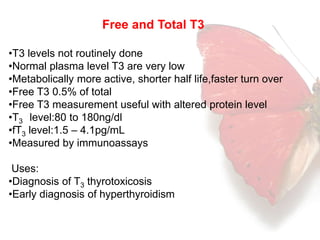
Free and Total T3 
•T3 levels not routinely done 
•Normal plasma level T3 are very low 
•Metabolically more active, shorter half life,faster turn over 
•Free T3 0.5% of total 
•Free T3 measurement useful with altered protein level 
•T3 level:80 to 180ng/dl 
•fT3 level:1.5 – 4.1pg/mL 
•Measured by immunoassays 
Uses: 
•Diagnosis of T3 thyrotoxicosis 
•Early diagnosis of hyperthyroidism
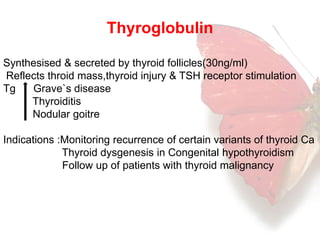
Thyroglobulin 
Synthesised & secreted by thyroid follicles(30ng/ml) 
Reflects throid mass,thyroid injury & TSH receptor stimulation 
Tg Grave`s disease 
Thyroiditis 
Nodular goitre 
Indications :Monitoring recurrence of certain variants of thyroid Ca 
Thyroid dysgenesis in Congenital hypothyroidism 
Follow up of patients with thyroid malignancy
Thyroid Autoantibodies 
•Diagnosing autoimmune diseases 
•Autoantibodies :Tg,Thyroid microsomal Ag, TSH receptor, non 
Tg colloid antigen,TSH,T4 
Anti Tg antibodies 
Methods: Agar gel diffusion precipitation test 
Tanned red cell haemagglutination tests(TRCH test) 
ELISA 
Immunoflourescence of tissue section 
RIA 
Positive: Hashimoto`s thyroiditis,Grave`s 
disease,myxedema,nontoxic goitre,thyroid ca,pernicious anaemia
Antimicrosomal Abs 
•Methods: CFT,Immunoflourescence tests,TRCH 
assay,ELISA,RIA 
•Positive in grave`s disease & Hashimoto`s thyroiditis 
•More frequently positive for autoimmune diseases than 
Tg Ab 
Thyroid receptor antibody 
Types: 
•TBI (Grave`s disease) 
•TSIgs ( Grave`s disease,predicting relapse or remission 
in hyperthyoid, development of neonatal 
hyperthyroidism)
Radioiodine uptake studies 
Correlates with functional activity of thyroid gland 
•Tracer dose of I131 orally followed by measurement of amount 
of radioactivity over thyroid gland at 2 hrs and again at 24hrs 
•Normal radioactive uptake 20 to 40 % of administered dose 
at 24 hr 
•Increased Uptake : 
•hyperthyroidism due to 
grave`s disease, 
•toxic MNG, 
•toxic adenoma, 
•TSH secreting tumor 
Decreased uptake: 
•hypothyroidism 
•subacute thyroiditis, 
•large I 2 doses, thyroid 
hormone 
•factitious hyperthyroidism
TRH stimulation tests 
Uses: Confirms diagnosis of secondary hypothyroidism 
Evaluation of suspected hypothalamic disease 
Procedure: 
TRH injected iv(200 0r 500ug) followed by measurement of 
serum TSH at 20 & 60 min 
Interpretation: 
Peak response in normal 4 times elevation of TSH 
Primary hypothyroidism: exaggerated & prolonged 
response 
Secondary hypothyroidism: blunted response 
Tertiary hypothyroidism: response is delayed
T3suppression test 
Use: differentiates boderline high normal from primary 
hyperthyroidism(grave`s disease) 
Procedure: After 24 hr RIU studies & obtaining basal value 
and serum T4 values,20 ug of T3 four times a day is 
given for 7 to 10 days 
RIU is repeated after administration & serum T4 values are 
also determined 
Interpretation: 
A suppression is indicated by the 24 hrs RIU falling to < 
50% of initial uptake & totalT4 to approx 2ug/ml or less 
Non suppression indicates autonomous thyroid 
function.(Grave`s disease)
TSH stimulation test 
Use:Differentiates primary from secondary hypothyroidism 
Procedure: After 24hr RIU studies,3 injections of TSH, each 5 
USP units are given at 24 hrs interval 
24hr RIU is measured after 42 hrs after final TSH dose. 
Interpretation: 
In primary hypothyroidism, failure of stimulation of gland 
In secondary hypothyroidism, stimulation of gland showing 
increased RIU.
Tests based on metabolic effects of 
thyroid hormones 
BMR: 
Between 5% & 20% normal 
Euthyroid state : -10% to 10% of normal 
Hyperthyroidism:50% to 75% 
Hypothyroidism: < -20% 
Sr. CHOLESTROL LEVEL: 
260mg% hypothyroidism 
Sr. CREATINE LEVEL 
0.6mg% hyperthyroidism 
Sr. URIC ACID LEVEL: 
Myxedema 6.5 to 11mg% 
Sr. CK LEVELS & HYPERCALCEMIA
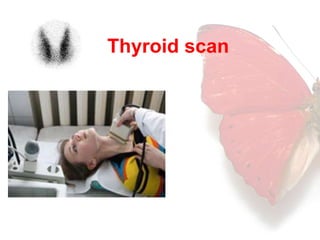
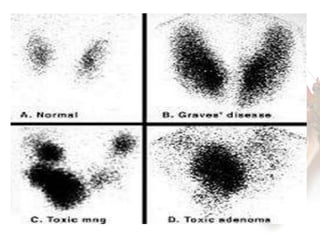
Thyroid scan
Advantages /Uses of scintiscan 
 Distinguishes diffuse glandular activity from patchy 
pattern seen in goitre 
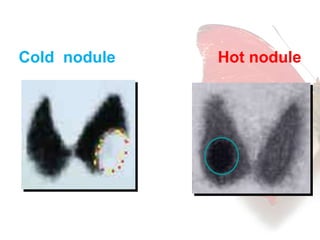
 Functional classification of nodules: warm,hot,cold 
 In association with thyroid suppression regimes, TSH 
dependent or autonomous nature of hot nodules 
 Information regarding size, shape, position of gland 
 Identification & localisation of functioning thyroid tissue in 
ectopic or metastatic sites 
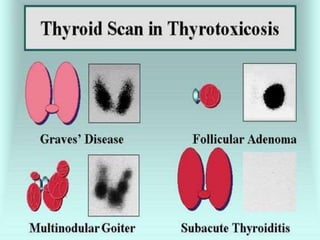
 Helps on differentiating various causes of thyrotoxicosis
Indications: 
1.Thyroid nodule(s) 
2. Diffuse or multinodular goiter 
3. Clinical hyper- or hypothyroidism 
4. Evaluation of substernal mass 
5. R/O Ectopic thyroid tissue 
6. Subacute thyroiditis, early phase 
7. Patient with previous Hx of H & N radiation 
Contraindications: 
1.Pregnancy 
2.Lactation
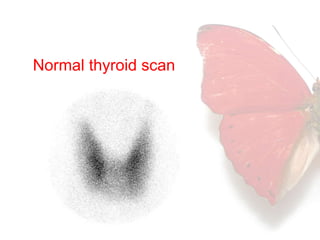
Normal thyroid scan
Cold nodule Hot nodule
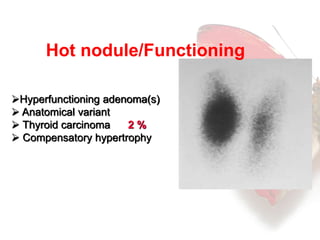
Hot nodule/Functioning 
Hyperfunctioning adenoma(s) 
 Anatomical variant 
 Thyroid carcinoma 2 % 
 Compensatory hypertrophy
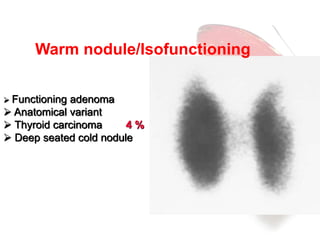
Warm nodule/Isofunctioning 
 Functioning adenoma 
 Anatomical variant 
 Thyroid carcinoma 4 % 
 Deep seated cold nodule
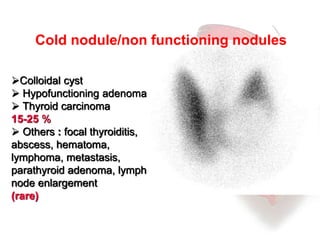
Cold nodule/non functioning nodules 
Colloidal cyst 
 Hypofunctioning adenoma 
 Thyroid carcinoma 
15-25 % 
 Others : focal thyroiditis, 
abscess, hematoma, 
lymphoma, metastasis, 
parathyroid adenoma, lymph 
node enlargement 
(rare)
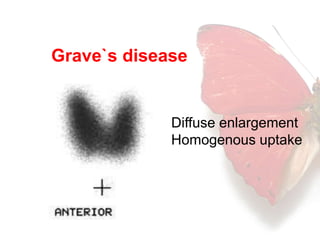
Grave`s disease 
Diffuse enlargement 
Homogenous uptake
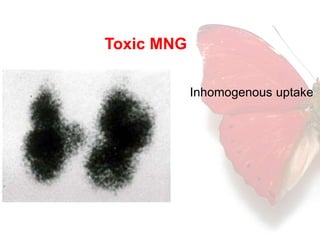
Toxic MNG 
Inhomogenous uptake
Whole body scan I131 
1.Post-operative evaluation for thyroid remnant or 
functioning metastasis 
2. Follow up patients after I-131 ablation or I-131 treatment 
3. Serum Tg rising 
4. Suspected tumor recurrence 
5. Suspected functioning metastases, either local or distant 
metastases
FNAC thyroid 
Indications: 
Diagnosis of diffuse non toxic goitre 
Diagnosis of solitary or dominant thyroid nodule 
Confirmation of clinically obvious malignancy 
To obtain material for special laboratory investigations aimed at 
defining prognostic parameters. 
Main limitation: Inability to distinguish between between follicular 
adenoma & carcinoma.
Contraindications: No 
Complications: 
Local h`age & haematoma. 
Transient laryngeal nerve paresis. 
Tracheal puncture 
Rarely,needling causes formation of a hot nodule
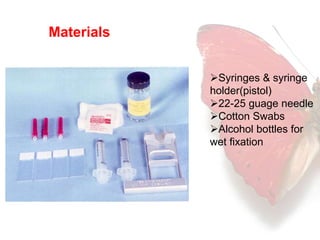
Materials 
Syringes & syringe 
holder(pistol) 
22-25 guage needle 
Cotton Swabs 
Alcohol bottles for 
wet fixation
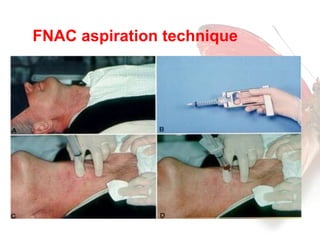
FNAC aspiration technique
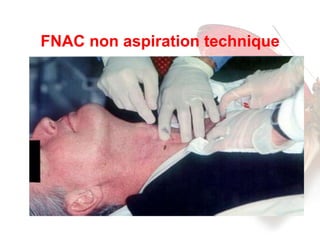
FNAC non aspiration technique
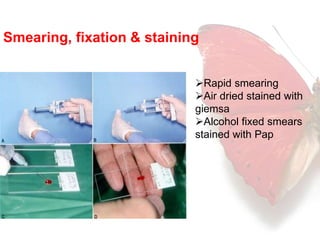
Smearing, fixation & staining 
Rapid smearing 
Air dried stained with 
giemsa 
Alcohol fixed smears 
stained with Pap
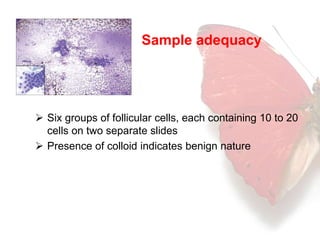
Sample adequacy 
 Six groups of follicular cells, each containing 10 to 20 
cells on two separate slides 
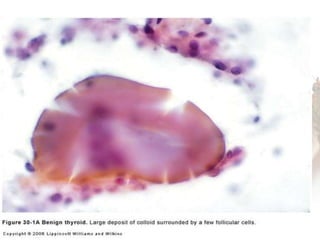
 Presence of colloid indicates benign nature
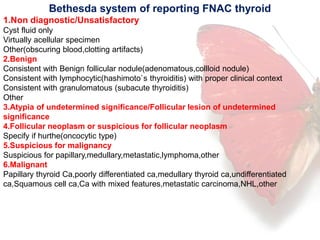
Bethesda system of reporting FNAC thyroid 
1.Non diagnostic/Unsatisfactory 
Cyst fluid only 
Virtually acellular specimen 
Other(obscuring blood,clotting artifacts) 
2.Benign 
Consistent with Benign follicular nodule(adenomatous,collloid nodule) 
Consistent with lymphocytic(hashimoto`s thyroiditis) with proper clinical context 
Consistent with granulomatous (subacute thyroiditis) 
Other 
3.Atypia of undetermined significance/Follicular lesion of undetermined 
significance 
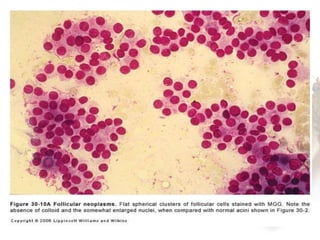
4.Follicular neoplasm or suspicious for follicular neoplasm 
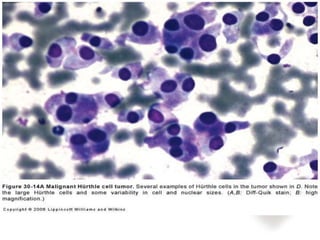
Specify if hurthe(oncocytic type) 
5.Suspicious for malignancy 
Suspicious for papillary,medullary,metastatic,lymphoma,other 
6.Malignant 
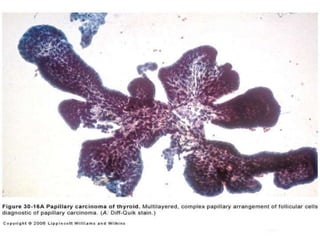
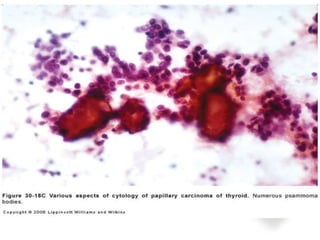
Papillary thyroid Ca,poorly differentiated ca,medullary thyroid ca,undifferentiated 
ca,Squamous cell ca,Ca with mixed features,metastatic carcinoma,NHL,other
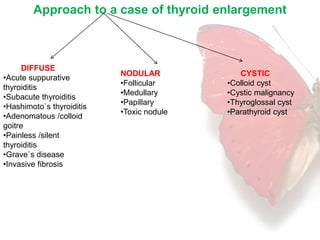
Approach to a case of thyroid enlargement 
DIFFUSE 
•Acute suppurative 
thyroiditis 
•Subacute thyroiditis 
•Hashimoto`s thyroiditis 
•Adenomatous /colloid 
goitre 
•Painless /silent 
thyroiditis 
•Grave`s disease 
•Invasive fibrosis 
NODULAR 
•Follicular 
•Medullary 
•Papillary 
•Toxic nodule 
CYSTIC 
•Colloid cyst 
•Cystic malignancy 
•Thyroglossal cyst 
•Parathyroid cyst
References 
Fauci,Braunwald,Kasper et al.Harrison`s principles of Internal Medicine.17th 
ed.Boston:Mc Graw Hill;2008;p2224 to 2246. 
Richard .A.McPherson,Mathew R Pincus.Henry`s Clinical Dignosis 
AndManagement by Laboratory methods.21ed.USA:Saunders An imprint of 
Elsevier,2008p.263 to 279. 
Leopald G.Koss,Myron R.Melamed`s Koss` Diagnostic Cytology and its 
histopathologic bases.5th ed.New York:Lippincott & Williams & 
Wilkins;2006;p1148-1185.vol 2. 
Svante R Orell,Gregory F Sterrett,Darell Whitaker`s Fine Needle Aspiration 
Cytology.4th ed.Australia:Churchilll Living An Imprint of Elsevier,2005;p125- 
164. 
Edmund S.Cibas & Syed Z.Ali.The bethesda system for reporting thyroid 
cytology.American journal of clinical pathology 2009;132:658-665. 
Chatterjee MN & Rana Shinde, Textbook of medical biochemistry,7th 
ed.JAYPEE;2009 p638-646.
Thank you 

Thyroid function tests

  • 1.
    Thyroid function tests DrNehaMahajan MD Pathology
  • 3.
  • 4.
    CLASSIFICATION OF TESTSBASED ON FUNCTIONS OF THYROID Tests measuring blood levels of thyroid hormones: •Sr PBI •Circulating T3 and T4 level •Circulating TSH level •Plasma tyrosine level Tests based on primary function if thyroid viz substrate input & hormone synthesis: • RIU(Radioiodine uptake studies) •PBI131 •T3 suppression test •TSH stimulation test •TRH stimulation test Tests based on metabolic effects of thyroid hormones •BMR •Sr cholestrol •Sr creatine level •Sr uric acid level •Sr CK enzyme
  • 5.
    Scanning of thyroidgland Immunological tests to detect autoimmune diseases of thyroid gland: •Agar gel diffusion test(PPT test) •TRCH test: tanned red cell haemagglutination test •Complement fixation test
  • 6.
    Indications of TFT • Diagnosing thyroid disorder in symptomatic person • Screening newborns for hypothyroidism • Monitoring thyroid replacement therapy in hypothyroidism patients • Diagnosis & monitoring female infertility patients • Screening adults for thyroid disorders
  • 7.
  • 8.
    Hypothyroidism Causes: PRIMARY:(high TSH) •Autoimmune : Hashimoto`s, Atrophic •Iatrogenic: I131 t/t, subtotal/total thyroidectomy, external irradiation of neck for Ca •Drugs: I excess, lithium, antithyroid drugs, p- aminosalicylic acid,Interferon •Congenital hypothyroidism: absent/ectopic thyroid gland, dyshormonogenesis, TSHR mutation •Iodine deficiency •Infiltrative disorders SECONDARY: (Low TSH) •Hypopitutarism: tumors, surgery, irradiation ,infiltrative disorders, sheehan`s syndrome,trauma •Isolated TSH deficiency or inactivity TERTIARY : (LOW TSH ,Low TRH) Diseases of hypothalamus TRANSIENT: silent / postpartum thyroiditis, subacute thyroiditis
  • 9.
    Clinical Features ofHypothyroidism Tiredness Forgetfulness/Slower Thinking Moodiness/ Irritability Depression Inability to Concentrate Thinning Hair/Hair Loss Loss of Body Hair Dry, Patchy Skin Weight Gain Cold Intolerance Elevated Cholesterol Family History of Thyroid Disease or Diabetes Puffy Eyes Enlarged Thyroid (Goiter) Hoarseness/ Deepening of Voice Persistent Dry or Sore Throat Difficulty Swallowing Slower Heartbeat Menstrual Irregularities/ Heavy Period Infertility Constipation Muscle Weakness/ Cramps
  • 10.
    TSH/FT4 TSH TSHTSH T4 N FT4 F T 4 Thyoid Subclinical Sec/tertiary microsomal Ab Hypothyroidism Hypothyroidism Increased normal Little or Delayed TSH response TSH response Hashimoto`s Cong T4 Thyroiditis synthesis Secondary Tertiary (pitutary)
  • 11.
    Hyperthyroidism Causes: PRIMARYHYPERTHYROIDISM Grave`s disease Toxic MNG Toxic Adenoma Functioning thyroid carcinoma mets Activating mutation of TSH receptor Struma ovarii Drugs: iodine excess(Jod basedow phenomenon) SECONDARY HYPERTHYROISM TSH secreting pitutary adenoma TRH syndrome Chorionic gonadotropin secreting tumors Gestational thyrotoxicosis THYROTOXICOSIS WITHOUT HYPERTHYROIDISM Subacute thyroiditis Silent thyroiditis Other causes of thyroid destruction: amiodarone,radiation,infarction of adenoma Ingestion of excess thyroid hormone
  • 12.
    Signs and Symptomsof Hyperthyroidism Nervousness/Tremor Mental Disturbances/ Irritability Difficulty Sleeping Bulging Eyes/Unblinking Stare/ Vision Changes Enlarged Thyroid (Goiter) Menstrual Irregularities/ Light Period Frequent Bowel Movements Warm, Moist Palms First-Trimester Miscarriage/ Excessive Vomiting in Pregnancy Hoarseness/ Deepening of Voice Persistent Dry or Sore Throat Difficulty Swallowing Palpitations/ Tachycardia Impaired Fertility Weight Loss or Gain Heat Intolerance Increased Sweating Sudden Paralysis Family History of Thyroid Disease or Diabetes
  • 13.
    Evaluation of hyperthyroidism TSH, fT4 Low TSH,high fT4 Low TSH,normal fT4 High TSH,highfT4 Primary hyperthyroidism TRAb +ve Diffuse uptake TRAb –ve Nodular uptake TRAb-ve Irregular uptake Grave`s disease Toxic adenoma Toxic MNG Measure FT3 Normal High T3 thyrotoxicosis •Subclinical/mild •NTI •Drugs Pitutary adenoma (secondary hyperthyroidism Thyroid hormone resistance TRH test response Resistance to thyroid hormone No response Pitutary adenoma
  • 14.
    TSH •First linetest in Thyroid function tests •Normal TSH level excludes thyroid dysfunction Uses: •Screening for euthyroidism •Screening of hypothyroidism in newborns •Diagnosis of 1 & 2 hypothyroidism •Diagnosis of clinical & subclinical hyperthyroidism •Follow up of T3 & T4 replacement therapy in hypothyroidism
  • 15.
    TSH Increase •Primary hypothyroidism • Addison`s disease • Anti TSH antibodies • PreEclampsia • Hypothermia,fasting state • Pitutary adenoma • Postoperatively • Acute psychiatric illness • Thyroiditis • Drugs:Amiodarone,bensarazide ,clomiphene, iopanoic acid, lithium, methimazole, metoclopramide,morphine,prop ylthiouracil,radiographic dyes Decrease • Primary hyperthyroidism • Hashimoto`s thyroiditis • Hypothyroidism(2 or 3) sometimes • Organic brain syndrome • Drugs: ASA,heparin,ketoconazole,T3,d opamine, glucocorticoids,octreotide
  • 16.
    Methods of TSHestimation •Radioimmunoassay •Immunometric assay •Chemiluminiscent & flourescent techniques(3rd gen) •Normal values: TSH 0.4 to 4mU/L
  • 17.
    Total thyroxine •Totalthyroxine includes free as well as protein bound thyroxine. •Normal levels:5 to 12.5ug/dL, largely bound to transport protein espTBG. • T4 combined with TSH gives the best measurement of thyroid function.
  • 18.
    Thyroxine Increase •Hyperthyroidism • Factitious hyperthyroidism • Pitutary TSH secreting pitutary tumor • Raised TBG Decrease • Primary hypothyroidism • Secondary/pitutary hypothyroidism • Severe non thyroidal illness • Decrease TBG
  • 19.
    Free T4 •Smallfraction of total T4 unbound to protein •Metabolically active form •0.05% of total T4 •Do not get affected by TBG levels or NTI •Measurement useful in conditions where TBG levels are affected •Normal levels:0.89- 1.76ng/dL
  • 20.
    TBG(Thyroid binding globulin) Main sr.carrier protein for both T4 & T3 (13-39ug/dL) Increase • Drugs:Clofibrate,estrogen,O.c Pills,Heroin.methadone • Genetic • Acute & chronic hepatitis • Pregnancy • Acute intermittent porphyria • Angioneurotic edema • Hyperproteinemia Decrease • Drugs:Androgens ,glucocorticoids,phenytoin,larg e doses of salicylates • Malnutrition • Hypoproteinemia,nephrotic syndrome • Acromegaly,cushing`s syndrome • Liver failure • Sepsis
  • 21.
    Free and TotalT3 •T3 levels not routinely done •Normal plasma level T3 are very low •Metabolically more active, shorter half life,faster turn over •Free T3 0.5% of total •Free T3 measurement useful with altered protein level •T3 level:80 to 180ng/dl •fT3 level:1.5 – 4.1pg/mL •Measured by immunoassays Uses: •Diagnosis of T3 thyrotoxicosis •Early diagnosis of hyperthyroidism
  • 23.
    Thyroglobulin Synthesised &secreted by thyroid follicles(30ng/ml) Reflects throid mass,thyroid injury & TSH receptor stimulation Tg Grave`s disease Thyroiditis Nodular goitre Indications :Monitoring recurrence of certain variants of thyroid Ca Thyroid dysgenesis in Congenital hypothyroidism Follow up of patients with thyroid malignancy
  • 24.
    Thyroid Autoantibodies •Diagnosingautoimmune diseases •Autoantibodies :Tg,Thyroid microsomal Ag, TSH receptor, non Tg colloid antigen,TSH,T4 Anti Tg antibodies Methods: Agar gel diffusion precipitation test Tanned red cell haemagglutination tests(TRCH test) ELISA Immunoflourescence of tissue section RIA Positive: Hashimoto`s thyroiditis,Grave`s disease,myxedema,nontoxic goitre,thyroid ca,pernicious anaemia
  • 25.
    Antimicrosomal Abs •Methods:CFT,Immunoflourescence tests,TRCH assay,ELISA,RIA •Positive in grave`s disease & Hashimoto`s thyroiditis •More frequently positive for autoimmune diseases than Tg Ab Thyroid receptor antibody Types: •TBI (Grave`s disease) •TSIgs ( Grave`s disease,predicting relapse or remission in hyperthyoid, development of neonatal hyperthyroidism)
  • 26.
    Radioiodine uptake studies Correlates with functional activity of thyroid gland •Tracer dose of I131 orally followed by measurement of amount of radioactivity over thyroid gland at 2 hrs and again at 24hrs •Normal radioactive uptake 20 to 40 % of administered dose at 24 hr •Increased Uptake : •hyperthyroidism due to grave`s disease, •toxic MNG, •toxic adenoma, •TSH secreting tumor Decreased uptake: •hypothyroidism •subacute thyroiditis, •large I 2 doses, thyroid hormone •factitious hyperthyroidism
  • 27.
    TRH stimulation tests Uses: Confirms diagnosis of secondary hypothyroidism Evaluation of suspected hypothalamic disease Procedure: TRH injected iv(200 0r 500ug) followed by measurement of serum TSH at 20 & 60 min Interpretation: Peak response in normal 4 times elevation of TSH Primary hypothyroidism: exaggerated & prolonged response Secondary hypothyroidism: blunted response Tertiary hypothyroidism: response is delayed
  • 28.
    T3suppression test Use:differentiates boderline high normal from primary hyperthyroidism(grave`s disease) Procedure: After 24 hr RIU studies & obtaining basal value and serum T4 values,20 ug of T3 four times a day is given for 7 to 10 days RIU is repeated after administration & serum T4 values are also determined Interpretation: A suppression is indicated by the 24 hrs RIU falling to < 50% of initial uptake & totalT4 to approx 2ug/ml or less Non suppression indicates autonomous thyroid function.(Grave`s disease)
  • 29.
    TSH stimulation test Use:Differentiates primary from secondary hypothyroidism Procedure: After 24hr RIU studies,3 injections of TSH, each 5 USP units are given at 24 hrs interval 24hr RIU is measured after 42 hrs after final TSH dose. Interpretation: In primary hypothyroidism, failure of stimulation of gland In secondary hypothyroidism, stimulation of gland showing increased RIU.
  • 30.
    Tests based onmetabolic effects of thyroid hormones BMR: Between 5% & 20% normal Euthyroid state : -10% to 10% of normal Hyperthyroidism:50% to 75% Hypothyroidism: < -20% Sr. CHOLESTROL LEVEL: 260mg% hypothyroidism Sr. CREATINE LEVEL 0.6mg% hyperthyroidism Sr. URIC ACID LEVEL: Myxedema 6.5 to 11mg% Sr. CK LEVELS & HYPERCALCEMIA
  • 31.
  • 32.
    Advantages /Uses ofscintiscan  Distinguishes diffuse glandular activity from patchy pattern seen in goitre  Functional classification of nodules: warm,hot,cold  In association with thyroid suppression regimes, TSH dependent or autonomous nature of hot nodules  Information regarding size, shape, position of gland  Identification & localisation of functioning thyroid tissue in ectopic or metastatic sites  Helps on differentiating various causes of thyrotoxicosis
  • 33.
    Indications: 1.Thyroid nodule(s) 2. Diffuse or multinodular goiter 3. Clinical hyper- or hypothyroidism 4. Evaluation of substernal mass 5. R/O Ectopic thyroid tissue 6. Subacute thyroiditis, early phase 7. Patient with previous Hx of H & N radiation Contraindications: 1.Pregnancy 2.Lactation
  • 34.
  • 35.
  • 36.
    Hot nodule/Functioning Hyperfunctioningadenoma(s)  Anatomical variant  Thyroid carcinoma 2 %  Compensatory hypertrophy
  • 37.
    Warm nodule/Isofunctioning Functioning adenoma  Anatomical variant  Thyroid carcinoma 4 %  Deep seated cold nodule
  • 38.
    Cold nodule/non functioningnodules Colloidal cyst  Hypofunctioning adenoma  Thyroid carcinoma 15-25 %  Others : focal thyroiditis, abscess, hematoma, lymphoma, metastasis, parathyroid adenoma, lymph node enlargement (rare)
  • 39.
    Grave`s disease Diffuseenlargement Homogenous uptake
  • 40.
  • 43.
    Whole body scanI131 1.Post-operative evaluation for thyroid remnant or functioning metastasis 2. Follow up patients after I-131 ablation or I-131 treatment 3. Serum Tg rising 4. Suspected tumor recurrence 5. Suspected functioning metastases, either local or distant metastases
  • 44.
    FNAC thyroid Indications: Diagnosis of diffuse non toxic goitre Diagnosis of solitary or dominant thyroid nodule Confirmation of clinically obvious malignancy To obtain material for special laboratory investigations aimed at defining prognostic parameters. Main limitation: Inability to distinguish between between follicular adenoma & carcinoma.
  • 45.
    Contraindications: No Complications: Local h`age & haematoma. Transient laryngeal nerve paresis. Tracheal puncture Rarely,needling causes formation of a hot nodule
  • 46.
    Materials Syringes &syringe holder(pistol) 22-25 guage needle Cotton Swabs Alcohol bottles for wet fixation
  • 47.
  • 48.
  • 49.
    Smearing, fixation &staining Rapid smearing Air dried stained with giemsa Alcohol fixed smears stained with Pap
  • 50.
    Sample adequacy Six groups of follicular cells, each containing 10 to 20 cells on two separate slides  Presence of colloid indicates benign nature
  • 51.
    Bethesda system ofreporting FNAC thyroid 1.Non diagnostic/Unsatisfactory Cyst fluid only Virtually acellular specimen Other(obscuring blood,clotting artifacts) 2.Benign Consistent with Benign follicular nodule(adenomatous,collloid nodule) Consistent with lymphocytic(hashimoto`s thyroiditis) with proper clinical context Consistent with granulomatous (subacute thyroiditis) Other 3.Atypia of undetermined significance/Follicular lesion of undetermined significance 4.Follicular neoplasm or suspicious for follicular neoplasm Specify if hurthe(oncocytic type) 5.Suspicious for malignancy Suspicious for papillary,medullary,metastatic,lymphoma,other 6.Malignant Papillary thyroid Ca,poorly differentiated ca,medullary thyroid ca,undifferentiated ca,Squamous cell ca,Ca with mixed features,metastatic carcinoma,NHL,other
  • 52.
    Approach to acase of thyroid enlargement DIFFUSE •Acute suppurative thyroiditis •Subacute thyroiditis •Hashimoto`s thyroiditis •Adenomatous /colloid goitre •Painless /silent thyroiditis •Grave`s disease •Invasive fibrosis NODULAR •Follicular •Medullary •Papillary •Toxic nodule CYSTIC •Colloid cyst •Cystic malignancy •Thyroglossal cyst •Parathyroid cyst
  • 70.
    References Fauci,Braunwald,Kasper etal.Harrison`s principles of Internal Medicine.17th ed.Boston:Mc Graw Hill;2008;p2224 to 2246. Richard .A.McPherson,Mathew R Pincus.Henry`s Clinical Dignosis AndManagement by Laboratory methods.21ed.USA:Saunders An imprint of Elsevier,2008p.263 to 279. Leopald G.Koss,Myron R.Melamed`s Koss` Diagnostic Cytology and its histopathologic bases.5th ed.New York:Lippincott & Williams & Wilkins;2006;p1148-1185.vol 2. Svante R Orell,Gregory F Sterrett,Darell Whitaker`s Fine Needle Aspiration Cytology.4th ed.Australia:Churchilll Living An Imprint of Elsevier,2005;p125- 164. Edmund S.Cibas & Syed Z.Ali.The bethesda system for reporting thyroid cytology.American journal of clinical pathology 2009;132:658-665. Chatterjee MN & Rana Shinde, Textbook of medical biochemistry,7th ed.JAYPEE;2009 p638-646.
  • 71.