MEMS MICROPHONE

BY :NIDHI TRIVEDI
MEMS MICROPHONES
INTRODUCTION
ABOUT MEMS
What is MEMS?
∙Micro – Small size, micro fabricated structures
∙Electro – Electrical signals/control(in/out)
∙Mechanical- Mechanical functionality(out/in)
∙Systems- structures, devices, system control
What is size of MEMS?
They range in size from the sub micron level to the
millimeter level and there can be any number, from a few
to millions in particular system.
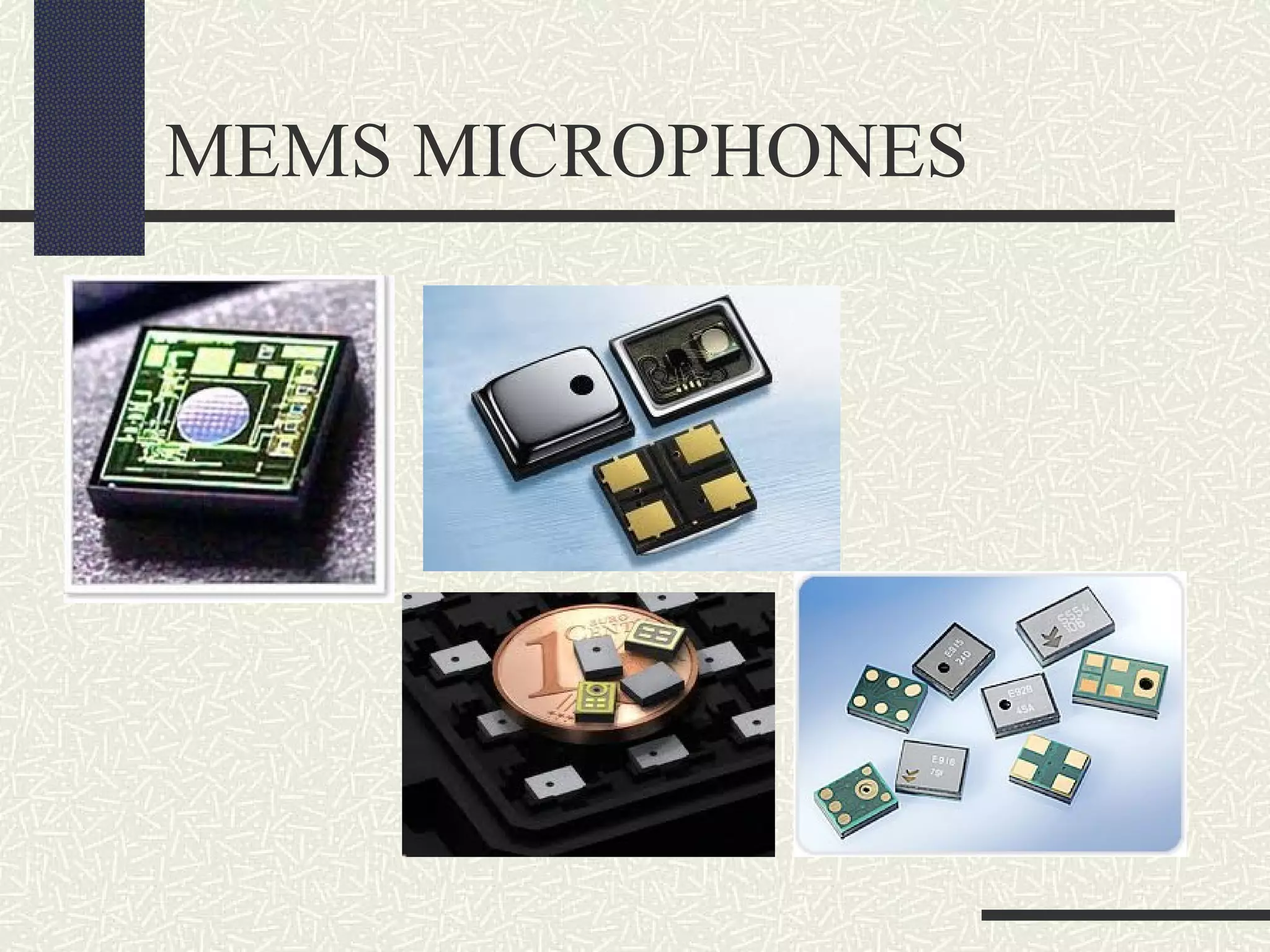
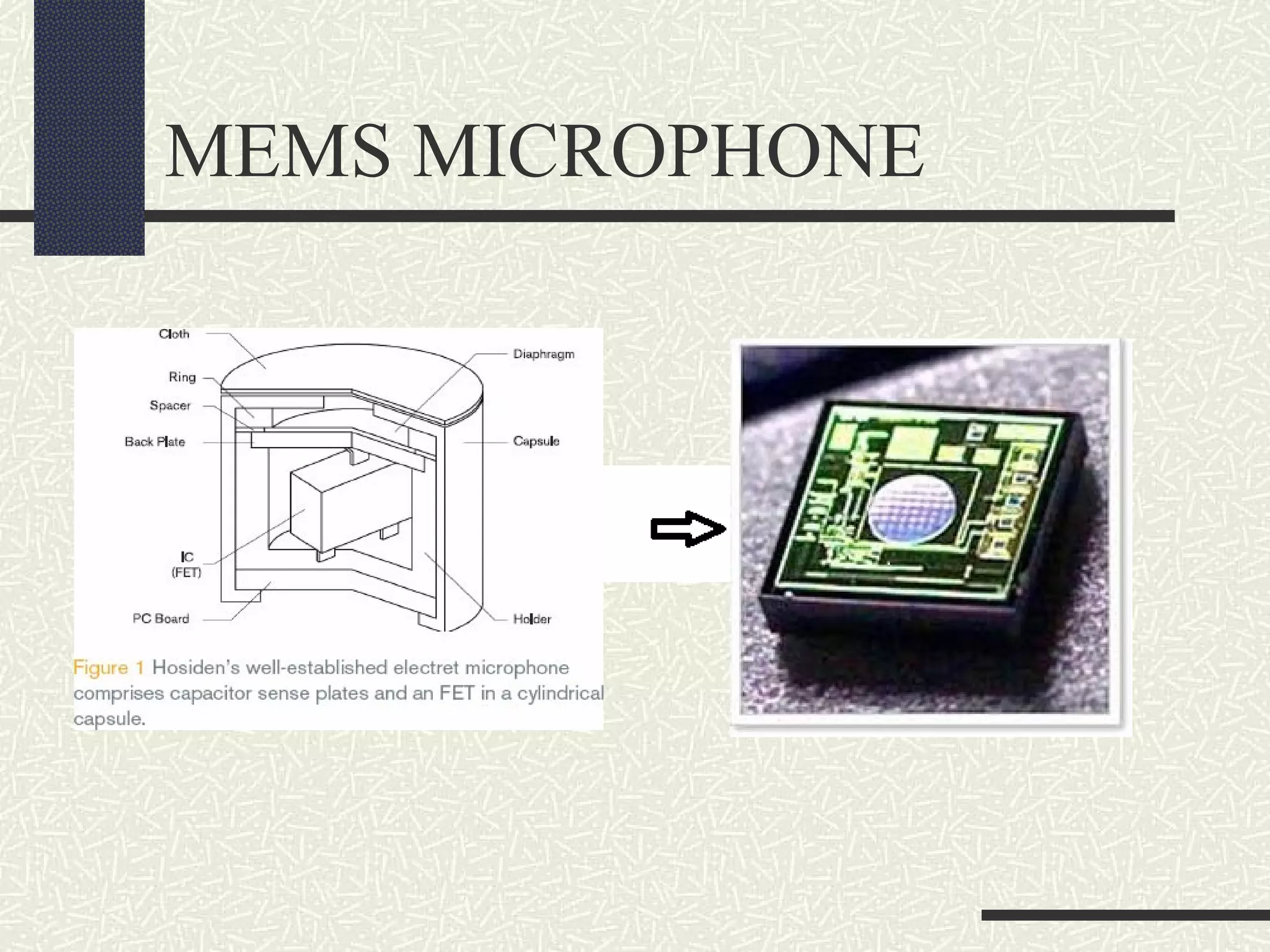
MEMS MICROPHONE
MEMS microphones are similar to the standard
ECMs (electret condensor microphones) found in
modern consumer electronics,except that the
components are built onto a single chip using CMOS
technology (material deposition & etching), rather
than assembled from discrete parts.
There are two main categories of MEMS
microphones:
Analog MEMS Microphones convert a sound
pressure input into an analog voltage output.
Digital MEMS Microphones convert a sound
pressure input into a digital output signal, typically in
pulse density modulation format (PDM).
ALL ABOUT MICROPHONES
Microphone Sensing: Principle
A microphone is an acoustic to electric transducer that
converts sound into an electrical signal.
Microphones capture sound waves with a thin, flexible
diaphragm. The vibrations of this element are then
converted by various methods into an electrical signal that
is an analog of the original sound.
Most microphones in use today use electromagnetic
generation (dynamic microphones), capacitance change
(condenser microphones) or piezo-electric generation to
produce the signal from mechanical vibration.
MEMS MICROPHONE
Microphone Fabrication
A piezoelectric microphone based on PZT thin films was
designed in order to investigate its potential use as a
passive sensing element in a photoacoustic resonant cell.
The microphone fabrication process began with a doublesided polished silicon wafer and used several different
types of deposition systems .
A plasma-enhanced chemical vapor-deposited (PECVD)
silicon dioxide thin film (1 µm thick) was deposited with a
Plasma-Therm 790 reactor using a mixture of SiH4, He,
and N2O.
Microphone Fabrication
The oxide served as the membrane structural layer and was
chosen to be 1 µm thick. After deposition, the film was
annealed in an A.G. Associates Heatpulse 610 rapid
thermal anneal (RTA) furnace at 700 °C for 60 seconds in
a nitrogen atmosphere.
This annealing removes the trapped hydrogen within the
film and causes the film to obtain a slightly tensile stress,
which aids in producing a planar membrane and a high
performance microphone.
FABRICATION PROCESS

PECVD

DC
Magnetron
saputtering

Sol-Gel
Deposition
Transducer Physics
The heart of the MEMS microphone is the variable
capacitor formed by a fixed back plate and a flexible
membrane.
Sound pressure deflects the membrane, causing a
change in capacitance. This change in capacitance
causes a change in voltage according to:
C=Q/V
C = Capacitance [Farads]
Q = Charge [Coulumbs]
V = Voltage [Volts]
Types of microphone
Condenser Microphones
In a condenser microphone, the diaphragm acts as one
plate of a capacitor, and the vibrations produce changes in
the distance between the plates.
Since the plates are biased with a fixed charge (Q), the
voltage maintained across the capacitor plates changes
with the vibrations in the air.
Condenser Microphone
Dynamic Microphone
In a dynamic microphone, a small movable induction coil,
positioned in the magnetic field of a permanent magnet, is
attached to the diaphragm.
When sound enters through the windscreen of the
microphone, the sound wave vibrations move the
diaphragm.
When the diaphragm vibrates, the coil moves in the
magnetic field, producing a varying current in the coil
through electromagnetic induction.
Dynamic Microphone
PZT Microphone
A piezo microphone uses the phenomenon of
piezo-electricity
 It is widely used to amplify acoustic
instruments for live performance to record
sounds in unusual environments
 Two different sound sources were used to
characterize the performance of the PZT
microphones

PZT Microphone

Images of the acoustic test chamber used for testing the PZT microphone
PZT Microphone

The BNC mounts provide electrical contact to the packaged
microphone whereas the acrylic plate on top provides a connection
for the acoustic tube.
Signal Conditioning &
Output
MEMS Microphones integrate signal
amplication & analog to digital conversion on
the same chip. The digital output is typically
in the pulse-densitymodulation
Most versions of the digital MEMS microphone
allow fortwo mics to multiplex on the same data
line. (This is oftenuse in noise-cancelling circuits)
Product Distinctions
Advantages:
Greater reliability due to fewer parts
Higher tolerance to mechanical vibrations
Smaller component height & footprint
Integrated signal conditioning & analog-to-digital conversion
Challenges:
If using digital-output versions, many require the use of a
separate codec to translate the PDM signal into a sound wave.
Only available as a surface mount component difficult to
breadboard.
CONCLUSION
The medical, wireless technology,
biotechnology, computers, automotive,
aerospace industries are only a few that will
benefit greatly from mems.
This enabling technology promises to cerate
entirely new categories of products.
MEMS will be indispensable factor for
advancing technology in the 21 century.
Mems microphone

Mems microphone

  • 1.
  • 2.
  • 3.
  • 4.
    ABOUT MEMS What isMEMS? ∙Micro – Small size, micro fabricated structures ∙Electro – Electrical signals/control(in/out) ∙Mechanical- Mechanical functionality(out/in) ∙Systems- structures, devices, system control What is size of MEMS? They range in size from the sub micron level to the millimeter level and there can be any number, from a few to millions in particular system.
  • 5.
    MEMS MICROPHONE MEMS microphonesare similar to the standard ECMs (electret condensor microphones) found in modern consumer electronics,except that the components are built onto a single chip using CMOS technology (material deposition & etching), rather than assembled from discrete parts. There are two main categories of MEMS microphones: Analog MEMS Microphones convert a sound pressure input into an analog voltage output. Digital MEMS Microphones convert a sound pressure input into a digital output signal, typically in pulse density modulation format (PDM).
  • 6.
  • 7.
    Microphone Sensing: Principle Amicrophone is an acoustic to electric transducer that converts sound into an electrical signal. Microphones capture sound waves with a thin, flexible diaphragm. The vibrations of this element are then converted by various methods into an electrical signal that is an analog of the original sound. Most microphones in use today use electromagnetic generation (dynamic microphones), capacitance change (condenser microphones) or piezo-electric generation to produce the signal from mechanical vibration.
  • 8.
  • 9.
    Microphone Fabrication A piezoelectricmicrophone based on PZT thin films was designed in order to investigate its potential use as a passive sensing element in a photoacoustic resonant cell. The microphone fabrication process began with a doublesided polished silicon wafer and used several different types of deposition systems . A plasma-enhanced chemical vapor-deposited (PECVD) silicon dioxide thin film (1 µm thick) was deposited with a Plasma-Therm 790 reactor using a mixture of SiH4, He, and N2O.
  • 10.
    Microphone Fabrication The oxideserved as the membrane structural layer and was chosen to be 1 µm thick. After deposition, the film was annealed in an A.G. Associates Heatpulse 610 rapid thermal anneal (RTA) furnace at 700 °C for 60 seconds in a nitrogen atmosphere. This annealing removes the trapped hydrogen within the film and causes the film to obtain a slightly tensile stress, which aids in producing a planar membrane and a high performance microphone.
  • 11.
  • 12.
    Transducer Physics The heartof the MEMS microphone is the variable capacitor formed by a fixed back plate and a flexible membrane. Sound pressure deflects the membrane, causing a change in capacitance. This change in capacitance causes a change in voltage according to: C=Q/V C = Capacitance [Farads] Q = Charge [Coulumbs] V = Voltage [Volts]
  • 13.
  • 14.
    Condenser Microphones In acondenser microphone, the diaphragm acts as one plate of a capacitor, and the vibrations produce changes in the distance between the plates. Since the plates are biased with a fixed charge (Q), the voltage maintained across the capacitor plates changes with the vibrations in the air.
  • 15.
  • 16.
    Dynamic Microphone In adynamic microphone, a small movable induction coil, positioned in the magnetic field of a permanent magnet, is attached to the diaphragm. When sound enters through the windscreen of the microphone, the sound wave vibrations move the diaphragm. When the diaphragm vibrates, the coil moves in the magnetic field, producing a varying current in the coil through electromagnetic induction.
  • 17.
  • 18.
    PZT Microphone A piezomicrophone uses the phenomenon of piezo-electricity  It is widely used to amplify acoustic instruments for live performance to record sounds in unusual environments  Two different sound sources were used to characterize the performance of the PZT microphones 
  • 19.
    PZT Microphone Images ofthe acoustic test chamber used for testing the PZT microphone
  • 20.
    PZT Microphone The BNCmounts provide electrical contact to the packaged microphone whereas the acrylic plate on top provides a connection for the acoustic tube.
  • 21.
    Signal Conditioning & Output MEMSMicrophones integrate signal amplication & analog to digital conversion on the same chip. The digital output is typically in the pulse-densitymodulation Most versions of the digital MEMS microphone allow fortwo mics to multiplex on the same data line. (This is oftenuse in noise-cancelling circuits)
  • 22.
    Product Distinctions Advantages: Greater reliabilitydue to fewer parts Higher tolerance to mechanical vibrations Smaller component height & footprint Integrated signal conditioning & analog-to-digital conversion Challenges: If using digital-output versions, many require the use of a separate codec to translate the PDM signal into a sound wave. Only available as a surface mount component difficult to breadboard.
  • 23.
    CONCLUSION The medical, wirelesstechnology, biotechnology, computers, automotive, aerospace industries are only a few that will benefit greatly from mems. This enabling technology promises to cerate entirely new categories of products. MEMS will be indispensable factor for advancing technology in the 21 century.