Balance Sheet SG Accounting & Finance Mr McGowan
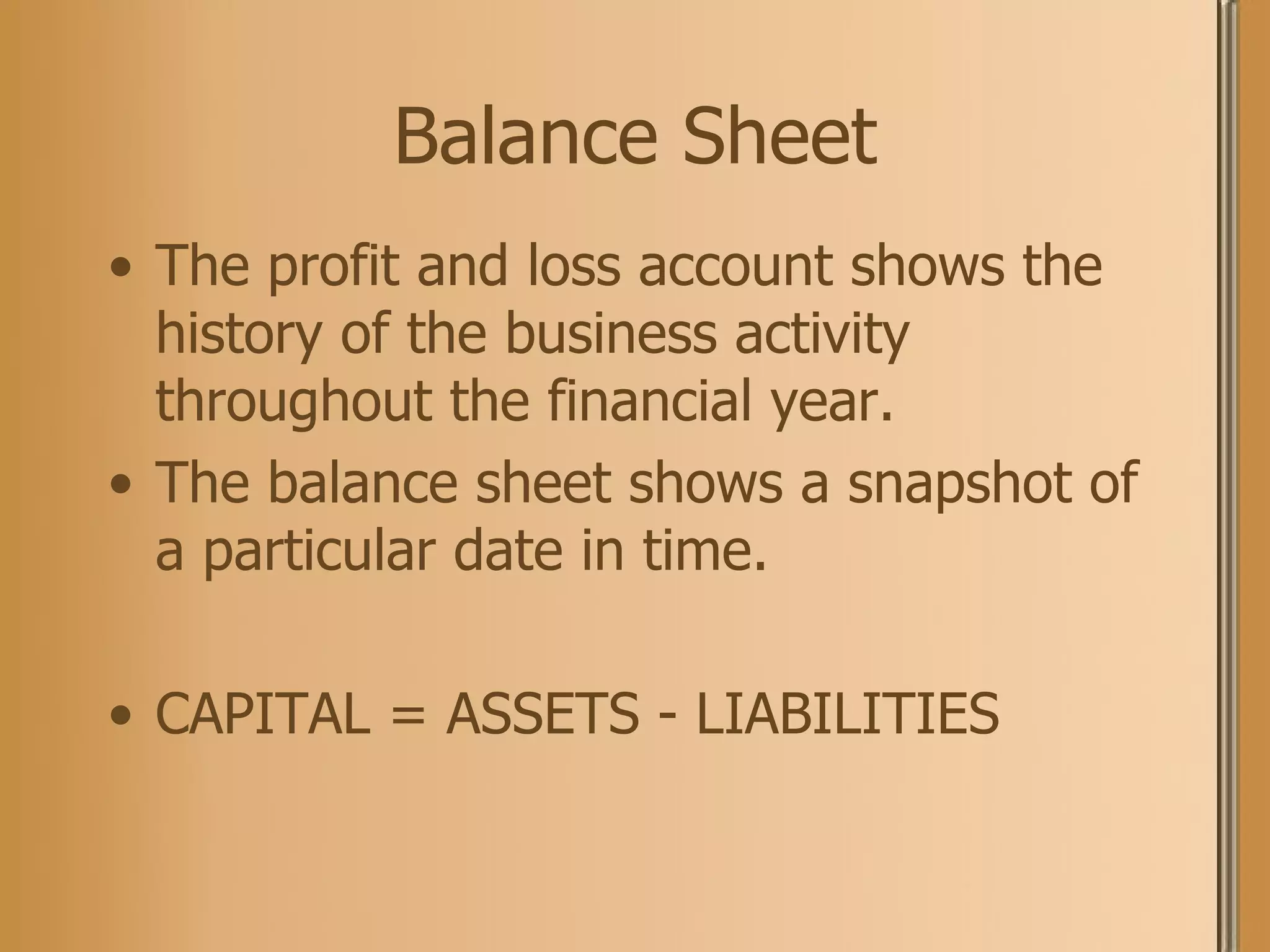
Balance Sheet The profit and loss account shows the history of the business activity throughout the financial year. The balance sheet shows a snapshot of a particular date in time. CAPITAL = ASSETS - LIABILITIES
Balance Sheet Assets Liabilities & Capital Balance
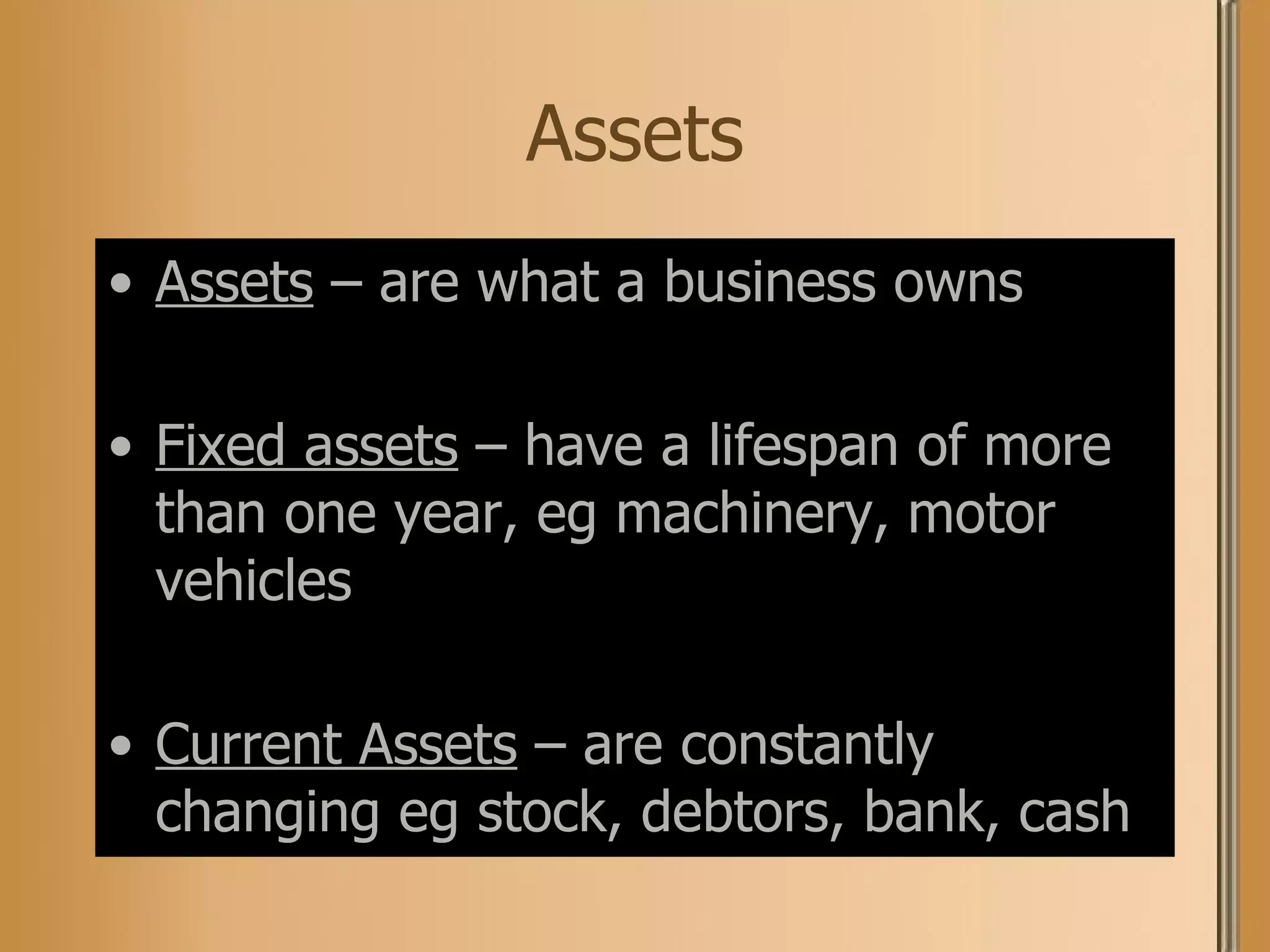
Assets Assets  – are what a business owns Fixed assets  – have a lifespan of more than one year, eg machinery, motor vehicles Current Assets  – are constantly changing eg stock, debtors, bank, cash
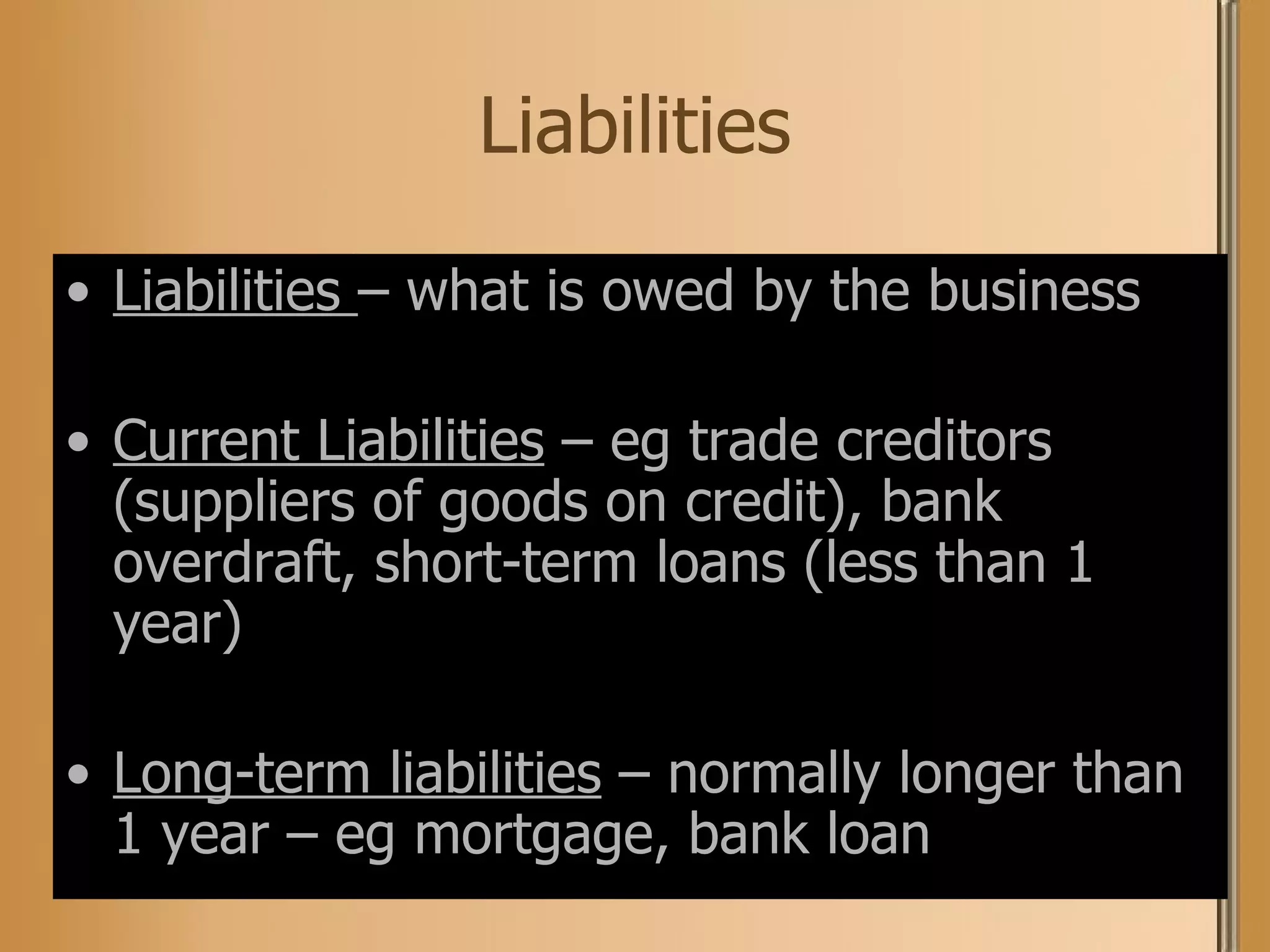
Liabilities Liabilities  – what is owed by the business Current Liabilities  – eg trade creditors (suppliers of goods on credit), bank overdraft, short-term loans (less than 1 year) Long-term liabilities  – normally longer than 1 year – eg mortgage, bank loan
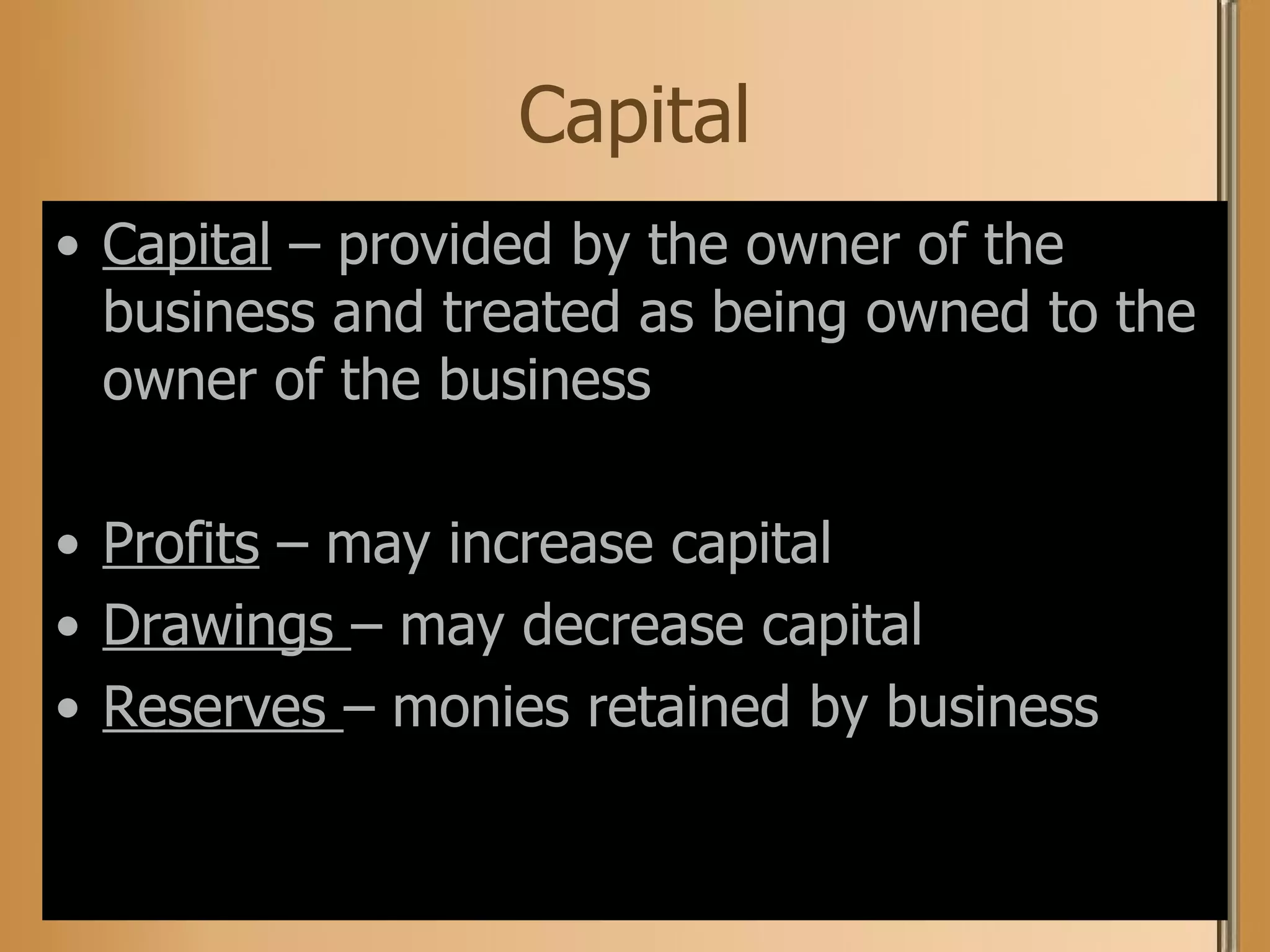
Capital Capital  – provided by the owner of the business and treated as being owned to the owner of the business Profits  – may increase capital Drawings  – may decrease capital Reserves  – monies retained by business
Liquidity Liquidity shows us whether a business has enough assets to cover its debts. Turning assets into cash to pay off debts is what normally happens. Stock is the hardest to turn into cash. Why?
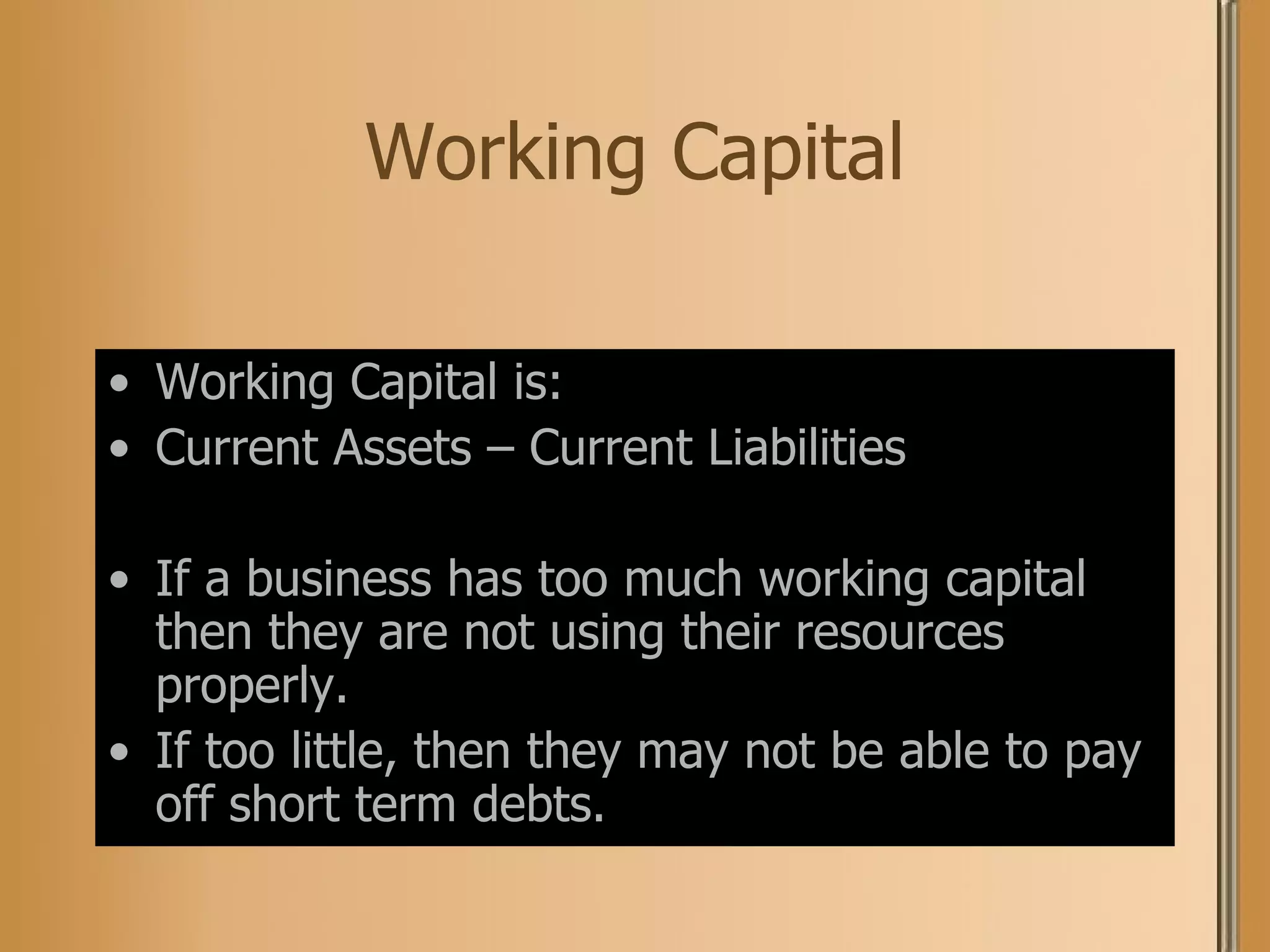
Working Capital Working Capital is: Current Assets – Current Liabilities If a business has too much working capital then they are not using their resources properly. If too little, then they may not be able to pay off short term debts.
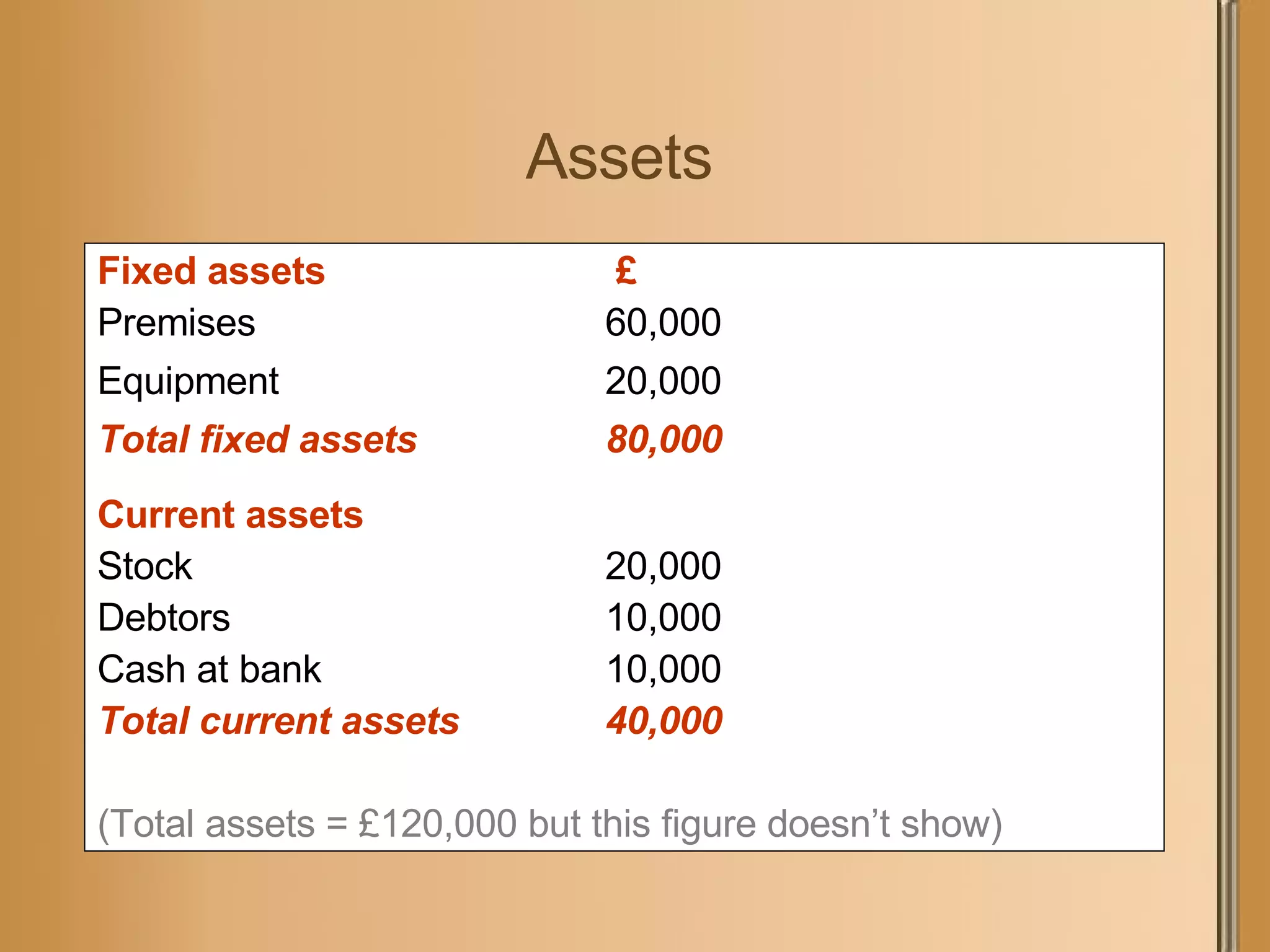
Assets Fixed assets  £ Premises 60,000 Equipment 20,000 Total fixed assets 80,000 Current assets Stock 20,000 Debtors 10,000 Cash at bank 10,000 Total current assets 40,000 (Total assets = £120,000 but this figure doesn’t show)
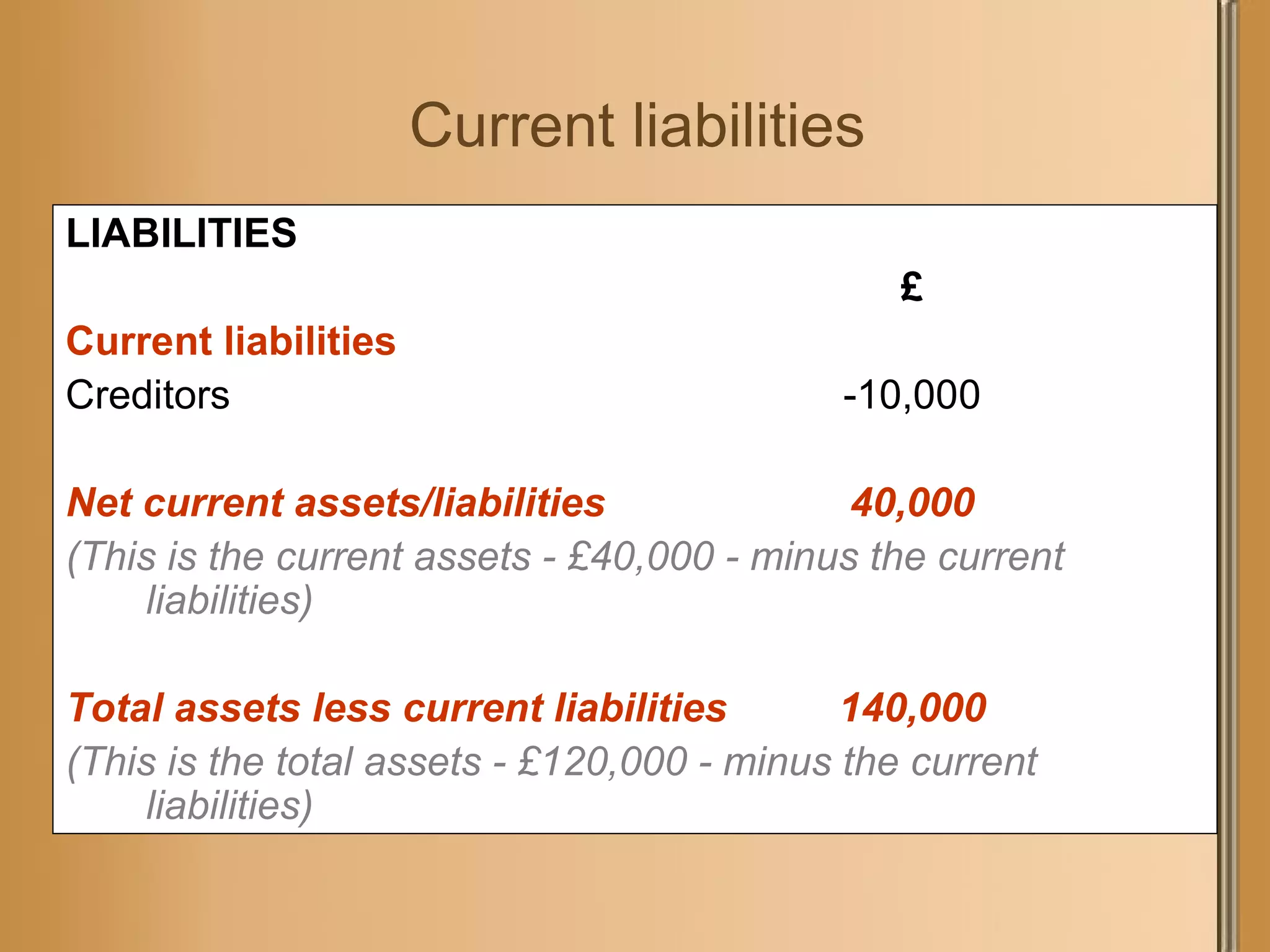
Current liabilities LIABILITIES £ Current liabilities Creditors -10,000 Net current assets/liabilities 40,000 (This is the current assets - £40,000 - minus the current liabilities) Total assets less current liabilities 140,000 (This is the total assets - £120,000 - minus the current liabilities)
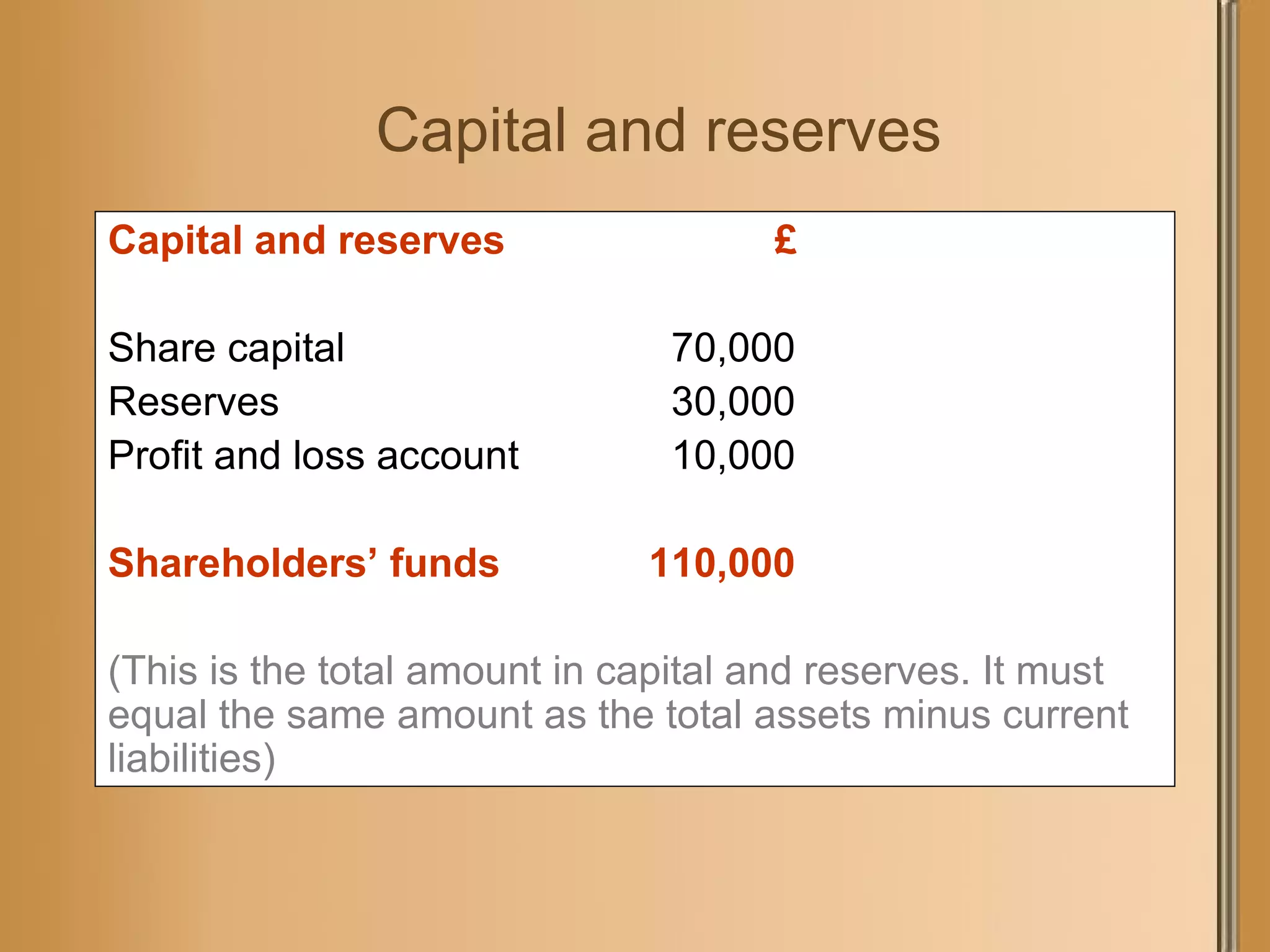
Capital and reserves Capital and reserves  £ Share capital 70,000 Reserves 30,000 Profit and loss account 10,000 Shareholders’ funds 110,000 (This is the total amount in capital and reserves. It must equal the same amount as the total assets minus current liabilities)
Interpretation of Balance Sheet Do we have enough working capital to avoid cash flow problems? Are we making enough use of available trade credit? Is our level of debtors comparable with that of our industry competitors?

Balance Sheet

  • 1.
    Balance Sheet SGAccounting & Finance Mr McGowan
  • 2.
    Balance Sheet Theprofit and loss account shows the history of the business activity throughout the financial year. The balance sheet shows a snapshot of a particular date in time. CAPITAL = ASSETS - LIABILITIES
  • 3.
    Balance Sheet AssetsLiabilities & Capital Balance
  • 4.
    Assets Assets – are what a business owns Fixed assets – have a lifespan of more than one year, eg machinery, motor vehicles Current Assets – are constantly changing eg stock, debtors, bank, cash
  • 5.
    Liabilities Liabilities – what is owed by the business Current Liabilities – eg trade creditors (suppliers of goods on credit), bank overdraft, short-term loans (less than 1 year) Long-term liabilities – normally longer than 1 year – eg mortgage, bank loan
  • 6.
    Capital Capital – provided by the owner of the business and treated as being owned to the owner of the business Profits – may increase capital Drawings – may decrease capital Reserves – monies retained by business
  • 7.
    Liquidity Liquidity showsus whether a business has enough assets to cover its debts. Turning assets into cash to pay off debts is what normally happens. Stock is the hardest to turn into cash. Why?
  • 8.
    Working Capital WorkingCapital is: Current Assets – Current Liabilities If a business has too much working capital then they are not using their resources properly. If too little, then they may not be able to pay off short term debts.
  • 9.
    Assets Fixed assets £ Premises 60,000 Equipment 20,000 Total fixed assets 80,000 Current assets Stock 20,000 Debtors 10,000 Cash at bank 10,000 Total current assets 40,000 (Total assets = £120,000 but this figure doesn’t show)
  • 10.
    Current liabilities LIABILITIES£ Current liabilities Creditors -10,000 Net current assets/liabilities 40,000 (This is the current assets - £40,000 - minus the current liabilities) Total assets less current liabilities 140,000 (This is the total assets - £120,000 - minus the current liabilities)
  • 11.
    Capital and reservesCapital and reserves £ Share capital 70,000 Reserves 30,000 Profit and loss account 10,000 Shareholders’ funds 110,000 (This is the total amount in capital and reserves. It must equal the same amount as the total assets minus current liabilities)
  • 12.
    Interpretation of BalanceSheet Do we have enough working capital to avoid cash flow problems? Are we making enough use of available trade credit? Is our level of debtors comparable with that of our industry competitors?