Interdependency
                          Big word

                Can you say it?

  Do you know what it means?
By Moira Whitehouse PhD
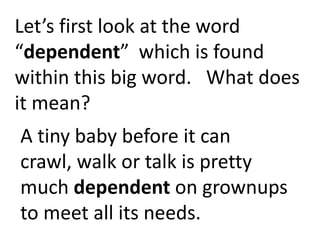
Let’s first look at the word
“dependent” which is found
within this big word. What does
it mean?
A tiny baby before it can crawl,
walk or talk is pretty much
dependent on grownups to
meet all its needs.
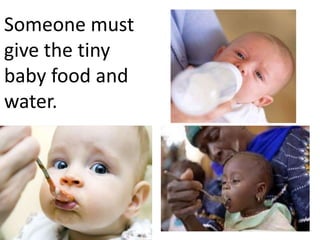
Someone must
give the tiny
baby food and
water.
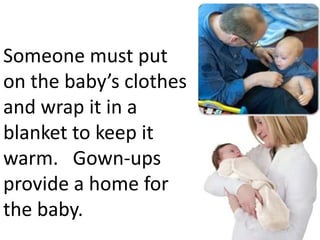
Someone must put
on the baby’s clothes
and wrap it in a
blanket to keep it.
warm
           Gown-ups
           provide a
           home for
           the baby.
The tiny baby is completely
dependent on others to satisfy
its needs.

The baby needs someone else
to provide it food, water and
shelter.
But what about the people who take care
of the baby? Are they dependent on the
baby for any of their needs?
No, babies cannot take care of their parents.
Babies and parents are not interdependent.
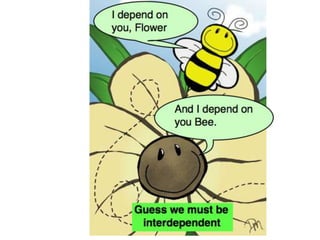
Things that are interdependent depend on
each other to satisfy their needs.
Now let’s look at some animals that are
interdependent, they are dependent upon
each other.
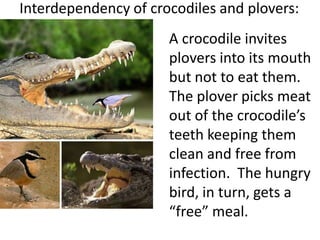
Interdependency of crocodiles and plovers:
                      A crocodile invites
                      plovers into its mouth
                      but not to eat them.
                      The plover picks meat
                      out of the crocodile’s
                      teeth keeping them
                      clean and free from
                      infection. The hungry
                      bird, in turn, gets a
                      “free” meal.
The two animals depend on one
another—they are interdependent.
What about plants and animals,
are they interdependent—do they
dependent on one another?

First let’s look at animal side of
that question. Are animals
dependent upon plants?
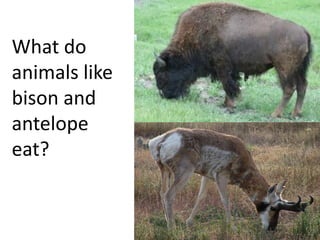
What do
animals like
bison and
antelope
eat?
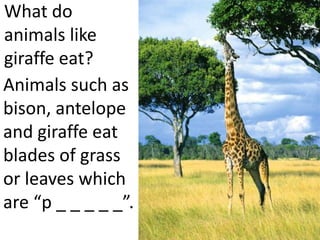
What do
animals like
giraffe eat?
Animals such as
bison, antelope
and giraffe eat
blades of grass
or leaves which
are “p _ _ _ _ _”.
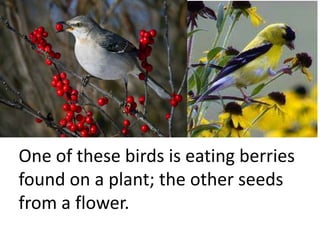
One of these birds is eating berries
found on a plant; the other seeds
from a flower.
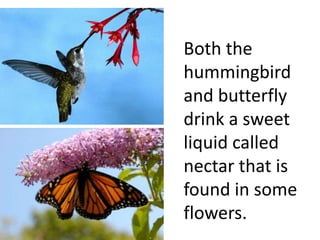
Both the
hummingbird
and butterfly
drink a sweet
liquid called
nectar that is
found in some
flowers.
These plant eating animals (herbivores) are
dependent on plants for _________.
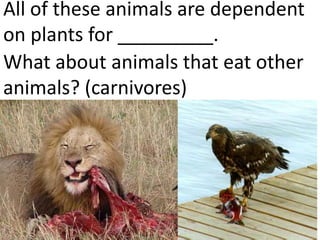
What about animals that eat other
animals? (carnivores)
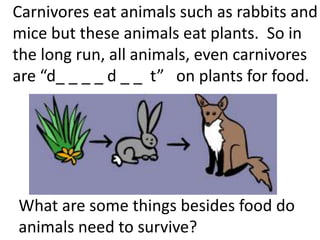
Carnivores eat animals such as rabbits and
mice but these animals eat plants. So in
the long run, all animals, even carnivores
are “d_ _ _ _ d _ _ t” on plants for food.


What are some things besides food do
animals need to survive?
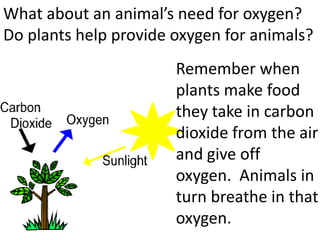
What about an animal’s need for oxygen?
Do plants help provide oxygen for animals?
                       Remember when
                       plants make food
                       they take in carbon
                       dioxide from the air
                       and give off
                       oxygen. Animals in
                       turn breathe in that
                       oxygen.
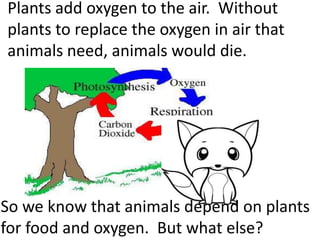
Plants add oxygen to the air. Without
plants to replace the oxygen in air that
animals need, animals would die.


So we know that animals depend on plants
for food and oxygen. But what else?
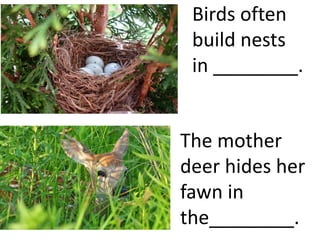
Birds often
 build nests
 in ________.


The mother
deer hides her
fawn in
the________.
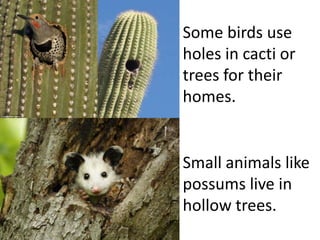
Some birds use
holes in cacti or
trees for their
homes.


Small animals like
possums live in
hollow trees.
These animals are dependent on plants to
satisfy their need for “s _ _ l _ _ r.” Living
in trees, cacti and grass protects the
animals and their babies from weather and
from their enemies.
So animals are always dependent on plants
for “f_ _ _” and “o_ y _ _ n” and
sometimes for “sh_ _ _ _ _.”
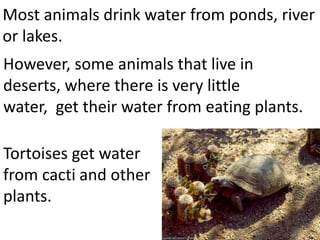
What about their need for water?.
Most animals find their drinking water
from puddles, ponds, river or lakes.
However, some animals that live in deserts,
where there is very little water, have a
harder time. They must get their water by
eating plants.
Tortoises get water
from cacti and other
plants.
Let’s review: Can you remember the ways
that animals depend on plants?
Which living things make food?
a. animals            b. plants
 Which living things do not make food?
 a. animals           b. plants
 Animals either eat “_ _ _ _ t _” or they
 eat animals that do eat “_ l _ _ _ _”.
So without plants, animals would not
have any “f_ _ _” and would die.
While making food, plants give off
“o_ _ _ _ _” which animals need to live.


In places with little rainfall, some animals
get their water from
a. drinking out of wells
b. digging ponds
c. eating plants
Some animals dig holes in the ground for
shelter from the weather and protection
from enemies. Can you think of three
kinds of shelter animals might build or
find in or on plants?
1. _______________________________

2. _______________________________

3. _______________________________
We have seen how animals use plants to
satisfy many of their needs. How about
animals? Do they help plants stay alive?
Do plants need animals for food?

Plants do not need animals for food
because
a. they don’t need food
b. they get their food from the soil.
c. they make their own food
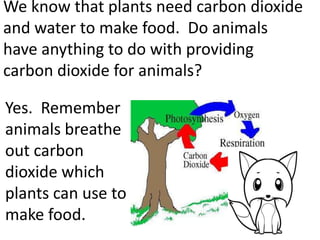
We know that plants need carbon dioxide
and water to make food. Do animals
have anything to do with providing
carbon dioxide for animals?

Yes. Remember
animals breathe
out carbon
dioxide which
plants can use to
make food.
Animals don’t provide much water for
plants, but there other things that animals
can do to help plants survive?

One thing is that they help plants
reproduce by carrying the pollen from the
male part of the plant to the female part so
that the flower can make seeds. Without
this important work, usually done by
insects or small birds and animals, many
plants could not make new plants.
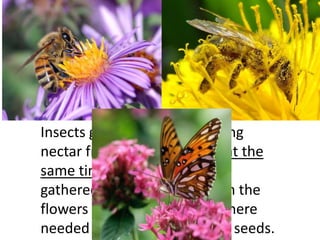
Insects getting food by drinking
nectar from the flowers and at the
same time moving the pollen
gathered on their bodies onto other
flowers where needed by the plant
to make seeds.
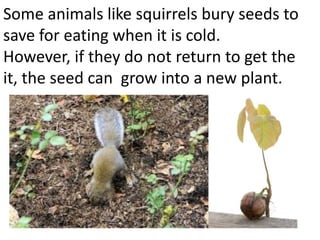
Animals also help plants by carrying the seeds
of the plant to a different place.
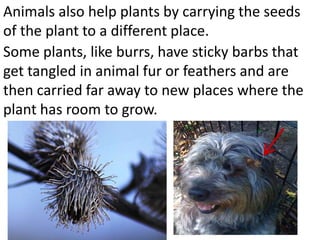
Some plants, like burrs, have sticky barbs that
get tangled in animal fur or feathers and are
then carried far away to new places where the
plant has room to grow.
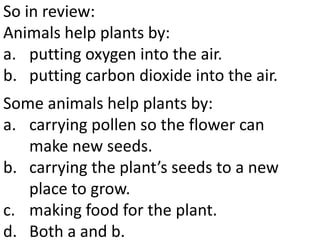
Some animals like squirrels bury seeds to
save for eating when it is cold. However,
if they do not return to get the it, the
seed can grow into a new plant.
So in review:
Animals help plants by:
a. putting oxygen into the air.
b. putting carbon dioxide into the air.
Some animals help plants by:
a. carrying pollen so the flower can
   make new seeds.
b. carrying the plant’s seeds to a new
   place to grow.
c. making food for the plant.
d. Both a and b.
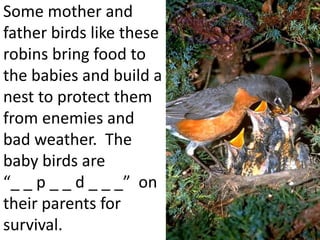
Some mother and
father birds like these
robins bring food to
the babies and build a
nest to protect them
from enemies and
bad weather. The
baby birds are
“_ _ p _ _ d _ _ _” on
their parents for
survival.
However, the robin’s parents are not
dependent on the the babies for survival.
So the babies and parents are not:
a. related
b. interdependent
c. members of the same family
d. the same color
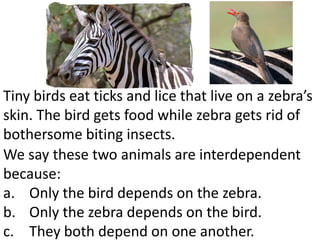
Tiny birds eat ticks and lice that live on a zebra’s
skin. The bird gets food while zebra gets rid of
bothersome biting insects.
We say these two animals are interdependent
because:
a. Only the bird depends on the zebra.
b. Only the zebra depends on the bird.
c. They both depend on one another.
Plants and animals are said to be
interdependent because:
a. Only plants depend on animals for
survival. Animals do not depend on
plants.
b. Only animals depend on plants for
survival. Plants do not depend on
animals.
c. Plants and animals both depend on
one another for survival.
Plants and animals depend on each other. (teach 2nd/3rd grade)

Plants and animals depend on each other. (teach 2nd/3rd grade)

  • 1.
    Interdependency Big word Can you say it? Do you know what it means? By Moira Whitehouse PhD
  • 2.
    Let’s first lookat the word “dependent” which is found within this big word. What does it mean? A tiny baby before it can crawl, walk or talk is pretty much dependent on grownups to meet all its needs.
  • 3.
    Someone must give thetiny baby food and water.
  • 4.
    Someone must put onthe baby’s clothes and wrap it in a blanket to keep it. warm Gown-ups provide a home for the baby.
  • 5.
    The tiny babyis completely dependent on others to satisfy its needs. The baby needs someone else to provide it food, water and shelter.
  • 6.
    But what aboutthe people who take care of the baby? Are they dependent on the baby for any of their needs? No, babies cannot take care of their parents. Babies and parents are not interdependent. Things that are interdependent depend on each other to satisfy their needs. Now let’s look at some animals that are interdependent, they are dependent upon each other.
  • 7.
    Interdependency of crocodilesand plovers: A crocodile invites plovers into its mouth but not to eat them. The plover picks meat out of the crocodile’s teeth keeping them clean and free from infection. The hungry bird, in turn, gets a “free” meal.
  • 8.
    The two animalsdepend on one another—they are interdependent. What about plants and animals, are they interdependent—do they dependent on one another? First let’s look at animal side of that question. Are animals dependent upon plants?
  • 9.
    What do animals like bisonand antelope eat?
  • 10.
    What do animals like giraffeeat? Animals such as bison, antelope and giraffe eat blades of grass or leaves which are “p _ _ _ _ _”.
  • 11.
    One of thesebirds is eating berries found on a plant; the other seeds from a flower.
  • 12.
    Both the hummingbird and butterfly drinka sweet liquid called nectar that is found in some flowers.
  • 13.
    These plant eatinganimals (herbivores) are dependent on plants for _________. What about animals that eat other animals? (carnivores)
  • 14.
    Carnivores eat animalssuch as rabbits and mice but these animals eat plants. So in the long run, all animals, even carnivores are “d_ _ _ _ d _ _ t” on plants for food. What are some things besides food do animals need to survive?
  • 15.
    What about ananimal’s need for oxygen? Do plants help provide oxygen for animals? Remember when plants make food they take in carbon dioxide from the air and give off oxygen. Animals in turn breathe in that oxygen.
  • 16.
    Plants add oxygento the air. Without plants to replace the oxygen in air that animals need, animals would die. So we know that animals depend on plants for food and oxygen. But what else?
  • 17.
    Birds often buildnests in ________. The mother deer hides her fawn in the________.
  • 18.
    Some birds use holesin cacti or trees for their homes. Small animals like possums live in hollow trees.
  • 19.
    These animals aredependent on plants to satisfy their need for “s _ _ l _ _ r.” Living in trees, cacti and grass protects the animals and their babies from weather and from their enemies. So animals are always dependent on plants for “f_ _ _” and “o_ y _ _ n” and sometimes for “sh_ _ _ _ _.” What about their need for water?.
  • 20.
    Most animals findtheir drinking water from puddles, ponds, river or lakes. However, some animals that live in deserts, where there is very little water, have a harder time. They must get their water by eating plants. Tortoises get water from cacti and other plants.
  • 21.
    Let’s review: Canyou remember the ways that animals depend on plants? Which living things make food? a. animals b. plants Which living things do not make food? a. animals b. plants Animals either eat “_ _ _ _ t _” or they eat animals that do eat “_ l _ _ _ _”. So without plants, animals would not have any “f_ _ _” and would die.
  • 22.
    While making food,plants give off “o_ _ _ _ _” which animals need to live. In places with little rainfall, some animals get their water from a. drinking out of wells b. digging ponds c. eating plants
  • 23.
    Some animals digholes in the ground for shelter from the weather and protection from enemies. Can you think of three kinds of shelter animals might build or find in or on plants? 1. _______________________________ 2. _______________________________ 3. _______________________________
  • 24.
    We have seenhow animals use plants to satisfy many of their needs. How about animals? Do they help plants stay alive? Do plants need animals for food? Plants do not need animals for food because a. they don’t need food b. they get their food from the soil. c. they make their own food
  • 25.
    We know thatplants need carbon dioxide and water to make food. Do animals have anything to do with providing carbon dioxide for animals? Yes. Remember animals breathe out carbon dioxide which plants can use to make food.
  • 26.
    Animals don’t providemuch water for plants, but there other things that animals can do to help plants survive? One thing is that they help plants reproduce by carrying the pollen from the male part of the plant to the female part so that the flower can make seeds. Without this important work, usually done by insects or small birds and animals, many plants could not make new plants.
  • 27.
    Insects getting foodby drinking nectar from the flowers and at the same time moving the pollen gathered on their bodies onto other flowers where needed by the plant to make seeds.
  • 28.
    Animals also helpplants by carrying the seeds of the plant to a different place. Some plants, like burrs, have sticky barbs that get tangled in animal fur or feathers and are then carried far away to new places where the plant has room to grow.
  • 29.
    Some animals likesquirrels bury seeds to save for eating when it is cold. However, if they do not return to get the it, the seed can grow into a new plant.
  • 30.
    So in review: Animalshelp plants by: a. putting oxygen into the air. b. putting carbon dioxide into the air. Some animals help plants by: a. carrying pollen so the flower can make new seeds. b. carrying the plant’s seeds to a new place to grow. c. making food for the plant. d. Both a and b.
  • 31.
    Some mother and fatherbirds like these robins bring food to the babies and build a nest to protect them from enemies and bad weather. The baby birds are “_ _ p _ _ d _ _ _” on their parents for survival.
  • 32.
    However, the robin’sparents are not dependent on the the babies for survival. So the babies and parents are not: a. related b. interdependent c. members of the same family d. the same color
  • 33.
    Tiny birds eatticks and lice that live on a zebra’s skin. The bird gets food while zebra gets rid of bothersome biting insects. We say these two animals are interdependent because: a. Only the bird depends on the zebra. b. Only the zebra depends on the bird. c. They both depend on one another.
  • 34.
    Plants and animalsare said to be interdependent because: a. Only plants depend on animals for survival. Animals do not depend on plants. b. Only animals depend on plants for survival. Plants do not depend on animals. c. Plants and animals both depend on one another for survival.