INTERDEPENDENCE IN
NATURE
WHAT ARE THE THINGS YOU NEED
TO STAY ALIVE?
HOW MANY OF THEM COME
FROM LIVING THINGS?
HOW MANY OF THEM ARE NON-
LIVING THING?
RESPIRATION
Plants use oxygen from the air
to get energy from food during
the process of respiration. They
use carbon dioxide from the
atmosphere to make their food
during the process of
photosynthesis.
Animals too need oxygen from
the air for respiration
This Photo by Unknown Author is licensed under CC BY
Plants grow in
soil. they get
water and
minerals from
the soil to make
food and to
grow soil also
provides plants
with support.
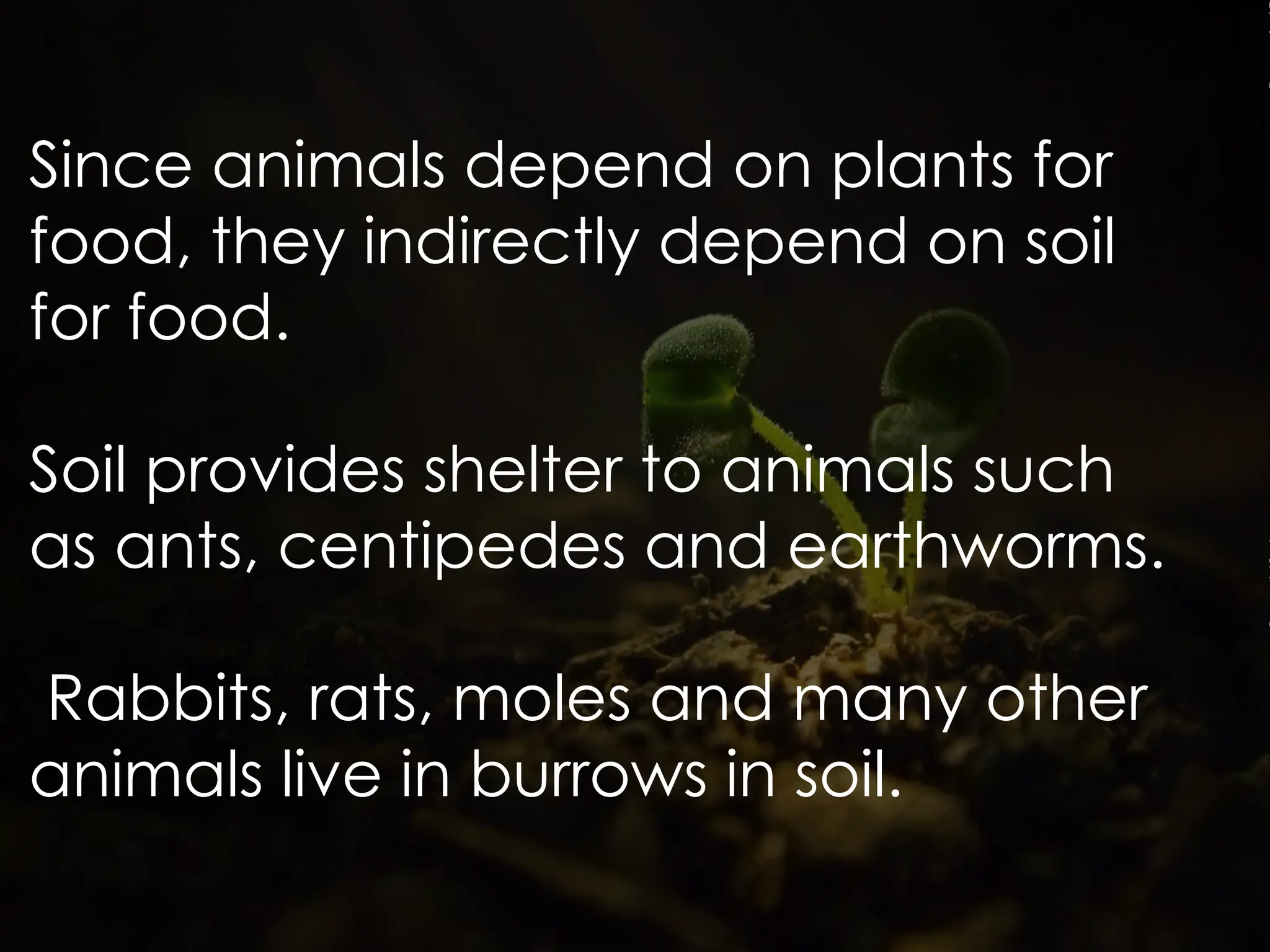
Since animals depend on plants for
food, they indirectly depend on soil
for food.
Soil provides shelter to animals such
as ants, centipedes and earthworms.
Rabbits, rats, moles and many other
animals live in burrows in soil.
Water is essential to all
plants for carrying out
their life processes.
Plants absorb the
minerals dissolved in
water through their
roots.
They use water to
prepare food during
photosynthesis.
Water also helps in the
dispersal of seeds of
plants growing in or
near water.
Several life processes in the
bodies of animals require water.
For example, water is required to
carry food to all parts of the
body.
Water is also essential for
collecting waste from all over the
body and removing it from the
body in the form of urine.
Plants use energy
trapped from sunlight
to make food during
photosynthesis.
Sunlight provides
warmth for seeds to
germinate.
Animals also need
warmth from sunlight
for survival.
This Photo by Unknown Author is licensed under CC BY-SA
PLANTS AND
ANIMALS
DEPEND ON
EACH OTHER
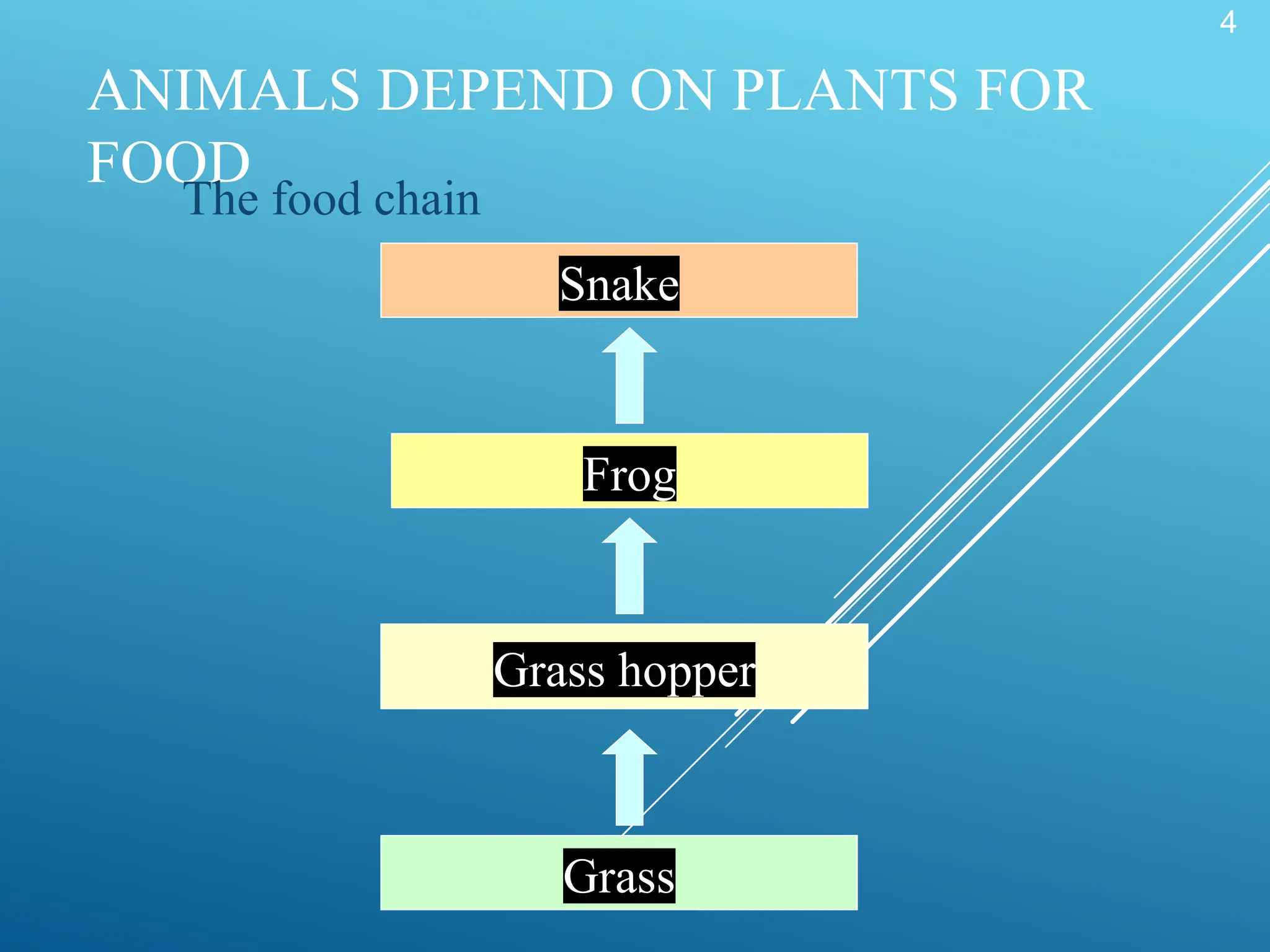
ANIMALS DEPEND ON PLANTS FOR
FOOD
The food chain
Grass
Grass hopper
Frog
Snake
4
ANIMALS DEPEND ON PLANTS
FOR FOOD.
All animals depend directly or indirectly on
plants for food.
Herbivores such as cows, goats or giraffes eat
plants and thus depend directly on plants for
food.
Carnivores such as tigers, lions or wolves eat
other animals and so depend indirectly on
plants for food.
ANIMALS
DEPEND ON
PLANTS FOR
SHELTER
A number of
animals such as
birds, squirrels,
monkeys and
insects find
shelter on trees.
Birds build nests
on trees, while
squirrels,
monkeys and
insects live on
tree branches.
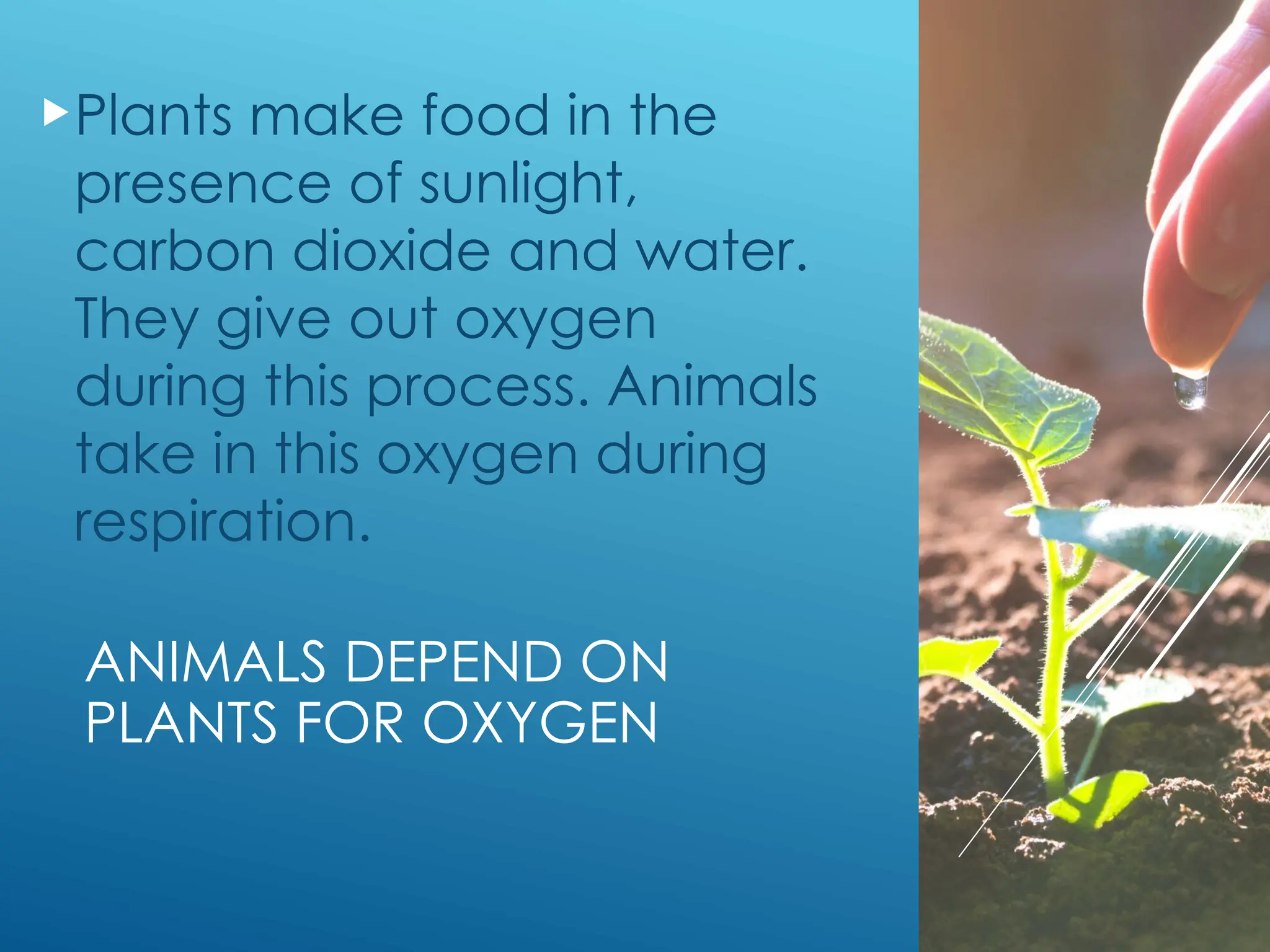
ANIMALS DEPEND ON
PLANTS FOR OXYGEN
Plants make food in the
presence of sunlight,
carbon dioxide and water.
They give out oxygen
during this process. Animals
take in this oxygen during
respiration.
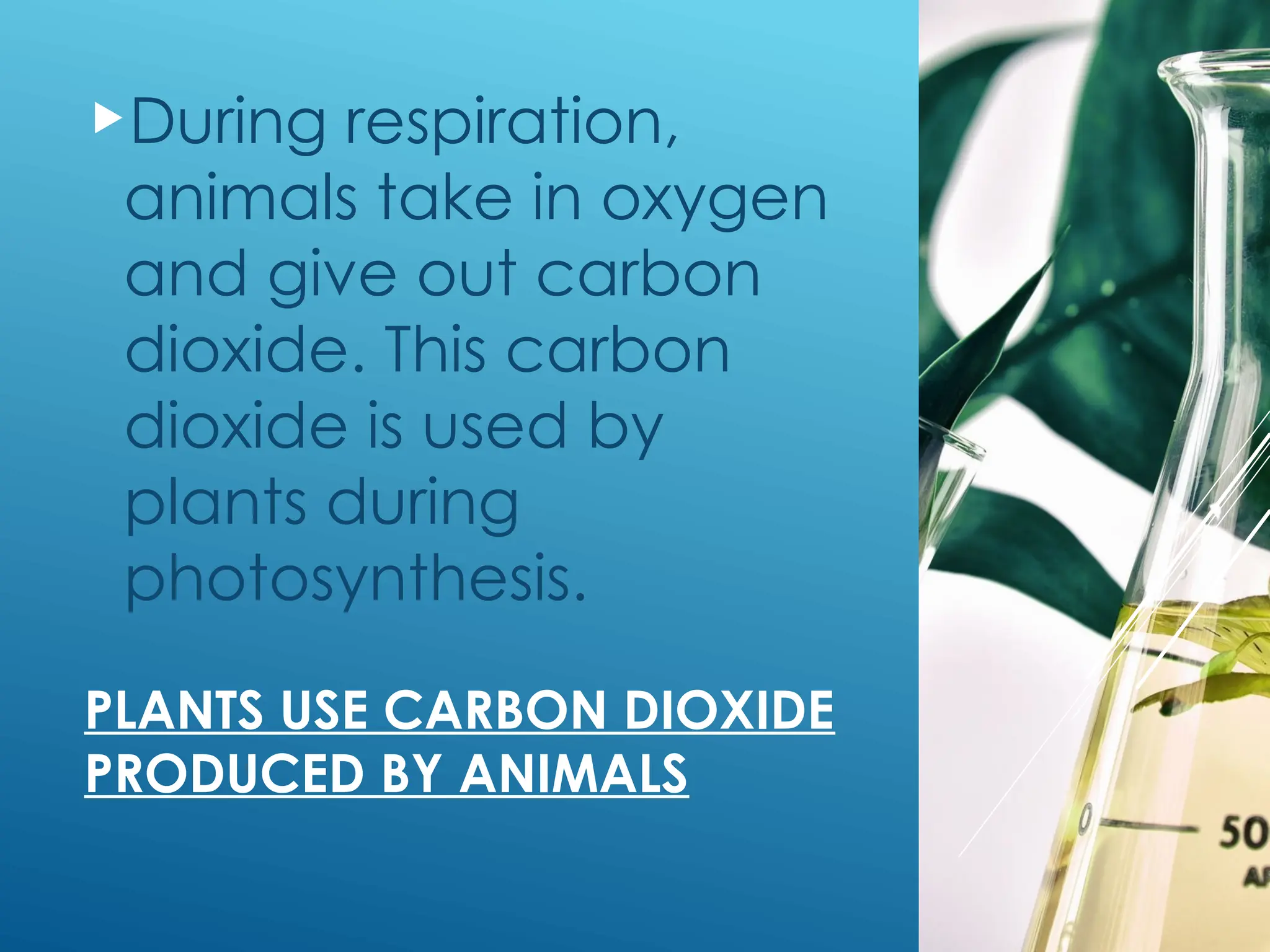
PLANTS USE CARBON DIOXIDE
PRODUCED BY ANIMALS
During respiration,
animals take in oxygen
and give out carbon
dioxide. This carbon
dioxide is used by
plants during
photosynthesis.
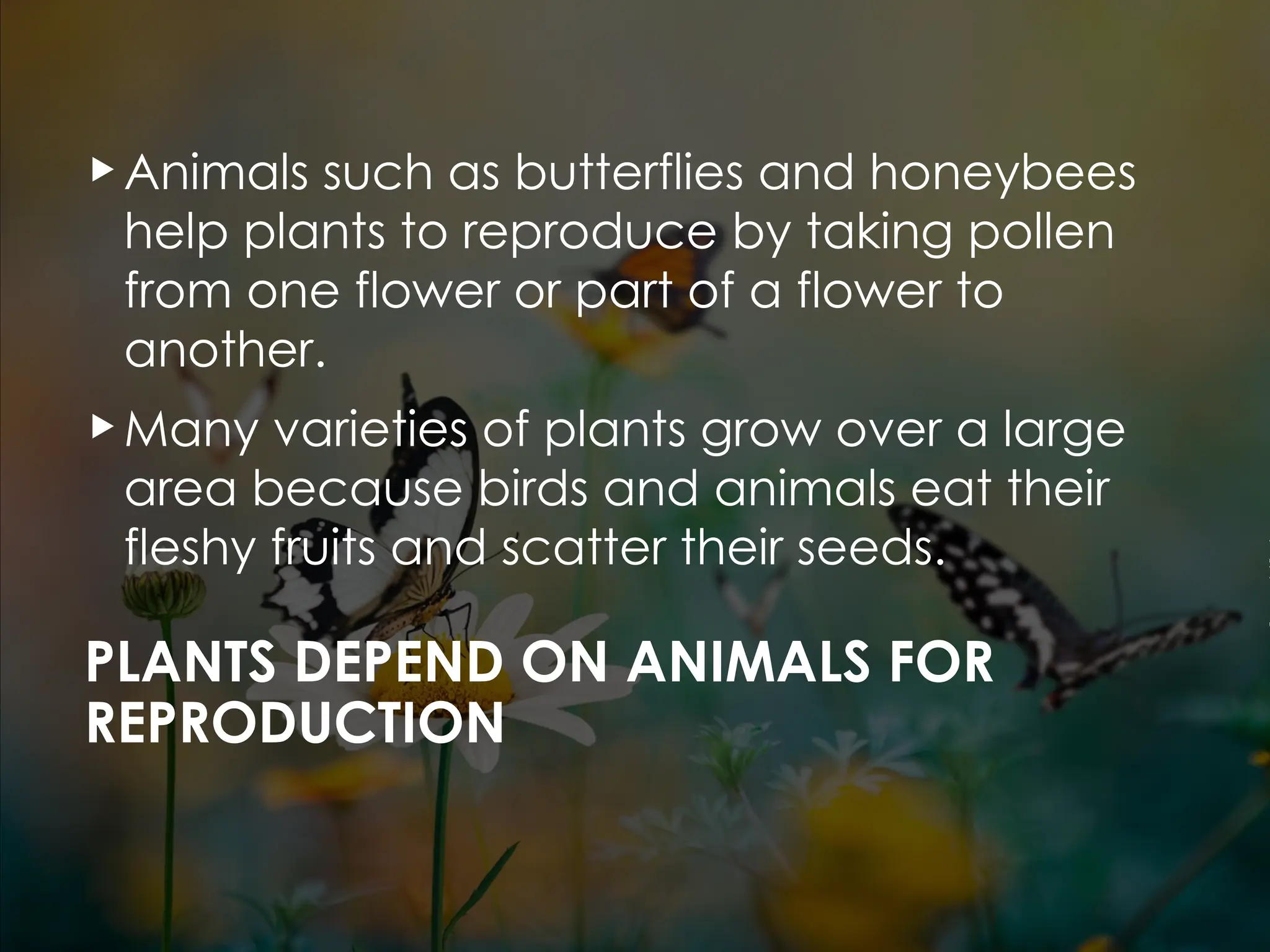
PLANTS DEPEND ON ANIMALS FOR
REPRODUCTION
Animals such as butterflies and honeybees
help plants to reproduce by taking pollen
from one flower or part of a flower to
another.
Many varieties of plants grow over a large
area because birds and animals eat their
fleshy fruits and scatter their seeds.
FOOD
RELATIONSHIPS
Organisms within
an ecosystem are
interconnected by
their food
relationships.
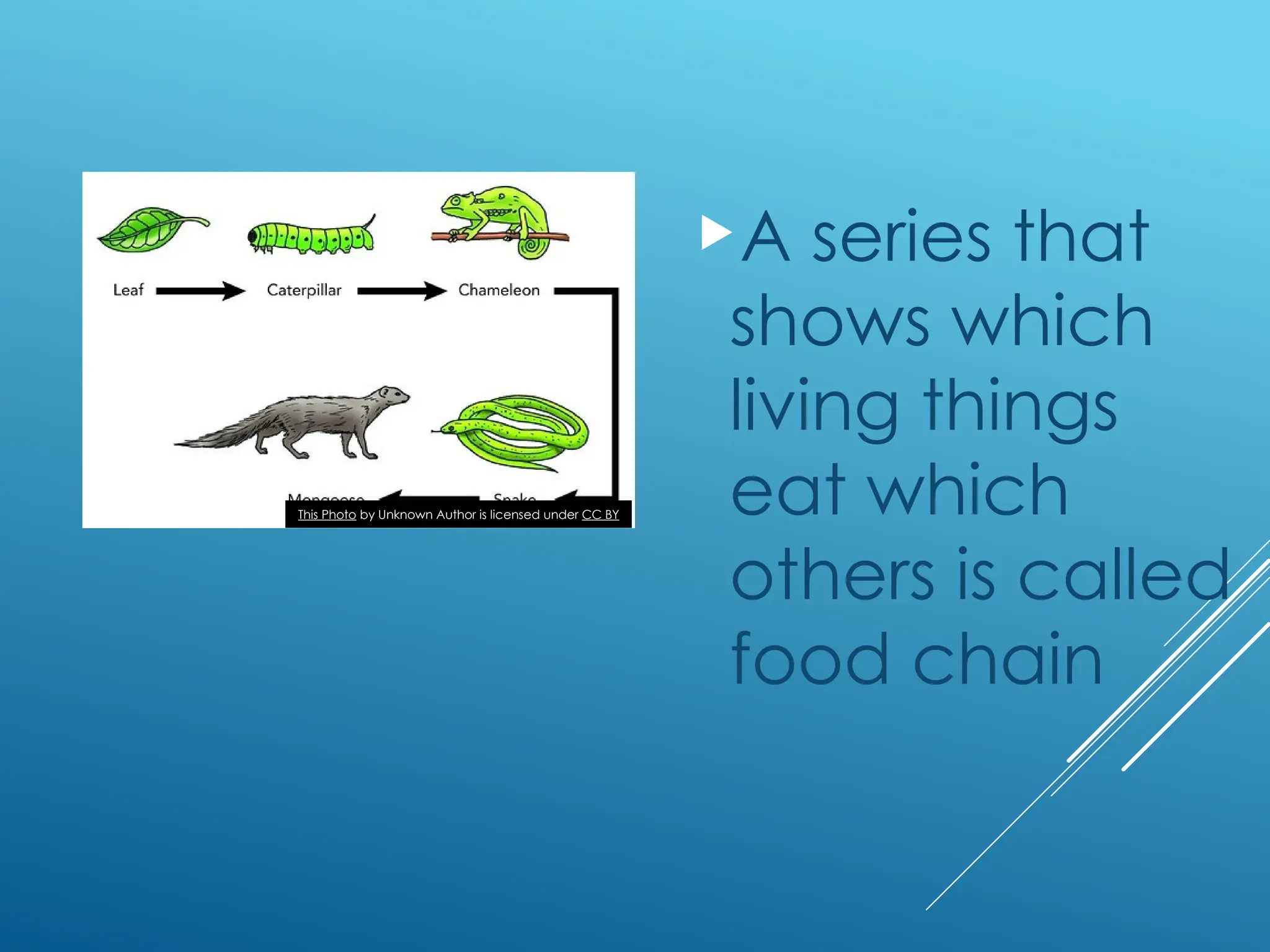
A series that
shows which
living things
eat which
others is called
food chain
This Photo by Unknown Author is licensed under CC BY
ANIMALS DEPEND ON PLANTS FOR
FOOD
The food chain
Grass
Grass Hopper
Frog
Snake
4
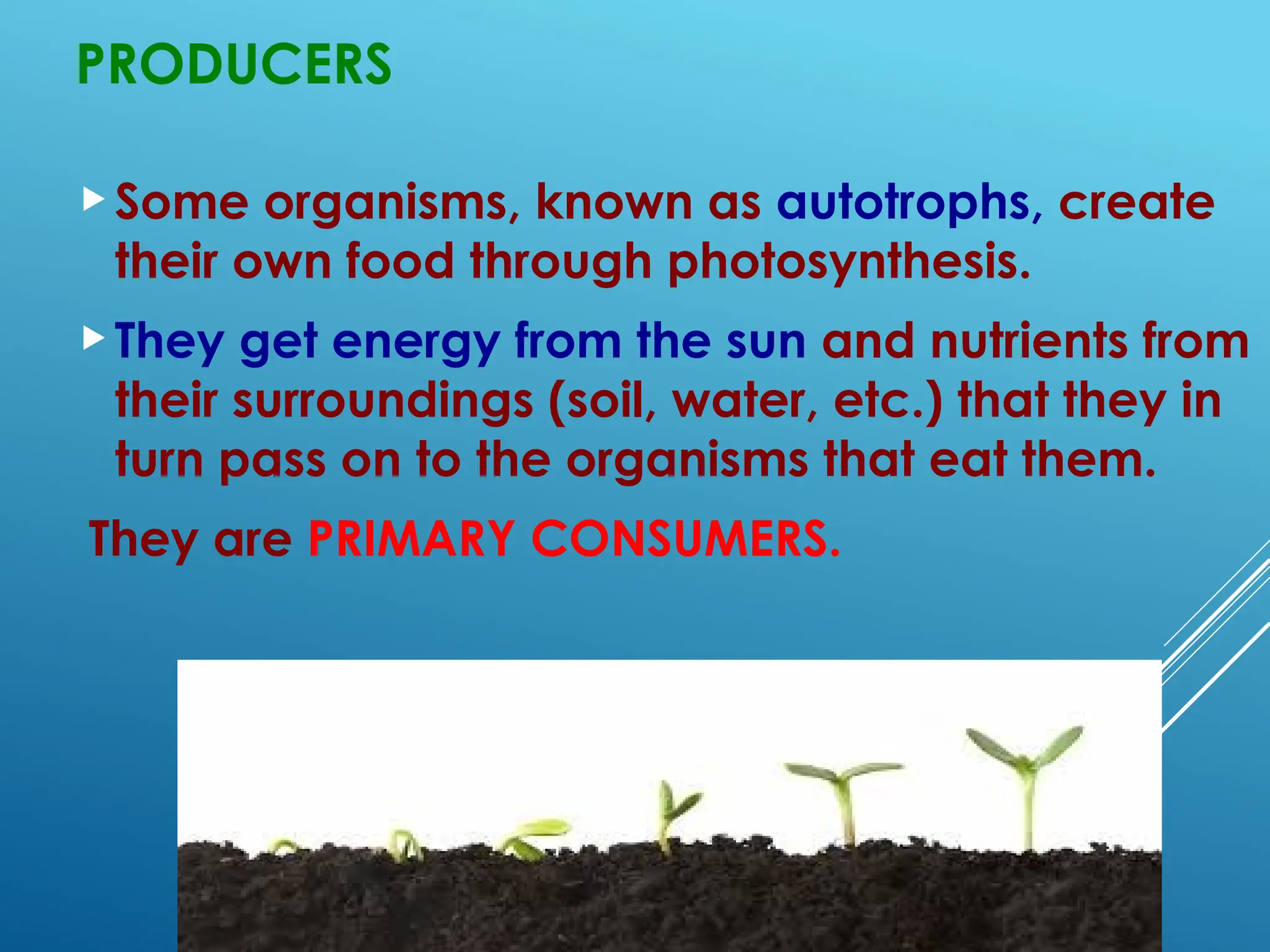
PRODUCERS
Some organisms, known as autotrophs, create
their own food through photosynthesis.
They get energy from the sun and nutrients from
their surroundings (soil, water, etc.) that they in
turn pass on to the organisms that eat them.
They are PRIMARY CONSUMERS.
EXAMPLES:
Plants
Algae
Photosynthetic Bacteria
CONSUMERS
The carnivores indirectly utilise the food
made by plants when they eat
herbivores.
They are SECONDARY CONSUMERS.
EXAMPLES:
Mouse
Fox
Eagle
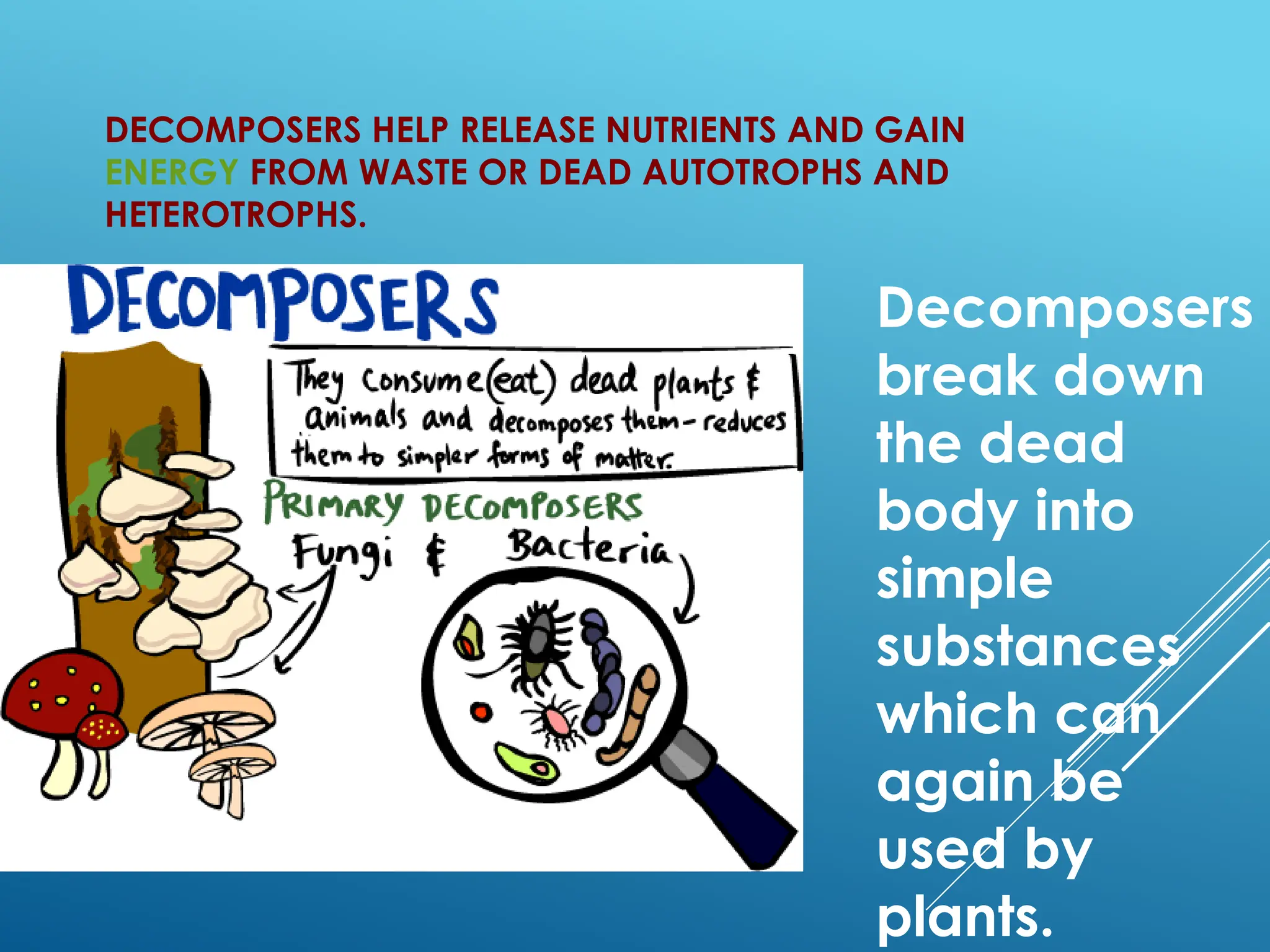
DECOMPOSERS HELP RELEASE NUTRIENTS AND GAIN
ENERGY FROM WASTE OR DEAD AUTOTROPHS AND
HETEROTROPHS.
Decomposers
break down
the dead
body into
simple
substances
which can
again be
used by
plants.
DECOMPOSERS
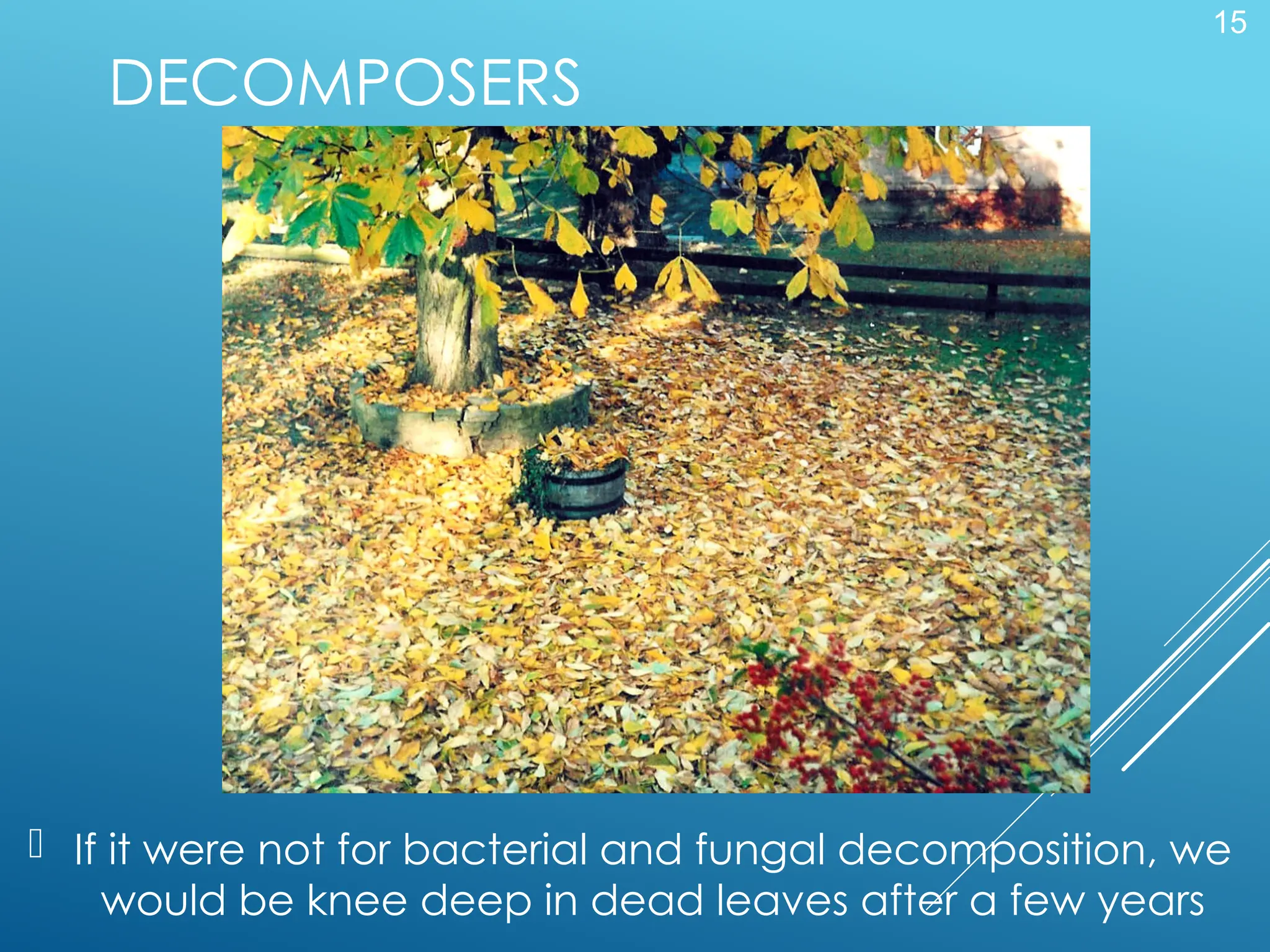
 If it were not for bacterial and fungal decomposition, we
would be knee deep in dead leaves after a few years
15
ULTIMATELY PHOTOSYNTHESIS
MAKES ENERGY WITHIN THE
ECOSYSTEM
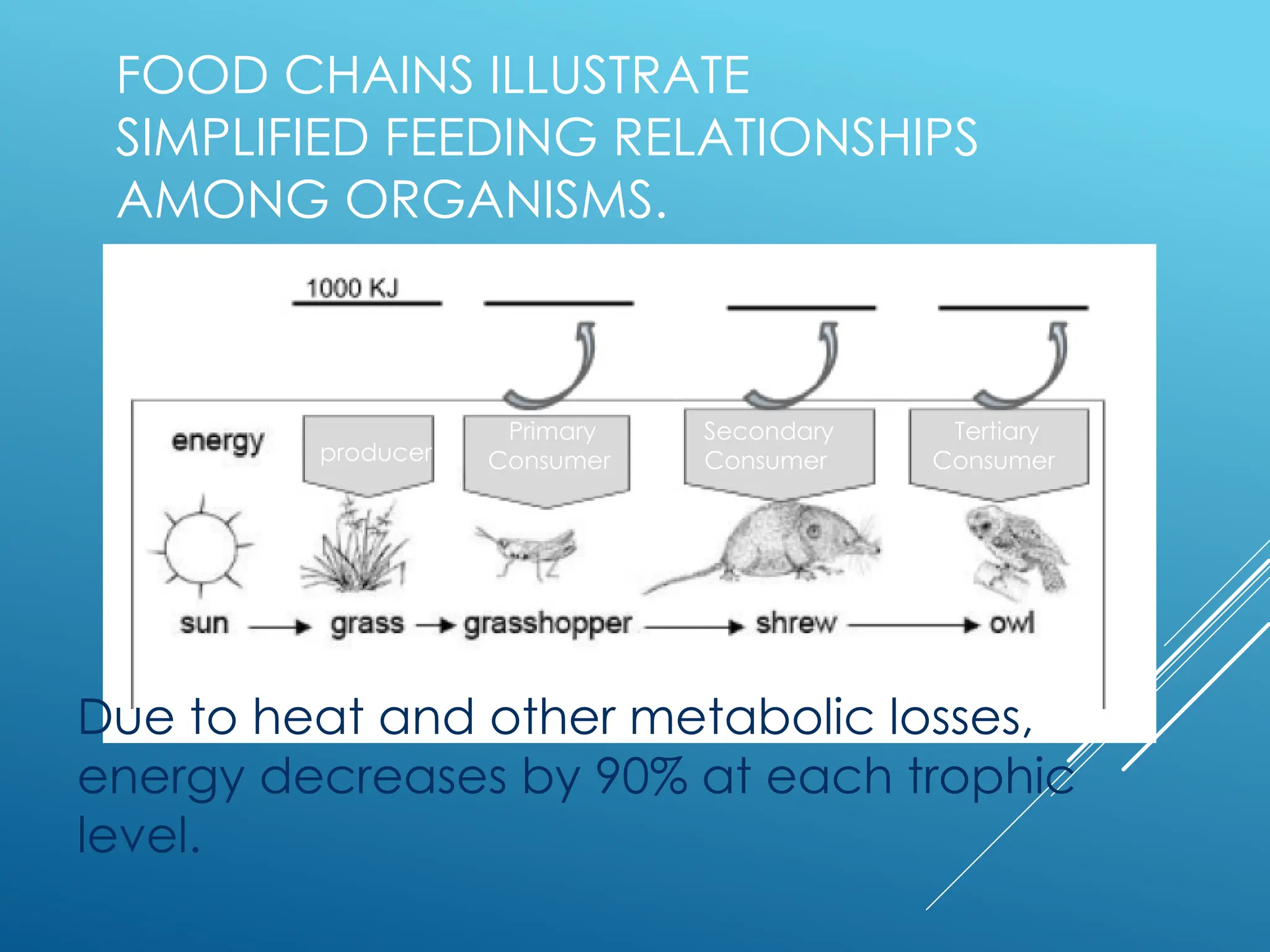
FOOD CHAINS ILLUSTRATE
SIMPLIFIED FEEDING RELATIONSHIPS
AMONG ORGANISMS.
producer
100 KJ 10 KJ 1 KJ
Due to heat and other metabolic losses,
energy decreases by 90% at each trophic
level.
Primary
Consumer
Secondary
Consumer
Tertiary
Consumer
THIS IS WHY THERE ARE FAR MORE PRODUCERS
THAN CONSUMERS.
WE CAN CATEGORIZE ANIMALS
BY WHAT THEY EAT AS WELL.
Carnivores eat meat only
Omnivores eat both meat and plants
Herbivores eat plants only
DEPENDENCE ON BACTERIA
Most bacteria are beneficial
They break down dead organisms into simpler
substances
Soil bacteria make mineral salts available
to plants
Bacteria and fungi are called decomposers
13
FOOD WEBS DEMONSTRATE A MORE REALISTIC
REPRESENTATION OF HOW FEEDING
RELATIONSHIPS CONNECT ORGANISMS IN AN
ECOSYSTEM.
Label the food web with the following: Producers, Carnivores, Omnivores,
and Herbivores
Interdependence in nature with animals plants.ppt

Interdependence in nature with animals plants.ppt

  • 1.
  • 2.
    WHAT ARE THETHINGS YOU NEED TO STAY ALIVE? HOW MANY OF THEM COME FROM LIVING THINGS? HOW MANY OF THEM ARE NON- LIVING THING?
  • 3.
    RESPIRATION Plants use oxygenfrom the air to get energy from food during the process of respiration. They use carbon dioxide from the atmosphere to make their food during the process of photosynthesis.
  • 4.
    Animals too needoxygen from the air for respiration This Photo by Unknown Author is licensed under CC BY
  • 5.
    Plants grow in soil.they get water and minerals from the soil to make food and to grow soil also provides plants with support.
  • 6.
    Since animals dependon plants for food, they indirectly depend on soil for food. Soil provides shelter to animals such as ants, centipedes and earthworms. Rabbits, rats, moles and many other animals live in burrows in soil.
  • 7.
    Water is essentialto all plants for carrying out their life processes. Plants absorb the minerals dissolved in water through their roots. They use water to prepare food during photosynthesis. Water also helps in the dispersal of seeds of plants growing in or near water.
  • 8.
    Several life processesin the bodies of animals require water. For example, water is required to carry food to all parts of the body. Water is also essential for collecting waste from all over the body and removing it from the body in the form of urine.
  • 9.
    Plants use energy trappedfrom sunlight to make food during photosynthesis. Sunlight provides warmth for seeds to germinate. Animals also need warmth from sunlight for survival. This Photo by Unknown Author is licensed under CC BY-SA
  • 10.
  • 11.
    ANIMALS DEPEND ONPLANTS FOR FOOD The food chain Grass Grass hopper Frog Snake 4
  • 12.
    ANIMALS DEPEND ONPLANTS FOR FOOD. All animals depend directly or indirectly on plants for food. Herbivores such as cows, goats or giraffes eat plants and thus depend directly on plants for food. Carnivores such as tigers, lions or wolves eat other animals and so depend indirectly on plants for food.
  • 13.
    ANIMALS DEPEND ON PLANTS FOR SHELTER Anumber of animals such as birds, squirrels, monkeys and insects find shelter on trees. Birds build nests on trees, while squirrels, monkeys and insects live on tree branches.
  • 14.
    ANIMALS DEPEND ON PLANTSFOR OXYGEN Plants make food in the presence of sunlight, carbon dioxide and water. They give out oxygen during this process. Animals take in this oxygen during respiration.
  • 15.
    PLANTS USE CARBONDIOXIDE PRODUCED BY ANIMALS During respiration, animals take in oxygen and give out carbon dioxide. This carbon dioxide is used by plants during photosynthesis.
  • 16.
    PLANTS DEPEND ONANIMALS FOR REPRODUCTION Animals such as butterflies and honeybees help plants to reproduce by taking pollen from one flower or part of a flower to another. Many varieties of plants grow over a large area because birds and animals eat their fleshy fruits and scatter their seeds.
  • 17.
    FOOD RELATIONSHIPS Organisms within an ecosystemare interconnected by their food relationships.
  • 18.
    A series that showswhich living things eat which others is called food chain This Photo by Unknown Author is licensed under CC BY
  • 19.
    ANIMALS DEPEND ONPLANTS FOR FOOD The food chain Grass Grass Hopper Frog Snake 4
  • 21.
    PRODUCERS Some organisms, knownas autotrophs, create their own food through photosynthesis. They get energy from the sun and nutrients from their surroundings (soil, water, etc.) that they in turn pass on to the organisms that eat them. They are PRIMARY CONSUMERS.
  • 22.
  • 23.
    CONSUMERS The carnivores indirectlyutilise the food made by plants when they eat herbivores. They are SECONDARY CONSUMERS.
  • 24.
  • 25.
    DECOMPOSERS HELP RELEASENUTRIENTS AND GAIN ENERGY FROM WASTE OR DEAD AUTOTROPHS AND HETEROTROPHS. Decomposers break down the dead body into simple substances which can again be used by plants.
  • 26.
    DECOMPOSERS  If itwere not for bacterial and fungal decomposition, we would be knee deep in dead leaves after a few years 15
  • 27.
  • 28.
    FOOD CHAINS ILLUSTRATE SIMPLIFIEDFEEDING RELATIONSHIPS AMONG ORGANISMS. producer 100 KJ 10 KJ 1 KJ Due to heat and other metabolic losses, energy decreases by 90% at each trophic level. Primary Consumer Secondary Consumer Tertiary Consumer
  • 29.
    THIS IS WHYTHERE ARE FAR MORE PRODUCERS THAN CONSUMERS.
  • 30.
    WE CAN CATEGORIZEANIMALS BY WHAT THEY EAT AS WELL. Carnivores eat meat only Omnivores eat both meat and plants Herbivores eat plants only
  • 31.
    DEPENDENCE ON BACTERIA Mostbacteria are beneficial They break down dead organisms into simpler substances Soil bacteria make mineral salts available to plants Bacteria and fungi are called decomposers 13
  • 32.
    FOOD WEBS DEMONSTRATEA MORE REALISTIC REPRESENTATION OF HOW FEEDING RELATIONSHIPS CONNECT ORGANISMS IN AN ECOSYSTEM.
  • 33.
    Label the foodweb with the following: Producers, Carnivores, Omnivores, and Herbivores

Editor's Notes

  • #26 In fact we would be buried more than knee deep in all sorts of dead matter that failed to decompose. Leaves are only one example.
  • #31 We tend to think only of disease-causing bacteria, but these are in a minority. Most bacteria are either harmless or directly or indirectly beneficial. For example, cattle and sheep have a large population of bacteria in their stomachs where these beneficial bacteria help to digest the cellulose cell walls in grass.