Lukas Williamson
Incident Management – Escalation
Process
2015-11-18
2
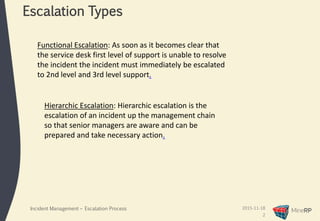
Escalation Types
Functional Escalation: As soon as it becomes clear that
the service desk first level of support is unable to resolve
the incident the incident must immediately be escalated
to 2nd level and 3rd level support.
Hierarchic Escalation: Hierarchic escalation is the
escalation of an incident up the management chain
so that senior managers are aware and can be
prepared and take necessary action.
Incident Management – Escalation Process
3
Escalation Process Flow
Incident Management – Escalation Process
The moving of the incident thought the incident lifecycle
Note: Incident Ownership remains with the Service
Desk
2015-11-18
MineRP Operations - Monthly Flash Report for March'15 4
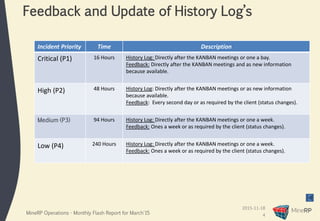
Feedback and Update of History Log’s
Incident Priority Time Description
Critical (P1) 16 Hours History Log: Directly after the KANBAN meetings or one a bay.
Feedback: Directly after the KANBAN meetings and as new information
because available.
High (P2) 48 Hours History Log: Directly after the KANBAN meetings or as new information
because available.
Feedback: Every second day or as required by the client (status changes).
Medium (P3) 94 Hours History Log: Directly after the KANBAN meetings or one a week.
Feedback: Ones a week or as required by the client (status changes).
Low (P4) 240 Hours History Log: Directly after the KANBAN meetings or one a week.
Feedback: Ones a week or as required by the client (status changes).
2015-11-18
5
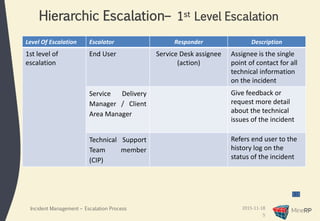
Hierarchic Escalation– 1st Level Escalation
Level Of Escalation Escalator Responder Description
1st level of
escalation
End User Service Desk assignee
(action)
Assignee is the single
point of contact for all
technical information
on the incident
Service Delivery
Manager / Client
Area Manager
Give feedback or
request more detail
about the technical
issues of the incident
Technical Support
Team member
(CIP)
Refers end user to the
history log on the
status of the incident
Incident Management – Escalation Process
2015-11-18
6
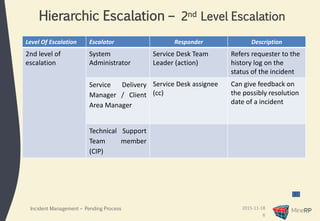
Hierarchic Escalation – 2nd Level Escalation
Incident Management – Pending Process
Level Of Escalation Escalator Responder Description
2nd level of
escalation
System
Administrator
Service Desk Team
Leader (action)
Refers requester to the
history log on the
status of the incident
Service Delivery
Manager / Client
Area Manager
Service Desk assignee
(cc)
Can give feedback on
the possibly resolution
date of a incident
Technical Support
Team member
(CIP)
2015-11-18
7
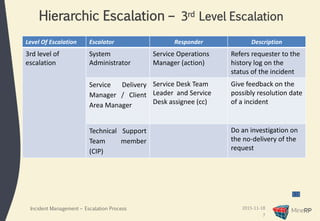
Hierarchic Escalation – 3rd Level Escalation
Level Of Escalation Escalator Responder Description
3rd level of
escalation
System
Administrator
Service Operations
Manager (action)
Refers requester to the
history log on the
status of the incident
Service Delivery
Manager / Client
Area Manager
Service Desk Team
Leader and Service
Desk assignee (cc)
Give feedback on the
possibly resolution date
of a incident
Technical Support
Team member
(CIP)
Do an investigation on
the no-delivery of the
request
Incident Management – Escalation Process
2015-11-18
8
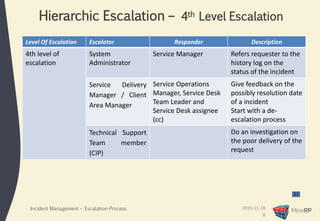
Hierarchic Escalation – 4th Level Escalation
Level Of Escalation Escalator Responder Description
4th level of
escalation
System
Administrator
Service Manager Refers requester to the
history log on the
status of the incident
Service Delivery
Manager / Client
Area Manager
Service Operations
Manager, Service Desk
Team Leader and
Service Desk assignee
(cc)
Give feedback on the
possibly resolution date
of a incident
Start with a de-
escalation process
Technical Support
Team member
(CIP)
Do an investigation on
the poor delivery of the
request
Incident Management – Escalation Process
2015-11-18
9
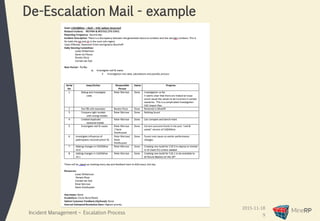
De-Escalation Mail - example
Incident Management – Escalation Process

Incident Escalation process Presentation

  • 1.
  • 2.
    2015-11-18 2 Escalation Types Functional Escalation:As soon as it becomes clear that the service desk first level of support is unable to resolve the incident the incident must immediately be escalated to 2nd level and 3rd level support. Hierarchic Escalation: Hierarchic escalation is the escalation of an incident up the management chain so that senior managers are aware and can be prepared and take necessary action. Incident Management – Escalation Process
  • 3.
    3 Escalation Process Flow IncidentManagement – Escalation Process The moving of the incident thought the incident lifecycle Note: Incident Ownership remains with the Service Desk
  • 4.
    2015-11-18 MineRP Operations -Monthly Flash Report for March'15 4 Feedback and Update of History Log’s Incident Priority Time Description Critical (P1) 16 Hours History Log: Directly after the KANBAN meetings or one a bay. Feedback: Directly after the KANBAN meetings and as new information because available. High (P2) 48 Hours History Log: Directly after the KANBAN meetings or as new information because available. Feedback: Every second day or as required by the client (status changes). Medium (P3) 94 Hours History Log: Directly after the KANBAN meetings or one a week. Feedback: Ones a week or as required by the client (status changes). Low (P4) 240 Hours History Log: Directly after the KANBAN meetings or one a week. Feedback: Ones a week or as required by the client (status changes).
  • 5.
    2015-11-18 5 Hierarchic Escalation– 1stLevel Escalation Level Of Escalation Escalator Responder Description 1st level of escalation End User Service Desk assignee (action) Assignee is the single point of contact for all technical information on the incident Service Delivery Manager / Client Area Manager Give feedback or request more detail about the technical issues of the incident Technical Support Team member (CIP) Refers end user to the history log on the status of the incident Incident Management – Escalation Process
  • 6.
    2015-11-18 6 Hierarchic Escalation –2nd Level Escalation Incident Management – Pending Process Level Of Escalation Escalator Responder Description 2nd level of escalation System Administrator Service Desk Team Leader (action) Refers requester to the history log on the status of the incident Service Delivery Manager / Client Area Manager Service Desk assignee (cc) Can give feedback on the possibly resolution date of a incident Technical Support Team member (CIP)
  • 7.
    2015-11-18 7 Hierarchic Escalation –3rd Level Escalation Level Of Escalation Escalator Responder Description 3rd level of escalation System Administrator Service Operations Manager (action) Refers requester to the history log on the status of the incident Service Delivery Manager / Client Area Manager Service Desk Team Leader and Service Desk assignee (cc) Give feedback on the possibly resolution date of a incident Technical Support Team member (CIP) Do an investigation on the no-delivery of the request Incident Management – Escalation Process
  • 8.
    2015-11-18 8 Hierarchic Escalation –4th Level Escalation Level Of Escalation Escalator Responder Description 4th level of escalation System Administrator Service Manager Refers requester to the history log on the status of the incident Service Delivery Manager / Client Area Manager Service Operations Manager, Service Desk Team Leader and Service Desk assignee (cc) Give feedback on the possibly resolution date of a incident Start with a de- escalation process Technical Support Team member (CIP) Do an investigation on the poor delivery of the request Incident Management – Escalation Process
  • 9.
    2015-11-18 9 De-Escalation Mail -example Incident Management – Escalation Process