OBSESSIVE COMPULSIVE
PERSONALITY DISORDER
SUBMITTED BY –
SMRITI SAINI – 21MHY1006
SAANI ZEHRA KHAN – 21MHY1062
PALAK SHARMA – 21MHY1088
SAMRIDHI GUPTA – 21MHY1098
TANVI DESAI – 21MHY1103
RAMANDEEP – 21MHY1107
WHAT IS OCPD?
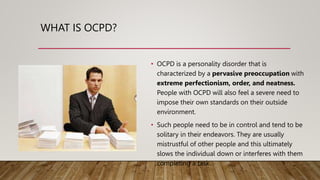
• OCPD is a personality disorder that is
characterized by a pervasive preoccupation with
extreme perfectionism, order, and neatness.
People with OCPD will also feel a severe need to
impose their own standards on their outside
environment.
• Such people need to be in control and tend to be
solitary in their endeavors. They are usually
mistrustful of other people and this ultimately
slows the individual down or interferes with them
completing a task.
DSM – 5 CRITERIA (301.4)
A. A pervasive pattern of preoccupation with orderliness, perfectionism, and
mental and interpersonal control, at the expense of flexibility, openness, and
efficiency, beginning by early adulthood as indicated by 4 (or more) of –
1. Is preoccupied with details, rules, lists, order, organization, or schedules to the
extent that the major point of the activity is lost.
2. Shows perfectionism that interferes with task completion
3. Is excessively devoted to work and productivity to the exclusion of leisure
activities and friendships
4. Is overconscientious, scrupulous, and inflexible about matters of morality, ethics, or
values.
5. Is unable to discard worn-out or worthless objects even when they have no
sentimental value.
6. Is reluctant to delegate tasks or to work with others unless they submit to exactly
his/her way of doing things.
7. Adopts a miserly spending style towards both self and others; money is viewed as
something to be hoarded for future catastrophes.
8. Shows rigidity and stubbornness.
CAUSES
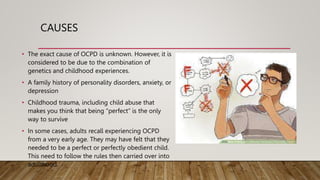
• The exact cause of OCPD is unknown. However, it is
considered to be due to the combination of
genetics and childhood experiences.
• A family history of personality disorders, anxiety, or
depression
• Childhood trauma, including child abuse that
makes you think that being “perfect” is the only
way to survive
• In some cases, adults recall experiencing OCPD
from a very early age. They may have felt that they
needed to be a perfect or perfectly obedient child.
This need to follow the rules then carried over into
adulthood.
ICD – 10 CRITERIA (F60.5) – ANANKASTIC DISORDER
• A disorder characterized by an enduring pattern of inflexibility, extreme
orderliness, and perfectionism which interfere with efficiency and which may
manifest in many different contexts, including work and leisure activities, financial
matters, and issues of morality or ethics.
• Disorder characterized by an emotionally constricted manner that is unduly
conventional, serious, formal, and stingy, by preoccupation with trivial details,
rules, order, organization, schedules, and lists, by stubborn insistence on having
things one's own way without regard for the effects on others, by poor
interpersonal relationships, and by indecisiveness due to fear of making mistakes.
• Personality disorder characterized by perfectionism, indecisiveness, excessive devotion
to work, inability to express warm emotions, and insistence that things be done in
accord with one's own preferences.
ANANKASTIC DISORDER
• Personality disorder characterized by –
1. Feelings of excessive doubt and caution
2. Preoccupation with details, rules, lists, order, organization or schedule
3. Perfectionism that interferes with task completion
4. Excessive conscientiousness, scrupulousness, and undue preoccupation with
productivity to the exclusion of pleasure and interpersonal relationships.
• Excessive pedantry and adherence to social convention
• Rigidity and stubbornness
• Unreasonable insistence by the patient that others submit to exactly his or her
way of doing things, or unreasonable reluctance to allow others to do things.
• Intrusion of insistent and unwelcome thoughts or impulses.
CASE STUDY
Mark is a 42-year-old, single male who lives with his parents. He has been unemployed for some
time because he has had difficulty maintaining employment. Most recently, he was not able to
meet production demands at his factory job because he got consumed with making each
package perfect before moving on to the next package. One weekend, when his family planned
to visit the grandparents, Mark started packing on Wednesday afternoon but did not finish the
packing until Saturday, when it was too late to go. Mark’s employment and personal relationships
are impacted by his rigidity and extreme attention to detail. Mark was diagnosed with obsessive-
compulsive personality disorder.
In therapy, Mark was very punctual in treatment and never missed a session; he talked freely and
in great detail. The initial part of therapy mainly dealt with family relationships. When the time
came to leave the sessions, he would often continue talking and delaying even when the
therapist was standing at the door.
TREATMENT
• Medication: Some medications, including anti-anxiety drugs and
antidepressants, can help control your symptoms. Talk to your
doctor to learn more.
• Therapy: Therapy is the first line of treatment for most personality
disorders. Talk therapy, group therapy, and occupational
therapy can all be beneficial to individuals with OCPD.
• Education: Learning more about personality disorders and mental
health can help you and your loved ones better understand and
cope with your condition.
• Support: Finding the right support group can help you feel better
and learn new coping skills
OCPD.pptx

OCPD.pptx

  • 1.
    OBSESSIVE COMPULSIVE PERSONALITY DISORDER SUBMITTEDBY – SMRITI SAINI – 21MHY1006 SAANI ZEHRA KHAN – 21MHY1062 PALAK SHARMA – 21MHY1088 SAMRIDHI GUPTA – 21MHY1098 TANVI DESAI – 21MHY1103 RAMANDEEP – 21MHY1107
  • 2.
    WHAT IS OCPD? •OCPD is a personality disorder that is characterized by a pervasive preoccupation with extreme perfectionism, order, and neatness. People with OCPD will also feel a severe need to impose their own standards on their outside environment. • Such people need to be in control and tend to be solitary in their endeavors. They are usually mistrustful of other people and this ultimately slows the individual down or interferes with them completing a task.
  • 3.
    DSM – 5CRITERIA (301.4) A. A pervasive pattern of preoccupation with orderliness, perfectionism, and mental and interpersonal control, at the expense of flexibility, openness, and efficiency, beginning by early adulthood as indicated by 4 (or more) of – 1. Is preoccupied with details, rules, lists, order, organization, or schedules to the extent that the major point of the activity is lost. 2. Shows perfectionism that interferes with task completion 3. Is excessively devoted to work and productivity to the exclusion of leisure activities and friendships
  • 4.
    4. Is overconscientious,scrupulous, and inflexible about matters of morality, ethics, or values. 5. Is unable to discard worn-out or worthless objects even when they have no sentimental value. 6. Is reluctant to delegate tasks or to work with others unless they submit to exactly his/her way of doing things. 7. Adopts a miserly spending style towards both self and others; money is viewed as something to be hoarded for future catastrophes. 8. Shows rigidity and stubbornness.
  • 5.
    CAUSES • The exactcause of OCPD is unknown. However, it is considered to be due to the combination of genetics and childhood experiences. • A family history of personality disorders, anxiety, or depression • Childhood trauma, including child abuse that makes you think that being “perfect” is the only way to survive • In some cases, adults recall experiencing OCPD from a very early age. They may have felt that they needed to be a perfect or perfectly obedient child. This need to follow the rules then carried over into adulthood.
  • 6.
    ICD – 10CRITERIA (F60.5) – ANANKASTIC DISORDER • A disorder characterized by an enduring pattern of inflexibility, extreme orderliness, and perfectionism which interfere with efficiency and which may manifest in many different contexts, including work and leisure activities, financial matters, and issues of morality or ethics. • Disorder characterized by an emotionally constricted manner that is unduly conventional, serious, formal, and stingy, by preoccupation with trivial details, rules, order, organization, schedules, and lists, by stubborn insistence on having things one's own way without regard for the effects on others, by poor interpersonal relationships, and by indecisiveness due to fear of making mistakes.
  • 7.
    • Personality disordercharacterized by perfectionism, indecisiveness, excessive devotion to work, inability to express warm emotions, and insistence that things be done in accord with one's own preferences.
  • 8.
    ANANKASTIC DISORDER • Personalitydisorder characterized by – 1. Feelings of excessive doubt and caution 2. Preoccupation with details, rules, lists, order, organization or schedule 3. Perfectionism that interferes with task completion 4. Excessive conscientiousness, scrupulousness, and undue preoccupation with productivity to the exclusion of pleasure and interpersonal relationships.
  • 9.
    • Excessive pedantryand adherence to social convention • Rigidity and stubbornness • Unreasonable insistence by the patient that others submit to exactly his or her way of doing things, or unreasonable reluctance to allow others to do things. • Intrusion of insistent and unwelcome thoughts or impulses.
  • 10.
    CASE STUDY Mark isa 42-year-old, single male who lives with his parents. He has been unemployed for some time because he has had difficulty maintaining employment. Most recently, he was not able to meet production demands at his factory job because he got consumed with making each package perfect before moving on to the next package. One weekend, when his family planned to visit the grandparents, Mark started packing on Wednesday afternoon but did not finish the packing until Saturday, when it was too late to go. Mark’s employment and personal relationships are impacted by his rigidity and extreme attention to detail. Mark was diagnosed with obsessive- compulsive personality disorder. In therapy, Mark was very punctual in treatment and never missed a session; he talked freely and in great detail. The initial part of therapy mainly dealt with family relationships. When the time came to leave the sessions, he would often continue talking and delaying even when the therapist was standing at the door.
  • 11.
    TREATMENT • Medication: Somemedications, including anti-anxiety drugs and antidepressants, can help control your symptoms. Talk to your doctor to learn more. • Therapy: Therapy is the first line of treatment for most personality disorders. Talk therapy, group therapy, and occupational therapy can all be beneficial to individuals with OCPD.
  • 12.
    • Education: Learningmore about personality disorders and mental health can help you and your loved ones better understand and cope with your condition. • Support: Finding the right support group can help you feel better and learn new coping skills