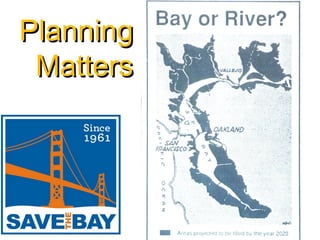
Planning
Matters
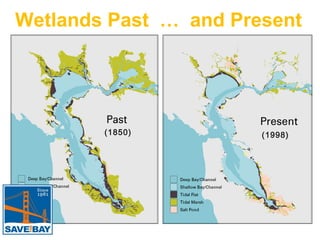
Wetlands Past … and Present

(1850)

(1998)
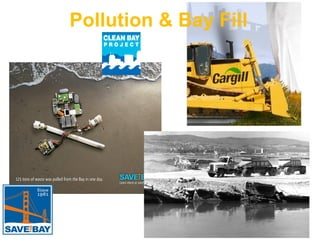
Pollution & Bay Fill
Clean Bay
Project
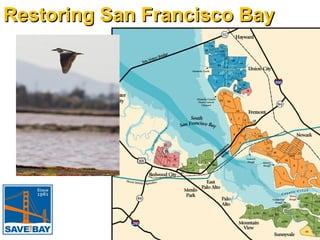
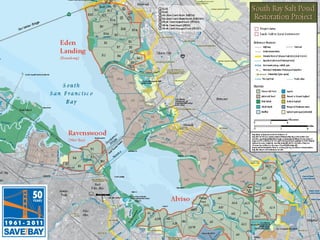
Restoring San Francisco Bay
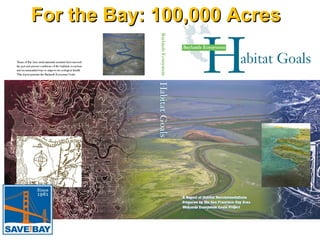
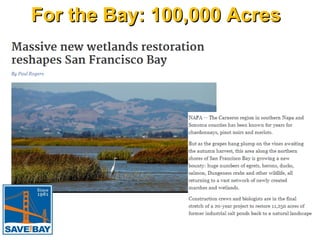
For the Bay: 100,000 Acres
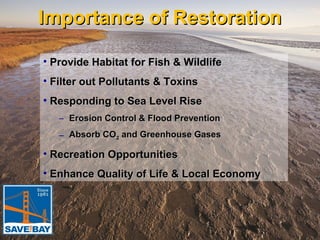
Importance of Restoration
• Provide Habitat for Fish & Wildlife
• Filter out Pollutants & Toxins
• Responding to Sea Level Rise
– Erosion Control & Flood Prevention
– Absorb CO2 and Greenhouse Gases

• Recreation Opportunities
• Enhance Quality of Life & Local Economy
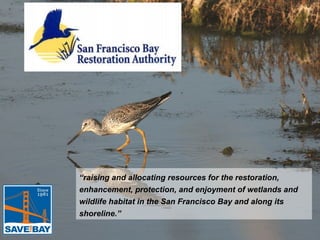
“raising and allocating resources for the restoration,
enhancement, protection, and enjoyment of wetlands and
wildlife habitat in the San Francisco Bay and along its
shoreline.”
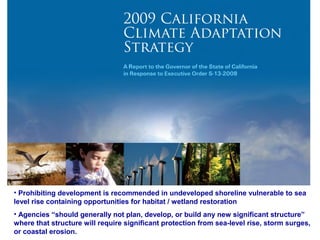
• Prohibiting development is recommended in undeveloped shoreline vulnerable to sea
•Prohibiting development is recommended in undeveloped shoreline vulnerable to sea
level rise containing opportunities for habitat / wetland restoration
level rise containing opportunities for habitat / wetland restoration (p. 74)
• Agencies “should generally not plan, develop, or build any new significant structure”
•Agencies “should generally not plan, develop, or build any new significant structure”
where that structure will require significant protection from sea-level rise, storm surges,
or coastal erosion.
or coastal erosion. (p. 73)
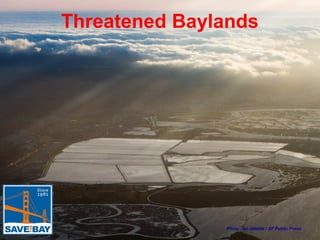
Threatened Baylands

Photo: Ian Umeda / SF Public Press
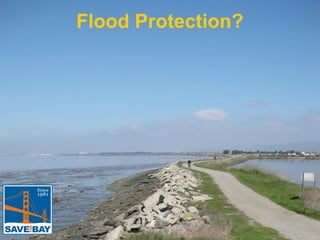
Flood Protection?
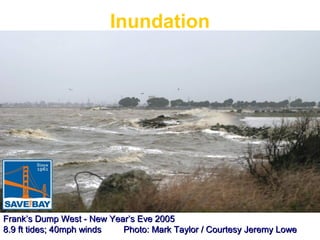
Inundation

Frank’s Dump West - New Year’s Eve 2005
8.9 ft tides; 40mph winds
Photo: Mark Taylor / Courtesy Jeremy Lowe
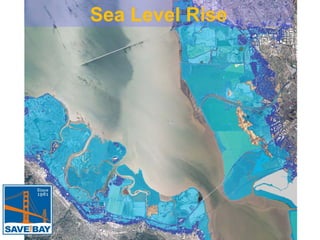
Sea Level Rise
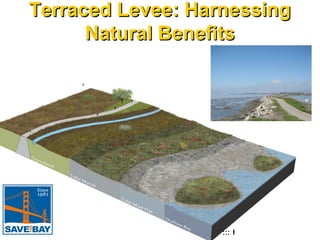
Terraced Levee: Harnessing
Natural Benefits

::: Hargreaves Associates
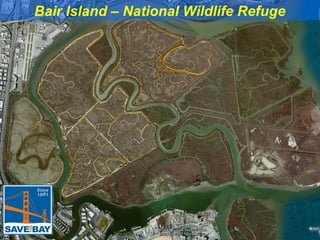
Bair Island – National Wildlife Refuge
Thank You
Stephen Knight
sknight@savesfbay.org * 510/463-6812

Planning Matters: Bay or River

Editor's Notes

  • #5 Helped secure state and federal acquisition of more than 16,000 acres of salt ponds from Cargill Salt Co. for wetland restoration.
  • #18 Redwood City knows the benefits of restoring the shoreline instead of developing it. Bair Island was Bay tidal marsh. It was diked off for agriculture and salt evaporation ponds. Private landowners proposed building on it several times. The citizens of Redwood City said “no” and voted to overturn a City Council decision to develop the property