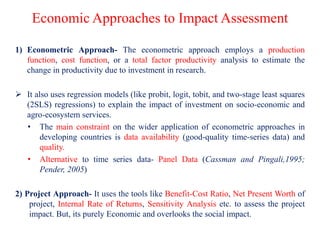
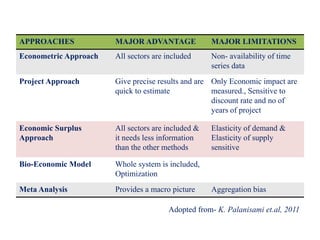
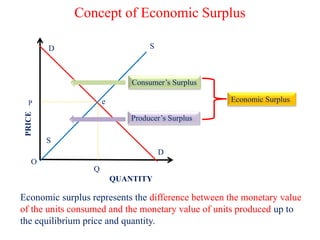
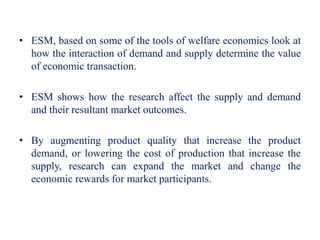
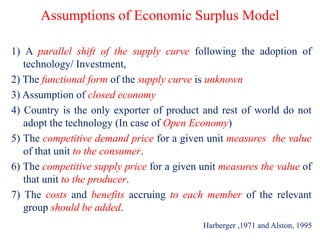
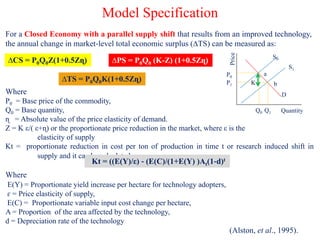
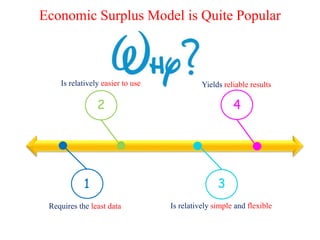
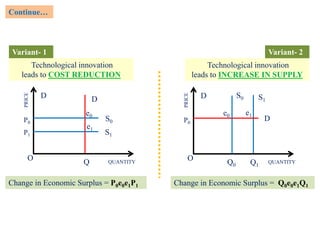
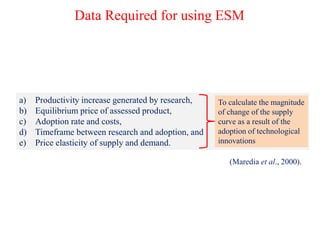
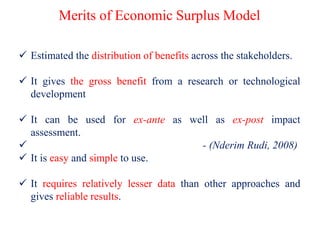
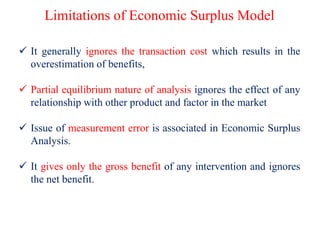
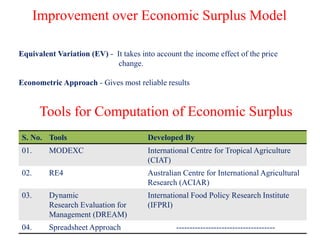
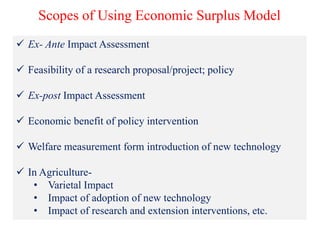
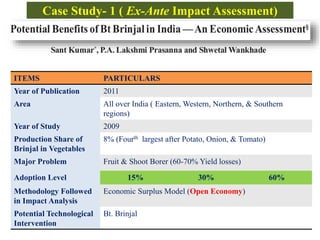
The document discusses the economic surplus model, which is a tool used for ex-ante impact assessment. It provides an overview of the concept, assumptions, specifications, data requirements, and computation of the economic surplus model. The model is popular because it requires relatively little data and provides reliable results. While it has merits such as estimating distribution of benefits, it also has limitations like ignoring transaction costs. The document examines case studies applying the model to assess potential impacts of Bt brinjal in India and actual impacts of a drought-resistant groundnut variety in Andhra Pradesh.