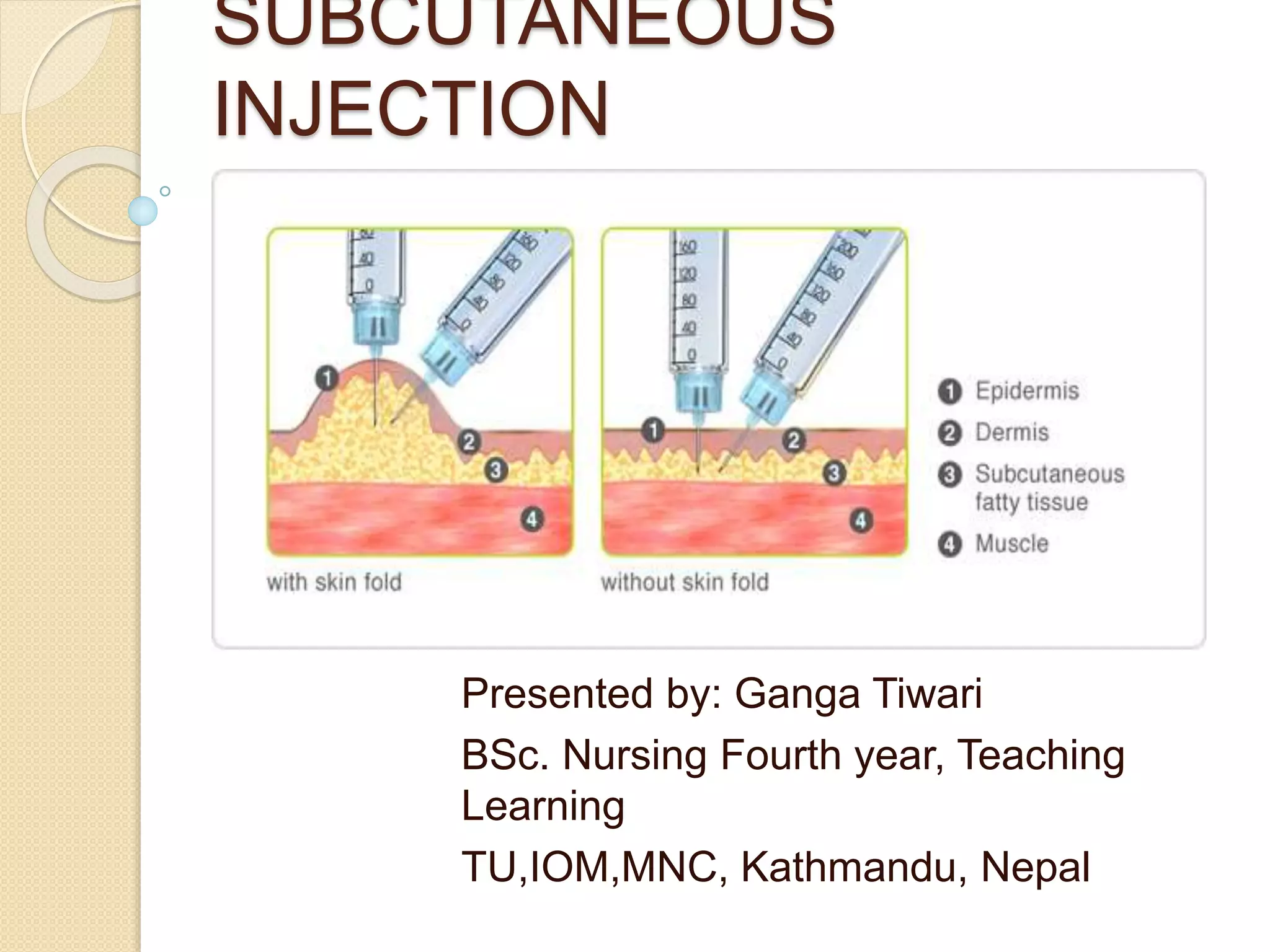
SUBCUTANEOUS
INJECTION
Presented by: Ganga Tiwari
BSc. Nursing Fourth year, Teaching
Learning
TU,IOM,MNC, Kathmandu, Nepal
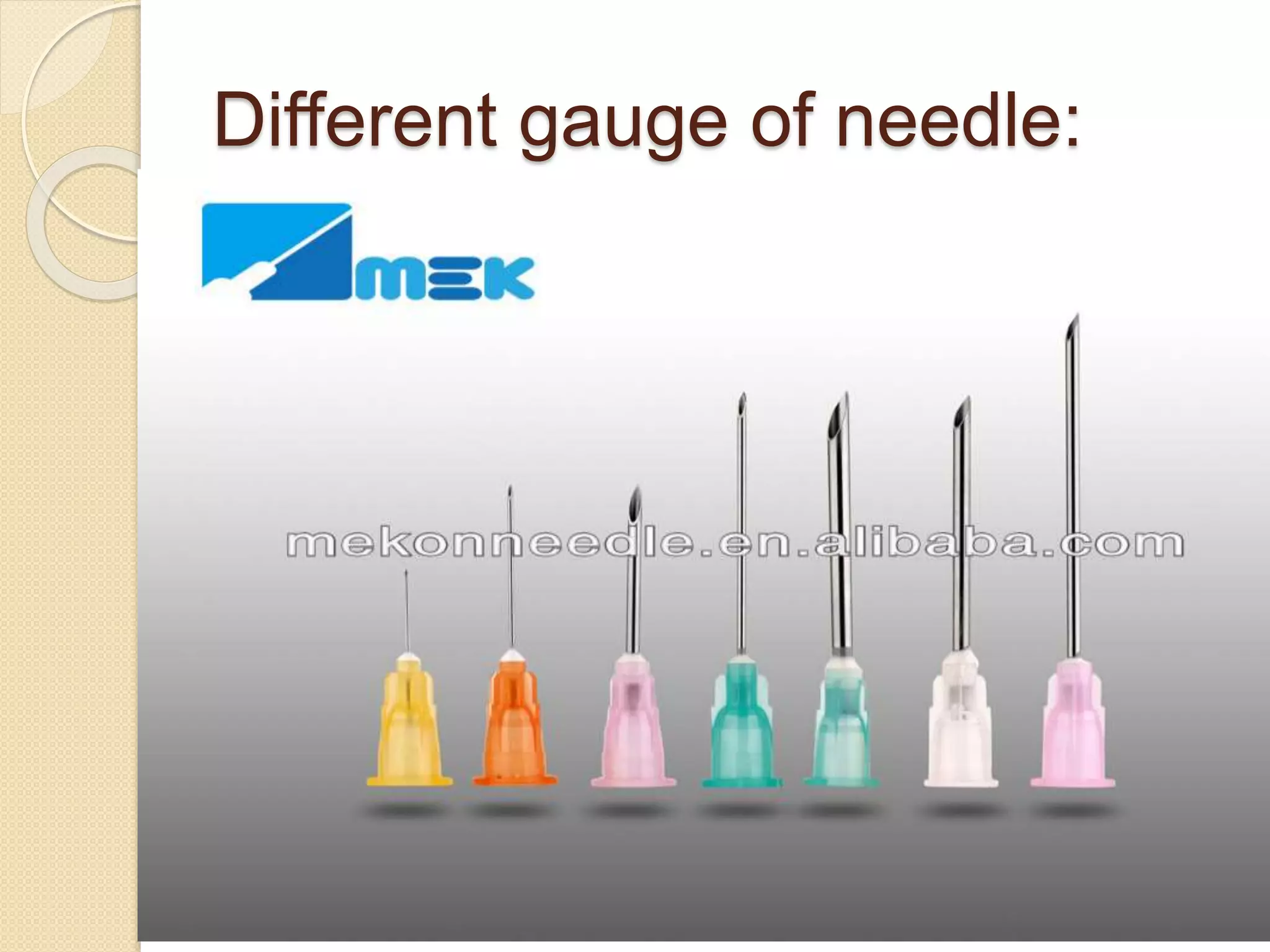
Different gauge of needle:
Subcutaneous injection:
 Subcutaneous injection involves
injecting medication into the adipose
tissue (sub cutaneous layer of fat)
below dermis and above the muscle
tissue.
 This tissue has few blood vessels, so
drug administered here have slow and
sustained absorption into the
capillaries.
Introduction contd…
 Only small dose (0.5 ml to 1 ml) of
water soluble medications is given
subcutaneously because tissue is
sensitive to irritating solution and large
volume of medication
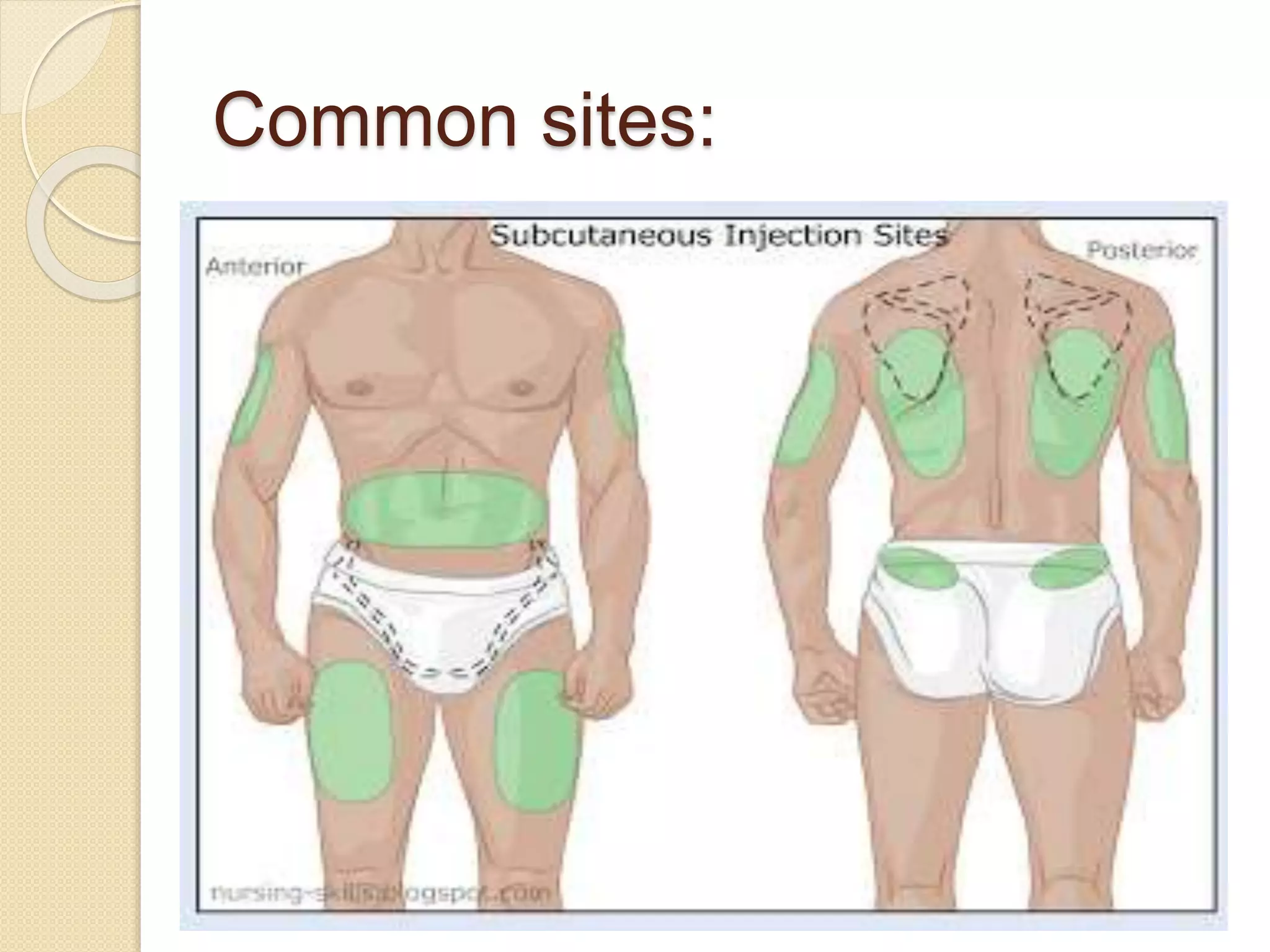
Common sites:
 Outer aspect of upper arm.
 Posterior chest wall below the
scapula.
 Anterior abdominal wall.(2 inches
around the umbilicus)
 Anterior and lateral aspects of thigh.
Common sites:
Articles
 Medication cardex.
 Medication tray
 Kidney tray
 Spirit swab
 Sterile syringe and needle
 Prescribed medications in ampule or
vial
 Disposable gloves
 Medicine cutter/ opener
 Puncture proof container
Procedure
 Check medication instructions.
 Identify the patient carefully.
 Explain procedure to the patient the drug
that is to be administer, site and how to
co-operate.
 Wash hands
 Set up medication tray with necessary
articles.
 Assemble all articles including loaded
syringe near the patient bed side.
Contd..
 Maintain privacy.
 Help the patient to assume the position
depending upon the site selected.
 -anterior thigh: sitting or lying down with
muscle relaxed
 - Abdomen: patient should lie on semi
recumbent position.
 -Scapular: patient may be prone, lateral
or sitting position.
 -Outer aspect of upper arm: arm relaxed
at the side of the body
Contd..
 Assess the area. Check for lumps,
nodules, tenderness, hardness,
swelling, scaring, itching, burning
sensation and localized inflammation
in the area.
 Wear gloves
 Clean the area around the injection
site with spirit swab. Use firm circular
motion while moving outward (about 5
cm in diameter).allow antiseptic to dry.
Contd..
 Remove the needle cap with non-
dominant hand pulling it straight off.
 Grasp and pinch the area around the
injection site (obese and normal
person) or spread skin at site( thin
person).
 Hold the syringe in dominant hand
between thumb and fore finger. Inject
the needle quickly at an angle 45 to 90
degree.
Contd..
 After insertion, release the tissue
immediately moves your non-dominant
hand to steady the lower end of the
syringe. Slide your dominant hand to top
of the barrel.
 Aspirate by holding the barrel steady
with non-dominant hand. Withdraw the
needle if blood appears in the syringe,
discard and prepare new injection. Do
not aspirate heparin is anticoagulant and
causes bruising on aspiration.
Contd..
 Inject medication slowly if no blood
appears.
 Withdraw the needle quickly at the
same angle as it was inserted while
applying counter traction around the
injection site with non-dominant hand.
 After withdrawing the needle apply
gentle pressure.
Contd..
 Do not massage the heparin and
insulin injection site. Massaging
heparin site can lead to bruising.
Massaging insulin site can lead to
unpredictable absorption
Contd..
 Assist the patient to comfortable
position.
 Discard the syringe and the needle in
puncture proof container and discard
gloves and other soiled articles in an
appropriate container.
 Wash hands.
 Document the administration of
medication with date, time, route, sites
and nurse signature.
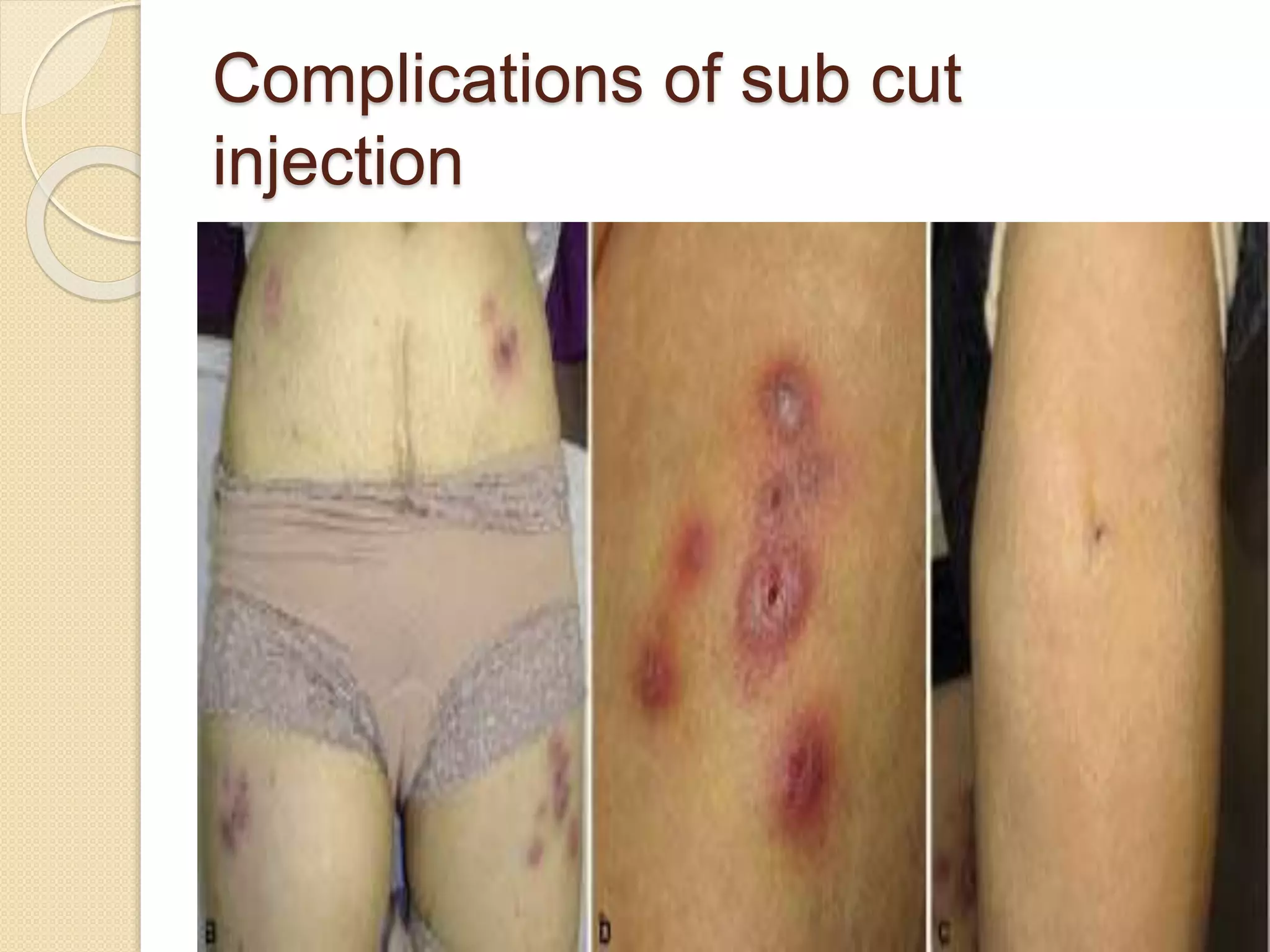
Complications
 Fat necrosis
 Erythema
 Abscess
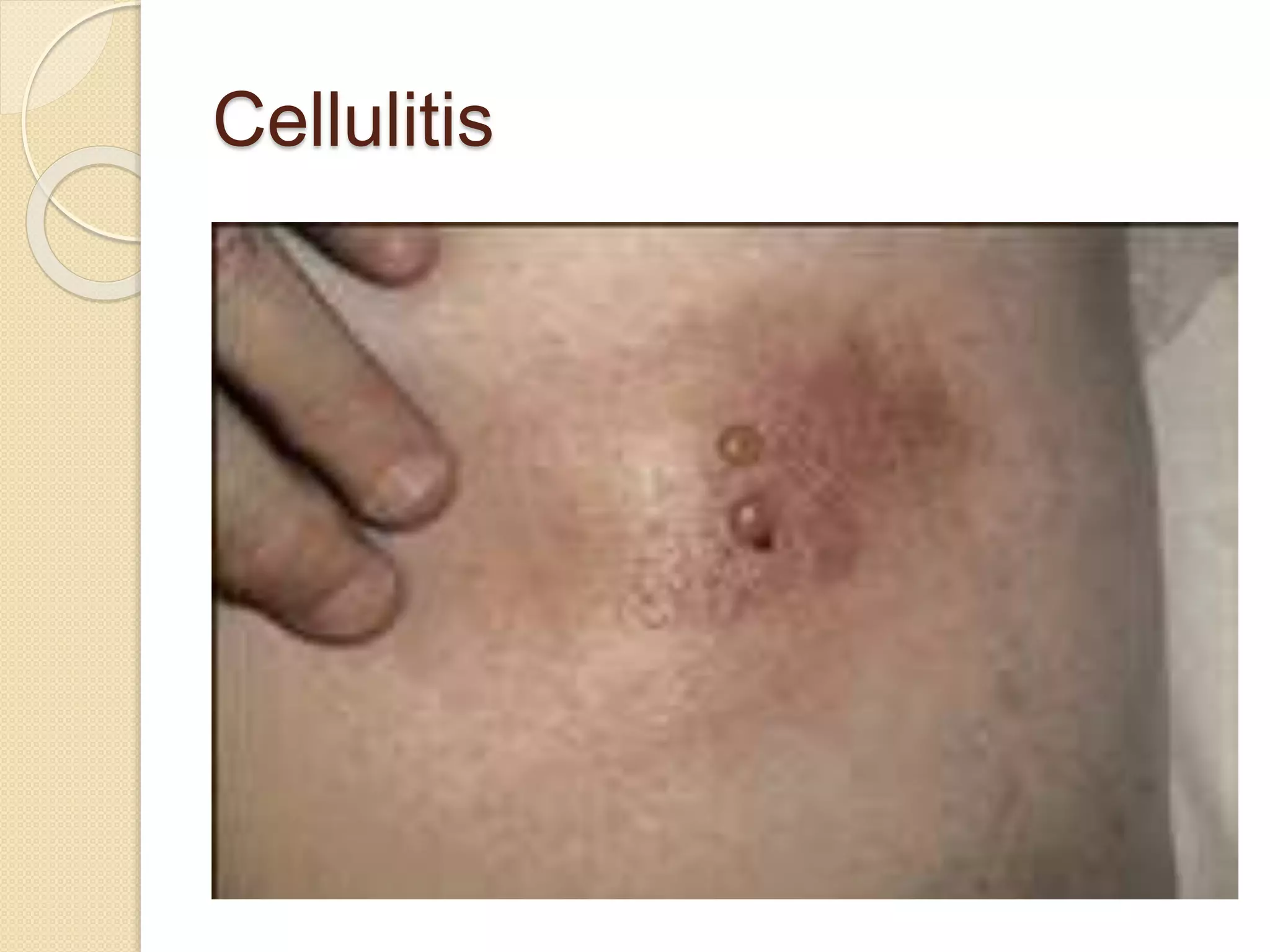
 Cellulitis
 Formation of nodule.
Cellulitis
Complications of sub cut
injection
References
 Basvanthappa,B.T.(2004). Fundamentals of Nursing. New
Delhi :Jaypee Brothers.
 Perry, A.G. and Potter, P.A. (2007).Basic Nursing Essentials
For Practice .(sixth edition): Mosby
 Giri, M. and Sharma,P. (2013). Essential Fundamental Of
Nursing.(first edition).Kathmandu: Medhavi Publication.
 Pathak ,S.and Devkota ,R.(2011).A Textbook Of
Fundamentals of Nursing.(second
edition).Kathmandu:Vidyarthi Prakashan.
 Taylor,C.R. and Lillis,C.(2008). Fundamental Of
Nursing.(Volume1):Lipincott William and Willikins
 Health learning material center. Institute Of
Medicine,Tribhuvan University.Fundamental Of Nursing
(Second Edition ,reprint,2010).Kathmandu Dillibazar.
Heidel Press.
THANK YOU !!

Subcutaneous injection (Procedure, sites and complications)

  • 1.
    SUBCUTANEOUS INJECTION Presented by: GangaTiwari BSc. Nursing Fourth year, Teaching Learning TU,IOM,MNC, Kathmandu, Nepal
  • 2.
  • 3.
    Subcutaneous injection:  Subcutaneousinjection involves injecting medication into the adipose tissue (sub cutaneous layer of fat) below dermis and above the muscle tissue.  This tissue has few blood vessels, so drug administered here have slow and sustained absorption into the capillaries.
  • 4.
    Introduction contd…  Onlysmall dose (0.5 ml to 1 ml) of water soluble medications is given subcutaneously because tissue is sensitive to irritating solution and large volume of medication
  • 5.
    Common sites:  Outeraspect of upper arm.  Posterior chest wall below the scapula.  Anterior abdominal wall.(2 inches around the umbilicus)  Anterior and lateral aspects of thigh.
  • 6.
  • 7.
    Articles  Medication cardex. Medication tray  Kidney tray  Spirit swab  Sterile syringe and needle  Prescribed medications in ampule or vial  Disposable gloves  Medicine cutter/ opener  Puncture proof container
  • 8.
    Procedure  Check medicationinstructions.  Identify the patient carefully.  Explain procedure to the patient the drug that is to be administer, site and how to co-operate.  Wash hands  Set up medication tray with necessary articles.  Assemble all articles including loaded syringe near the patient bed side.
  • 9.
    Contd..  Maintain privacy. Help the patient to assume the position depending upon the site selected.  -anterior thigh: sitting or lying down with muscle relaxed  - Abdomen: patient should lie on semi recumbent position.  -Scapular: patient may be prone, lateral or sitting position.  -Outer aspect of upper arm: arm relaxed at the side of the body
  • 10.
    Contd..  Assess thearea. Check for lumps, nodules, tenderness, hardness, swelling, scaring, itching, burning sensation and localized inflammation in the area.  Wear gloves  Clean the area around the injection site with spirit swab. Use firm circular motion while moving outward (about 5 cm in diameter).allow antiseptic to dry.
  • 11.
    Contd..  Remove theneedle cap with non- dominant hand pulling it straight off.  Grasp and pinch the area around the injection site (obese and normal person) or spread skin at site( thin person).  Hold the syringe in dominant hand between thumb and fore finger. Inject the needle quickly at an angle 45 to 90 degree.
  • 12.
    Contd..  After insertion,release the tissue immediately moves your non-dominant hand to steady the lower end of the syringe. Slide your dominant hand to top of the barrel.  Aspirate by holding the barrel steady with non-dominant hand. Withdraw the needle if blood appears in the syringe, discard and prepare new injection. Do not aspirate heparin is anticoagulant and causes bruising on aspiration.
  • 13.
    Contd..  Inject medicationslowly if no blood appears.  Withdraw the needle quickly at the same angle as it was inserted while applying counter traction around the injection site with non-dominant hand.  After withdrawing the needle apply gentle pressure.
  • 14.
    Contd..  Do notmassage the heparin and insulin injection site. Massaging heparin site can lead to bruising. Massaging insulin site can lead to unpredictable absorption
  • 15.
    Contd..  Assist thepatient to comfortable position.  Discard the syringe and the needle in puncture proof container and discard gloves and other soiled articles in an appropriate container.  Wash hands.  Document the administration of medication with date, time, route, sites and nurse signature.
  • 16.
    Complications  Fat necrosis Erythema  Abscess  Cellulitis  Formation of nodule.
  • 17.
  • 18.
    Complications of subcut injection
  • 19.
    References  Basvanthappa,B.T.(2004). Fundamentalsof Nursing. New Delhi :Jaypee Brothers.  Perry, A.G. and Potter, P.A. (2007).Basic Nursing Essentials For Practice .(sixth edition): Mosby  Giri, M. and Sharma,P. (2013). Essential Fundamental Of Nursing.(first edition).Kathmandu: Medhavi Publication.  Pathak ,S.and Devkota ,R.(2011).A Textbook Of Fundamentals of Nursing.(second edition).Kathmandu:Vidyarthi Prakashan.  Taylor,C.R. and Lillis,C.(2008). Fundamental Of Nursing.(Volume1):Lipincott William and Willikins  Health learning material center. Institute Of Medicine,Tribhuvan University.Fundamental Of Nursing (Second Edition ,reprint,2010).Kathmandu Dillibazar. Heidel Press.
  • 20.