By Gopal Khodve (M.S.Pharmacology & Toxicology)
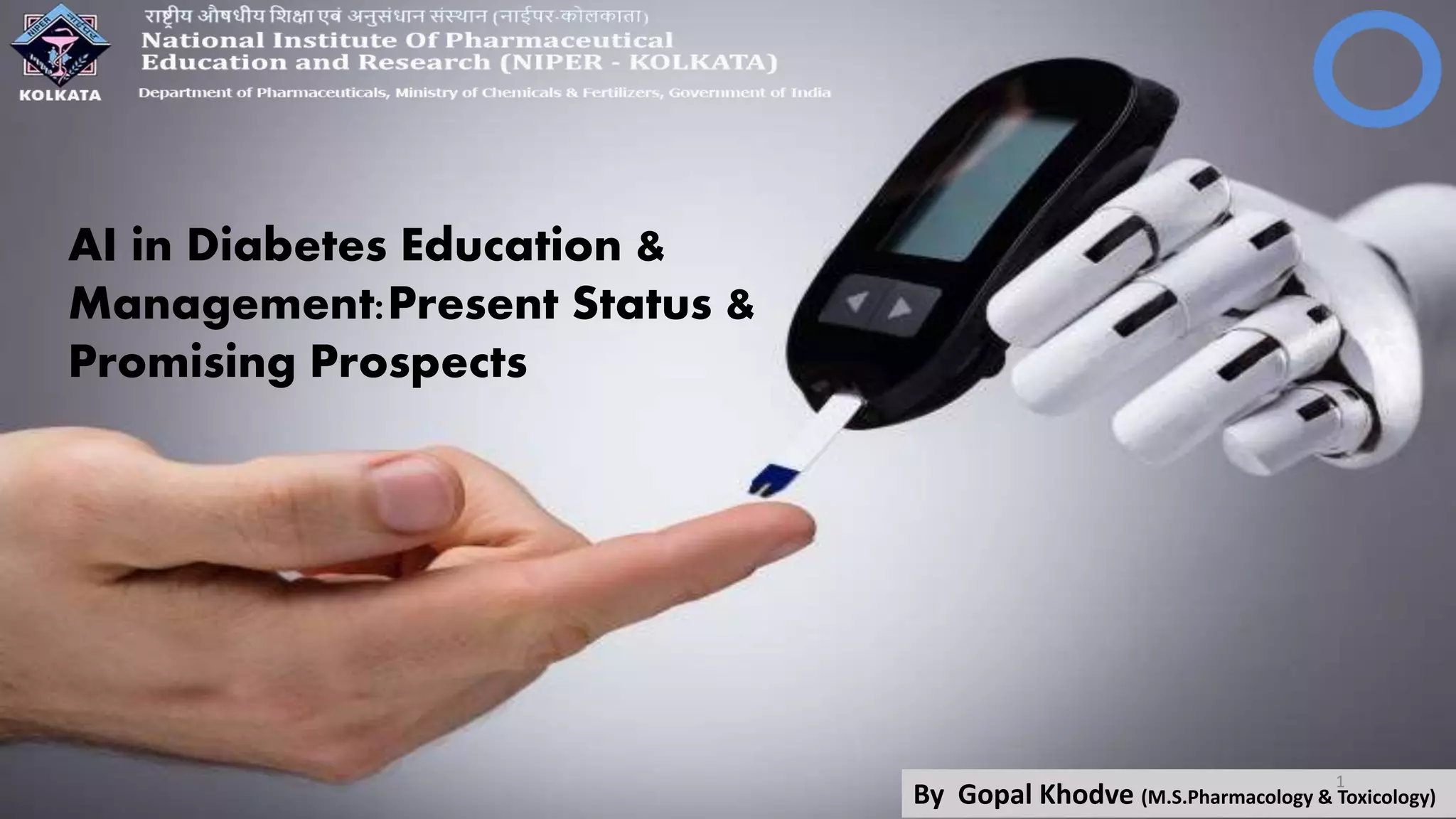
AI in Diabetes Education &
Management:Present Status &
Promising Prospects
1
Contents
1 of 10
3
1
2
4
5
Introduction
Diabetic Education
AI in Diabetes & it’s applications
Conclusion
Future Scope
2
Introduction
Despite the rapid development of science and technology in healthcare, diabetes remains an
incurable lifelong illness
According to recently published data from the International Diabetes Federation, the number
of people worldwide suffering from diabetes has reached 451 million
The prevention and management of diabetes is extremely important and diabetes education is
an essential component
Diabetes education aiming to improve the
self-management skills is an essential way
to help patients enhance their metabolic
control and quality of life.
Global and regional diabetes prevalence estimates for 2019 and projections for 2030 and 2045: Results from the International Diabetes Federation Diabetes Atlas, 9th edition, Cho NH, Shaw JE, Karuranga S,
Huang Y, Da Rocha Fernandes JD, Ohlrogge AW, et al. IDF diabetes atlas: global estimates of diabetes prevalence for 2017 and projections for 2045. Diabetes Res Clin Pract. (2018) 138:271–81. doi:
10.1016/j.diabres.2018.02.023
3
Quality Professional
PPT Presentation
Diabetes cannot be completely cured but
its severity and symptoms can be
managed by the use of Drugs, Insulin
Therapy, Monitoring tools and lifestyle
modifications.
Insulin
Therapy
Diabetic
Medication
Glucose
meter
Diet &
Exercise
Current Treatment on Diabetes Management
4
Diabetic Education
• The importance of diabetes self-management education was recognized in the
early 1970s to 1980s
• self-management is essential to reduce the risks of chronic complications in
diabetes patients.
• It helps patients to develop self-management skills to manage their own incorrect
behaviors, and therefore, various methods are used to customize patient oriented
programs.
• Offline diabetes education program can only serve 10–20 patients at a time, while
there is a worldwide shortage of diabetes specialists, nurses, and diabetes
education personnel.
• This suggests that new methods and models of educational intervention should be
explored to improve efficiency and coverage such that the long-term and patient-
specific requirements can be satisfied.
1)Muhlhauser I, Jorgens V, Berger M, Graninger W, Gurtler W, Hornke L,et al. Bicentric evaluation of a teaching and treatment programme for type 1 (insulin-dependent) diabetic patients:
improvement of metabolic control and other measures of diabetes care for up to 22 months. Diabetologia. (1983)25:470–6. doi: 10.1007/BF00284453 2) Zurn P, Dal Poz MR, Stilwell B, Adams O.
Imbalance in the health workforce. Hum Resour Health. (2004) 2:13. doi: 10.1186/1478-4491-2-13
5
Artificial intelligence
• Artificial intelligence is an interdisciplinary concept based on the foundations of computer
science, control theory, information theory, neuropsychology, philosophy, and linguistics
• AI employs artificial methods to impart intelligence on computers. The term “artificial
intelligence” was proposed as early as 1956.
• AI technologies, such as machine learning and data mining, have been increasingly
integrated with medical science and are gradually becoming important drivers of medical
development
AI presents unique advantages in disease diagnosis and prediction, surgical robotics,
image recognition, virtual medical assistance, pharmaceutical research and development,
and health management
SVM
Das N, Topalovic M, Janssens W. Artificial intelligence in diagnosis of obstructive lung disease: current status and future potential. Curr Opin Pulm Med. (2018)
24:117–23.
doi: 10.1097/MCP.0000000000000459
6
AI methodologies
in Diabetes
learning to
use
information
Extracting
conclusions from
information
Exploring and
discovering
information
AI Methodologies in Diabetes
AI technologies applied to diabetes education mainly focus on diabetes prediction, lifestyle
guidance, insulin injection guidance, blood sugar monitoring, self management, and
complication monitoring. etc
7
Contreras I, Vehi J. Artificial intelligence for diabetes management and decision support: literature review. J Med Internet Res. (2018) 20:e10775.doi:
10.2196/10775
Diabetes Prediction
• British scholars performed a systematic assessment of 94 existing type 2 Diabetes risk
assessment models and scoring standards using both quantitative and qualitative methods.
• The experimental results proved the stability of a considerable proportion of the risk
assessment approaches and verified these approaches in different patient groups
• In machine learning algorithms in conjunction with electronic medical record data from
2,000 patients with type 2 diabetes to predict the risk of diabetes.
• It was found that the area under the curve (AUC) values of 6-months and 1-year
predictions were <0.8. This indicated the feasibility of using electronic medical record
data to automatically predict diabetes and identify persons at a high risk of diabetes
Mani S, Chen Y, Elasy T, Clayton W, Denny J. Type 2 diabetes risk forecasting from EMR data
using machine learning. AMIA. (2012) 2012:606–15
8
Lifestyle Guidance for Diabetes Patients
• To appropriately adjust an insulin dose, the total amount of carbohydrates ingested by the patient
must be calculated.
• 1990s, some scholars used a computerized device (a food meter) to help 21 diabetes patients record
the types and amounts of food and beverages they consumed during a 1-week period.
• Software applications that use graphic analysis technologies to quickly and directly analyze dietary
content are under development
• software allows patients to quickly obtain relevant nutrition information, including carbohydrate
content and calories, by taking smartphone photos and will thereby help in their nutritional choices
• With the technical progress of picture
visualization and the widespread use of
wearable devices, we believe that AI
would play a crucial role in personalized
lifestyle guidance and thus help the
management of diabetes
Rivellese AA, Ventura MM, Vespasiani G, Bruni M, Moriconi V, PacioniD, et al. Evaluation of new computerized method for recording 7-day food intake in IDDM patients.
Diabetes Care. (1991) 14:602–4. doi: 10.2337/diacare.14.7.602
9
Insulin Injection Guidance
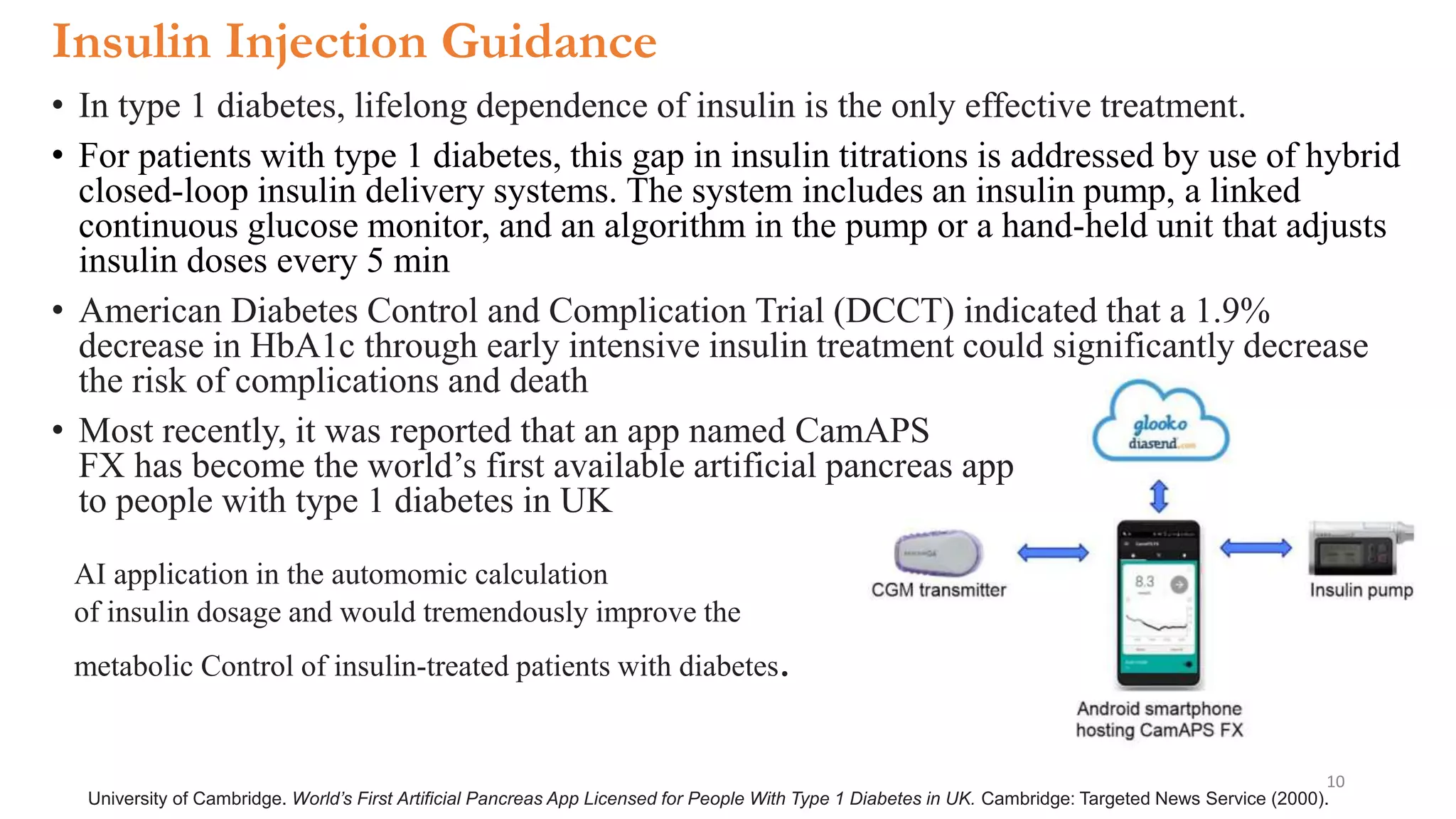
• In type 1 diabetes, lifelong dependence of insulin is the only effective treatment.
• For patients with type 1 diabetes, this gap in insulin titrations is addressed by use of hybrid
closed-loop insulin delivery systems. The system includes an insulin pump, a linked
continuous glucose monitor, and an algorithm in the pump or a hand-held unit that adjusts
insulin doses every 5 min
• American Diabetes Control and Complication Trial (DCCT) indicated that a 1.9%
decrease in HbA1c through early intensive insulin treatment could significantly decrease
the risk of complications and death
• Most recently, it was reported that an app named CamAPS
FX has become the world’s first available artificial pancreas app
to people with type 1 diabetes in UK
University of Cambridge. World’s First Artificial Pancreas App Licensed for People With Type 1 Diabetes in UK. Cambridge: Targeted News Service (2000).
AI application in the automomic calculation
of insulin dosage and would tremendously improve the
metabolic Control of insulin-treated patients with diabetes.
10
Blood sugar monitoring
• Continuous glucose monitoring (CGM) employing an intelligent algorithm combined with
insulin pump therapy can help patients achieve a better understanding of their blood sugar
fluctuations.
• In the US, the WellDoc diabetes management system, a smartphone software application,
has been approved by the FDA and is covered by most types of medical insurance.
Doctors can use this system in conjunction with patients’ blood sugar diaries to provide
individualized feedback and recommendations via real-time online communication
Quinn CC, Shardell MD, Terrin ML, Barr EA, Ballew SH, Gruber-Baldini AL. Cluster-randomized trial of a mobile phone personalized behavioral intervention for blood
glucose control. Diabetes Care. (2011) 34:1934–42. doi: 10.2337/dc11-0366
11
Monitoring of Diabetes Complications
• Most common complications of diabetes include vascular pathologies and peripheral
neuropathies
• Scholars who assessed adult retinal fundus photographs found that detection of diabetic
retinopathies by a deep learning algorithm achieved sensitivity and specificity of more than
93%
• A mobile app called “FootSnap” was developed to standardize diabetic foot images
The Jaccard similarity index (JSI) was used to confirm the reproducibility of the foot images.
• Fuzzy logic and applied it to the medical records of 244 patients diagnosed with diabetic
neuropathies; they found that the system could intelligently determine the severity of
diabetic neuropathies with a sensitivity of 89%,
a specificity of 98%, and an accuracy of 93%.
Katigari MR, Ayatollahi H, Malek M, Haghighi MK. Fuzzy expert system for diagnosing diabetic neuropathy. World J Diab. (2017) 8:80. doi: 10.4239/wjd.v8.i2.80
12
Conclusion
• The diabetes education and management is an essential means of improving the
quality of disease management
• The integration of education and management approaches with mobile health and AI
technologies has become an unstoppable trend
• Current challenges include technological, philosophical, and ethical dilemmas, as
well as issues surrounding user data security and privacy, and even legal hurdles.
Among these issues, information security is a new challenge for the AI era.
• Further efforts will be needed to promote the rapid and effective application of AI to
medical fields.
Gather large amounts of patient data
and establish individualized patient data
profiles
Establish in-depth crossover between the
professional knowledge of physicians
and AI technologies
Continuously update and
enlarge the existing knowledge
bases
perform standardized, randomized
control studies involving clinical
practice
Involve both clinicians
and patients jointly in a
system designed to
optimize effectiveness
13
New Technology in Future Diabetes Care
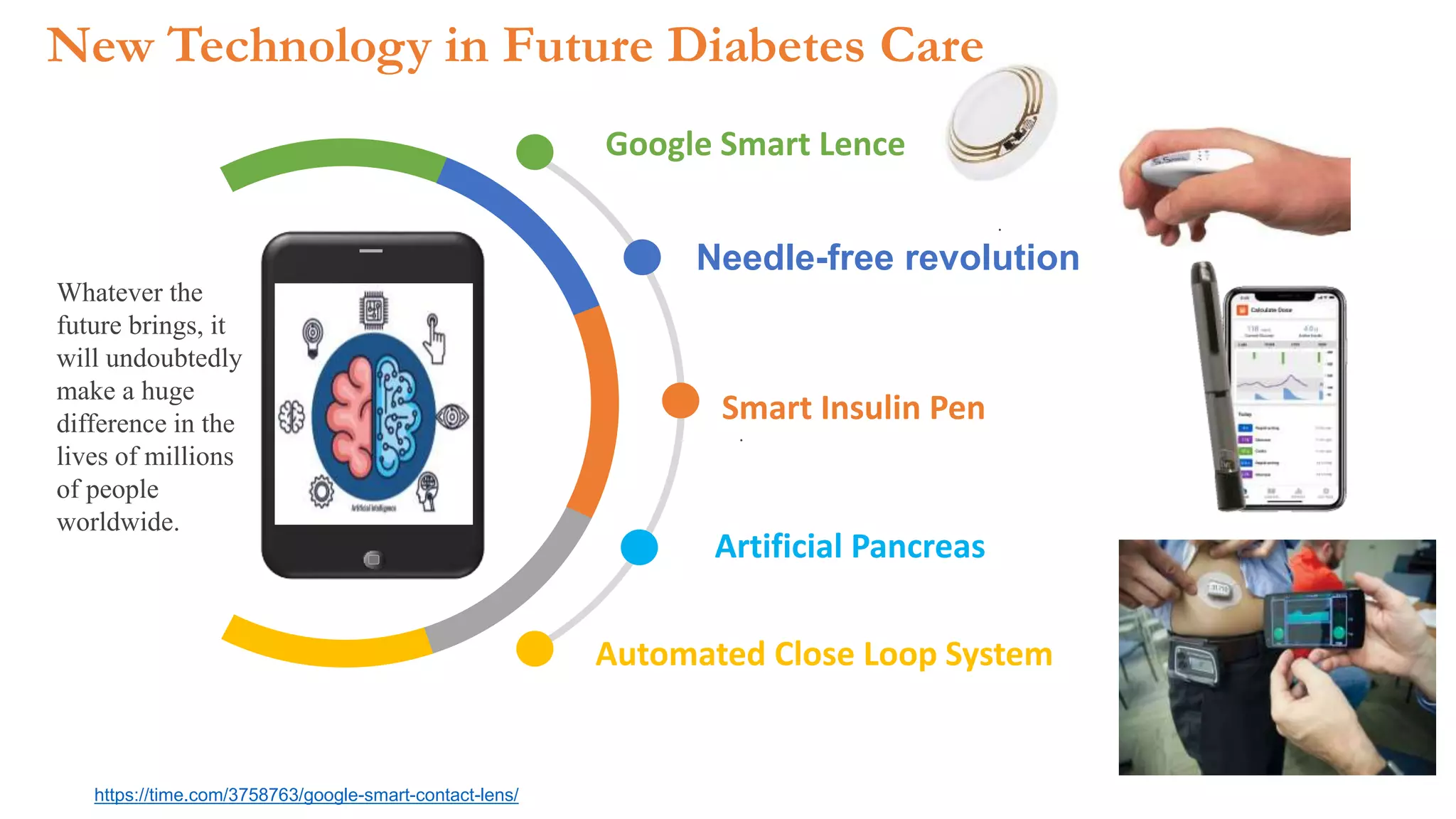
Whatever the
future brings, it
will undoubtedly
make a huge
difference in the
lives of millions
of people
worldwide.
Google Smart Lence
.
Needle-free revolution
.
Smart Insulin Pen
Automated Close Loop System
Artificial Pancreas
https://time.com/3758763/google-smart-contact-lens/
Future Scope
• The future use of integrated and comprehensive applications of individual AI technologies
in diabetes education can provide full-course, individualized, and intelligent education and
thereby provide patients with a lifetime of guidance and protection.
• There are numerous applications of AI on the market today or awaiting approval that can
improve patient care and potentially save lives.
15
Froisland DH, Arsand E. Integrating visual dietary documentation in mobile-phone-based self-management application for adolescents with type 1
diabetes. J Diab Sci Technol. (2015) 9:541–8. doi: 10.1177/1932296815576956
References
• Application of Artificial Intelligence in Diabetes Education and Management: Present Status and Promising Prospect
REVIEW published: 29 May 2020 doi: 10.3389/fpubh.2020.00173
• Global and regional diabetes prevalence estimates for 2019 and projections for 2030 and 2045: Results from the
International Diabetes Federation Diabetes Atlas, 9th edition, Cho NH, Shaw JE, Karuranga S, Huang Y, Da Rocha
Fernandes JD, Ohlrogge AW, et al. IDF diabetes atlas: global estimates of diabetes prevalence for 2017 and projections for
2045. Diabetes Res Clin Pract. (2018) 138:271–81.doi: 10.1016/j.diabres.2018.02.023
• Muhlhauser I, Jorgens V, Berger M, Graninger W, Gurtler W, Hornke L,et al. Bicentric evaluation of a teaching and
treatment programme for type 1 (insulin-dependent) diabetic patients: improvement of metabolic control and other
measures of diabetes care for up to 22 months. Diabetologia. (1983)25:470–6. doi: 10.1007/BF00284453
• Contreras I, Vehi J. Artificial intelligence for diabetes management and decision support: literature review. J Med Internet
Res. (2018) 20:e10775.doi: 10.2196/10775
• Zurn P, Dal Poz MR, Stilwell B, Adams O. Imbalance in the health workforce. Hum Resour Health. (2004) 2:13. doi:
10.1186/1478-4491-2-13
• Das N, Topalovic M, Janssens W. Artificial intelligence in diagnosis of obstructive lung disease: current status and future
potential. Curr Opin Pulm Med. (2018) 24:117–23. doi: 10.1097/MCP.0000000000000459
• Mani S, Chen Y, Elasy T, Clayton W, Denny J. Type 2 diabetes risk forecasting from EMR data using machine learning.
AMIA. (2012) 2012:606–15
• University of Cambridge. World’s First Artificial Pancreas App Licensed for People With Type 1 Diabetes in UK. Cambridge:
Targeted News Service (2000).
• Quinn CC, Shardell MD, Terrin ML, Barr EA, Ballew SH, Gruber-Baldini AL. Cluster-randomized trial of a mobile phone
personalized behavioral intervention for blood glucose control. Diabetes Care. (2011) 34:1934–42. doi: 10.2337/dc11-0366
16
• Thank You
Thank You
17

Ai in diabetes management

  • 1.
    By Gopal Khodve(M.S.Pharmacology & Toxicology) AI in Diabetes Education & Management:Present Status & Promising Prospects 1
  • 2.
    Contents 1 of 10 3 1 2 4 5 Introduction DiabeticEducation AI in Diabetes & it’s applications Conclusion Future Scope 2
  • 3.
    Introduction Despite the rapiddevelopment of science and technology in healthcare, diabetes remains an incurable lifelong illness According to recently published data from the International Diabetes Federation, the number of people worldwide suffering from diabetes has reached 451 million The prevention and management of diabetes is extremely important and diabetes education is an essential component Diabetes education aiming to improve the self-management skills is an essential way to help patients enhance their metabolic control and quality of life. Global and regional diabetes prevalence estimates for 2019 and projections for 2030 and 2045: Results from the International Diabetes Federation Diabetes Atlas, 9th edition, Cho NH, Shaw JE, Karuranga S, Huang Y, Da Rocha Fernandes JD, Ohlrogge AW, et al. IDF diabetes atlas: global estimates of diabetes prevalence for 2017 and projections for 2045. Diabetes Res Clin Pract. (2018) 138:271–81. doi: 10.1016/j.diabres.2018.02.023 3
  • 4.
    Quality Professional PPT Presentation Diabetescannot be completely cured but its severity and symptoms can be managed by the use of Drugs, Insulin Therapy, Monitoring tools and lifestyle modifications. Insulin Therapy Diabetic Medication Glucose meter Diet & Exercise Current Treatment on Diabetes Management 4
  • 5.
    Diabetic Education • Theimportance of diabetes self-management education was recognized in the early 1970s to 1980s • self-management is essential to reduce the risks of chronic complications in diabetes patients. • It helps patients to develop self-management skills to manage their own incorrect behaviors, and therefore, various methods are used to customize patient oriented programs. • Offline diabetes education program can only serve 10–20 patients at a time, while there is a worldwide shortage of diabetes specialists, nurses, and diabetes education personnel. • This suggests that new methods and models of educational intervention should be explored to improve efficiency and coverage such that the long-term and patient- specific requirements can be satisfied. 1)Muhlhauser I, Jorgens V, Berger M, Graninger W, Gurtler W, Hornke L,et al. Bicentric evaluation of a teaching and treatment programme for type 1 (insulin-dependent) diabetic patients: improvement of metabolic control and other measures of diabetes care for up to 22 months. Diabetologia. (1983)25:470–6. doi: 10.1007/BF00284453 2) Zurn P, Dal Poz MR, Stilwell B, Adams O. Imbalance in the health workforce. Hum Resour Health. (2004) 2:13. doi: 10.1186/1478-4491-2-13 5
  • 6.
    Artificial intelligence • Artificialintelligence is an interdisciplinary concept based on the foundations of computer science, control theory, information theory, neuropsychology, philosophy, and linguistics • AI employs artificial methods to impart intelligence on computers. The term “artificial intelligence” was proposed as early as 1956. • AI technologies, such as machine learning and data mining, have been increasingly integrated with medical science and are gradually becoming important drivers of medical development AI presents unique advantages in disease diagnosis and prediction, surgical robotics, image recognition, virtual medical assistance, pharmaceutical research and development, and health management SVM Das N, Topalovic M, Janssens W. Artificial intelligence in diagnosis of obstructive lung disease: current status and future potential. Curr Opin Pulm Med. (2018) 24:117–23. doi: 10.1097/MCP.0000000000000459 6
  • 7.
    AI methodologies in Diabetes learningto use information Extracting conclusions from information Exploring and discovering information AI Methodologies in Diabetes AI technologies applied to diabetes education mainly focus on diabetes prediction, lifestyle guidance, insulin injection guidance, blood sugar monitoring, self management, and complication monitoring. etc 7 Contreras I, Vehi J. Artificial intelligence for diabetes management and decision support: literature review. J Med Internet Res. (2018) 20:e10775.doi: 10.2196/10775
  • 8.
    Diabetes Prediction • Britishscholars performed a systematic assessment of 94 existing type 2 Diabetes risk assessment models and scoring standards using both quantitative and qualitative methods. • The experimental results proved the stability of a considerable proportion of the risk assessment approaches and verified these approaches in different patient groups • In machine learning algorithms in conjunction with electronic medical record data from 2,000 patients with type 2 diabetes to predict the risk of diabetes. • It was found that the area under the curve (AUC) values of 6-months and 1-year predictions were <0.8. This indicated the feasibility of using electronic medical record data to automatically predict diabetes and identify persons at a high risk of diabetes Mani S, Chen Y, Elasy T, Clayton W, Denny J. Type 2 diabetes risk forecasting from EMR data using machine learning. AMIA. (2012) 2012:606–15 8
  • 9.
    Lifestyle Guidance forDiabetes Patients • To appropriately adjust an insulin dose, the total amount of carbohydrates ingested by the patient must be calculated. • 1990s, some scholars used a computerized device (a food meter) to help 21 diabetes patients record the types and amounts of food and beverages they consumed during a 1-week period. • Software applications that use graphic analysis technologies to quickly and directly analyze dietary content are under development • software allows patients to quickly obtain relevant nutrition information, including carbohydrate content and calories, by taking smartphone photos and will thereby help in their nutritional choices • With the technical progress of picture visualization and the widespread use of wearable devices, we believe that AI would play a crucial role in personalized lifestyle guidance and thus help the management of diabetes Rivellese AA, Ventura MM, Vespasiani G, Bruni M, Moriconi V, PacioniD, et al. Evaluation of new computerized method for recording 7-day food intake in IDDM patients. Diabetes Care. (1991) 14:602–4. doi: 10.2337/diacare.14.7.602 9
  • 10.
    Insulin Injection Guidance •In type 1 diabetes, lifelong dependence of insulin is the only effective treatment. • For patients with type 1 diabetes, this gap in insulin titrations is addressed by use of hybrid closed-loop insulin delivery systems. The system includes an insulin pump, a linked continuous glucose monitor, and an algorithm in the pump or a hand-held unit that adjusts insulin doses every 5 min • American Diabetes Control and Complication Trial (DCCT) indicated that a 1.9% decrease in HbA1c through early intensive insulin treatment could significantly decrease the risk of complications and death • Most recently, it was reported that an app named CamAPS FX has become the world’s first available artificial pancreas app to people with type 1 diabetes in UK University of Cambridge. World’s First Artificial Pancreas App Licensed for People With Type 1 Diabetes in UK. Cambridge: Targeted News Service (2000). AI application in the automomic calculation of insulin dosage and would tremendously improve the metabolic Control of insulin-treated patients with diabetes. 10
  • 11.
    Blood sugar monitoring •Continuous glucose monitoring (CGM) employing an intelligent algorithm combined with insulin pump therapy can help patients achieve a better understanding of their blood sugar fluctuations. • In the US, the WellDoc diabetes management system, a smartphone software application, has been approved by the FDA and is covered by most types of medical insurance. Doctors can use this system in conjunction with patients’ blood sugar diaries to provide individualized feedback and recommendations via real-time online communication Quinn CC, Shardell MD, Terrin ML, Barr EA, Ballew SH, Gruber-Baldini AL. Cluster-randomized trial of a mobile phone personalized behavioral intervention for blood glucose control. Diabetes Care. (2011) 34:1934–42. doi: 10.2337/dc11-0366 11
  • 12.
    Monitoring of DiabetesComplications • Most common complications of diabetes include vascular pathologies and peripheral neuropathies • Scholars who assessed adult retinal fundus photographs found that detection of diabetic retinopathies by a deep learning algorithm achieved sensitivity and specificity of more than 93% • A mobile app called “FootSnap” was developed to standardize diabetic foot images The Jaccard similarity index (JSI) was used to confirm the reproducibility of the foot images. • Fuzzy logic and applied it to the medical records of 244 patients diagnosed with diabetic neuropathies; they found that the system could intelligently determine the severity of diabetic neuropathies with a sensitivity of 89%, a specificity of 98%, and an accuracy of 93%. Katigari MR, Ayatollahi H, Malek M, Haghighi MK. Fuzzy expert system for diagnosing diabetic neuropathy. World J Diab. (2017) 8:80. doi: 10.4239/wjd.v8.i2.80 12
  • 13.
    Conclusion • The diabeteseducation and management is an essential means of improving the quality of disease management • The integration of education and management approaches with mobile health and AI technologies has become an unstoppable trend • Current challenges include technological, philosophical, and ethical dilemmas, as well as issues surrounding user data security and privacy, and even legal hurdles. Among these issues, information security is a new challenge for the AI era. • Further efforts will be needed to promote the rapid and effective application of AI to medical fields. Gather large amounts of patient data and establish individualized patient data profiles Establish in-depth crossover between the professional knowledge of physicians and AI technologies Continuously update and enlarge the existing knowledge bases perform standardized, randomized control studies involving clinical practice Involve both clinicians and patients jointly in a system designed to optimize effectiveness 13
  • 14.
    New Technology inFuture Diabetes Care Whatever the future brings, it will undoubtedly make a huge difference in the lives of millions of people worldwide. Google Smart Lence . Needle-free revolution . Smart Insulin Pen Automated Close Loop System Artificial Pancreas https://time.com/3758763/google-smart-contact-lens/
  • 15.
    Future Scope • Thefuture use of integrated and comprehensive applications of individual AI technologies in diabetes education can provide full-course, individualized, and intelligent education and thereby provide patients with a lifetime of guidance and protection. • There are numerous applications of AI on the market today or awaiting approval that can improve patient care and potentially save lives. 15 Froisland DH, Arsand E. Integrating visual dietary documentation in mobile-phone-based self-management application for adolescents with type 1 diabetes. J Diab Sci Technol. (2015) 9:541–8. doi: 10.1177/1932296815576956
  • 16.
    References • Application ofArtificial Intelligence in Diabetes Education and Management: Present Status and Promising Prospect REVIEW published: 29 May 2020 doi: 10.3389/fpubh.2020.00173 • Global and regional diabetes prevalence estimates for 2019 and projections for 2030 and 2045: Results from the International Diabetes Federation Diabetes Atlas, 9th edition, Cho NH, Shaw JE, Karuranga S, Huang Y, Da Rocha Fernandes JD, Ohlrogge AW, et al. IDF diabetes atlas: global estimates of diabetes prevalence for 2017 and projections for 2045. Diabetes Res Clin Pract. (2018) 138:271–81.doi: 10.1016/j.diabres.2018.02.023 • Muhlhauser I, Jorgens V, Berger M, Graninger W, Gurtler W, Hornke L,et al. Bicentric evaluation of a teaching and treatment programme for type 1 (insulin-dependent) diabetic patients: improvement of metabolic control and other measures of diabetes care for up to 22 months. Diabetologia. (1983)25:470–6. doi: 10.1007/BF00284453 • Contreras I, Vehi J. Artificial intelligence for diabetes management and decision support: literature review. J Med Internet Res. (2018) 20:e10775.doi: 10.2196/10775 • Zurn P, Dal Poz MR, Stilwell B, Adams O. Imbalance in the health workforce. Hum Resour Health. (2004) 2:13. doi: 10.1186/1478-4491-2-13 • Das N, Topalovic M, Janssens W. Artificial intelligence in diagnosis of obstructive lung disease: current status and future potential. Curr Opin Pulm Med. (2018) 24:117–23. doi: 10.1097/MCP.0000000000000459 • Mani S, Chen Y, Elasy T, Clayton W, Denny J. Type 2 diabetes risk forecasting from EMR data using machine learning. AMIA. (2012) 2012:606–15 • University of Cambridge. World’s First Artificial Pancreas App Licensed for People With Type 1 Diabetes in UK. Cambridge: Targeted News Service (2000). • Quinn CC, Shardell MD, Terrin ML, Barr EA, Ballew SH, Gruber-Baldini AL. Cluster-randomized trial of a mobile phone personalized behavioral intervention for blood glucose control. Diabetes Care. (2011) 34:1934–42. doi: 10.2337/dc11-0366 16
  • 17.