ARTIFICIAL INTELLIGENCE
AND DIABETES
Iris Thiele Isip Tan MD, MSc

Professor 3, UP College of Medicine

Chief, UP Medical Informatics Unit

Director, UP Manila Interactive Learning Center
NOTHING TO DISCLOSE
I give consent for the audience to tweet this talk
and give me feedback (@endocrine_witch).
Feel free take pictures of my slides (though the
deck will be at www.slideshare.net/isiptan).
What is AI?
Use of AI in diabetes
Will AI replace
physicians?
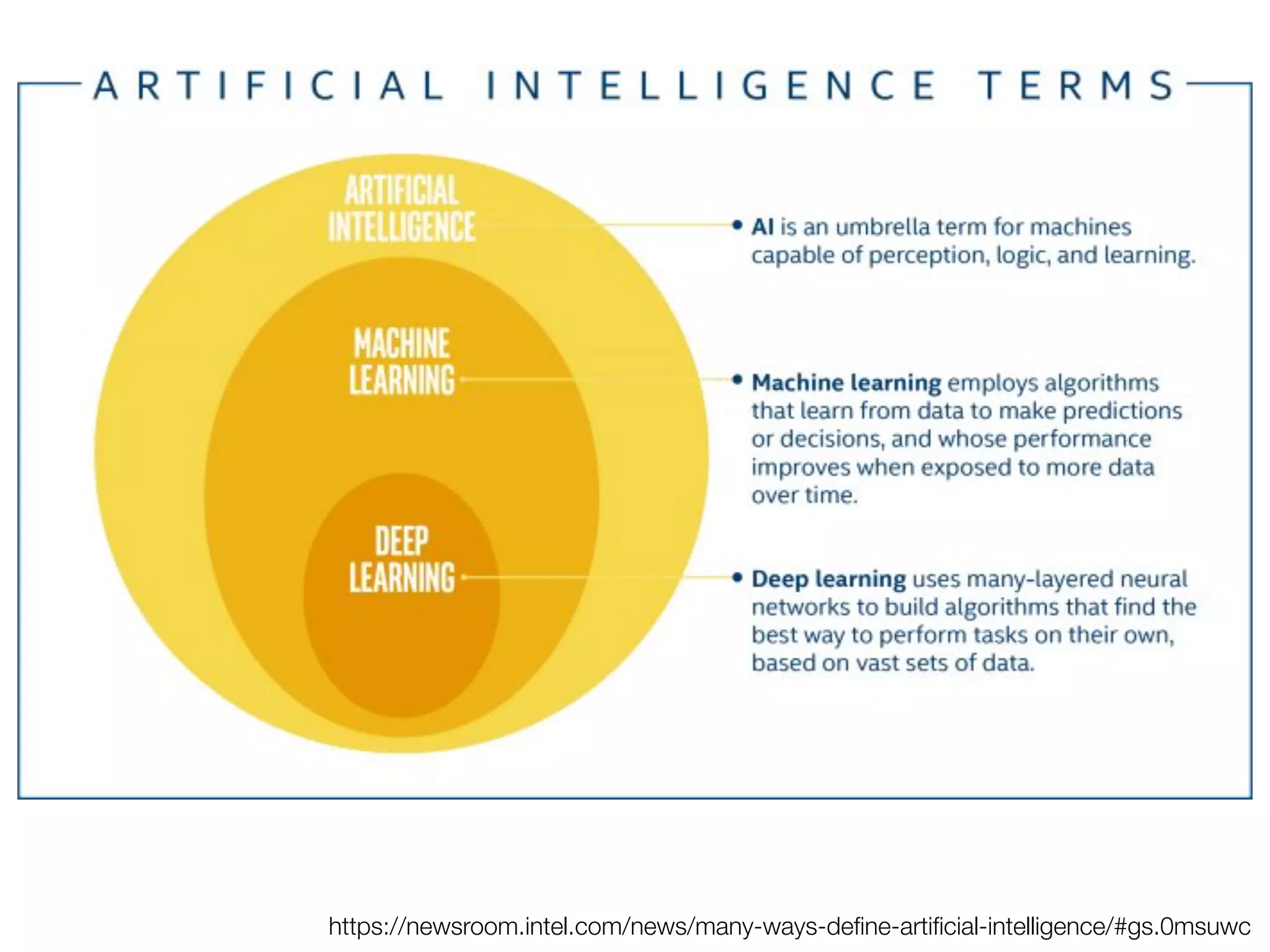
ARTIFICIAL
INTELLIGENCE
Allow machines to sense,
reason, act and adapt like
humans do - or in ways
beyond our abilities
https://newsroom.intel.com/news/many-ways-define-artificial-intelligence/#gs.0msuwc
More computing power
More data
Better algorithms
Broad investment
AI is not new …
https://newsroom.intel.com/news/many-ways-define-artificial-intelligence/#gs.0msuwc
What is AI?
Use of AI in diabetes
Will AI replace
physicians?
How to calculate insulin
bolus in type 1 diabetes
https://www.uni-trier.de/index.php?id=44502&L=2
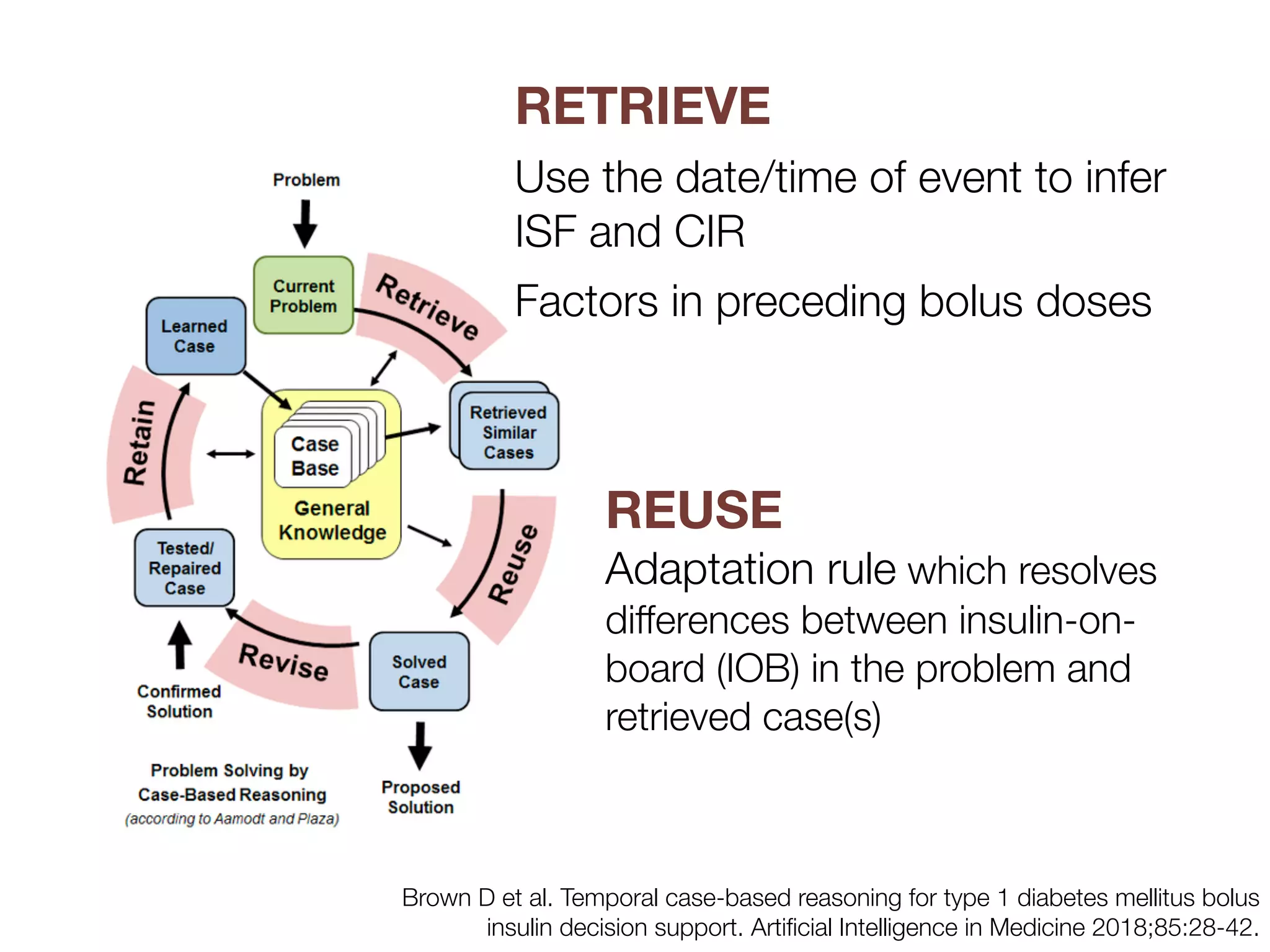
CASE-BASED REASONING
Problem-solving paradigm in
artificial intelligence
Similar problems tend to
have similar solutions
Case base: collection of
memorized chunks of
experience (cases)
Adaptive systems: new problem
solving experience is retained and
outdated experience is removed
Brown D et al. Temporal case-based reasoning for type 1 diabetes mellitus bolus
insulin decision support. Artificial Intelligence in Medicine 2018;85:28-42.
Case-based reasoning model
for T1DM bolus insulin advice
Brown D et al. Temporal case-based reasoning for type 1 diabetes mellitus bolus
insulin decision support. Artificial Intelligence in Medicine 2018;85:28-42.
CASE FEATURES
Determine which parameters are
required by bolus calculators
Carbohydrate intake
Pre-meal blood glucose
Target blood glucose level
Insulin-on-board
Exercise
Time
Insulin Sensitivity Factor (ISF)
Carbohydrate-to-Insulin Ratio (CIR)
https://mysugr.com/mysugr-bolus-calculator/
Insulin on board
Blood glucose
Carbs
Previous injections
Carbs/insulin ratio
Insulin correction
factor
Blood glucose
target
MySugr Bolus
Calculator
RETRIEVE
Use the date/time of event to infer
ISF and CIR
Factors in preceding bolus doses
REUSE
Adaptation rule which resolves
differences between insulin-on-
board (IOB) in the problem and
retrieved case(s)
Brown D et al. Temporal case-based reasoning for type 1 diabetes mellitus bolus
insulin decision support. Artificial Intelligence in Medicine 2018;85:28-42.
Brown D et al. Temporal case-based reasoning for type 1 diabetes mellitus bolus
insulin decision support. Artificial Intelligence in Medicine 2018;85:28-42.
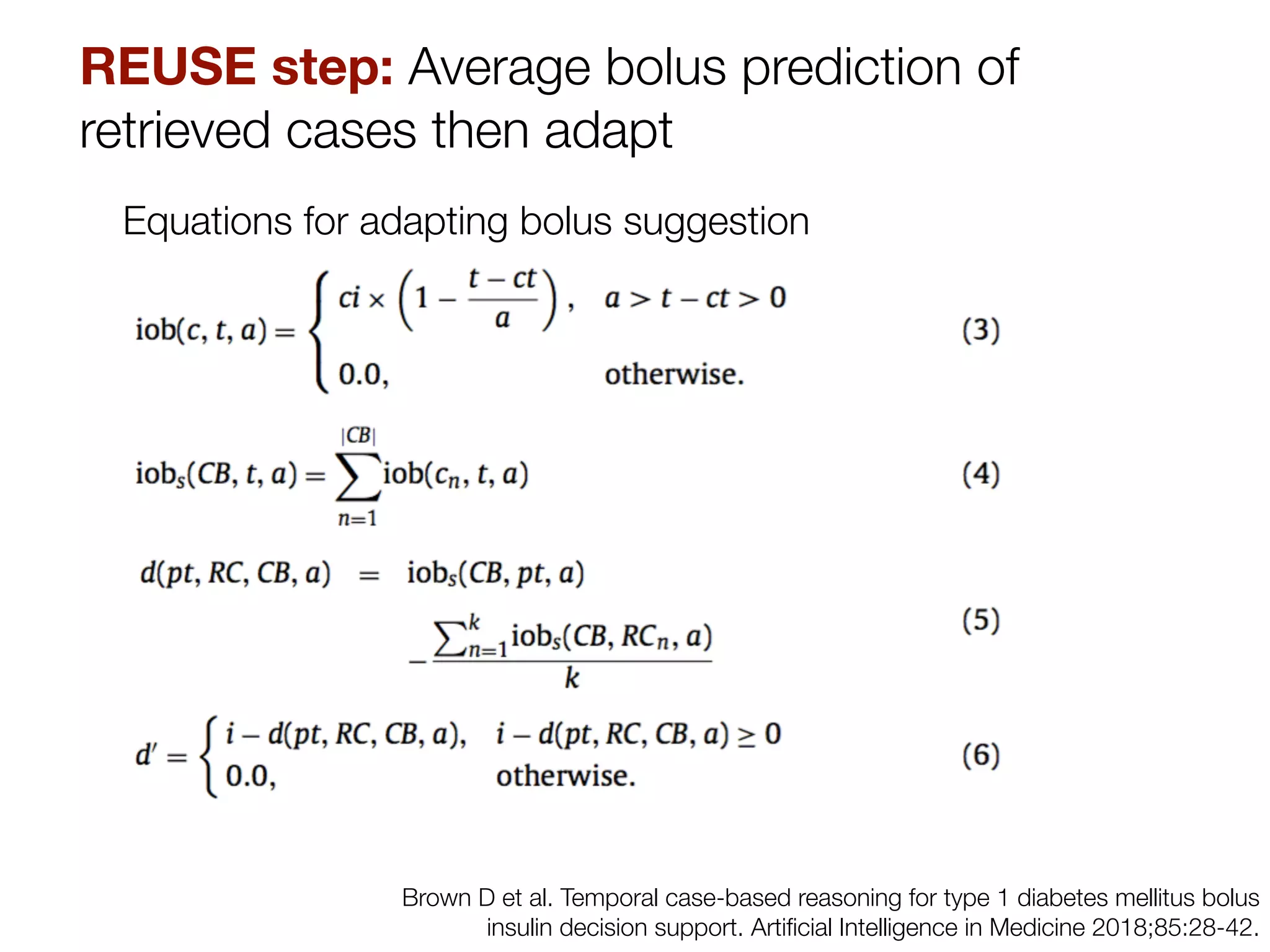
REUSE step: Average bolus prediction of
retrieved cases then adapt
Equation for averaging bolus prediction of retrieved cases
k = number of retrieved cases
in = bolus solution provided by a retrieved case
Brown D et al. Temporal case-based reasoning for type 1 diabetes mellitus bolus
insulin decision support. Artificial Intelligence in Medicine 2018;85:28-42.
REUSE step: Average bolus prediction of
retrieved cases then adapt
Equations for adapting bolus suggestion
Brown D et al. Temporal case-based reasoning for type 1 diabetes mellitus bolus
insulin decision support. Artificial Intelligence in Medicine 2018;85:28-42.
REVISE
If postprandial BG is equal
or close to target BG then
recommendation is optimal
and not revised
Brown D et al. Temporal case-based reasoning for type 1 diabetes mellitus bolus
insulin decision support. Artificial Intelligence in Medicine 2018;85:28-42.
Advanced Bolus Calculator for Diabetes (ABC4D)
CBR approach: tuning of ISF
and CIR for a small set of meal
scenarios
ISF and CIR from the most
similar case used in a standard
bolus calculator to suggest a
bolus dose
No temporal approach
Brown D et al. Temporal case-based reasoning for type 1 diabetes mellitus bolus
insulin decision support. Artificial Intelligence in Medicine 2018;85:28-42.
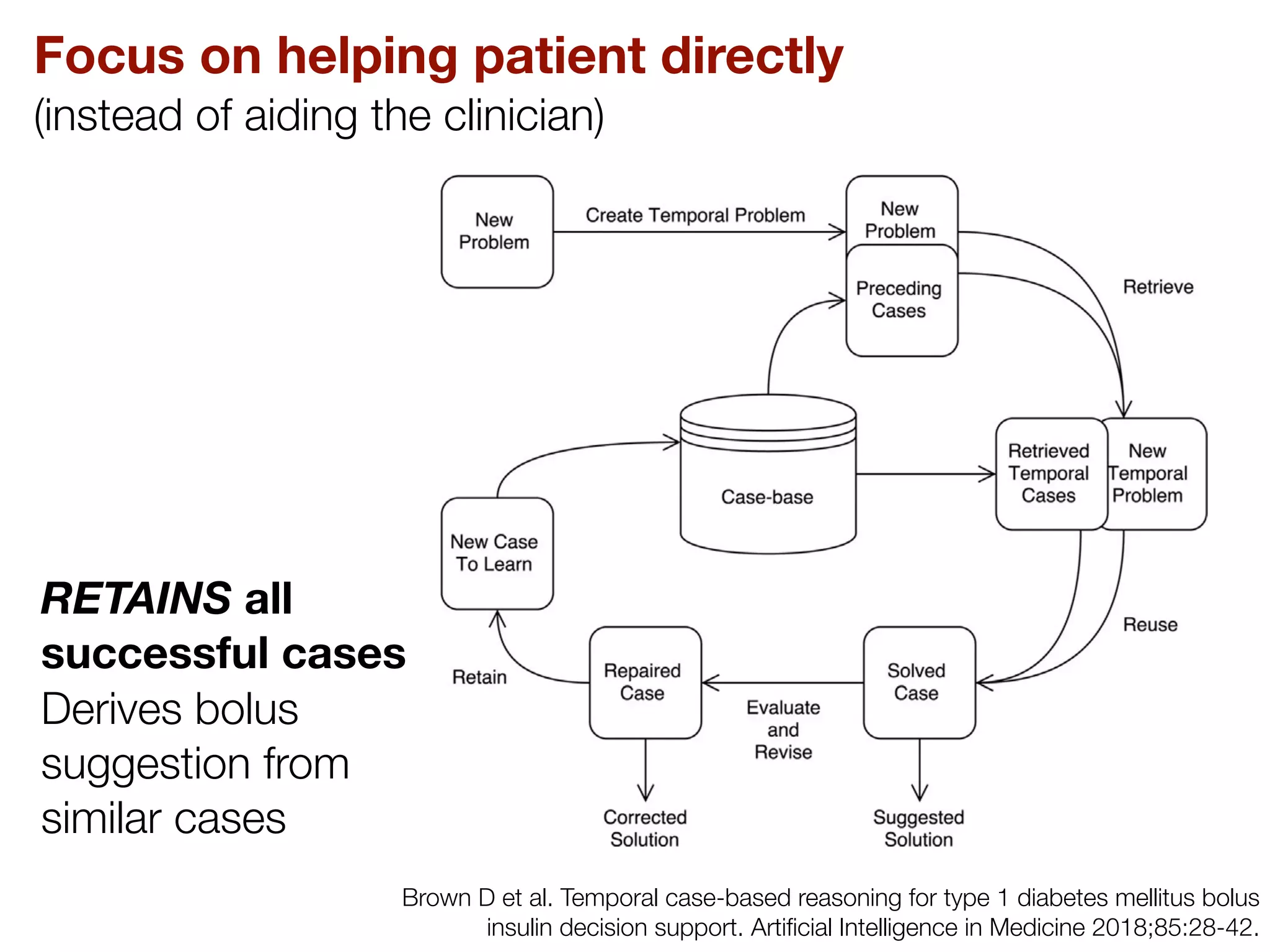
Focus on helping patient directly
(instead of aiding the clinician)
RETAINS all
successful cases
Derives bolus
suggestion from
similar cases
Brown D et al. Temporal case-based reasoning for type 1 diabetes mellitus bolus insulin
decision support. Artificial Intelligence in Medicine 2018;85:28-42.
CBR method can be
adopted by insulin
pumps, blood glucose
monitors, PCs and as
a web service
CBR service in the cloud opens possibility
of case sharing between subjects
Brown D et al. Temporal case-based reasoning for type 1 diabetes mellitus bolus insulin
decision support. Artificial Intelligence in Medicine 2018;85:28-42.
OBJECTIVE
Apply gradient forest analysis to identify subgroups of
ACCORD participants with increased/decreased risk of all-
cause mortality attributable to intensive therapy
Action to Control Cardiovascular Risk in Diabetes
(ACCORD) Trial halted due to increase in all-cause
mortality in intensive therapy arm
Median A1c
Intensive: 6.4%
Standard: 7.5%
ACCORD study group. N Engl J Med 2008; 358:2545-2559
Which subgroup in ACCORD was
most likely to benefit or have increased
mortality?
Heterogeneous
treatment effects
Basu et al. Diabetes Care 2017
doi.org/10.2337/dc17-2252
Basu et al. Diabetes Care 2017
doi.org/10.2337/dc17-2252
Summary risk stratification decision tree
Hemoglobin Glycosylation Index
(Observed - Predicted A1c)
Predicted A1c
0.009 x FPG [mg/dl] + 6.8
Basu et al. Diabetes Care 2017 doi.org/10.2337/dc17-2252
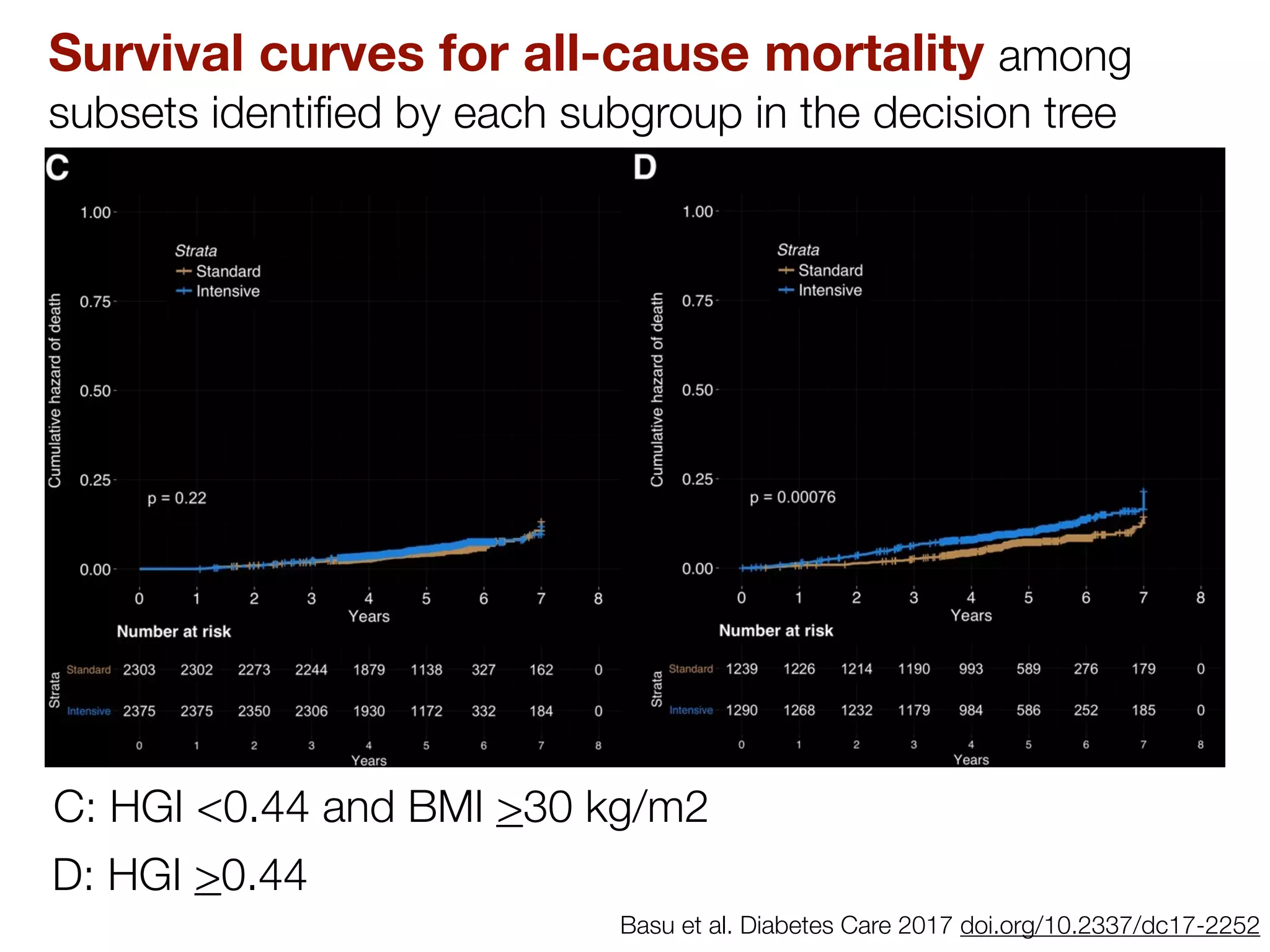
Survival curves for all-cause mortality among
subsets identified by each subgroup in the decision tree
A: HGI <0.44, BMI <30 kg/m2 and age <61 years
B: HGI <0.44, BMI <30 kg/m2 and age >61 years
Basu et al. Diabetes Care 2017 doi.org/10.2337/dc17-2252
Survival curves for all-cause mortality among
subsets identified by each subgroup in the decision tree
C: HGI <0.44 and BMI >30 kg/m2
D: HGI >0.44
What is AI?
Use of AI in diabetes
Will AI replace
physicians?
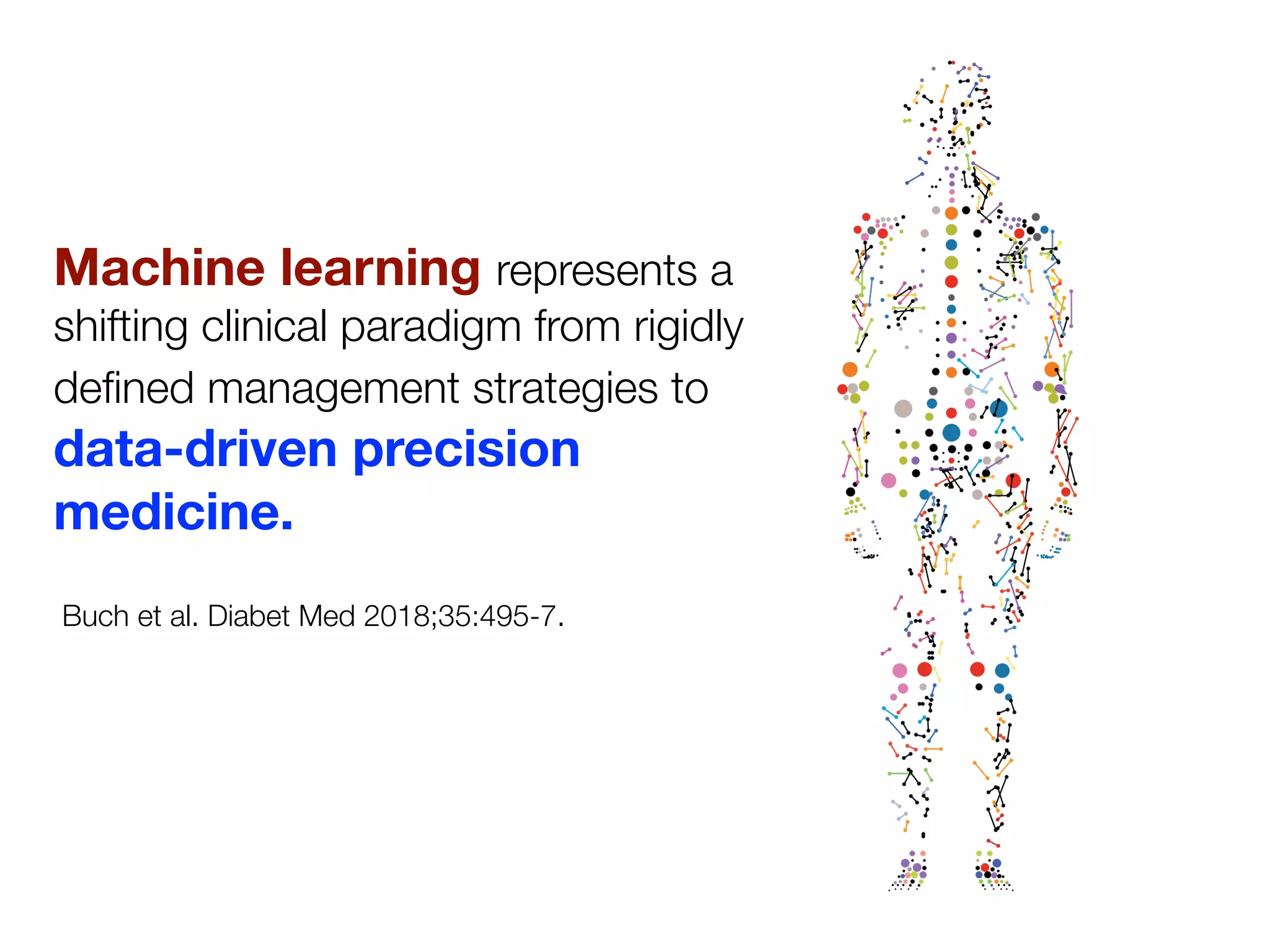
Machine learning represents a
shifting clinical paradigm from rigidly
defined management strategies to
data-driven precision
medicine.
Buch et al. Diabet Med 2018;35:495-7.
Clinical guidelines will be
delivered through apps
rather than static documents.
Buch et al. Diabet Med 2018;35:495-7.
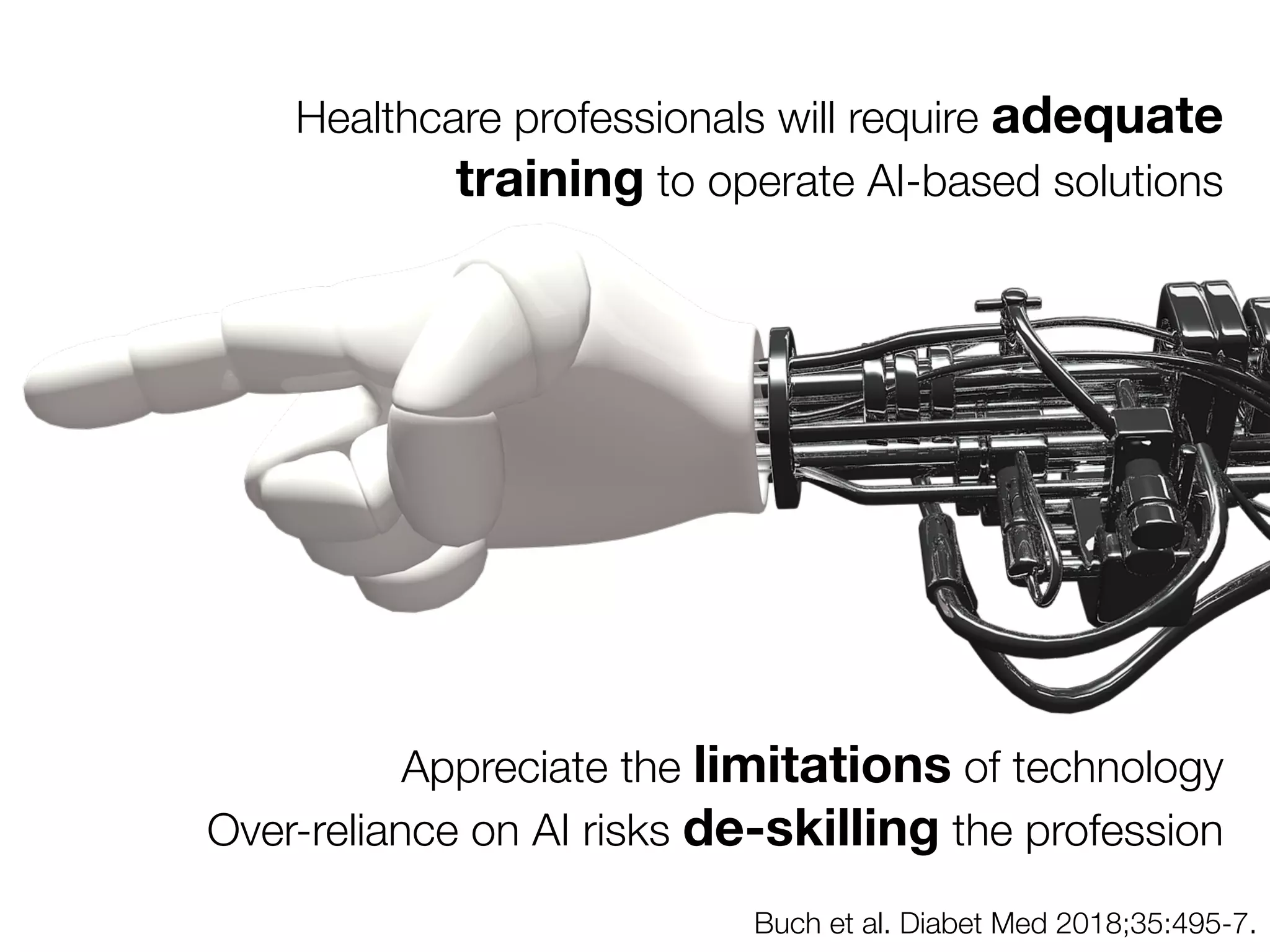
Healthcare professionals will require adequate
training to operate AI-based solutions
Appreciate the limitations of technology
Over-reliance on AI risks de-skilling the profession
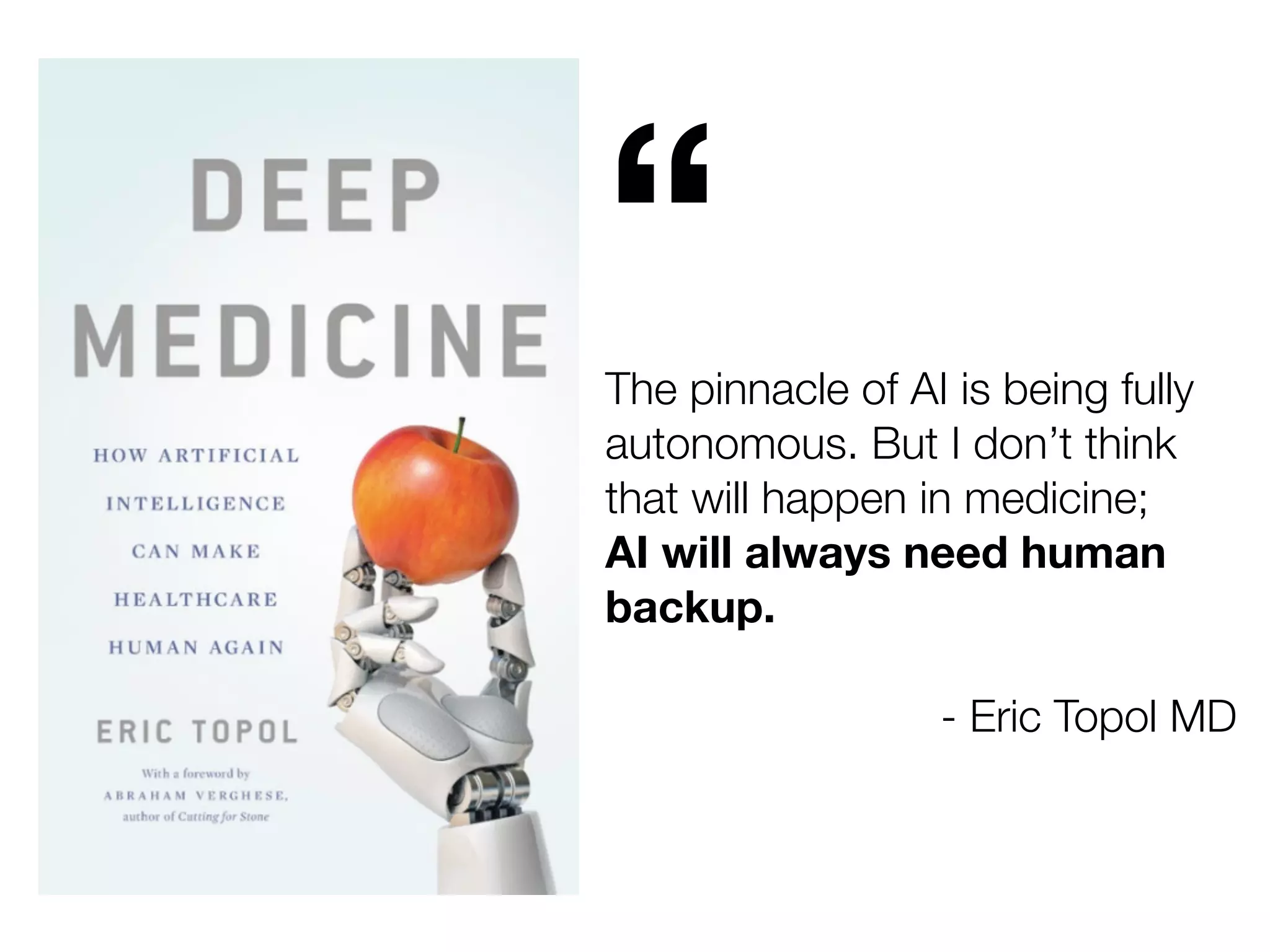
“The pinnacle of AI is being fully
autonomous. But I don’t think
that will happen in medicine;
AI will always need human
backup.
- Eric Topol MD
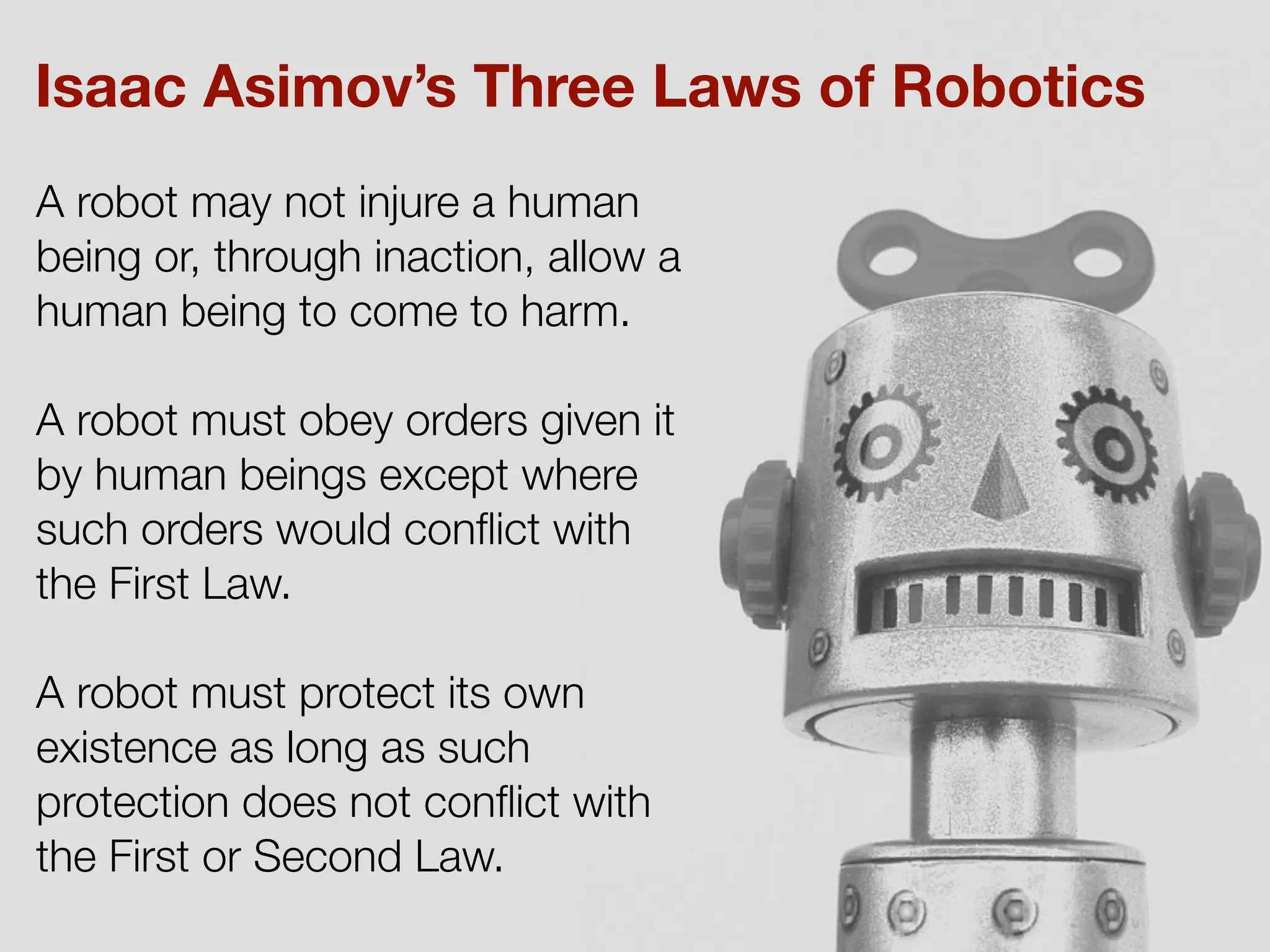
A robot may not injure a human
being or, through inaction, allow a
human being to come to harm.
A robot must obey orders given it
by human beings except where
such orders would conflict with
the First Law.
A robot must protect its own
existence as long as such
protection does not conflict with
the First or Second Law.
Isaac Asimov’s Three Laws of Robotics

Artificial Intelligence and Diabetes

  • 1.
    ARTIFICIAL INTELLIGENCE AND DIABETES IrisThiele Isip Tan MD, MSc Professor 3, UP College of Medicine Chief, UP Medical Informatics Unit Director, UP Manila Interactive Learning Center
  • 2.
    NOTHING TO DISCLOSE Igive consent for the audience to tweet this talk and give me feedback (@endocrine_witch). Feel free take pictures of my slides (though the deck will be at www.slideshare.net/isiptan).
  • 3.
    What is AI? Useof AI in diabetes Will AI replace physicians?
  • 4.
    ARTIFICIAL INTELLIGENCE Allow machines tosense, reason, act and adapt like humans do - or in ways beyond our abilities https://newsroom.intel.com/news/many-ways-define-artificial-intelligence/#gs.0msuwc
  • 5.
    More computing power Moredata Better algorithms Broad investment AI is not new … https://newsroom.intel.com/news/many-ways-define-artificial-intelligence/#gs.0msuwc
  • 6.
  • 7.
  • 8.
  • 9.
    What is AI? Useof AI in diabetes Will AI replace physicians?
  • 10.
    How to calculateinsulin bolus in type 1 diabetes
  • 11.
    https://www.uni-trier.de/index.php?id=44502&L=2 CASE-BASED REASONING Problem-solving paradigmin artificial intelligence Similar problems tend to have similar solutions Case base: collection of memorized chunks of experience (cases) Adaptive systems: new problem solving experience is retained and outdated experience is removed
  • 12.
    Brown D etal. Temporal case-based reasoning for type 1 diabetes mellitus bolus insulin decision support. Artificial Intelligence in Medicine 2018;85:28-42. Case-based reasoning model for T1DM bolus insulin advice
  • 13.
    Brown D etal. Temporal case-based reasoning for type 1 diabetes mellitus bolus insulin decision support. Artificial Intelligence in Medicine 2018;85:28-42. CASE FEATURES Determine which parameters are required by bolus calculators Carbohydrate intake Pre-meal blood glucose Target blood glucose level Insulin-on-board Exercise Time Insulin Sensitivity Factor (ISF) Carbohydrate-to-Insulin Ratio (CIR)
  • 14.
    https://mysugr.com/mysugr-bolus-calculator/ Insulin on board Bloodglucose Carbs Previous injections Carbs/insulin ratio Insulin correction factor Blood glucose target MySugr Bolus Calculator
  • 15.
    RETRIEVE Use the date/timeof event to infer ISF and CIR Factors in preceding bolus doses REUSE Adaptation rule which resolves differences between insulin-on- board (IOB) in the problem and retrieved case(s) Brown D et al. Temporal case-based reasoning for type 1 diabetes mellitus bolus insulin decision support. Artificial Intelligence in Medicine 2018;85:28-42.
  • 16.
    Brown D etal. Temporal case-based reasoning for type 1 diabetes mellitus bolus insulin decision support. Artificial Intelligence in Medicine 2018;85:28-42. REUSE step: Average bolus prediction of retrieved cases then adapt Equation for averaging bolus prediction of retrieved cases k = number of retrieved cases in = bolus solution provided by a retrieved case
  • 17.
    Brown D etal. Temporal case-based reasoning for type 1 diabetes mellitus bolus insulin decision support. Artificial Intelligence in Medicine 2018;85:28-42. REUSE step: Average bolus prediction of retrieved cases then adapt Equations for adapting bolus suggestion
  • 18.
    Brown D etal. Temporal case-based reasoning for type 1 diabetes mellitus bolus insulin decision support. Artificial Intelligence in Medicine 2018;85:28-42. REVISE If postprandial BG is equal or close to target BG then recommendation is optimal and not revised
  • 19.
    Brown D etal. Temporal case-based reasoning for type 1 diabetes mellitus bolus insulin decision support. Artificial Intelligence in Medicine 2018;85:28-42. Advanced Bolus Calculator for Diabetes (ABC4D) CBR approach: tuning of ISF and CIR for a small set of meal scenarios ISF and CIR from the most similar case used in a standard bolus calculator to suggest a bolus dose No temporal approach
  • 20.
    Brown D etal. Temporal case-based reasoning for type 1 diabetes mellitus bolus insulin decision support. Artificial Intelligence in Medicine 2018;85:28-42. Focus on helping patient directly (instead of aiding the clinician) RETAINS all successful cases Derives bolus suggestion from similar cases
  • 21.
    Brown D etal. Temporal case-based reasoning for type 1 diabetes mellitus bolus insulin decision support. Artificial Intelligence in Medicine 2018;85:28-42. CBR method can be adopted by insulin pumps, blood glucose monitors, PCs and as a web service
  • 22.
    CBR service inthe cloud opens possibility of case sharing between subjects Brown D et al. Temporal case-based reasoning for type 1 diabetes mellitus bolus insulin decision support. Artificial Intelligence in Medicine 2018;85:28-42.
  • 23.
    OBJECTIVE Apply gradient forestanalysis to identify subgroups of ACCORD participants with increased/decreased risk of all- cause mortality attributable to intensive therapy
  • 24.
    Action to ControlCardiovascular Risk in Diabetes (ACCORD) Trial halted due to increase in all-cause mortality in intensive therapy arm Median A1c Intensive: 6.4% Standard: 7.5% ACCORD study group. N Engl J Med 2008; 358:2545-2559
  • 25.
    Which subgroup inACCORD was most likely to benefit or have increased mortality? Heterogeneous treatment effects
  • 26.
    Basu et al.Diabetes Care 2017 doi.org/10.2337/dc17-2252
  • 27.
    Basu et al.Diabetes Care 2017 doi.org/10.2337/dc17-2252 Summary risk stratification decision tree Hemoglobin Glycosylation Index (Observed - Predicted A1c) Predicted A1c 0.009 x FPG [mg/dl] + 6.8
  • 28.
    Basu et al.Diabetes Care 2017 doi.org/10.2337/dc17-2252 Survival curves for all-cause mortality among subsets identified by each subgroup in the decision tree A: HGI <0.44, BMI <30 kg/m2 and age <61 years B: HGI <0.44, BMI <30 kg/m2 and age >61 years
  • 29.
    Basu et al.Diabetes Care 2017 doi.org/10.2337/dc17-2252 Survival curves for all-cause mortality among subsets identified by each subgroup in the decision tree C: HGI <0.44 and BMI >30 kg/m2 D: HGI >0.44
  • 30.
    What is AI? Useof AI in diabetes Will AI replace physicians?
  • 31.
    Machine learning representsa shifting clinical paradigm from rigidly defined management strategies to data-driven precision medicine. Buch et al. Diabet Med 2018;35:495-7.
  • 32.
    Buch et al.Diabet Med 2018;35:495-7. Clinical guidelines will be delivered through apps rather than static documents.
  • 33.
    Buch et al.Diabet Med 2018;35:495-7. Healthcare professionals will require adequate training to operate AI-based solutions Appreciate the limitations of technology Over-reliance on AI risks de-skilling the profession
  • 34.
    “The pinnacle ofAI is being fully autonomous. But I don’t think that will happen in medicine; AI will always need human backup. - Eric Topol MD
  • 35.
    A robot maynot injure a human being or, through inaction, allow a human being to come to harm. A robot must obey orders given it by human beings except where such orders would conflict with the First Law. A robot must protect its own existence as long as such protection does not conflict with the First or Second Law. Isaac Asimov’s Three Laws of Robotics