1
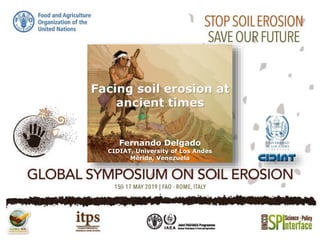
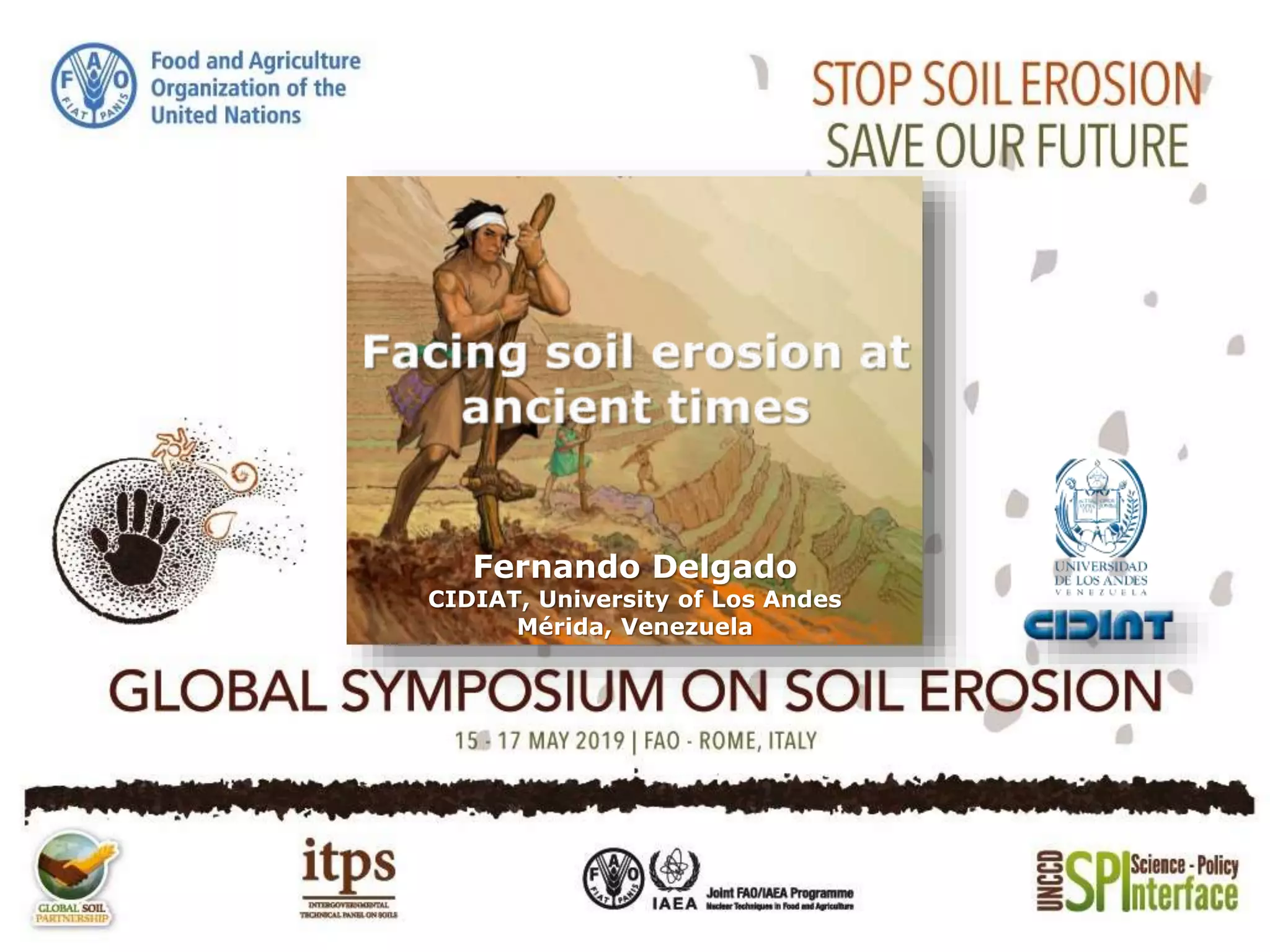
Fernando Delgado
CIDIAT, University of Los Andes
Mérida, Venezuela
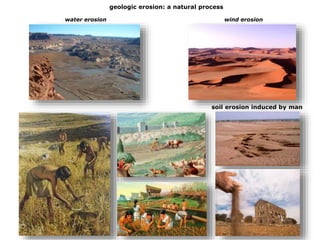
water erosion wind erosion
geologic erosion: a natural process
soil erosion induced by man
intensive agriculture
intensiva
incipient agriculture, hunting
and collecting
hunting, fishing and collecting
North
South
basic human activities in the American continent at ancient times
Facing soil erosion at ancient times
Central
America
soil
detachment
soil
transport
deposition
Strategies to face soil erosion
three processes three strategies
strategy 1
strategy 2
strategy 3
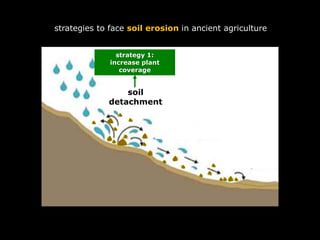
soil
detachment
strategy 1:
increase plant
coverage
strategies to face soil erosion in ancient agriculture
the Maya culture (2000 b.C. - 900 AD)
main crop management system in Mayan agriculture
cut & burning: shifting cultivation
a “milpa” landscape into
the Maya forest
maize
beanssquash
The “milpa” system:
(short-cycle crop association)
leading technology: crop associations
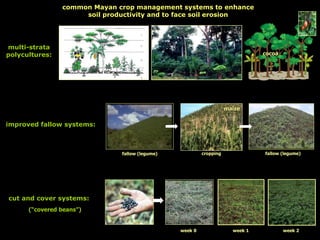
common Mayan crop management systems to enhance
soil productivity and to face soil erosion
cut and cover systems:
(“covered beans”)
week 1 week 2week 0
improved fallow systems:
maize
fallow (legume) fallow (legume)cropping
multi-strata
polycultures: cocoa
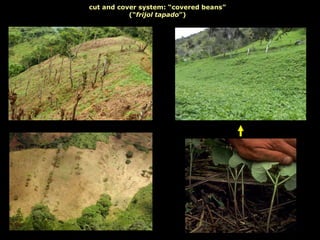
cut and cover system: “covered beans”
(“frijol tapado”)
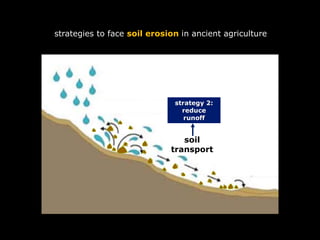
soil
transport
strategy 2:
reduce
runoff
strategies to face soil erosion in ancient agriculture
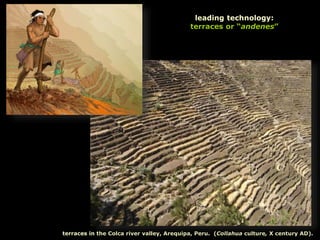
terraces in the Colca river valley, Arequipa, Peru. (Collahua culture, X century AD).
leading technology:
terraces or “andenes”
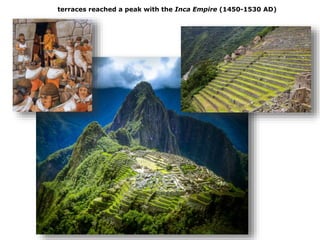
terraces reached a peak with the Inca Empire (1450-1530 AD)
typical section of an Andean terrace
0.5 – 0.6 m
topsoil
(organic substrate)
sand
gravel
small stones
big stones
original terrain level
stone
wall
2 m
ground penetrating radar (GPR) composition of a Machu Picchu farming terrace
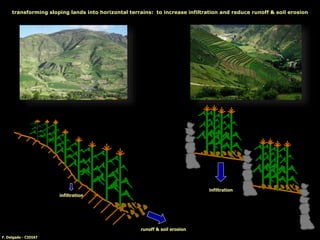
transforming sloping lands into horizontal terrains: to increase infiltration and reduce runoff & soil erosion
F. Delgado - CIDIAT
runoff & soil erosion
infiltration
infiltration
24/05/2019
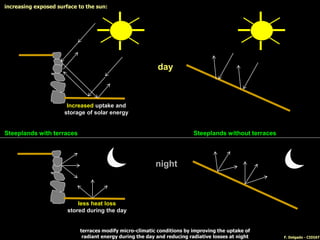
night
less heat loss
stored during the day
F. Delgado - CIDIAT
Steeplands with terraces
day
Increased uptake and
storage of solar energy
Steeplands without terraces
increasing exposed surface to the sun:
terraces modify micro-climatic conditions by improving the uptake of
radiant energy during the day and reducing radiative losses at night
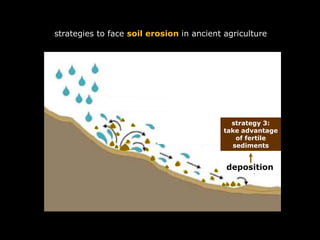
deposition
strategy 3:
take advantage
of fertile
sediments
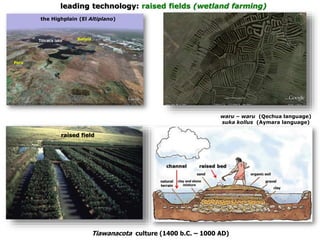
strategies to face soil erosion in ancient agriculture
leading technology: raised fields (wetland farming)
the Highplain (El Altiplano)
Tiawanacota culture (1400 b.C. – 1000 AD)
raised field
waru – waru (Qechua language)
suka kollus (Aymara language)
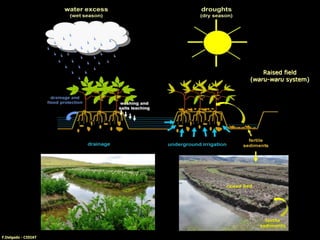
F.Delgado - CIDIAT
Raised field
(waru-waru system)
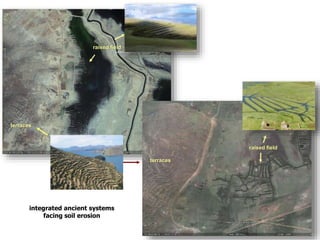
raised beds
terraces
raised field
integrated ancient systems
facing soil erosion
terraces
raised field
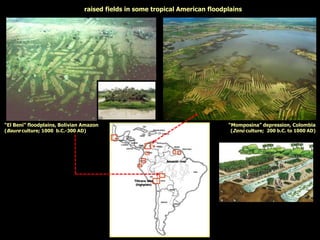
raised fields in some tropical American floodplains
Titicaca lake
(highplain)
“El Beni” floodplains, Bolivian Amazon
(Baure culture; 1000 b.C.-300 AD)
Amazon river
“Momposina” depression, Colombia
(Zenú culture; 200 b.C. to 1000 AD)
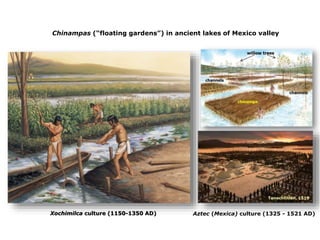
Xochimilca culture (1150-1350 AD)
Chinampas (“floating gardens”) in ancient lakes of Mexico valley
Aztec (Mexica) culture (1325 - 1521 AD)
23
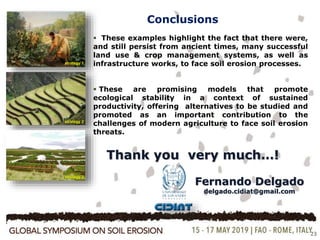
Conclusions
 These examples highlight the fact that there were,
and still persist from ancient times, many successful
land use & crop management systems, as well as
infrastructure works, to face soil erosion processes.
 These are promising models that promote
ecological stability in a context of sustained
productivity, offering alternatives to be studied and
promoted as an important contribution to the
challenges of modern agriculture to face soil erosion
threats.
strategy 1
strategy 2
strategy 3
Thank you very much…!
Fernando Delgado
delgado.cidiat@gmail.com

Facing soil erosion at ancient times

  • 1.
    1 Fernando Delgado CIDIAT, Universityof Los Andes Mérida, Venezuela
  • 2.
    water erosion winderosion geologic erosion: a natural process soil erosion induced by man
  • 4.
    intensive agriculture intensiva incipient agriculture,hunting and collecting hunting, fishing and collecting North South basic human activities in the American continent at ancient times Facing soil erosion at ancient times Central America
  • 5.
    soil detachment soil transport deposition Strategies to facesoil erosion three processes three strategies strategy 1 strategy 2 strategy 3
  • 6.
    soil detachment strategy 1: increase plant coverage strategiesto face soil erosion in ancient agriculture
  • 7.
    the Maya culture(2000 b.C. - 900 AD)
  • 8.
    main crop managementsystem in Mayan agriculture cut & burning: shifting cultivation a “milpa” landscape into the Maya forest maize beanssquash The “milpa” system: (short-cycle crop association) leading technology: crop associations
  • 9.
    common Mayan cropmanagement systems to enhance soil productivity and to face soil erosion cut and cover systems: (“covered beans”) week 1 week 2week 0 improved fallow systems: maize fallow (legume) fallow (legume)cropping multi-strata polycultures: cocoa
  • 10.
    cut and coversystem: “covered beans” (“frijol tapado”)
  • 11.
    soil transport strategy 2: reduce runoff strategies toface soil erosion in ancient agriculture
  • 12.
    terraces in theColca river valley, Arequipa, Peru. (Collahua culture, X century AD). leading technology: terraces or “andenes”
  • 13.
    terraces reached apeak with the Inca Empire (1450-1530 AD)
  • 14.
    typical section ofan Andean terrace 0.5 – 0.6 m topsoil (organic substrate) sand gravel small stones big stones original terrain level stone wall 2 m ground penetrating radar (GPR) composition of a Machu Picchu farming terrace
  • 15.
    transforming sloping landsinto horizontal terrains: to increase infiltration and reduce runoff & soil erosion F. Delgado - CIDIAT runoff & soil erosion infiltration infiltration
  • 16.
    24/05/2019 night less heat loss storedduring the day F. Delgado - CIDIAT Steeplands with terraces day Increased uptake and storage of solar energy Steeplands without terraces increasing exposed surface to the sun: terraces modify micro-climatic conditions by improving the uptake of radiant energy during the day and reducing radiative losses at night
  • 17.
    deposition strategy 3: take advantage offertile sediments strategies to face soil erosion in ancient agriculture
  • 18.
    leading technology: raisedfields (wetland farming) the Highplain (El Altiplano) Tiawanacota culture (1400 b.C. – 1000 AD) raised field waru – waru (Qechua language) suka kollus (Aymara language)
  • 19.
    F.Delgado - CIDIAT Raisedfield (waru-waru system)
  • 20.
    raised beds terraces raised field integratedancient systems facing soil erosion terraces raised field
  • 21.
    raised fields insome tropical American floodplains Titicaca lake (highplain) “El Beni” floodplains, Bolivian Amazon (Baure culture; 1000 b.C.-300 AD) Amazon river “Momposina” depression, Colombia (Zenú culture; 200 b.C. to 1000 AD)
  • 22.
    Xochimilca culture (1150-1350AD) Chinampas (“floating gardens”) in ancient lakes of Mexico valley Aztec (Mexica) culture (1325 - 1521 AD)
  • 23.
    23 Conclusions  These exampleshighlight the fact that there were, and still persist from ancient times, many successful land use & crop management systems, as well as infrastructure works, to face soil erosion processes.  These are promising models that promote ecological stability in a context of sustained productivity, offering alternatives to be studied and promoted as an important contribution to the challenges of modern agriculture to face soil erosion threats. strategy 1 strategy 2 strategy 3 Thank you very much…! Fernando Delgado delgado.cidiat@gmail.com