Managing reputational risk Eneni Oduwole Jan. 2009
Contents What is reputation? Attributes of reputation How can reputation be damaged? What is reputational risk management? Attributes of reputational risk management Benefits of reputational risk management Managing reputational risk Rating reputational risk Indicators of levels of reputational risk
What is reputation? It is : an intangible asset not a brand  the sum total of all stakeholders’ experience  public information regarding an organization’s trustworthiness It also assures: premium value growth opportunities to shareholders (value growth resulting from managerial experience, innovation, intellectual property) continued comparative advantage
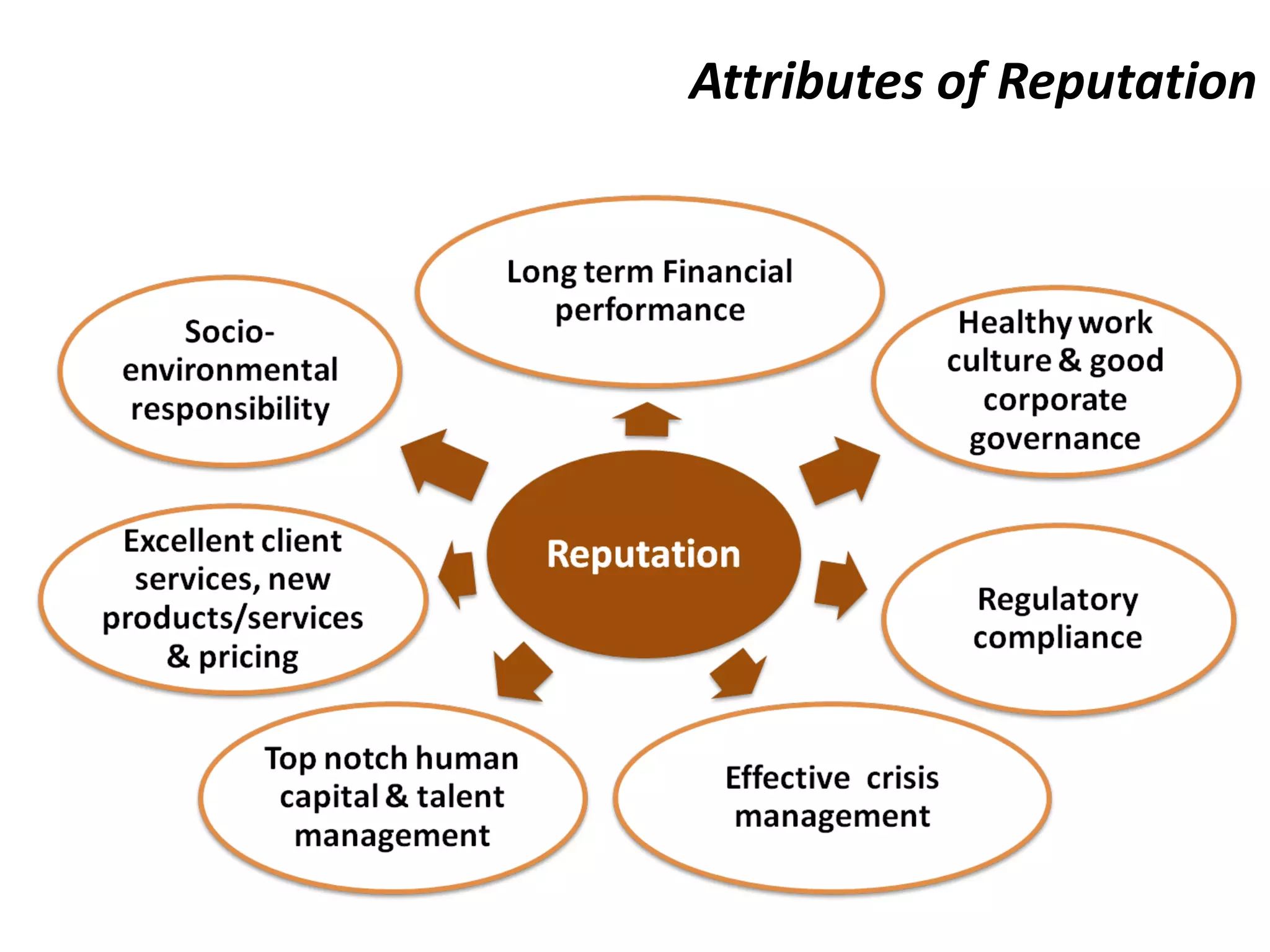
Attributes of  Reputation
How can reputation be damaged? Actions that result in stakeholders lose of trust and confidence Public perception of organization’s standards drop Sudden change of management; no succession planning Adverse regulatory reports and sanctions Increased incidences of fraud Consistent unfavourable ratings Continued decline in share price
What is Reputational Risk Management? It is the current and prospective impact on earnings and capital arising from negative public opinion It measures the change in perception of a company It is linked with customer expectations regarding an organization’s ability to conduct business securely and responsibly
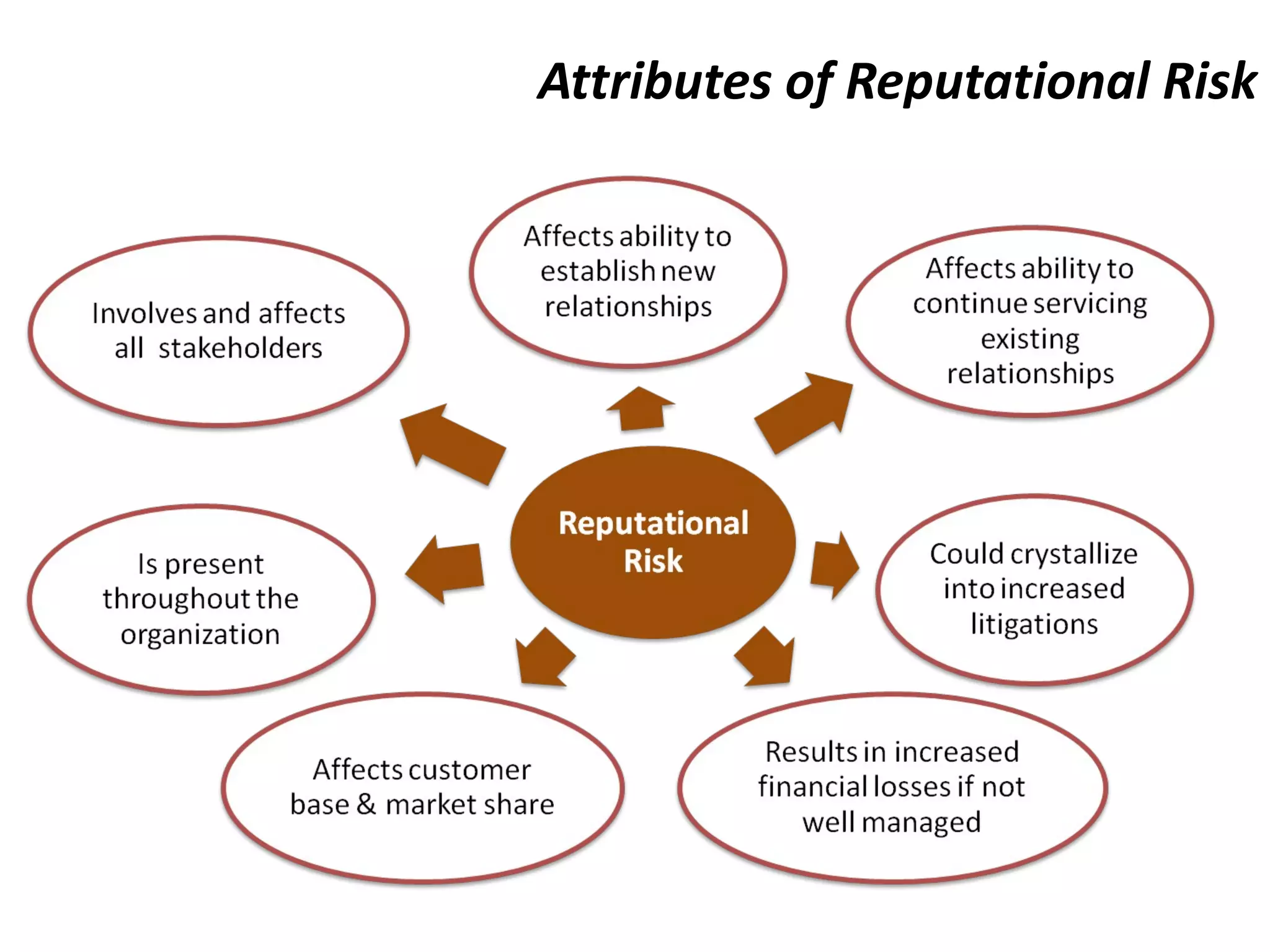
Attributes of  Reputational Risk
Benefits of Reputational Risk Management Identifies key risks that can affect an organization's reputation adversely Assesses potential impact  Ensures timely and appropriate response to adverse public criticisms Enables a good work culture is promoted by Management Ensures effective communication and disclosure to all stakeholders Promotes commitment and trust between all stakeholders
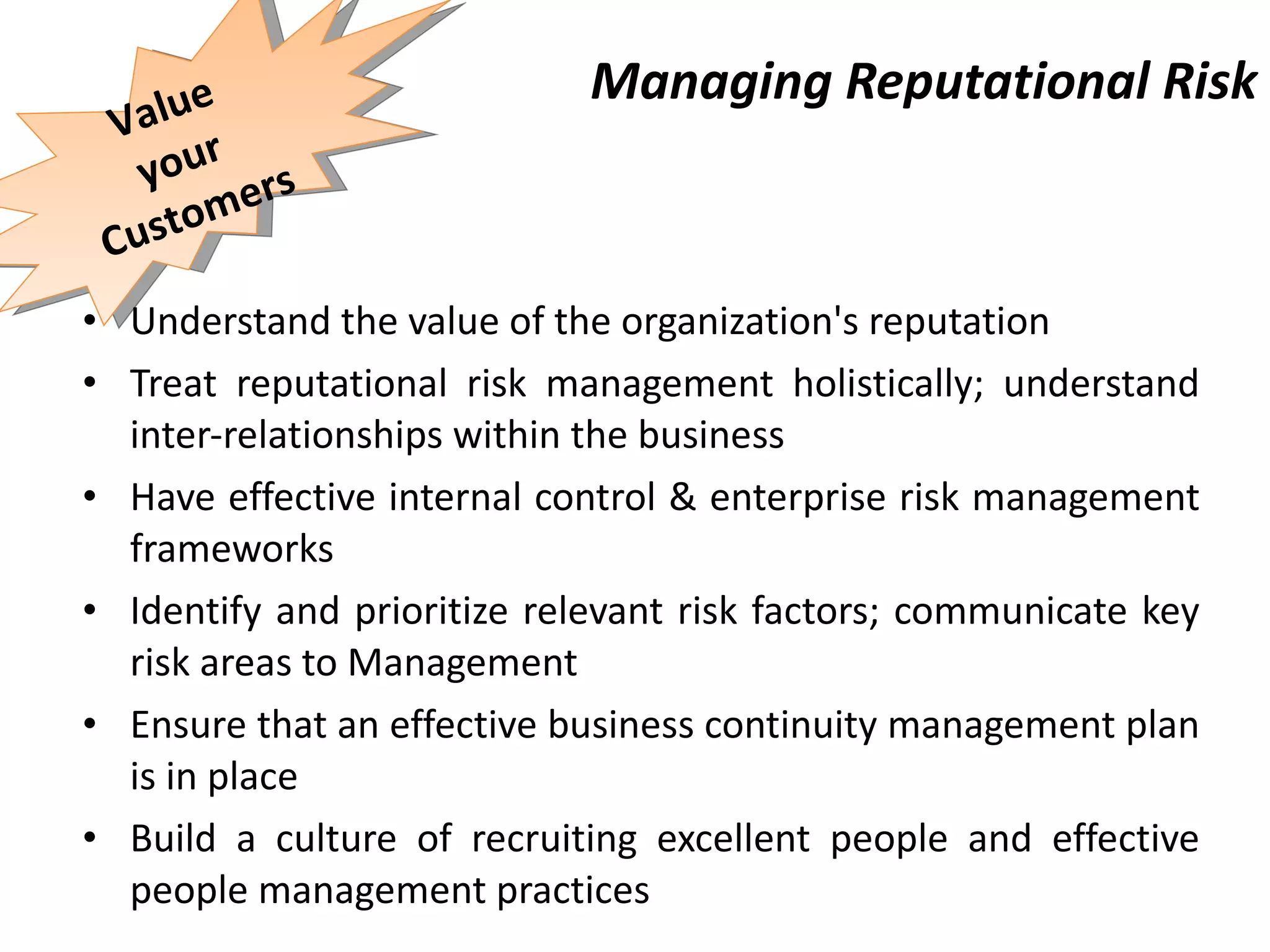
Managing Reputational Risk Understand the value of the organization's reputation  Treat reputational risk management holistically; understand inter-relationships within the business Have effective internal control & enterprise risk management frameworks Identify and prioritize relevant risk factors; communicate key risk areas to  Management Ensure that an effective business continuity management plan is in place Build a culture of recruiting excellent people and effective people management practices Value your Customers
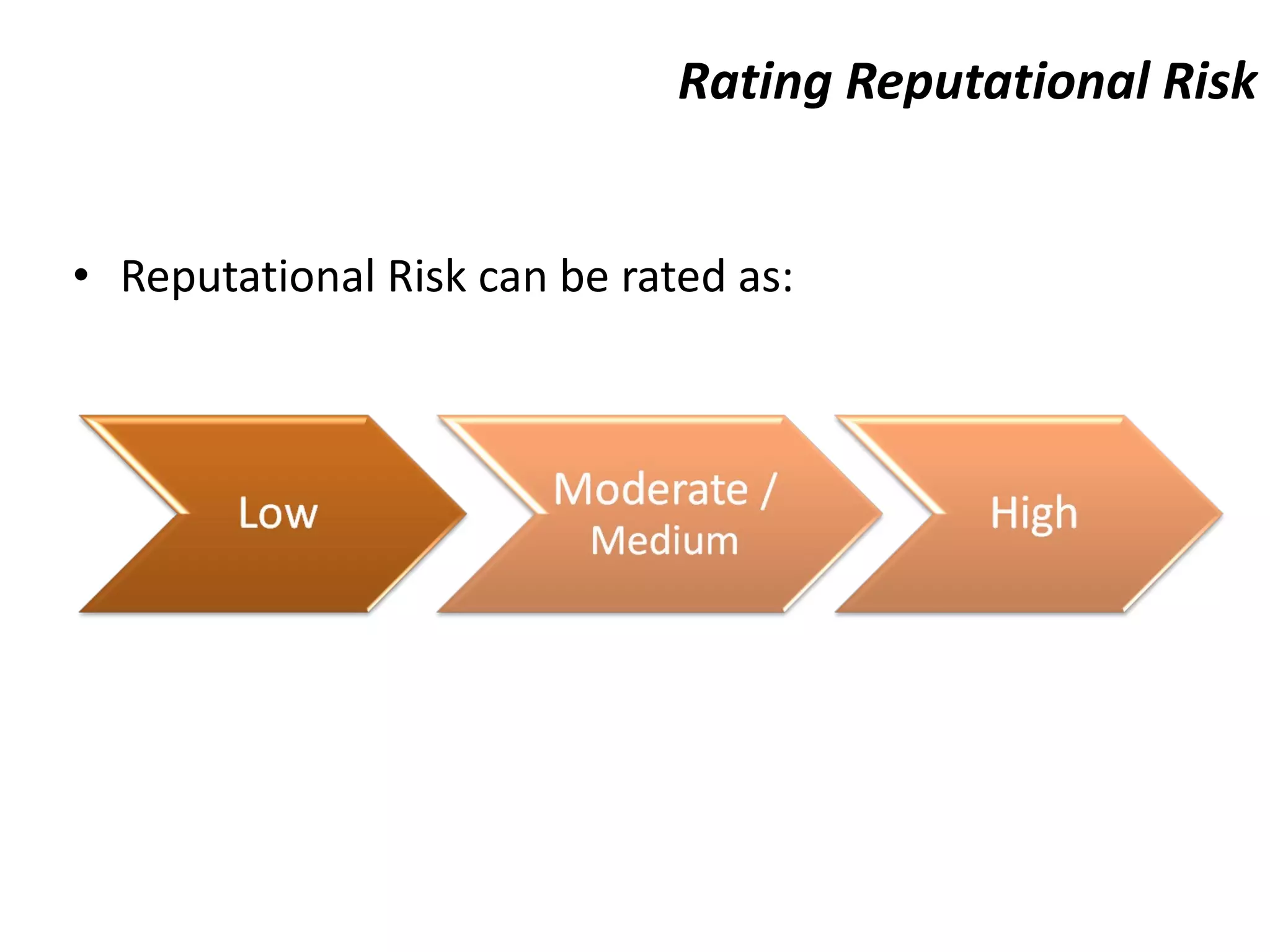
Rating Reputational Risk Reputational Risk can be rated as:
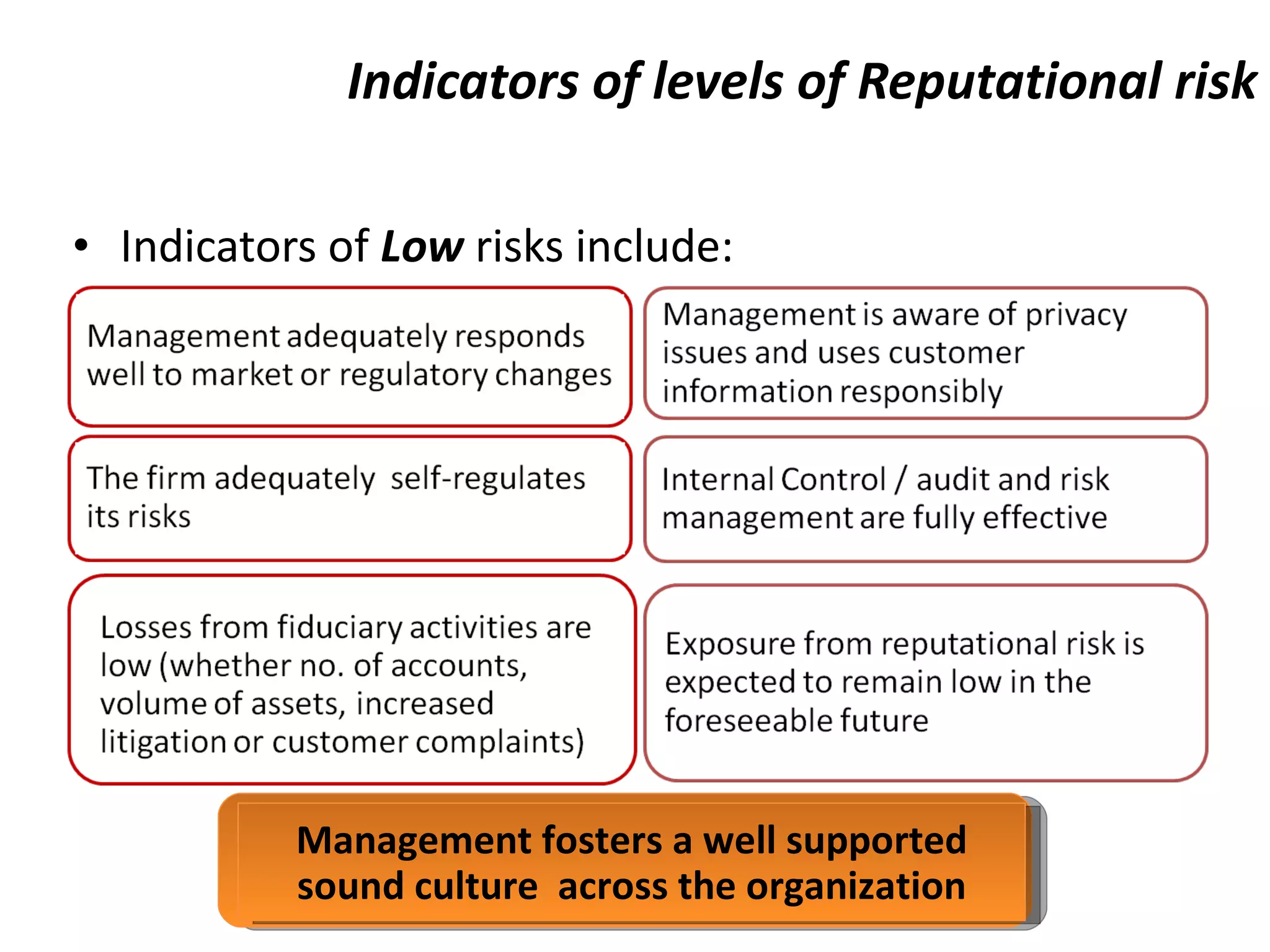
Indicators of levels of Reputational risk Indicators of  Low  risks include: Management fosters a well supported sound culture  across the organization Management fosters a well supported sound culture  across the organization
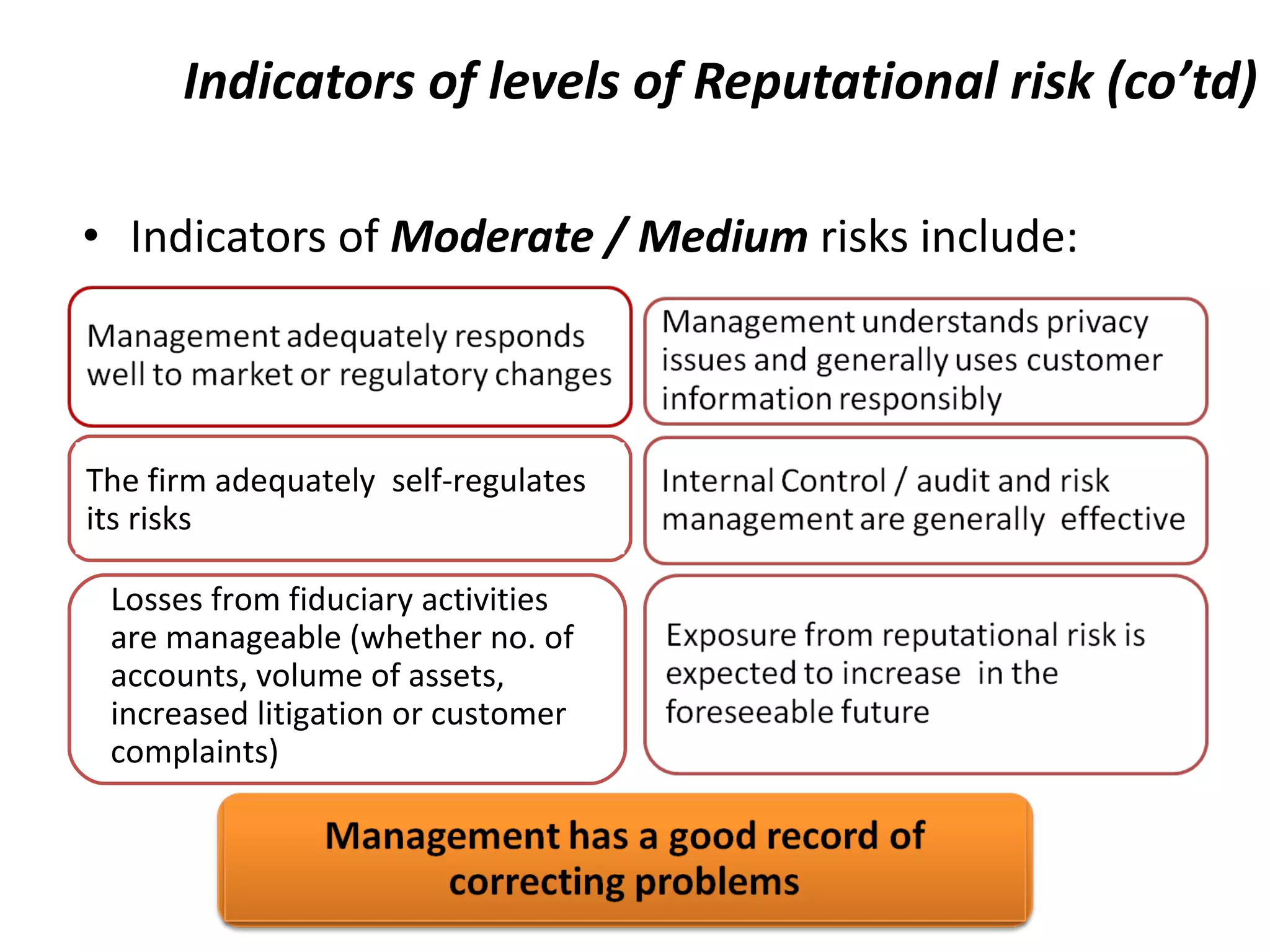
Indicators of levels of Reputational risk (co’td) Indicators of  Moderate / Medium  risks include: Management fosters a well supported sound culture  across the organization The firm adequately  self-regulates  its risks Losses from fiduciary activities are manageable (whether no. of accounts, volume of assets, increased litigation or customer complaints)
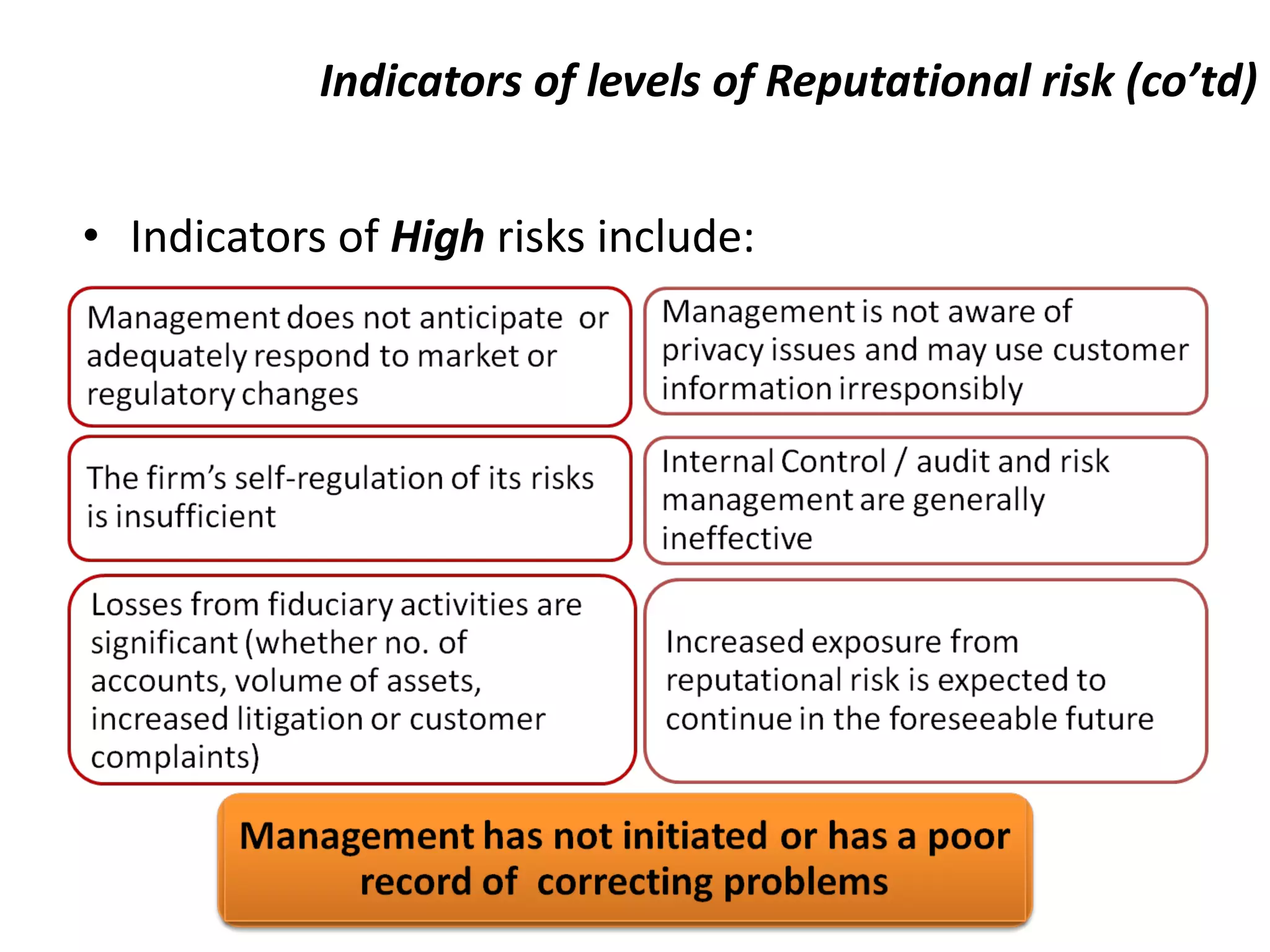
Indicators of levels of Reputational risk (co’td) Indicators of  High  risks include: Management fosters a well supported sound culture  across the organization
 

Managing Reputational Risk

  • 1.
    Managing reputational riskEneni Oduwole Jan. 2009
  • 2.
    Contents What isreputation? Attributes of reputation How can reputation be damaged? What is reputational risk management? Attributes of reputational risk management Benefits of reputational risk management Managing reputational risk Rating reputational risk Indicators of levels of reputational risk
  • 3.
    What is reputation?It is : an intangible asset not a brand the sum total of all stakeholders’ experience public information regarding an organization’s trustworthiness It also assures: premium value growth opportunities to shareholders (value growth resulting from managerial experience, innovation, intellectual property) continued comparative advantage
  • 4.
    Attributes of Reputation
  • 5.
    How can reputationbe damaged? Actions that result in stakeholders lose of trust and confidence Public perception of organization’s standards drop Sudden change of management; no succession planning Adverse regulatory reports and sanctions Increased incidences of fraud Consistent unfavourable ratings Continued decline in share price
  • 6.
    What is ReputationalRisk Management? It is the current and prospective impact on earnings and capital arising from negative public opinion It measures the change in perception of a company It is linked with customer expectations regarding an organization’s ability to conduct business securely and responsibly
  • 7.
    Attributes of Reputational Risk
  • 8.
    Benefits of ReputationalRisk Management Identifies key risks that can affect an organization's reputation adversely Assesses potential impact Ensures timely and appropriate response to adverse public criticisms Enables a good work culture is promoted by Management Ensures effective communication and disclosure to all stakeholders Promotes commitment and trust between all stakeholders
  • 9.
    Managing Reputational RiskUnderstand the value of the organization's reputation Treat reputational risk management holistically; understand inter-relationships within the business Have effective internal control & enterprise risk management frameworks Identify and prioritize relevant risk factors; communicate key risk areas to Management Ensure that an effective business continuity management plan is in place Build a culture of recruiting excellent people and effective people management practices Value your Customers
  • 10.
    Rating Reputational RiskReputational Risk can be rated as:
  • 11.
    Indicators of levelsof Reputational risk Indicators of Low risks include: Management fosters a well supported sound culture across the organization Management fosters a well supported sound culture across the organization
  • 12.
    Indicators of levelsof Reputational risk (co’td) Indicators of Moderate / Medium risks include: Management fosters a well supported sound culture across the organization The firm adequately self-regulates its risks Losses from fiduciary activities are manageable (whether no. of accounts, volume of assets, increased litigation or customer complaints)
  • 13.
    Indicators of levelsof Reputational risk (co’td) Indicators of High risks include: Management fosters a well supported sound culture across the organization
  • 14.