RISK MANAGEMENT IN E-
       BANKING
An Introduction to E-Banking
Electronic banking is one of the truly widespread avatars of E-
commerce the world over. Various authors define E-Banking
differently but the most definition describe the meaning and
features of E-Banking are as follows:

• Banking is a combination of two, Electronic technology and
  Banking.
• Electronic Banking is a process by which a customer
  performs banking Transactions electronically without visiting
  a brick-and-mortar institutions.
• E-Banking denotes the provision of banking and related
  service through Extensive use of information technology
  without direct recourse to the bank by the customer
AN INTRODUCTION TO RISK


 Risk Management is the process of measuring
or assessing the actual or potential dangers of a
               particular situation.
Risk management is the process of monitoring
      and addressing the potential for loss
TYPES OF RISK IN E-BANKING


Operational Risk
Reputational Risk
  Credit Risk
   Legal Risk
OPERATIONAL RISK


The risk of loss resulting from inadequate
  or failed internal processes, people and
systems, or from external events. That type
     risk is called as operational risk
OPERATIONAL RISKS INCLUDE


               Internal Fraud.
               External Fraud.
Employment Practices and Workplace Safety.
  Clients, Products and Business Practices.
         Damage to Physical Assets.
  Business Disruption and System Failures.
Execution, Delivery and Process Management.
INTERNAL FRAUD

Unauthorized Activity.
Transactions not reported.
Transaction type unauthorized.
Mismarking of position.
Theft and Fraud.
Fraud/credit fraud/worthless deposits.
Theft/extortion/embezzlement/robbery.
Misappropriation of assets.
Forgery.
Account take-over/impersonation.
Bribes/kickbacks.
Insider trading.
Money laundering.
Willful blindness.
OPERATIONAL RISK CHECKLIST


    Employee training.
Close management oversight.
  Segregation of duties.
Employee background checks.
 Procedures and process.
  Purchase of insurance.
 Exiting certain businesses.
  Capitalization of risks.
CREDIT RISK


      Risk due to an uncertainty in a
counterparty’s ability to meet its obligations
   in accordance with agreed upon terms.
  That type of risk is called a credit risk
CREDIT RISKS INCLUDE:


        Loans.
     Acceptances.
Interbank transactions.
   Trade financing.
       Futures.
        Swaps.
       Equities.
   Letters of credit.
       Options.
SOUND PRACTICES FOR MANAGING
                     CREDIT RISK


     Establish an appropriate credit risk
                environment.
Operate under a sound credit-granting process.
Maintain an appropriate credit administration,
   measurement and monitoring process.
  Ensure adequate controls over credit risk .
ESTABLISH AN APPROPRIATE
          CREDIT RISK ENVIRONMENT


  Board of Directors should review
   credit risk strategy periodically.
Senior management should implement
 credit risk strategy approved by the
                 Board.
OPERATE UNDER A SOUND
              CREDIT GRANTING PROCESS


 Criteria should include thorough understanding
of the borrower, purpose/structure of credit and
             its source of repayment.
   Establish overall credit limits at the level of
 individual borrowers/connected counterparties.
 Have a clearly established process for approving
    new credits/extension of existing credits.
  Extension of credit must be made on an arm’s
                    length basis.
MAINTAIN A CREDIT
             ADMINISTRATION, MEASUREMENT
               AND MONITORING PROCESS


        Have in place a system for ongoing
administration of various risk-bearing portfolios.
     Develop an internal risk rating system for
                managing credit risk.
    Have an information system and analytical
 techniques that enable management to measure
   credit risk of on/off balance sheet activities .
MAINTAIN A CREDIT
           ADMINISTRATION,
          MEASUREMENT AND
         MONITORING PROCESS
               (CONTINUED)


  It is System for monitoring overall
composition and quality of the credit
               portfolio.
Consider future changes in economic
conditions when assessing individual
                credits.
ENSURE ADEQUATE CONTROLS
              OVER CREDIT RISK


It is System of independent, ongoing
             credit review.
 Credit granting function is properly
   handled and credit exposures are
             within limits.
System for managing problem credits.
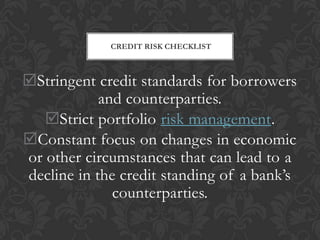
CREDIT RISK CHECKLIST


Stringent credit standards for borrowers
            and counterparties.
   Strict portfolio risk management.
Constant focus on changes in economic
or other circumstances that can lead to a
decline in the credit standing of a bank’s
              counterparties.
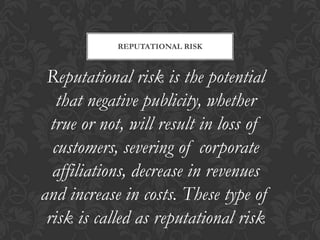
REPUTATIONAL RISK


 Reputational risk is the potential
   that negative publicity, whether
  true or not, will result in loss of
  customers, severing of corporate
  affiliations, decrease in revenues
and increase in costs. These type of
 risk is called as reputational risk
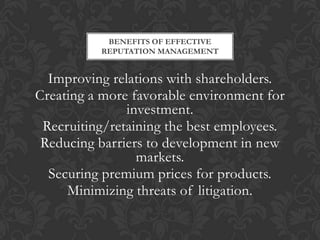
BENEFITS OF EFFECTIVE
          REPUTATION MANAGEMENT


  Improving relations with shareholders.
Creating a more favorable environment for
               investment.
 Recruiting/retaining the best employees.
 Reducing barriers to development in new
                 markets.
  Securing premium prices for products.
     Minimizing threats of litigation.
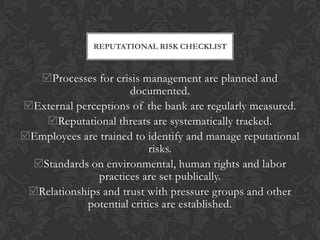
REPUTATIONAL RISK CHECKLIST


  Processes for crisis management are planned and
                      documented.
External perceptions of the bank are regularly measured.
   Reputational threats are systematically tracked.
Employees are trained to identify and manage reputational
                           risks.
 Standards on environmental, human rights and labor
               practices are set publically.
 Relationships and trust with pressure groups and other
            potential critics are established.
LEGAL RISK


 legal risk is a risk which
is done in purely the
result of legal problems,
with a specific focus on
counterparty risk. That
type of risk is called as
legal risk
CONCLUSION


Banks should develop
appropriate incident response
plans, including communication
strategies, that ensure business
continuity, control r risk and limit
liability associated with
disruptions in their e-banking
services.
Risk management in e banking

Risk management in e banking

  • 2.
  • 3.
    An Introduction toE-Banking Electronic banking is one of the truly widespread avatars of E- commerce the world over. Various authors define E-Banking differently but the most definition describe the meaning and features of E-Banking are as follows: • Banking is a combination of two, Electronic technology and Banking. • Electronic Banking is a process by which a customer performs banking Transactions electronically without visiting a brick-and-mortar institutions. • E-Banking denotes the provision of banking and related service through Extensive use of information technology without direct recourse to the bank by the customer
  • 4.
    AN INTRODUCTION TORISK Risk Management is the process of measuring or assessing the actual or potential dangers of a particular situation. Risk management is the process of monitoring and addressing the potential for loss
  • 5.
    TYPES OF RISKIN E-BANKING Operational Risk Reputational Risk Credit Risk Legal Risk
  • 6.
    OPERATIONAL RISK The riskof loss resulting from inadequate or failed internal processes, people and systems, or from external events. That type risk is called as operational risk
  • 7.
    OPERATIONAL RISKS INCLUDE Internal Fraud. External Fraud. Employment Practices and Workplace Safety. Clients, Products and Business Practices. Damage to Physical Assets. Business Disruption and System Failures. Execution, Delivery and Process Management.
  • 8.
    INTERNAL FRAUD Unauthorized Activity. Transactionsnot reported. Transaction type unauthorized. Mismarking of position. Theft and Fraud. Fraud/credit fraud/worthless deposits. Theft/extortion/embezzlement/robbery. Misappropriation of assets. Forgery. Account take-over/impersonation. Bribes/kickbacks. Insider trading. Money laundering. Willful blindness.
  • 9.
    OPERATIONAL RISK CHECKLIST Employee training. Close management oversight. Segregation of duties. Employee background checks. Procedures and process. Purchase of insurance. Exiting certain businesses. Capitalization of risks.
  • 10.
    CREDIT RISK Risk due to an uncertainty in a counterparty’s ability to meet its obligations in accordance with agreed upon terms. That type of risk is called a credit risk
  • 11.
    CREDIT RISKS INCLUDE: Loans. Acceptances. Interbank transactions. Trade financing. Futures. Swaps. Equities. Letters of credit. Options.
  • 12.
    SOUND PRACTICES FORMANAGING CREDIT RISK Establish an appropriate credit risk environment. Operate under a sound credit-granting process. Maintain an appropriate credit administration, measurement and monitoring process. Ensure adequate controls over credit risk .
  • 13.
    ESTABLISH AN APPROPRIATE CREDIT RISK ENVIRONMENT Board of Directors should review credit risk strategy periodically. Senior management should implement credit risk strategy approved by the Board.
  • 14.
    OPERATE UNDER ASOUND CREDIT GRANTING PROCESS Criteria should include thorough understanding of the borrower, purpose/structure of credit and its source of repayment. Establish overall credit limits at the level of individual borrowers/connected counterparties. Have a clearly established process for approving new credits/extension of existing credits. Extension of credit must be made on an arm’s length basis.
  • 15.
    MAINTAIN A CREDIT ADMINISTRATION, MEASUREMENT AND MONITORING PROCESS Have in place a system for ongoing administration of various risk-bearing portfolios. Develop an internal risk rating system for managing credit risk. Have an information system and analytical techniques that enable management to measure credit risk of on/off balance sheet activities .
  • 16.
    MAINTAIN A CREDIT ADMINISTRATION, MEASUREMENT AND MONITORING PROCESS (CONTINUED) It is System for monitoring overall composition and quality of the credit portfolio. Consider future changes in economic conditions when assessing individual credits.
  • 17.
    ENSURE ADEQUATE CONTROLS OVER CREDIT RISK It is System of independent, ongoing credit review. Credit granting function is properly handled and credit exposures are within limits. System for managing problem credits.
  • 18.
    CREDIT RISK CHECKLIST Stringentcredit standards for borrowers and counterparties. Strict portfolio risk management. Constant focus on changes in economic or other circumstances that can lead to a decline in the credit standing of a bank’s counterparties.
  • 19.
    REPUTATIONAL RISK Reputationalrisk is the potential that negative publicity, whether true or not, will result in loss of customers, severing of corporate affiliations, decrease in revenues and increase in costs. These type of risk is called as reputational risk
  • 20.
    BENEFITS OF EFFECTIVE REPUTATION MANAGEMENT Improving relations with shareholders. Creating a more favorable environment for investment. Recruiting/retaining the best employees. Reducing barriers to development in new markets. Securing premium prices for products. Minimizing threats of litigation.
  • 21.
    REPUTATIONAL RISK CHECKLIST Processes for crisis management are planned and documented. External perceptions of the bank are regularly measured. Reputational threats are systematically tracked. Employees are trained to identify and manage reputational risks. Standards on environmental, human rights and labor practices are set publically. Relationships and trust with pressure groups and other potential critics are established.
  • 22.
    LEGAL RISK legalrisk is a risk which is done in purely the result of legal problems, with a specific focus on counterparty risk. That type of risk is called as legal risk
  • 23.
    CONCLUSION Banks should develop appropriateincident response plans, including communication strategies, that ensure business continuity, control r risk and limit liability associated with disruptions in their e-banking services.