Effective Communication in the
Workplace
How well do you communicate????
 Identify three types of communication
 Examine barriers to effective communication
 Discuss three dimensions to any communication
 Explain the importance of listening in the
communication process
Objectives
The act of transferring
information from one place to
another through verbal, non-
verbal, or written means.
Communication
Everything we say has at least 3 messages:
 What we said
 What we meant
 What the other person understood
Verbal Communication
 Facial expressions
 Gestures displayed through body language
 Eye contact/gaze
Non-verbal Communication
 Must be clear and concise to be effective
 Pay attention to spelling, grammar, punctuation
Written Communication
 Communication between two people consists of
transmitting and receiving.
 What I say is not necessarily what you hear.
 You must be “multi-lingual;” Communicating across
many culture, gender, and social barriers.
Key Concepts of Communication
Both parties must be willing to exchange information
and ideas………
For communication to be effective:
Purposes of Communication
 Inform
 Request
 Persuade
 Ensure understanding
 Acknowledge, support and encourage
 Convey feelings, opinions and ideas
 Individual sending the message
 Context of the message
 Individual receiving the message
 Delivery method
 Content of the message
Components of Communication
Communication Characteristics
 Language (the words we use)
 Paralanguage (how we sound- tone, pitch, volume,
speed)
 Body Language (posture, gesture, eye contact)
 Successful communication is clear, direct, two–way
 There is a match between the words, tone, and
behavior
Characteristics
 Language Barriers (use of jargon, use of words the
listener doesn’t understand)
 Physical Barriers (closed doors, unable to see the
non-verbal cues, gestures, body language)
 Psychological/Emotional Barriers (stress, anger, and
fear can make it difficult to hear outside of one’s
self)
 Cultural Barriers (ethnic, religious, social
differences)
Barriers to Communication
Misuses of Communication
People Misuse Communication By:
 Withholding information
 Demanding information
 Giving incomplete or wrong information
How can we improve
communication?
 Check our perceptions
 Ask questions to clarify understanding
 Be aware of personal bias and values
Listening
and
Responding!!!!!
Key Concepts
There are three
dimensions to any
communications:
 Content
 Feeling
 Meaning
Active Listening hears
all the messages.
Listening
Listening is the key to all effective communication.
Without the ability to listen effectively:
• Messages are easily misunderstood
• Communication breaks down
• Sender of the message can easily become frustrated or
irritated
Hearing is a physiological process involving sound
transmission through the ears.
Listening is a psychological process that requires
focus. Listening means paying attention to not only
what is being said, but how the information is told,
the use of language and voice, and how the other
person uses his or her body.
Hearing –vs- Listening
Effective listening is:
 Actively absorbing the information given to you by a
speaker (Focus)
 Showing that you are listening and interested
(Attend)
 Keeping an open mind to what is being said (Receive)
 Providing feedback to the speaker so that he or she
knows the message was received (Respond).
Effective Listening
STEP # 1
FOCUS
 Eliminate distractions
 Refrain from other activity
 Face the person squarely – eye
level
 REMEMBER- every person is
unique and has an important
message.
STEP #2
ATTEND
 Listen to words, but more
importantly, the meaning of the
message.
 Watch, listen—what is the
sense of non-verbal messages?
 Sense the emotional part of the
message along with the content
STEP #3
RECEIVE
 Remain open to the message
 Allow the message to “sink
in”. What is the meaning?
 Take notes.
 What feelings and values
does the message generate
within you?
STEP #4
RESPOND
 Let the sender know
you have received the
message
 Ask for clarification
 Consider alternatives
before responding
CONSIDER
 What form will your
response take? Questioning?
 Interpreting?
 Judging?
 Supporting?
 Changing the subject?
 What part of the message will you
respond to?
Content…Feeling…Meaning
Listen on Three Fronts….
 Content
 Feeling
 Meaning
CONTENT!
Listen for the
information,
facts or
statements
being made.
“Your conclusions are well thought
out.”
FEELINGS!
Listen for the
emotional or
affective piece
carried along
with the
message.
 “That must have been difficult for
you.”
MEANING!
Listen for the
meaning or
the purpose
of the
message.
 “So what do you want to see
happen?”
Improving Communication Skills
To communicate effectively, you need to be aware of and in
control of your own emotions.
Learn how to manage stress (recognize when you are
becoming stressed)
• Stay calm under pressure (take a moment to calm down if
needed before continuing conversation – take deep
breaths, relax muscles)
• Be willing to compromise and willing to agree to disagree
if necessary. Take time away from the situation so
everyone can calm down.
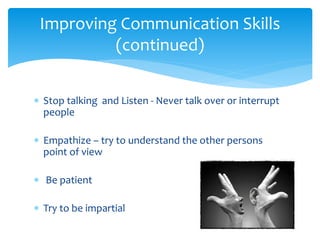
 Stop talking and Listen - Never talk over or interrupt
people
 Empathize – try to understand the other persons
point of view
 Be patient
 Try to be impartial
Improving Communication Skills
(continued)
 Communication between two people consists of
transmitting and receiving. If both parties are
performing both tasks effectively, there is good
communication. This sounds very simple, but in
reality it is difficult for most people to achieve.
 Most of us need help in communicating effectively.
Communication
Communication is a skill that you can learn. It’s
like riding a bicycle or typing. If you’re willing to
work at it, you can rapidly improve the quality of
every part of your life.
-Brian Tracy

Effective-Workplace-Communication.pdf

  • 1.
    Effective Communication inthe Workplace How well do you communicate????
  • 2.
     Identify threetypes of communication  Examine barriers to effective communication  Discuss three dimensions to any communication  Explain the importance of listening in the communication process Objectives
  • 3.
    The act oftransferring information from one place to another through verbal, non- verbal, or written means. Communication
  • 4.
    Everything we sayhas at least 3 messages:  What we said  What we meant  What the other person understood Verbal Communication
  • 5.
     Facial expressions Gestures displayed through body language  Eye contact/gaze Non-verbal Communication
  • 6.
     Must beclear and concise to be effective  Pay attention to spelling, grammar, punctuation Written Communication
  • 7.
     Communication betweentwo people consists of transmitting and receiving.  What I say is not necessarily what you hear.  You must be “multi-lingual;” Communicating across many culture, gender, and social barriers. Key Concepts of Communication
  • 8.
    Both parties mustbe willing to exchange information and ideas……… For communication to be effective:
  • 9.
    Purposes of Communication Inform  Request  Persuade  Ensure understanding  Acknowledge, support and encourage  Convey feelings, opinions and ideas
  • 10.
     Individual sendingthe message  Context of the message  Individual receiving the message  Delivery method  Content of the message Components of Communication
  • 11.
    Communication Characteristics  Language(the words we use)  Paralanguage (how we sound- tone, pitch, volume, speed)  Body Language (posture, gesture, eye contact)
  • 12.
     Successful communicationis clear, direct, two–way  There is a match between the words, tone, and behavior Characteristics
  • 13.
     Language Barriers(use of jargon, use of words the listener doesn’t understand)  Physical Barriers (closed doors, unable to see the non-verbal cues, gestures, body language)  Psychological/Emotional Barriers (stress, anger, and fear can make it difficult to hear outside of one’s self)  Cultural Barriers (ethnic, religious, social differences) Barriers to Communication
  • 14.
    Misuses of Communication PeopleMisuse Communication By:  Withholding information  Demanding information  Giving incomplete or wrong information
  • 15.
    How can weimprove communication?  Check our perceptions  Ask questions to clarify understanding  Be aware of personal bias and values
  • 16.
  • 17.
    Key Concepts There arethree dimensions to any communications:  Content  Feeling  Meaning Active Listening hears all the messages.
  • 18.
    Listening Listening is thekey to all effective communication. Without the ability to listen effectively: • Messages are easily misunderstood • Communication breaks down • Sender of the message can easily become frustrated or irritated
  • 19.
    Hearing is aphysiological process involving sound transmission through the ears. Listening is a psychological process that requires focus. Listening means paying attention to not only what is being said, but how the information is told, the use of language and voice, and how the other person uses his or her body. Hearing –vs- Listening
  • 20.
    Effective listening is: Actively absorbing the information given to you by a speaker (Focus)  Showing that you are listening and interested (Attend)  Keeping an open mind to what is being said (Receive)  Providing feedback to the speaker so that he or she knows the message was received (Respond). Effective Listening
  • 21.
    STEP # 1 FOCUS Eliminate distractions  Refrain from other activity  Face the person squarely – eye level  REMEMBER- every person is unique and has an important message.
  • 22.
    STEP #2 ATTEND  Listento words, but more importantly, the meaning of the message.  Watch, listen—what is the sense of non-verbal messages?  Sense the emotional part of the message along with the content
  • 23.
    STEP #3 RECEIVE  Remainopen to the message  Allow the message to “sink in”. What is the meaning?  Take notes.  What feelings and values does the message generate within you?
  • 24.
    STEP #4 RESPOND  Letthe sender know you have received the message  Ask for clarification  Consider alternatives before responding CONSIDER  What form will your response take? Questioning?  Interpreting?  Judging?  Supporting?  Changing the subject?  What part of the message will you respond to? Content…Feeling…Meaning
  • 25.
    Listen on ThreeFronts….  Content  Feeling  Meaning
  • 26.
    CONTENT! Listen for the information, factsor statements being made. “Your conclusions are well thought out.”
  • 27.
    FEELINGS! Listen for the emotionalor affective piece carried along with the message.  “That must have been difficult for you.”
  • 28.
    MEANING! Listen for the meaningor the purpose of the message.  “So what do you want to see happen?”
  • 29.
    Improving Communication Skills Tocommunicate effectively, you need to be aware of and in control of your own emotions. Learn how to manage stress (recognize when you are becoming stressed) • Stay calm under pressure (take a moment to calm down if needed before continuing conversation – take deep breaths, relax muscles) • Be willing to compromise and willing to agree to disagree if necessary. Take time away from the situation so everyone can calm down.
  • 30.
     Stop talkingand Listen - Never talk over or interrupt people  Empathize – try to understand the other persons point of view  Be patient  Try to be impartial Improving Communication Skills (continued)
  • 31.
     Communication betweentwo people consists of transmitting and receiving. If both parties are performing both tasks effectively, there is good communication. This sounds very simple, but in reality it is difficult for most people to achieve.  Most of us need help in communicating effectively. Communication
  • 32.
    Communication is askill that you can learn. It’s like riding a bicycle or typing. If you’re willing to work at it, you can rapidly improve the quality of every part of your life. -Brian Tracy