Biomedical waste and its
Management
BIO-MEDICAL WASTE
Definition
– Anything tested or used on an individual, or any trash
from biological experiments are medical waste
Generated from
– Waste generated by health care facility
– Research facility
– Laboratories
Hazardous health care waste
– 85% waste is non infectious
– 10% are infectious
– 5% are hazardous
BIOMEDICAL WASTE
HOSPITAL
WASTE
INFECTIVE
SOLID LIQUID
NON-
INFECTIVE
SOLID
HOSPITAL
WASTE
INFECTIVE
SOLID LIQUID
NON-
INFECTIVE
SOLID LIQUID
Biomedical waste Statistics
• Developed Countries- 1-5 kg/bed/day, with variations
among countries.
In India-
• 1-2 kg/bed/day with variation among
Govt. and Private establishments.
• Approximately 506.74 tons/ day wastes generated
• Out of which only 57% waste undergoes proper
disposal
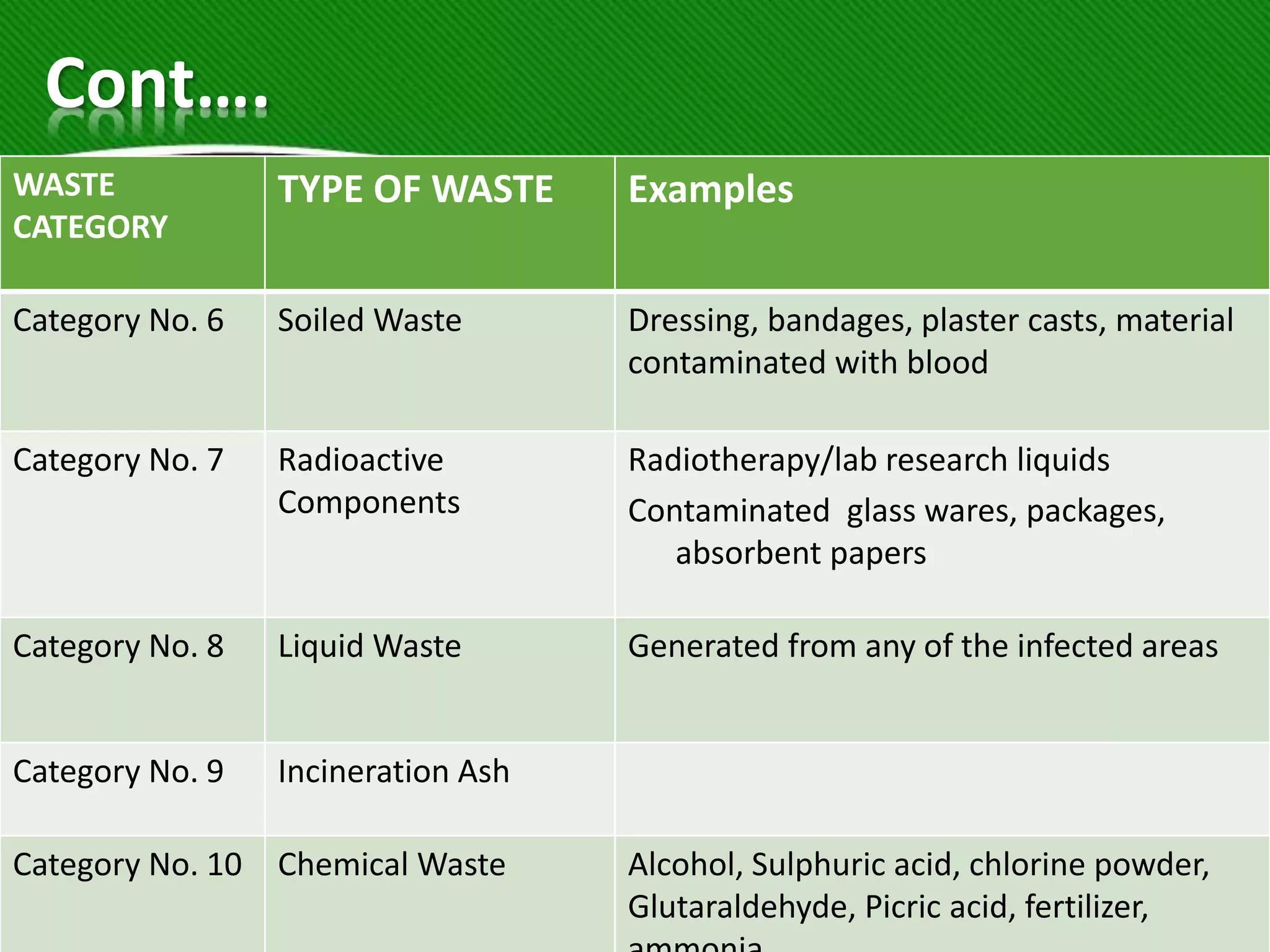
Classification of Waste Category as per
WHO standard
WASTE
CATEGORY
TYPE OF WASTE Examples
Category No. 1 Human anatomical waste Tissues, organs, body parts
Category No. 2 Animal waste Generated during
research/experimentation, from
veterinary hospitals
Category No.3 Microbiology and
biotechnology waste
Laboratory cultures, micro-organisms,
human and animal cell cultures, toxins
Category No. 4 Waste sharps hypodermic needles, syringes, scalpels,
broken glass
Category No. 5 Discarded medicines and
cyto-toxic drugs
X-rays, Cancer chemotherapy
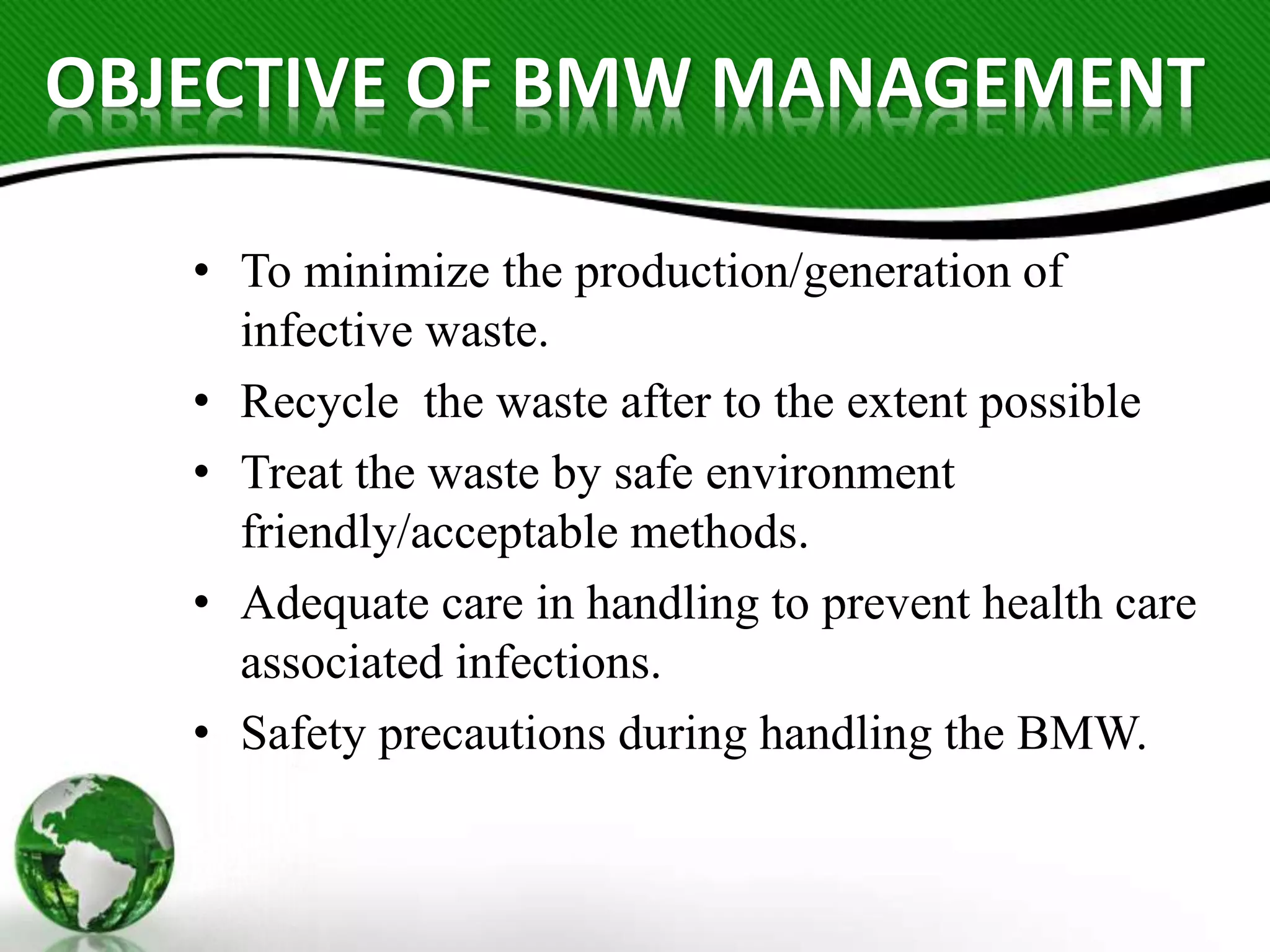
Cont….
WASTE
CATEGORY
TYPE OF WASTE Examples
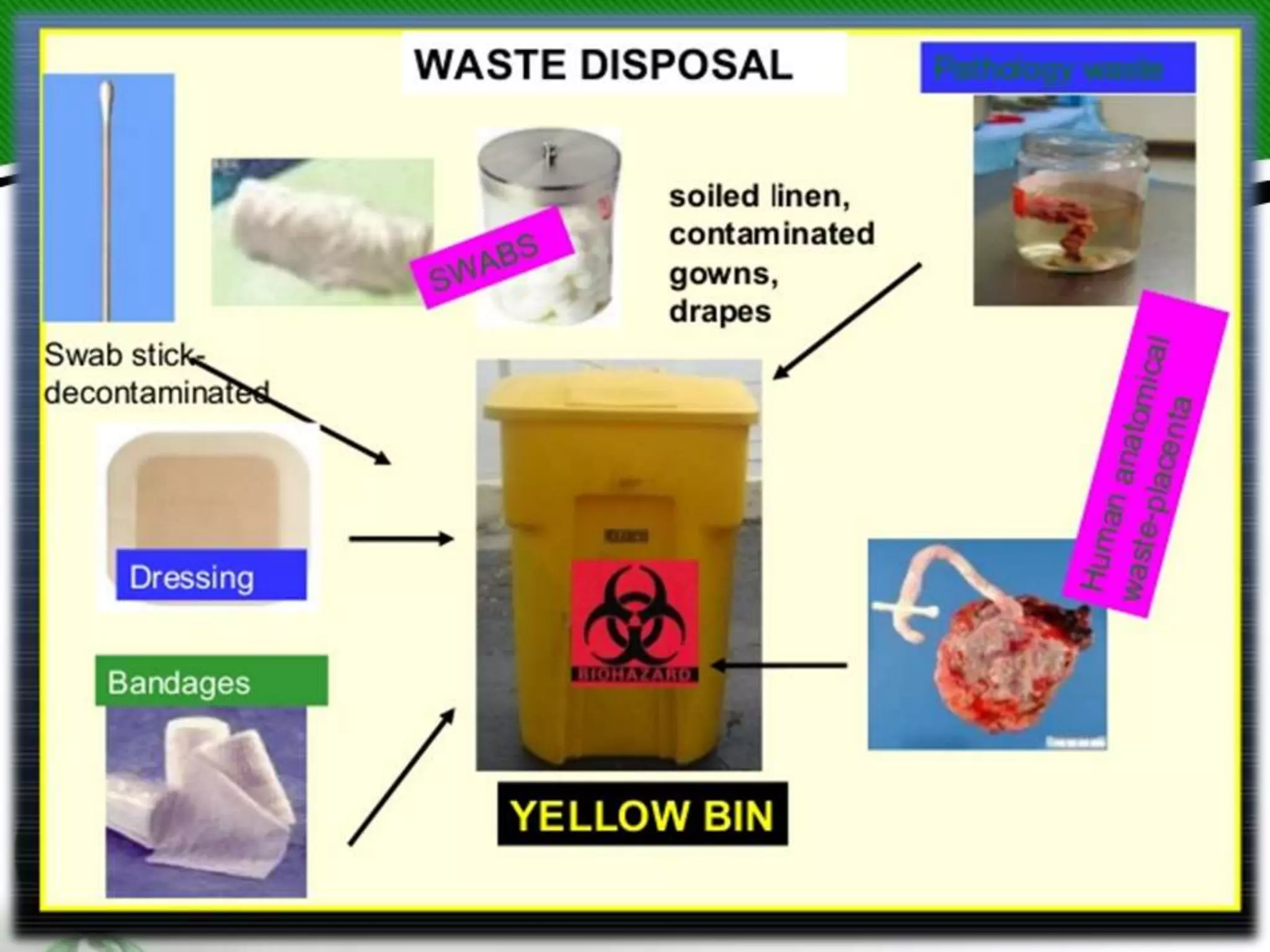
Category No. 6 Soiled Waste Dressing, bandages, plaster casts, material
contaminated with blood
Category No. 7 Radioactive
Components
Radiotherapy/lab research liquids
Contaminated glass wares, packages,
absorbent papers
Category No. 8 Liquid Waste Generated from any of the infected areas
Category No. 9 Incineration Ash
Category No. 10 Chemical Waste Alcohol, Sulphuric acid, chlorine powder,
Glutaraldehyde, Picric acid, fertilizer,
PROBLEM ASSOCIATED WITH BMW
ORGANISM DISEASES CAUSED RELATED WASTE ITEM
VIRUSES
HIV, Hepatitis B,
Hepatitis A,C,
Arboviruses,
Enteroviruses
AIDS, Infectious
Hepatitis,
Japanese encephalitis,
tick-borne
fevers, etc.
Infected needles,
body Fluids, Human
excreta, Blood.
BACTERIA
Salmonella typhi,
Vibrio cholerae,
Clostridium Tetani,
Pseudomonas,
Streptococcus
Typhoid, Cholera,
Tetanus, Wound
infections,
septicemia, rheumatic
fever, skin
and soft tissue
infections
Human excreta and
body fluid in landfills
and hospital wards,
Sharps such as
needles, surgical
blades in hospital
waste.
ORGANISM DISEASES CAUSED RELATED WASTE ITEM
PARASITES
Plasmodium
Cutaneous
leishmaniasis,
Malaria
Human excreta, blood and body fluids in
poorly
managed sewage system of hospitals.
OBJECTIVE OF BMW MANAGEMENT
• To minimize the production/generation of
infective waste.
• Recycle the waste after to the extent possible
• Treat the waste by safe environment
friendly/acceptable methods.
• Adequate care in handling to prevent health care
associated infections.
• Safety precautions during handling the BMW.
COLOUR CODING OF BAGS
COLOR
CODE
TYPE OF CONTAINER WASTE
CATEGORY
TREATMENT OPTIONS
Yellow Plastic bags 1, 2, 3 and 6 Incineration
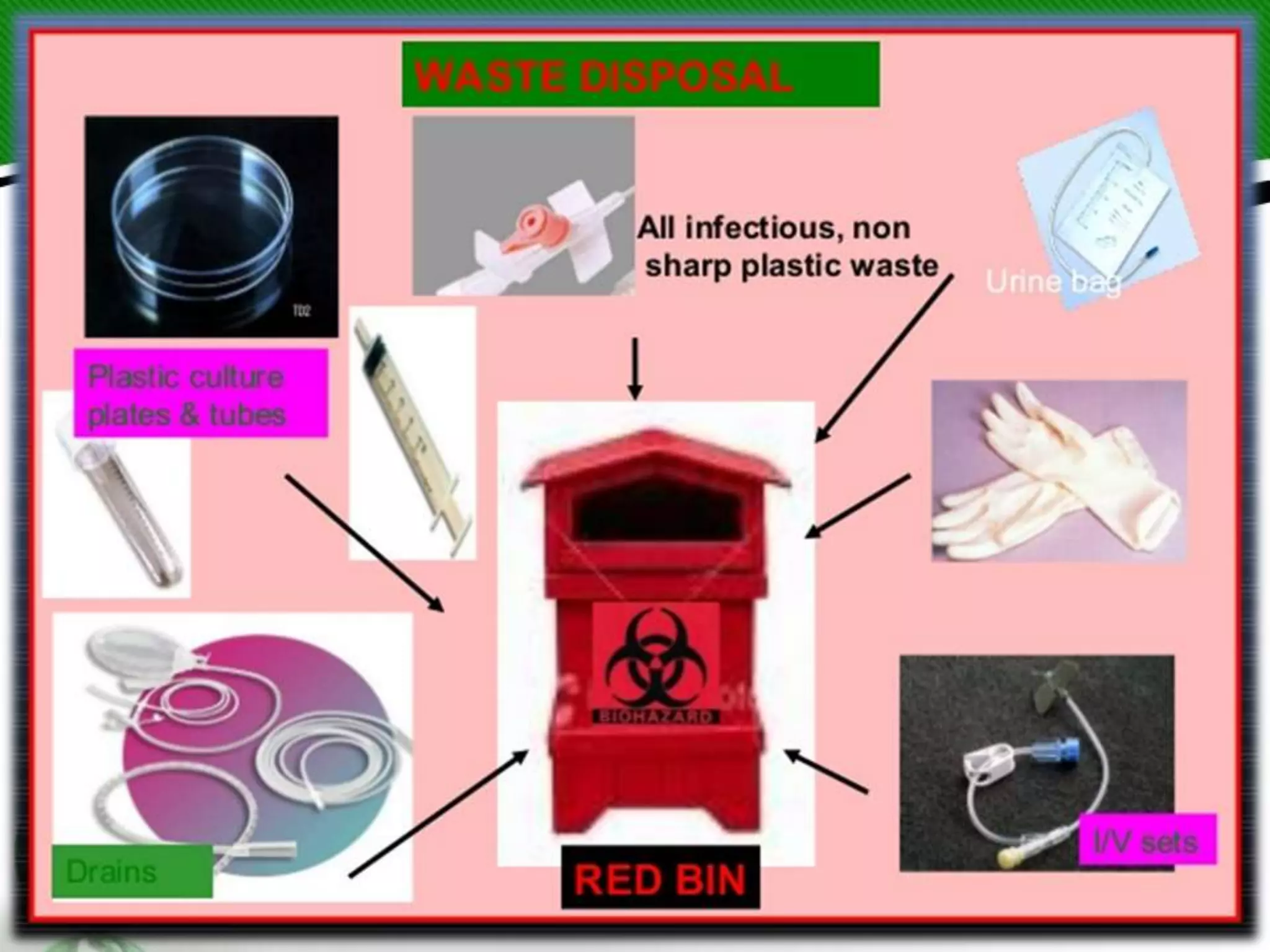
Red Disinfected
container/plastic bag
3, 6 & 7 Autoclaving/Micro
Waving/Chemical treatment
Blue/white
transparent
Plastic bags/puncture
proof container
4 & 7 Autoclaving/Micro
waving/chemical treatment,
Destruction & shredding
Black Plastic bag 5, & 9, AND
10 (SOLID)
Disposal in secured land fills
LABEL FOR BIO-MEDICAL WASTE
CONTAINERS/BAGS
Note : Label shall be non-washable and prominently
visible.
Transport
Transport by wheeled
trolleys/containers /carts
only in vehicles
authorized for the
purpose
They should be
Easy to load and unload
No sharp edges
Easy to clean
 Disinfect daily
Double Chambered
Incinerator
Autoclave
 Temperature -not
less than 121 0C
 Pressure -15 pounds
per square inch (psi)
 Residence time - not
less than 60 minutes
Micro wave
• kill bacteria and other
pathogenic organism.
• not be used for cytotoxic,
hazardous or radioactive
wastes, contaminated animal
carcasses, body parts and
large metal items.
Disposal of Sharps
• disposed in circular or
rectangular pits.
• covered with a heavy
concrete slab
• When the pipe is full it
can be sealed completely
after another has been
prepared.
ENVIRONMENTAL LEGISLATION
 The Environment (Protection) Act, 1986
 The Biomedical Waste (Management & Handling)
Rules, 1998
 The Municipal Solid Waste (Management & Handling)
Rules, 2000
 The Hazardous Waste (Management & Handling) Rules,
1989
 The National Environmental Tribunal Act, 1995
 The Air (Prevention and Control of Pollution) Act, 1981
Biomedical waste and its management

Biomedical waste and its management

  • 1.
    Biomedical waste andits Management
  • 2.
    BIO-MEDICAL WASTE Definition – Anythingtested or used on an individual, or any trash from biological experiments are medical waste Generated from – Waste generated by health care facility – Research facility – Laboratories Hazardous health care waste – 85% waste is non infectious – 10% are infectious – 5% are hazardous
  • 3.
  • 4.
    Biomedical waste Statistics •Developed Countries- 1-5 kg/bed/day, with variations among countries. In India- • 1-2 kg/bed/day with variation among Govt. and Private establishments. • Approximately 506.74 tons/ day wastes generated • Out of which only 57% waste undergoes proper disposal
  • 5.
    Classification of WasteCategory as per WHO standard WASTE CATEGORY TYPE OF WASTE Examples Category No. 1 Human anatomical waste Tissues, organs, body parts Category No. 2 Animal waste Generated during research/experimentation, from veterinary hospitals Category No.3 Microbiology and biotechnology waste Laboratory cultures, micro-organisms, human and animal cell cultures, toxins Category No. 4 Waste sharps hypodermic needles, syringes, scalpels, broken glass Category No. 5 Discarded medicines and cyto-toxic drugs X-rays, Cancer chemotherapy
  • 6.
    Cont…. WASTE CATEGORY TYPE OF WASTEExamples Category No. 6 Soiled Waste Dressing, bandages, plaster casts, material contaminated with blood Category No. 7 Radioactive Components Radiotherapy/lab research liquids Contaminated glass wares, packages, absorbent papers Category No. 8 Liquid Waste Generated from any of the infected areas Category No. 9 Incineration Ash Category No. 10 Chemical Waste Alcohol, Sulphuric acid, chlorine powder, Glutaraldehyde, Picric acid, fertilizer,
  • 7.
    PROBLEM ASSOCIATED WITHBMW ORGANISM DISEASES CAUSED RELATED WASTE ITEM VIRUSES HIV, Hepatitis B, Hepatitis A,C, Arboviruses, Enteroviruses AIDS, Infectious Hepatitis, Japanese encephalitis, tick-borne fevers, etc. Infected needles, body Fluids, Human excreta, Blood. BACTERIA Salmonella typhi, Vibrio cholerae, Clostridium Tetani, Pseudomonas, Streptococcus Typhoid, Cholera, Tetanus, Wound infections, septicemia, rheumatic fever, skin and soft tissue infections Human excreta and body fluid in landfills and hospital wards, Sharps such as needles, surgical blades in hospital waste.
  • 8.
    ORGANISM DISEASES CAUSEDRELATED WASTE ITEM PARASITES Plasmodium Cutaneous leishmaniasis, Malaria Human excreta, blood and body fluids in poorly managed sewage system of hospitals.
  • 9.
    OBJECTIVE OF BMWMANAGEMENT • To minimize the production/generation of infective waste. • Recycle the waste after to the extent possible • Treat the waste by safe environment friendly/acceptable methods. • Adequate care in handling to prevent health care associated infections. • Safety precautions during handling the BMW.
  • 10.
    COLOUR CODING OFBAGS COLOR CODE TYPE OF CONTAINER WASTE CATEGORY TREATMENT OPTIONS Yellow Plastic bags 1, 2, 3 and 6 Incineration Red Disinfected container/plastic bag 3, 6 & 7 Autoclaving/Micro Waving/Chemical treatment Blue/white transparent Plastic bags/puncture proof container 4 & 7 Autoclaving/Micro waving/chemical treatment, Destruction & shredding Black Plastic bag 5, & 9, AND 10 (SOLID) Disposal in secured land fills
  • 15.
    LABEL FOR BIO-MEDICALWASTE CONTAINERS/BAGS Note : Label shall be non-washable and prominently visible.
  • 16.
    Transport Transport by wheeled trolleys/containers/carts only in vehicles authorized for the purpose They should be Easy to load and unload No sharp edges Easy to clean  Disinfect daily
  • 17.
  • 19.
    Autoclave  Temperature -not lessthan 121 0C  Pressure -15 pounds per square inch (psi)  Residence time - not less than 60 minutes
  • 20.
    Micro wave • killbacteria and other pathogenic organism. • not be used for cytotoxic, hazardous or radioactive wastes, contaminated animal carcasses, body parts and large metal items.
  • 21.
    Disposal of Sharps •disposed in circular or rectangular pits. • covered with a heavy concrete slab • When the pipe is full it can be sealed completely after another has been prepared.
  • 22.
    ENVIRONMENTAL LEGISLATION  TheEnvironment (Protection) Act, 1986  The Biomedical Waste (Management & Handling) Rules, 1998  The Municipal Solid Waste (Management & Handling) Rules, 2000  The Hazardous Waste (Management & Handling) Rules, 1989  The National Environmental Tribunal Act, 1995  The Air (Prevention and Control of Pollution) Act, 1981