
Deepak (IIT Delhi)
2015-2017
Department of Chemistry
chemistrytoday.in
 Xanthine oxidase (XO), a type of enzyme that
generates reactive oxygen species.
 Other names: xanthine oxidoreductase, hypoxanthine oxidase,
hypoxanthine - xanthine oxidase
 These enzymes catalyze the oxidation of hypoxanthine to
xanthine and further catalyze the oxidation of xanthine to uric
acid.
 These enzymes play an important role in the catabolism
of purines in some species, including humans.
 Source - Milk
 EC 1.17.3.2
 The same protein, which in humans has gene
symbol XDH, can also have xanthine dehydrogenase
activity.
 Most of the protein in the liver exists in a form with
xanthine dehydrogenase activity, but it can be converted
to xanthine oxidase by reversible sulfhydryl oxidation
or by irreversible proteolytic modification.
 The protein is homodimer, having a molecular
weight of 270 kDa.
 Each monomer has three –
(1) N-terminal domain - FeS-cluster
(2) FAD-binding domain
(3) The third domain - one molybdenum
 Fe-S convert XDH (xanthine dehydrogenase) to XO.
 FAD reduction of O2
 Molybdenum oxidative hydroxylation of purine.
 FeS-cluster (orange)
 bounded FAD (red)
 molybdopterin cofactor
with molydenium (yellow).
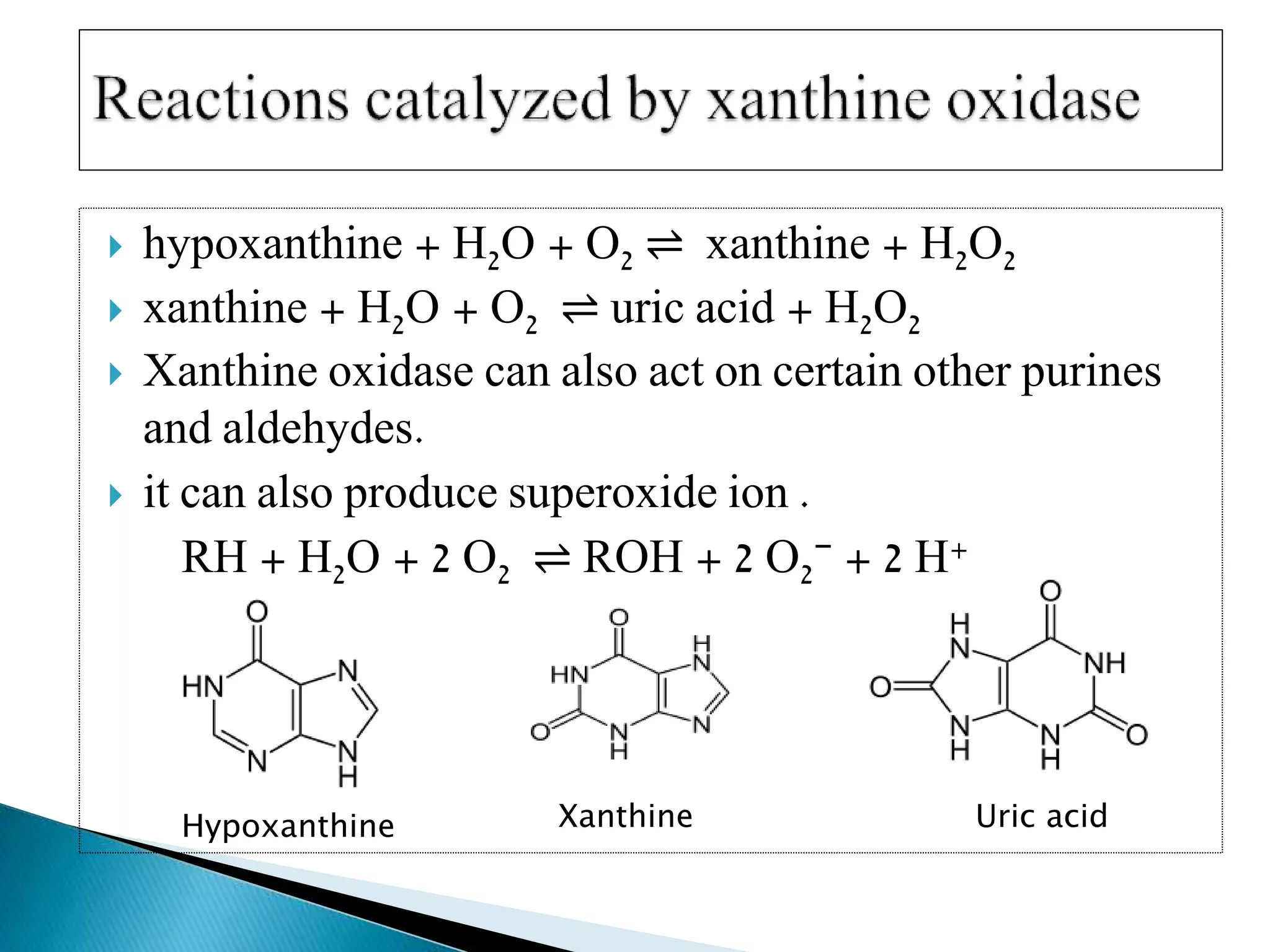
 hypoxanthine + H2O + O2 ⇌ xanthine + H2O2
 xanthine + H2O + O2 ⇌ uric acid + H2O2
 Xanthine oxidase can also act on certain other purines
and aldehydes.
 it can also produce superoxide ion .
RH + H2O + 2 O2 ⇌ ROH + 2 O2
− + 2 H+
Hypoxanthine Xanthine Uric acid
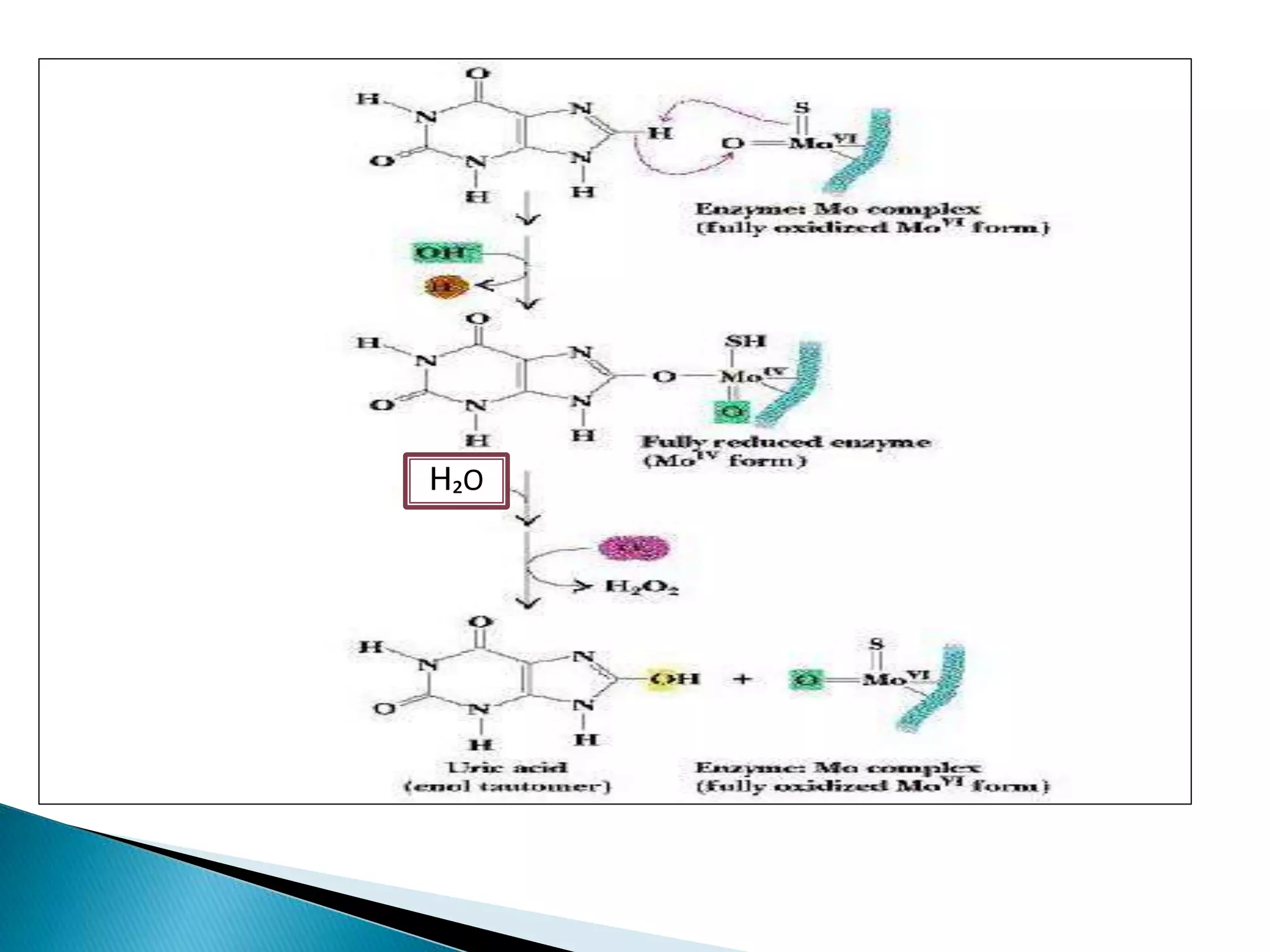
 The active site of XO is composed of a molybdopterin
unit with the molybdenum atom also coordinated by
terminal oxygen (oxo), sulfur atoms and a
terminal hydroxide.
 In the reaction with xanthine to form uric acid, an
oxygen atom is transferred from molybdenum to
xanthine.
 The reformation of the active molybdenum centre
occurs by the addition of water
H₂O
 Spectrophotometric determination of XO activity is
based on measuring uric acid production from xanthine
or hypoxanthine substrate at around 295 nm.
 The assay mixture always contains xanthine as a
substrate and sample.
hypoxanthine + H2O + O2 ⇌ xanthine + H2O2
xanthine + H2O + O2 ⇌ uric acid + H2O2
 Xanthine oxidase is a superoxide-producing enzyme
found normally in serum and the lungs, and its activity
is increased during influenza A infection.
 During severe liver damage, xanthine oxidase is
released into the blood, so a blood assay for XO is a
way to determine if liver damage has happened.
 Because xanthine oxidase is a metabolic pathway
for uric acid formation, the xanthine oxidase
inhibitor allopurinol is used in the treatment of gout.
 Maintaining adequate fluid intake helps prevent acute
gout attacks and decreases the risk of kidney stone
formation in people with gout.
 Alcohol is known to have diuretic effects that can
contribute to dehydration and precipitate acute gout
attacks. Alcohol can also affect uric acid metabolism
and cause hyperuricemia. It causes gout by slowing
down the excretion of uric acid from the kidneys as well
as by causing dehydration, which precipitates the
crystals in the joints.
 Xanthinuria is a rare genetic disorder where the lack of
xanthine oxidase leads to high concentration of xanthine
in blood and can cause health problems such as renal
failure. There is no specific treatment, sufferers are
advised by doctors to avoid foods high in purine and to
maintain a high fluid intake.
Xanthine oxidase enzyme

Xanthine oxidase enzyme

  • 1.
    Deepak (IIT Delhi) 2015-2017 Departmentof Chemistry chemistrytoday.in
  • 2.
     Xanthine oxidase(XO), a type of enzyme that generates reactive oxygen species.  Other names: xanthine oxidoreductase, hypoxanthine oxidase, hypoxanthine - xanthine oxidase  These enzymes catalyze the oxidation of hypoxanthine to xanthine and further catalyze the oxidation of xanthine to uric acid.  These enzymes play an important role in the catabolism of purines in some species, including humans.
  • 3.
     Source -Milk  EC 1.17.3.2  The same protein, which in humans has gene symbol XDH, can also have xanthine dehydrogenase activity.  Most of the protein in the liver exists in a form with xanthine dehydrogenase activity, but it can be converted to xanthine oxidase by reversible sulfhydryl oxidation or by irreversible proteolytic modification.
  • 4.
     The proteinis homodimer, having a molecular weight of 270 kDa.  Each monomer has three – (1) N-terminal domain - FeS-cluster (2) FAD-binding domain (3) The third domain - one molybdenum  Fe-S convert XDH (xanthine dehydrogenase) to XO.  FAD reduction of O2  Molybdenum oxidative hydroxylation of purine.
  • 5.
     FeS-cluster (orange) bounded FAD (red)  molybdopterin cofactor with molydenium (yellow).
  • 6.
     hypoxanthine +H2O + O2 ⇌ xanthine + H2O2  xanthine + H2O + O2 ⇌ uric acid + H2O2  Xanthine oxidase can also act on certain other purines and aldehydes.  it can also produce superoxide ion . RH + H2O + 2 O2 ⇌ ROH + 2 O2 − + 2 H+ Hypoxanthine Xanthine Uric acid
  • 7.
     The activesite of XO is composed of a molybdopterin unit with the molybdenum atom also coordinated by terminal oxygen (oxo), sulfur atoms and a terminal hydroxide.  In the reaction with xanthine to form uric acid, an oxygen atom is transferred from molybdenum to xanthine.  The reformation of the active molybdenum centre occurs by the addition of water
  • 8.
  • 9.
     Spectrophotometric determinationof XO activity is based on measuring uric acid production from xanthine or hypoxanthine substrate at around 295 nm.  The assay mixture always contains xanthine as a substrate and sample. hypoxanthine + H2O + O2 ⇌ xanthine + H2O2 xanthine + H2O + O2 ⇌ uric acid + H2O2
  • 10.
     Xanthine oxidaseis a superoxide-producing enzyme found normally in serum and the lungs, and its activity is increased during influenza A infection.  During severe liver damage, xanthine oxidase is released into the blood, so a blood assay for XO is a way to determine if liver damage has happened.  Because xanthine oxidase is a metabolic pathway for uric acid formation, the xanthine oxidase inhibitor allopurinol is used in the treatment of gout.
  • 12.
     Maintaining adequatefluid intake helps prevent acute gout attacks and decreases the risk of kidney stone formation in people with gout.  Alcohol is known to have diuretic effects that can contribute to dehydration and precipitate acute gout attacks. Alcohol can also affect uric acid metabolism and cause hyperuricemia. It causes gout by slowing down the excretion of uric acid from the kidneys as well as by causing dehydration, which precipitates the crystals in the joints.
  • 13.
     Xanthinuria isa rare genetic disorder where the lack of xanthine oxidase leads to high concentration of xanthine in blood and can cause health problems such as renal failure. There is no specific treatment, sufferers are advised by doctors to avoid foods high in purine and to maintain a high fluid intake.