Situational Leadership
http://www.techss.com/wp-content/uploads/2013/07/overview.jpg
How Does the Situational Approach work
Developmental Levels
Leadership Styles
 Situational Leadership II (SLII) Model
Situational Approach
https://managementpocketbooks.wordpress.com/2015/01/27/kenneth-blanchard-management-storyteller/
https://howwelead.files.wordpress.com/2013/02/paul-hersey.jpg
Perspective
“Leaders match their style to the competence and
commitment of subordinates”
 Different situations demand different kinds of
leadership ( adapting-style)
 Focuses on leadership in situations
 Called the Situational Leadership II(SLII)
Model
Paul Hersey
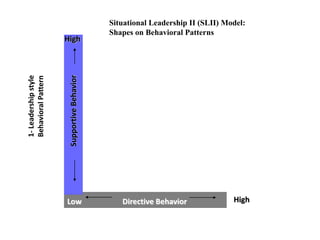
Low HighDirective Behavior
High
SupportiveBehavior
1-Leadershipstyle
BehavioralPattern
Situational Leadership II (SLII) Model:
Shapes on Behavioral Patterns
Establishing goals & how to achieve them
Methods of evaluation & time lines
Defining roles
Directive behaviors
Low HighDirective Behavior
http://behavioradvisor.com/sbAccuseOther.jpg
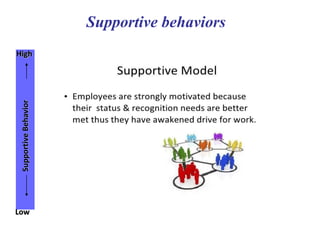
High
SupportiveBehavior
Low
Supportive behaviors
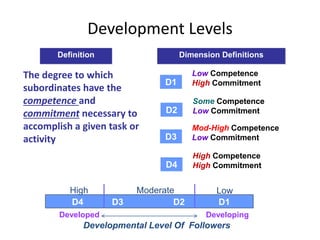
Development Levels
The degree to which
subordinates have the
competence and
commitment necessary to
accomplish a given task or
activity
Definition Dimension Definitions
D1
Low Competence
High Commitment
D2
Some Competence
Low Commitment
D3
Mod-High Competence
Low Commitment
D4
High Competence
High Commitment
D4 D3 D2 D1
Developed Developing
High Moderate Low
Developmental Level Of Followers
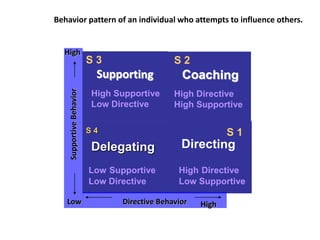
Behavior pattern of an individual who attempts to influence others.
High Directive
Low Supportive
S 1
High Supportive
Low Directive
S 3
Low Supportive
Low Directive
S 4
High
Low HighDirective Behavior
SupportiveBehavior
High Directive
High Supportive
S 2
S1 – Directing/Telling Style
 Leader focuses communication on goal achievement
http://www.thebusinesstrends.net/gallery/the-primary-management-styles-and-how-to-use-them/the-
primary-management-styles-and-how-to-use-them_1.jpg
Low Competence
High Commitment
 Spends LESS time using supportive behaviors
 Leader focuses communication on :
BOTH goal achievement and supporting subordinates’ socio-emotional needs
 Requires leader involvement through encouragement and soliciting subordinate
input
S2 – Coaching/Selling Style
http://www.bizrapport.com/wp-content/uploads/2015/08/The-Coaching-Leader.jpg
Some Competence
Low Commitment
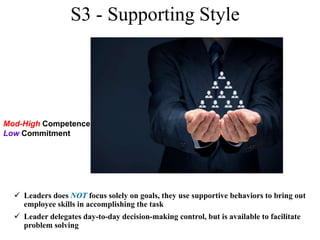
S3 - Supporting Style
 Leaders does NOT focus solely on goals, they use supportive behaviors to bring out
employee skills in accomplishing the task
 Leader delegates day-to-day decision-making control, but is available to facilitate
problem solving
Mod-High Competence
Low Commitment
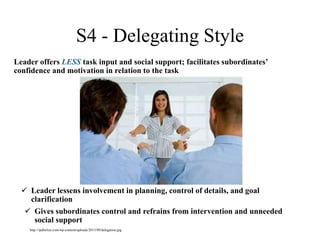
S4 - Delegating Style
Leader offers LESS task input and social support; facilitates subordinates’
confidence and motivation in relation to the task
 Leader lessens involvement in planning, control of details, and goal
clarification
 Gives subordinates control and refrains from intervention and unneeded
social support
http://ipdbelize.com/wp-content/uploads/2013/09/delegation.jpg
Leader effectiveness depends on:
 Assessing subordinate’s developmental position, and
 Adapting his/her leadership style to match subordinate
developmental level
“The Situational approach requires leaders to demonstrate a strong degree of flexibility.”
Subordinates vacillate along the developmental continuum of competence and
commitment
http://startup.channelnewsasia.com/documents/10180/46799/Your-Effectiveness-as-a-
Leader.jpg?t=1423706224489
How Does the Situational Approach Work?
1st Task
Diagnose the Situation
 Identify the developmental level
of employee
• Ask questions like:
-What is the task subordinates
are being asked to perform?
- How complicated is it?
-What is their skill set?
- Do they have the desire to
complete the job?
2nd Task
Adapt their Style
 To prescribed Leadership style in
the SLII model
• Leadership style must
correspond to the employee’s
development level
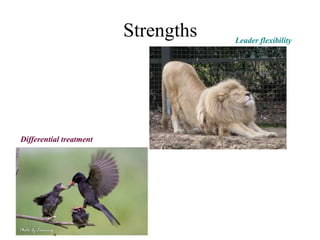
Strengths
http://www.tasc-consulting.com/_Uploads/UtilsMedia/practicality.jpg
https://userscontent2.emaze.com/images/23d78b58-cd50-4920-99df-60054a710088/60e9a2cb-8a5e-42b3-a532-15b473f7ce02image2.jpeg
.
Strengths Leader flexibility
Differential treatment
G
Criticisms
 Further research is required to determine
how commitment and competence are
conceptualized for each developmental
level.
 Replication studies fail to support basic
prescriptions of situational leadership model
validity
 Questionnaires are biased in favor of
situational leadership
Criticisms
Demographics
Group leadership
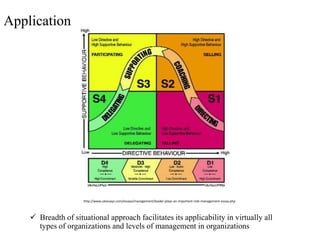
Application
 Straightforward nature makes it practical for
managers to apply
Consulting
 Breadth of situational approach facilitates its applicability in virtually all
types of organizations and levels of management in organizations
Application
http://www.ukessays.com/essays/management/leader-plays-an-important-role-management-essay.php

1 Situational Approach

  • 1.
  • 2.
    http://www.techss.com/wp-content/uploads/2013/07/overview.jpg How Does theSituational Approach work Developmental Levels Leadership Styles  Situational Leadership II (SLII) Model Situational Approach
  • 3.
    https://managementpocketbooks.wordpress.com/2015/01/27/kenneth-blanchard-management-storyteller/ https://howwelead.files.wordpress.com/2013/02/paul-hersey.jpg Perspective “Leaders match theirstyle to the competence and commitment of subordinates”  Different situations demand different kinds of leadership ( adapting-style)  Focuses on leadership in situations  Called the Situational Leadership II(SLII) Model Paul Hersey
  • 4.
  • 5.
    Establishing goals &how to achieve them Methods of evaluation & time lines Defining roles Directive behaviors Low HighDirective Behavior http://behavioradvisor.com/sbAccuseOther.jpg
  • 6.
  • 7.
    Development Levels The degreeto which subordinates have the competence and commitment necessary to accomplish a given task or activity Definition Dimension Definitions D1 Low Competence High Commitment D2 Some Competence Low Commitment D3 Mod-High Competence Low Commitment D4 High Competence High Commitment D4 D3 D2 D1 Developed Developing High Moderate Low Developmental Level Of Followers
  • 8.
    Behavior pattern ofan individual who attempts to influence others. High Directive Low Supportive S 1 High Supportive Low Directive S 3 Low Supportive Low Directive S 4 High Low HighDirective Behavior SupportiveBehavior High Directive High Supportive S 2
  • 9.
    S1 – Directing/TellingStyle  Leader focuses communication on goal achievement http://www.thebusinesstrends.net/gallery/the-primary-management-styles-and-how-to-use-them/the- primary-management-styles-and-how-to-use-them_1.jpg Low Competence High Commitment  Spends LESS time using supportive behaviors
  • 10.
     Leader focusescommunication on : BOTH goal achievement and supporting subordinates’ socio-emotional needs  Requires leader involvement through encouragement and soliciting subordinate input S2 – Coaching/Selling Style http://www.bizrapport.com/wp-content/uploads/2015/08/The-Coaching-Leader.jpg Some Competence Low Commitment
  • 11.
    S3 - SupportingStyle  Leaders does NOT focus solely on goals, they use supportive behaviors to bring out employee skills in accomplishing the task  Leader delegates day-to-day decision-making control, but is available to facilitate problem solving Mod-High Competence Low Commitment
  • 12.
    S4 - DelegatingStyle Leader offers LESS task input and social support; facilitates subordinates’ confidence and motivation in relation to the task  Leader lessens involvement in planning, control of details, and goal clarification  Gives subordinates control and refrains from intervention and unneeded social support http://ipdbelize.com/wp-content/uploads/2013/09/delegation.jpg
  • 13.
    Leader effectiveness dependson:  Assessing subordinate’s developmental position, and  Adapting his/her leadership style to match subordinate developmental level “The Situational approach requires leaders to demonstrate a strong degree of flexibility.” Subordinates vacillate along the developmental continuum of competence and commitment http://startup.channelnewsasia.com/documents/10180/46799/Your-Effectiveness-as-a- Leader.jpg?t=1423706224489 How Does the Situational Approach Work?
  • 14.
    How Does theSituational Approach Work? 1st Task Diagnose the Situation  Identify the developmental level of employee • Ask questions like: -What is the task subordinates are being asked to perform? - How complicated is it? -What is their skill set? - Do they have the desire to complete the job? 2nd Task Adapt their Style  To prescribed Leadership style in the SLII model • Leadership style must correspond to the employee’s development level
  • 15.
  • 16.
  • 17.
    Criticisms  Further researchis required to determine how commitment and competence are conceptualized for each developmental level.  Replication studies fail to support basic prescriptions of situational leadership model validity
  • 18.
     Questionnaires arebiased in favor of situational leadership Criticisms Demographics Group leadership
  • 19.
    Application  Straightforward naturemakes it practical for managers to apply Consulting
  • 20.
     Breadth ofsituational approach facilitates its applicability in virtually all types of organizations and levels of management in organizations Application http://www.ukessays.com/essays/management/leader-plays-an-important-role-management-essay.php