Unit 3(c): The circulatory
system.
Unit 3(c): The circulatory system.
Index.

1. New words
2. The circulatory system .
3. Parts of the circulatory system.
4. Healthy habits.
5. Experiment
6. Activities.
Unit 3(b): Human body.

1. New words.
•Blood vessels•Arteries•Veins•Chambers•Capillaries•the pulses•Blood pressure•Heart beat rate•Restrug•Disorder•Hollow•Fist•Atrium•Ventricle-

Vasos sanguíneos
arterias
venas
compartimentos
capilares
pulsaciones
tensión arterial
tasa de pulsaciones
descansando
alteraciones, enfermedades
hueco
puño
aurícula
ventrículo
Unit 3(b): Human body.

2-º The Circuylatory system.

The circulatory system.
CIRCULATION consists of
transporting nutrients, oxygen
and residues
around the body
Unit 3(b): Human body.

3. The Circulatory system.

The circulatory System
consists of:

•Blood vessels
•Blood
•Heart
Unit 3(b): Human body.

1. The Circuylatory system.
BLOOD VESSELS
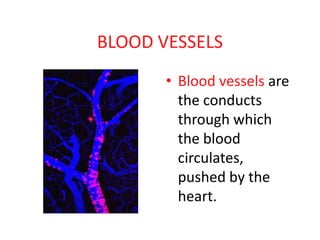
• Blood vessels are
the conducts
through which
the blood
circulates,
pushed by the
heart.
THERE ARE THREE TYPES
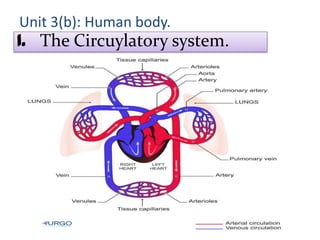
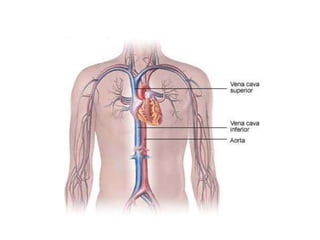
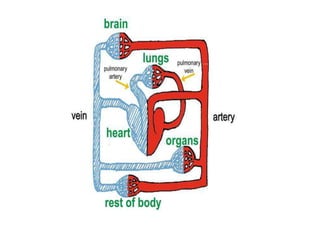
• VEINS: they transport the blood
from the organs to the heart.
• ARTERIES: they transport the blood from
the heart to the organs.
• CAPILLARIES: They are very small vessels
that connect the veins and arteries and
reach all the cells in our body.
THERE ARE THREE TYPES
• VEINS are thinner than arteries
• ARTERIES are the thickest
• CAPILLARIES are the thinnest
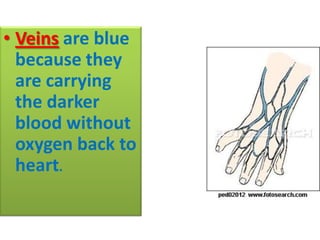
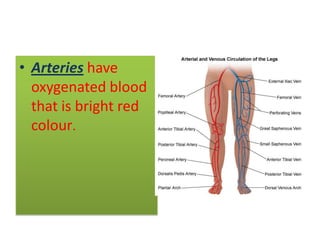
• Veins are blue
because they
are carrying
the darker
blood without
oxygen back to
heart.
• Arteries have
oxygenated blood
that is bright red
colour.
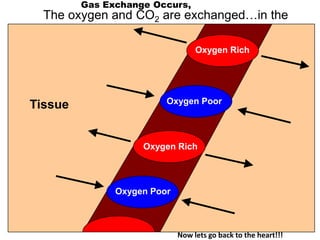
Gas Exchange Occurs,

The oxygen and CO2 are exchanged…in the
cells
Oxygen Rich

Tissue

Oxygen Poor

Oxygen Rich

Oxygen Poor

Now lets go back to the heart!!!
The Human Heart

The first person to describe circulation as
we know it today was Dr. William Harvey
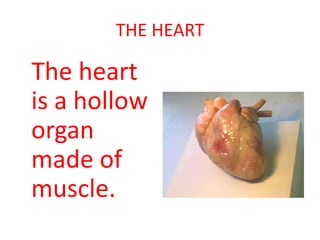
THE HEART

The heart
is a hollow
organ
made of
muscle.
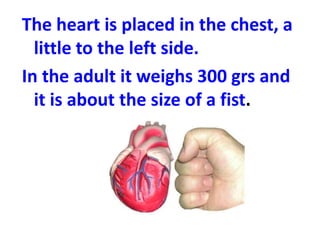
The heart is placed in the chest, a
little to the left side.
In the adult it weighs 300 grs and
it is about the size of a fist.
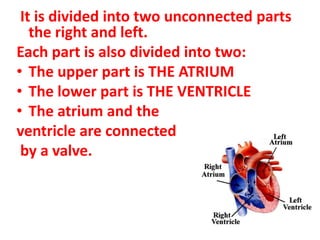
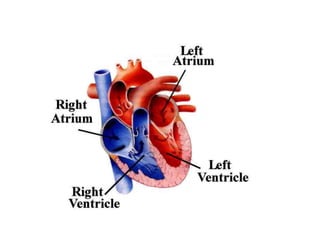
It is divided into two unconnected parts
the right and left.
Each part is also divided into two:
• The upper part is THE ATRIUM
• The lower part is THE VENTRICLE
• The atrium and the
ventricle are connected
by a valve.
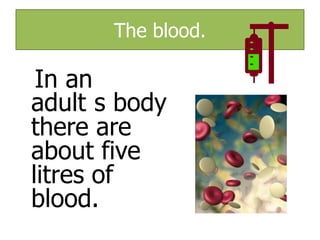
The blood.

In an
adult s body
there are
about five
litres of
blood.
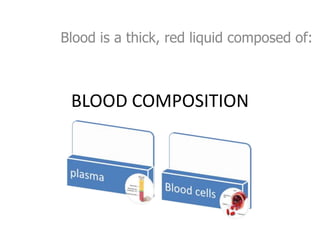
Blood is a thick, red liquid composed of:

BLOOD COMPOSITION
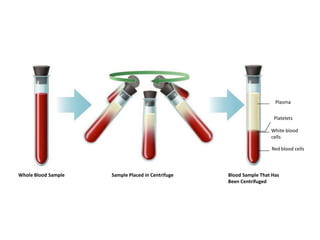
Plasma
Platelets
White blood
cells
Red blood cells

Whole Blood Sample

Sample Placed in Centrifuge

Blood Sample That Has
Been Centrifuged
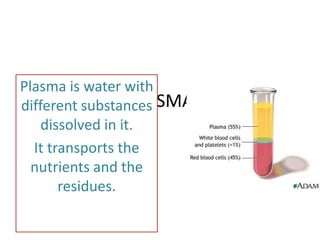
Plasma is water with
PLASMA
different substances
dissolved in it.
It transports the
nutrients and the
residues.
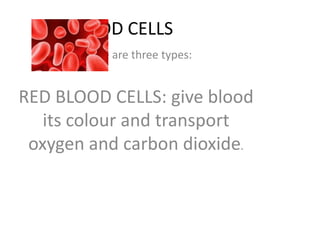
BLOOD CELLS
There are three types:

RED BLOOD CELLS: give blood
its colour and transport
oxygen and carbon dioxide.
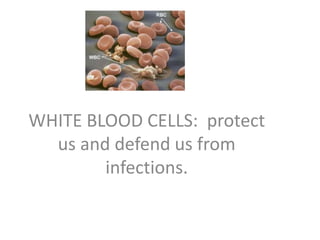
WHITE BLOOD CELLS: protect
us and defend us from
infections.
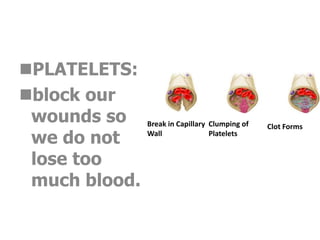
PLATELETS:
block our
wounds so
we do not
lose too
much blood.

Break in Capillary Clumping of
Wall
Platelets

Clot Forms
THE FUNCTIONS OF THE BLOOD
*Blood transports nutrients and oxygen to

the cells and take away the residues to
where they are eliminated.
*It also defends our body from

infections.
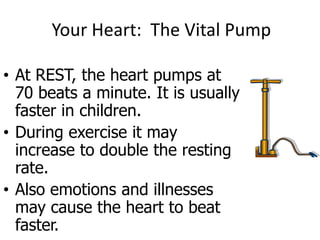
Your Heart: The Vital Pump
• At REST, the heart pumps at
70 beats a minute. It is usually
faster in children.
• During exercise it may
increase to double the resting
rate.
• Also emotions and illnesses
may cause the heart to beat
faster.
What are the pulses?
In certain places, at the wrists, in the neck
on the temples, arteries are near the
surface and cen be felt easily.
Doctors take the pulses to know the
regularity of the heart.
What is blood pressure?
It is the pressure of blood in the
arteries which can be too high or to
low in some diseases.
A normal blood pressure is 120/80
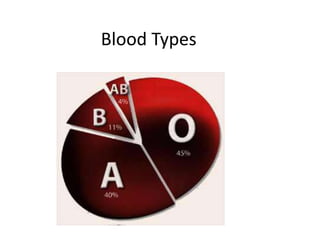
Blood Types
Massive loss of blood requires a transfusion
Four Types
A
B
AB
O

Inherited from your parents
Blood Types
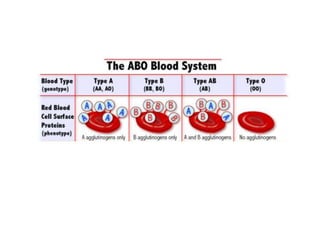
What Makes Our Blood Type?
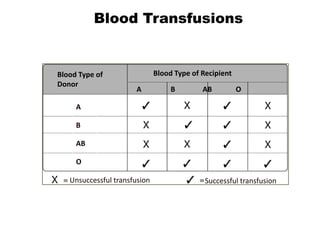
Blood Transfusions

Blood Type of
Donor

Blood Type of Recipient
A

B

AB

O

A

B
AB
O
Unsuccessful transfusion

Successful transfusion
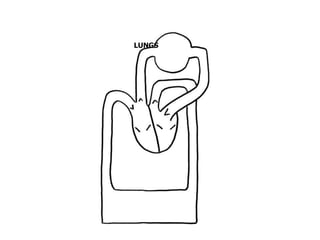
LUNGS
The CirculatorySystem.
Healthy habits
Current PREVENTION
Recommendations

Regular
exercise
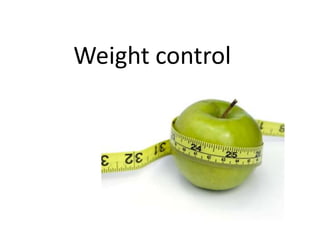
Weight control
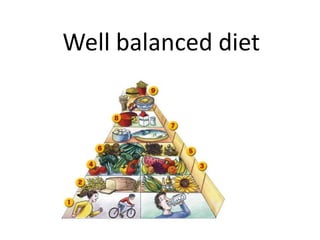
Well balanced diet
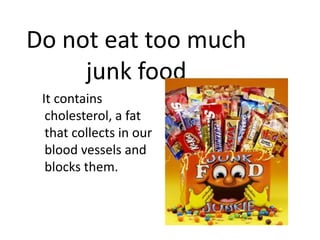
Do not eat too much
junk food
It contains
cholesterol, a fat
that collects in our
blood vessels and
blocks them.
Do not smoke
Summary
Healthy Habits
•
•
•
•
•

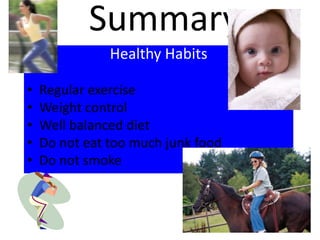
Regular exercise
Weight control
Well balanced diet
Do not eat too much junk food
Do not smoke

Unit 3c

  • 1.
    Unit 3(c): Thecirculatory system.
  • 2.
    Unit 3(c): Thecirculatory system. Index. 1. New words 2. The circulatory system . 3. Parts of the circulatory system. 4. Healthy habits. 5. Experiment 6. Activities.
  • 3.
    Unit 3(b): Humanbody. 1. New words. •Blood vessels•Arteries•Veins•Chambers•Capillaries•the pulses•Blood pressure•Heart beat rate•Restrug•Disorder•Hollow•Fist•Atrium•Ventricle- Vasos sanguíneos arterias venas compartimentos capilares pulsaciones tensión arterial tasa de pulsaciones descansando alteraciones, enfermedades hueco puño aurícula ventrículo
  • 4.
    Unit 3(b): Humanbody. 2-º The Circuylatory system. The circulatory system. CIRCULATION consists of transporting nutrients, oxygen and residues around the body
  • 5.
    Unit 3(b): Humanbody. 3. The Circulatory system. The circulatory System consists of: •Blood vessels •Blood •Heart
  • 6.
    Unit 3(b): Humanbody. 1. The Circuylatory system.
  • 7.
    BLOOD VESSELS • Bloodvessels are the conducts through which the blood circulates, pushed by the heart.
  • 8.
    THERE ARE THREETYPES • VEINS: they transport the blood from the organs to the heart. • ARTERIES: they transport the blood from the heart to the organs. • CAPILLARIES: They are very small vessels that connect the veins and arteries and reach all the cells in our body.
  • 9.
    THERE ARE THREETYPES • VEINS are thinner than arteries • ARTERIES are the thickest • CAPILLARIES are the thinnest
  • 11.
    • Veins areblue because they are carrying the darker blood without oxygen back to heart.
  • 12.
    • Arteries have oxygenatedblood that is bright red colour.
  • 13.
    Gas Exchange Occurs, Theoxygen and CO2 are exchanged…in the cells Oxygen Rich Tissue Oxygen Poor Oxygen Rich Oxygen Poor Now lets go back to the heart!!!
  • 14.
    The Human Heart Thefirst person to describe circulation as we know it today was Dr. William Harvey
  • 15.
    THE HEART The heart isa hollow organ made of muscle.
  • 16.
    The heart isplaced in the chest, a little to the left side. In the adult it weighs 300 grs and it is about the size of a fist.
  • 17.
    It is dividedinto two unconnected parts the right and left. Each part is also divided into two: • The upper part is THE ATRIUM • The lower part is THE VENTRICLE • The atrium and the ventricle are connected by a valve.
  • 20.
    The blood. In an adults body there are about five litres of blood.
  • 21.
    Blood is athick, red liquid composed of: BLOOD COMPOSITION
  • 22.
    Plasma Platelets White blood cells Red bloodcells Whole Blood Sample Sample Placed in Centrifuge Blood Sample That Has Been Centrifuged
  • 23.
    Plasma is waterwith PLASMA different substances dissolved in it. It transports the nutrients and the residues.
  • 24.
    BLOOD CELLS There arethree types: RED BLOOD CELLS: give blood its colour and transport oxygen and carbon dioxide.
  • 25.
    WHITE BLOOD CELLS:protect us and defend us from infections.
  • 26.
    PLATELETS: block our wounds so wedo not lose too much blood. Break in Capillary Clumping of Wall Platelets Clot Forms
  • 27.
    THE FUNCTIONS OFTHE BLOOD *Blood transports nutrients and oxygen to the cells and take away the residues to where they are eliminated. *It also defends our body from infections.
  • 28.
    Your Heart: TheVital Pump • At REST, the heart pumps at 70 beats a minute. It is usually faster in children. • During exercise it may increase to double the resting rate. • Also emotions and illnesses may cause the heart to beat faster.
  • 29.
    What are thepulses? In certain places, at the wrists, in the neck on the temples, arteries are near the surface and cen be felt easily. Doctors take the pulses to know the regularity of the heart.
  • 30.
    What is bloodpressure? It is the pressure of blood in the arteries which can be too high or to low in some diseases. A normal blood pressure is 120/80
  • 31.
    Blood Types Massive lossof blood requires a transfusion Four Types A B AB O Inherited from your parents
  • 32.
  • 33.
    What Makes OurBlood Type?
  • 34.
    Blood Transfusions Blood Typeof Donor Blood Type of Recipient A B AB O A B AB O Unsuccessful transfusion Successful transfusion
  • 36.
  • 37.
  • 38.
  • 39.
  • 40.
  • 41.
    Do not eattoo much junk food It contains cholesterol, a fat that collects in our blood vessels and blocks them.
  • 42.
  • 43.
    Summary Healthy Habits • • • • • Regular exercise Weightcontrol Well balanced diet Do not eat too much junk food Do not smoke