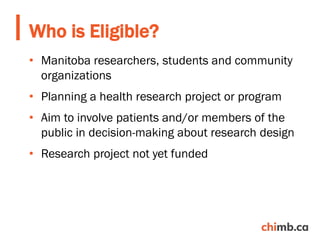
• Manitoba researchers, students and community
organizations
• Planning a health research project or program
• Aim to involve patients and/or members of the
public in decision-making about research design
• Research project not yet funded
Who is Eligible?
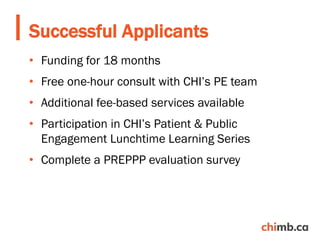
• Funding for 18 months
• Free one-hour consult with CHI’s PE team
• Additional fee-based services available
• Participation in CHI’s Patient & Public
Engagement Lunchtime Learning Series
• Complete a PREPPP evaluation survey
Successful Applicants
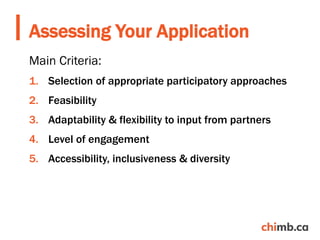
Main Criteria:
1. Selection of appropriate participatory approaches
2. Feasibility
3. Adaptability & flexibility to input from partners
4. Level of engagement
5. Accessibility, inclusiveness & diversity
Assessing Your Application
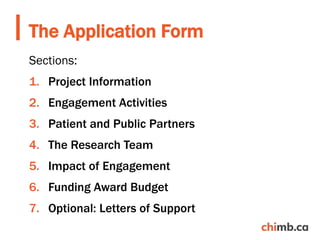
Sections:
1. Project Information
2. Engagement Activities
3. Patient and Public Partners
4. The Research Team
5. Impact of Engagement
6. Funding Award Budget
7. Optional: Letters of Support
The Application Form
What’s in a
strong
application?
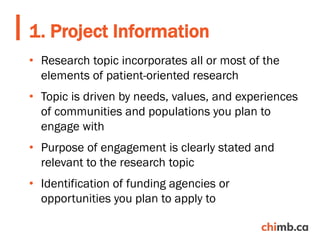
• Research topic incorporates all or most of the
elements of patient-oriented research
• Topic is driven by needs, values, and experiences
of communities and populations you plan to
engage with
• Purpose of engagement is clearly stated and
relevant to the research topic
• Identification of funding agencies or
opportunities you plan to apply to
1. Project Information
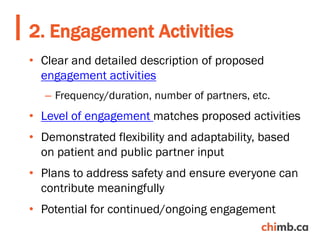
• Clear and detailed description of proposed
engagement activities
– Frequency/duration, number of partners, etc.
• Level of engagement matches proposed activities
• Demonstrated flexibility and adaptability, based
on patient and public partner input
• Plans to address safety and ensure everyone can
contribute meaningfully
• Potential for continued/ongoing engagement
2. Engagement Activities
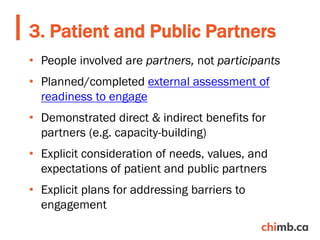
• People involved are partners, not participants
• Planned/completed external assessment of
readiness to engage
• Demonstrated direct & indirect benefits for
partners (e.g. capacity-building)
• Explicit consideration of needs, values, and
expectations of patient and public partners
• Explicit plans for addressing barriers to
engagement
3. Patient and Public Partners
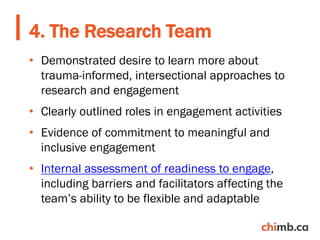
• Demonstrated desire to learn more about
trauma-informed, intersectional approaches to
research and engagement
• Clearly outlined roles in engagement activities
• Evidence of commitment to meaningful and
inclusive engagement
• Internal assessment of readiness to engage,
including barriers and facilitators affecting the
team’s ability to be flexible and adaptable
4. The Research Team
• Clear description of the level of decision-making
power patient and public partners will have
– Which decisions they will participate in making
– How engagement methods inform decision-making
– Who has the final say in research decisions
• Processes to ensure partners’ concerns,
interests, and values are represented
• How engagement in early stages will inform
future research and engagement
5. Impact of Engagement
• Focused on supporting meaningful involvement
(compensation, reimbursement, addressing
barriers, meeting people where they’re at)
• Preferably using CHI’s Budget Builder (Excel
template)
• Indicates any additional financial or in-kind
supports from other organizations
• Does not contain inappropriate research-related
expenses (e.g. publications)
6. Funding Award Budget
• Application form & previous winners info:
www.chimb.ca/preppp
• Resources (Budgeting Tool, PE Methods guide):
www.chimb.ca/resources
• Previous PE Lunchtime Learning recordings:
http://bit.ly/PELL-Videos
• KnowledgeNudge PE Blog Series:
http://bit.ly/PE101Blog
Relevant PE Resources
• Shimmin et al. 2017:
– Trauma-Informed Intersectional Analysis & Critical
Reflexive Questions for teams
– http://bit.ly/PEinHealthRes
• Roche et al. 2020:
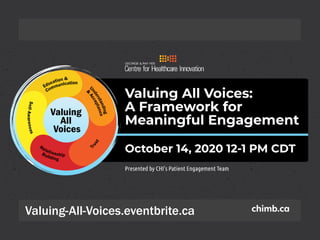
– The Valuing All Voices Framework for Meaningful
Patient & Public Engagement
– http://bit.ly/Valuing-All-Voices
Relevant PE Articles
Valuing-All-Voices.eventbrite.ca
PREPPP Award guidance

PREPPP Award guidance

  • 4.
    • Manitoba researchers,students and community organizations • Planning a health research project or program • Aim to involve patients and/or members of the public in decision-making about research design • Research project not yet funded Who is Eligible?
  • 5.
    • Funding for18 months • Free one-hour consult with CHI’s PE team • Additional fee-based services available • Participation in CHI’s Patient & Public Engagement Lunchtime Learning Series • Complete a PREPPP evaluation survey Successful Applicants
  • 6.
    Main Criteria: 1. Selectionof appropriate participatory approaches 2. Feasibility 3. Adaptability & flexibility to input from partners 4. Level of engagement 5. Accessibility, inclusiveness & diversity Assessing Your Application
  • 7.
    Sections: 1. Project Information 2.Engagement Activities 3. Patient and Public Partners 4. The Research Team 5. Impact of Engagement 6. Funding Award Budget 7. Optional: Letters of Support The Application Form
  • 8.
  • 9.
    • Research topicincorporates all or most of the elements of patient-oriented research • Topic is driven by needs, values, and experiences of communities and populations you plan to engage with • Purpose of engagement is clearly stated and relevant to the research topic • Identification of funding agencies or opportunities you plan to apply to 1. Project Information
  • 10.
    • Clear anddetailed description of proposed engagement activities – Frequency/duration, number of partners, etc. • Level of engagement matches proposed activities • Demonstrated flexibility and adaptability, based on patient and public partner input • Plans to address safety and ensure everyone can contribute meaningfully • Potential for continued/ongoing engagement 2. Engagement Activities
  • 11.
    • People involvedare partners, not participants • Planned/completed external assessment of readiness to engage • Demonstrated direct & indirect benefits for partners (e.g. capacity-building) • Explicit consideration of needs, values, and expectations of patient and public partners • Explicit plans for addressing barriers to engagement 3. Patient and Public Partners
  • 12.
    • Demonstrated desireto learn more about trauma-informed, intersectional approaches to research and engagement • Clearly outlined roles in engagement activities • Evidence of commitment to meaningful and inclusive engagement • Internal assessment of readiness to engage, including barriers and facilitators affecting the team’s ability to be flexible and adaptable 4. The Research Team
  • 13.
    • Clear descriptionof the level of decision-making power patient and public partners will have – Which decisions they will participate in making – How engagement methods inform decision-making – Who has the final say in research decisions • Processes to ensure partners’ concerns, interests, and values are represented • How engagement in early stages will inform future research and engagement 5. Impact of Engagement
  • 14.
    • Focused onsupporting meaningful involvement (compensation, reimbursement, addressing barriers, meeting people where they’re at) • Preferably using CHI’s Budget Builder (Excel template) • Indicates any additional financial or in-kind supports from other organizations • Does not contain inappropriate research-related expenses (e.g. publications) 6. Funding Award Budget
  • 15.
    • Application form& previous winners info: www.chimb.ca/preppp • Resources (Budgeting Tool, PE Methods guide): www.chimb.ca/resources • Previous PE Lunchtime Learning recordings: http://bit.ly/PELL-Videos • KnowledgeNudge PE Blog Series: http://bit.ly/PE101Blog Relevant PE Resources
  • 16.
    • Shimmin etal. 2017: – Trauma-Informed Intersectional Analysis & Critical Reflexive Questions for teams – http://bit.ly/PEinHealthRes • Roche et al. 2020: – The Valuing All Voices Framework for Meaningful Patient & Public Engagement – http://bit.ly/Valuing-All-Voices Relevant PE Articles
  • 17.