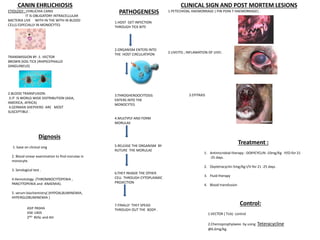
Canine ehrlichiosis is caused by the obligatory intracellular bacteria Ehrlichia canis, which lives within monocytes in the blood. It is transmitted primarily by the brown dog tick and can also spread through blood transfusions. German shepherds are most susceptible. Clinical signs include hemorrhaging, uveitis, and abnormalities in blood counts. Diagnosis involves finding morulae in blood smears or through serological tests. Treatment consists of doxycycline or oxytetracycline antibiotics for 3-4 weeks along with fluid therapy and blood transfusions if needed. Control involves tick control, chemoprophylaxis, and vaccination.